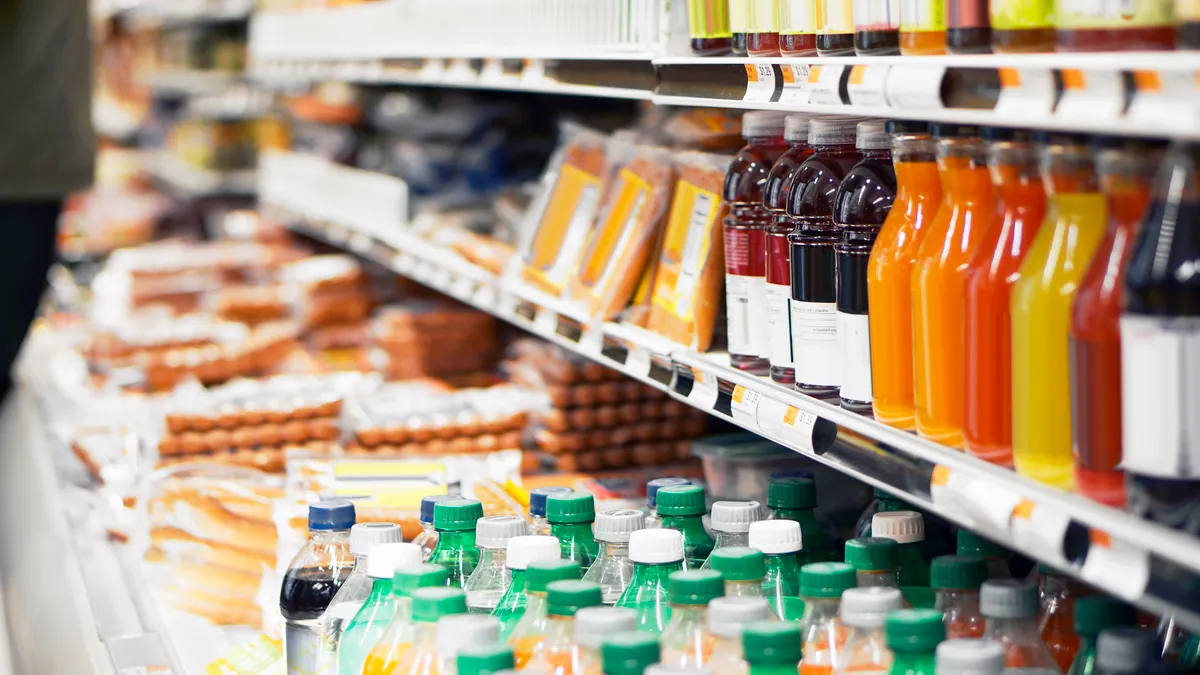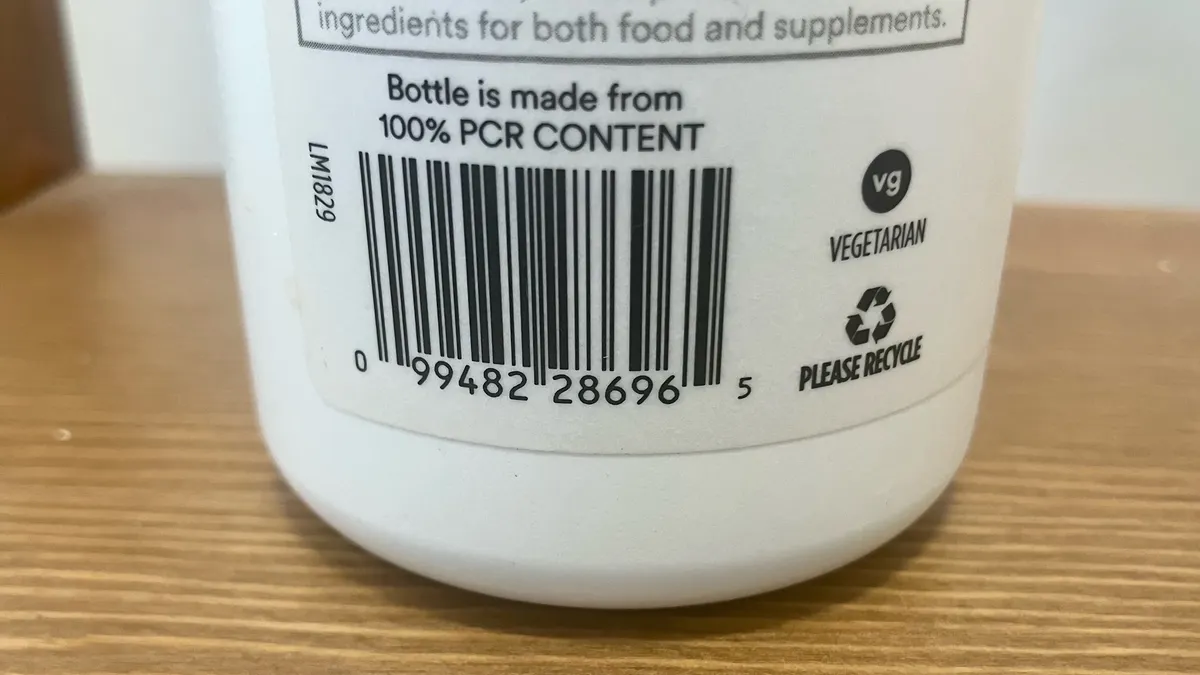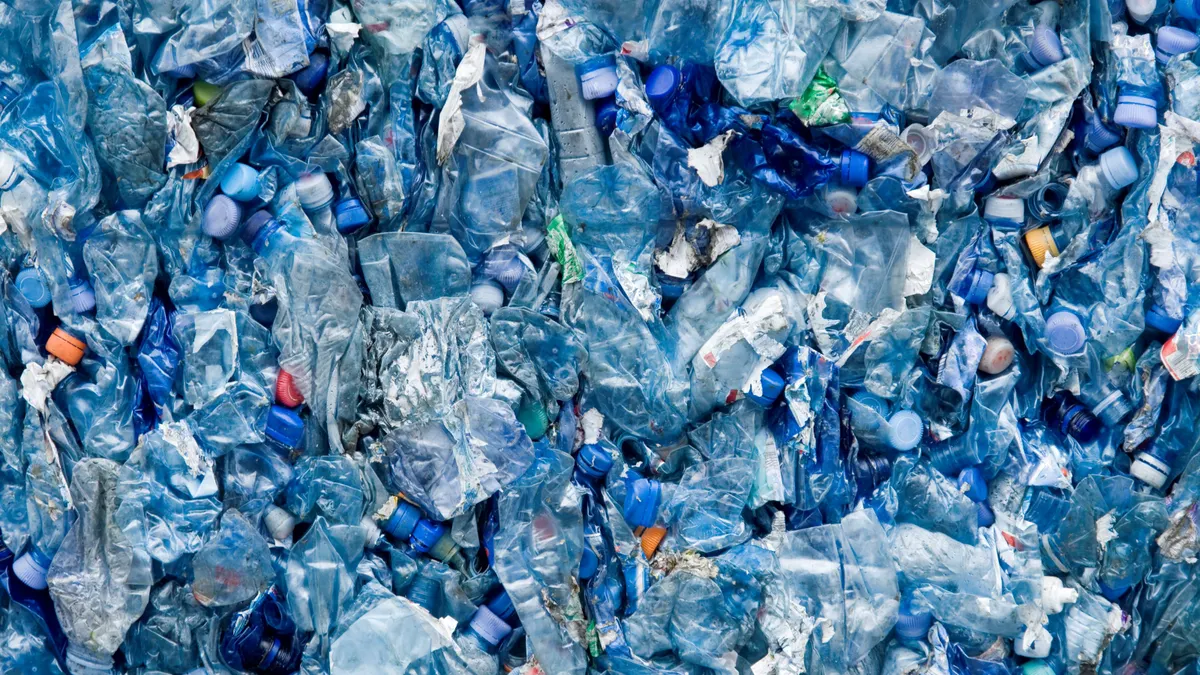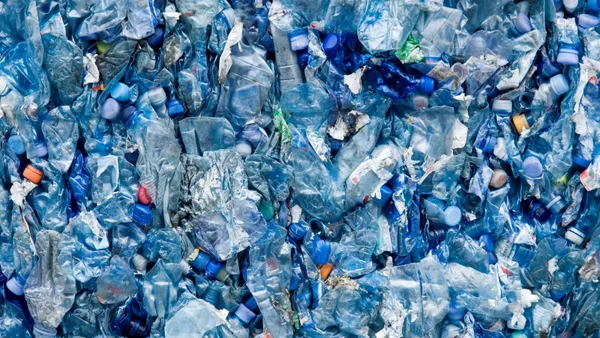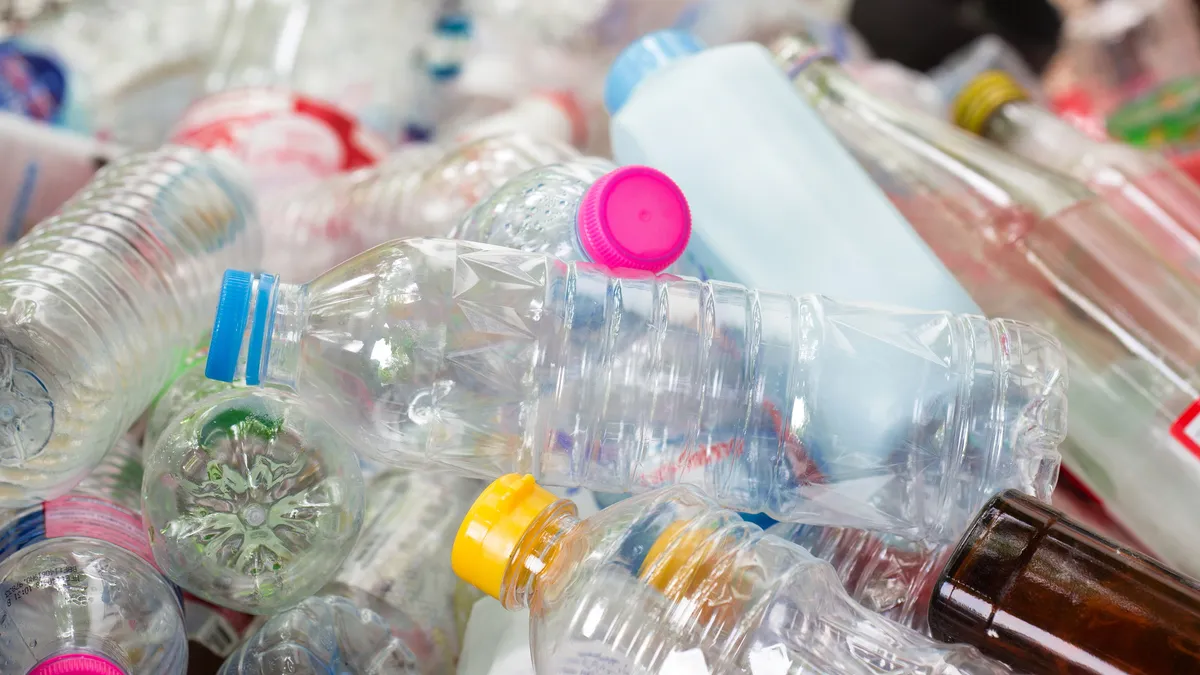
PET bottles — both virgin and recycled — contain a dozen leachable plastic additives and at least a dozen more hazardous chemicals that were not intentionally added, according to a small study published in late 2025. The findings add to a growing body of research on chemical leaching from plastics and come as new rules requiring recycled material boost demand for recycled PET.
The analysis, published in the Royal Society of Chemistry’s Environmental Science: Processes and Impacts journal, found that virgin and recycled products can leach chemicals that have been linked to cancer, endocrine disruption and reproductive problems. The study did not, for the most part, quantify levels of the chemicals.
The study was also conducted by researchers from Toronto Metropolitan University, the Ecology Center and Wayne State University. It was co-designed and funded by the Alliance for Mission-Based Recycling, or AMBR, and Defend Our Health, an environmental health advocacy group.
“We hope that this study helps shift the conversation from whether recycling is good or bad to what kind of materials should even be in the system in the first place,” said Katie Drews, national director of AMBR, which is group of nonprofit MRF operators, and CEO of Eureka Recycling, a Minnesota-based member of the group.
Unpacking the latest data
The analysis looked at the chemical differences between virgin and recycled polyethylene terephthalate — widely used in bottles — in 26 products, including 10 soda and water bottles purchased in California and eight from Michigan, which is where the Ecology Center and Wayne State are based. (The center founded Recycle Ann Arbor, a nonprofit recycling service provider that is also an AMBR member.) The rest of the products tested were children’s clothing, plush toys and pillows.
Across all of the samples, the researchers detected about 30 contaminants — including 12 toxic plastic additives and six organophosphates, which are synthetic chemicals widely used as plasticizers — that leached from the plastic or textile into water. After applying a solvent to isolate other chemicals, the analysis also found another 15 non-intentionally added organic contaminants, including diethylene glycol, used to increase flexibility or produced as a byproduct of PET production. It showed up in 96% of the samples.
Recycled PET bottles “consistently contained” benzene, according to the study. Ethylene glycol and 2-methyl-1,3-dioxolane showed up most often in virgin PET bottles. Organophosphates were detected more frequently in recycled PET, which suggests that the contamination occurred during the recycling process, the researchers concluded.
Geography also made a difference in what contaminants were detected and — for contaminants whose concentrations were measured — at what levels. Michigan bottles had elevated concentrations of benzaldehyde, while bottles from California had higher diethylene glycol levels.
All the bottles from Michigan had benzaldehyde concentrations averaging about 2.9 milligrams per kilogram of plastic. Only one sample from California had detectable benzaldehyde concentrations, measuring 0.6 milligrams per kilogram. But California samples had more diethylene glycol — an average of 27 milligrams, compared to about 2 milligrams per kilogram in Michigan bottles. The difference is likely due to different manufacturing practices, according to the study.
Roxane Sühring, an environmental chemist at Toronto Metropolitan University, said she was surprised to find such a big difference between bottles from the two states.
“There’s a lack of standardization in the use of chemicals, and of course that can be an issue, because it leads to a contaminant cocktail that’s difficult to predict,” she said. “I think the big takeaway for me was we need more standardization in the types of chemicals we use in different plastics.”
Since the study only looked at a small number of bottles, the findings should be taken as preliminary, Sühring noted.
“This should not be seen as something representative of every plastic bottle ever,” she said. "We had an equal number of recycled and non-recycled, then we found this difference between bottles in different states. There should absolutely be follow-up on that.”
Ongoing debate about chemical risks
The new research adds to a growing number of studies and reports warning of the health risks associated with chemicals in plastics.
A 2023 United Nations Environment Program report surveying the latest science on chemicals in plastics found that almost half of the 7,000 associated substances contain one or more hazardous properties linked to adverse health effects. Polymers and additives break down during recycling, so new additives must be mixed in to meet quality and durability standards. But the degraded additives stay in the material as well, and they can be released when the recycled product is used, the report noted.
In November, an analysis published in the Journal of Chromatography looked at volatile organic compounds and phthalate acid esters in recycled PET. It found higher levels of nonintentionally added substances in recycled PET than in virgin PET. The study, conducted by researchers in Italy, Spain and the U.K., also found that PET with more recycled material had higher concentrations of contaminants.
Plastics used in recycled food and beverage packaging are regulated by certain federal and state guidelines, but health advocates have pushed for tighter restrictions that address both individual substances and combinations of chemicals.
Toxicity in plastics needs to be addressed at the manufacturing stage, Drews said.
“For years we've been seeing this kind of packaging that contains toxics, and [recyclers] aren't responsible for fixing that,” she said.
The materials entering recycling systems in the U.S. have changed since recycling began in the 1970s, she noted.
“It was mainly paper, metals and glass,” she said. “So our system wasn’t designed to effectively manage all the new kinds of packaging, especially the plastics on the market today with their complex chemistry and toxic additives. And there really hasn't been an effective way to recycle plastics that is not just circulating those toxics.”
The new analysis underscores the need for safer design, less complexity and fewer toxic additives, she added. “I think that’s the way we need to go.”
Scott Trenor, technical director at the Association of Plastic Recyclers, said the new study needs to be taken in the context of the larger body of work on the risks from toxic substances in plastics.
“We support continued research into identification and quantification of contamination in recycled materials; however, presence does not necessarily imply risk as previous studies have demonstrated that the benzene levels measured in the Sühring study led to exposure limits between 15 and 49 times lower that the European Food Safety Authority's level of concern for benzene in infant food packaging,” he said in an email. “We support the rigorous approaches FDA, EFSA and other regulatory bodies take in evaluating health risks."
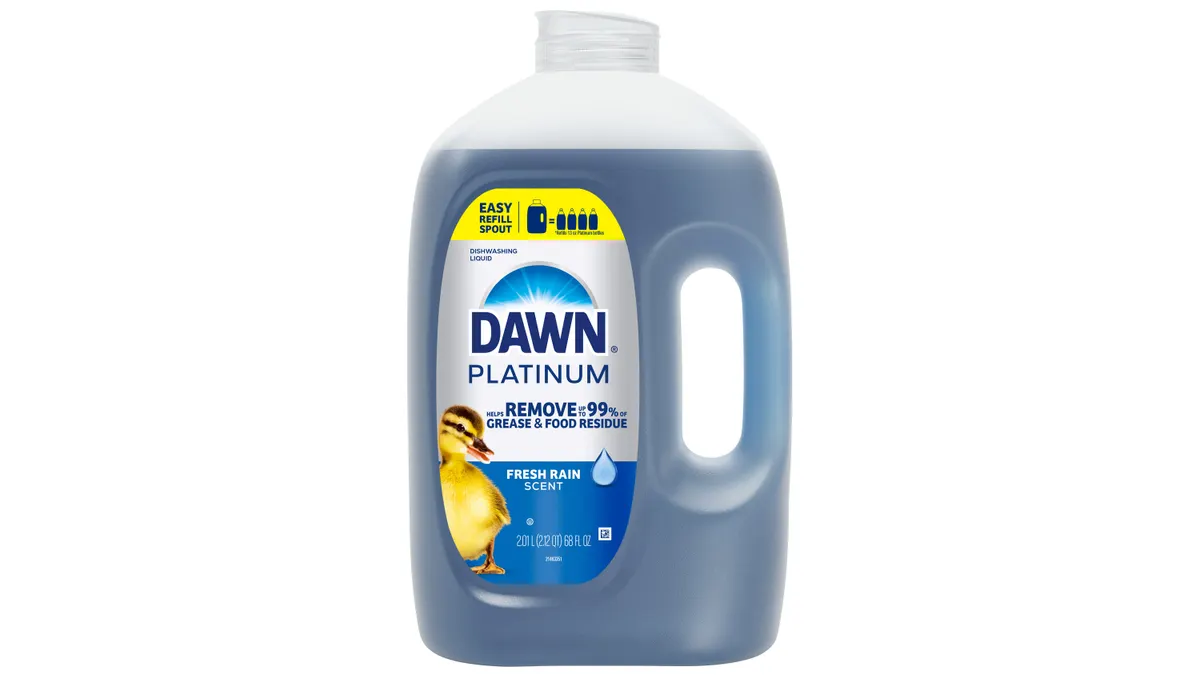
Trenor referenced a 2020 German study that evaluated the contamination of recycled PET beverage bottles that had material from 36 non-food PET containers collected for recycling in Germany. The bottles had contained dishwashing detergent, antifreeze, shampoo, mouthwash or household cleaning products.
Only about 5% of non-food PET ends up in the recycling feed stream and “does not pose any risk to the consumer,” the researchers concluded. Among the study's findings: For an infant drinking 0.75 liters of water per day from recycled PET bottles, the threshold used by EFSA, the risk of benzene exposure was 0.000161 micrograms per kilogram of body weight, which is below the EFSA benchmark of 0.0025 micrograms per kilogram of body weight per day. Unidentified substances also posed an exposure risk below EFSA criteria.
The study appeared in Molecules, an open-access journal from MDPI, a scientific publishing company that has been criticized for its rapid peer-review process.
The U.S. Food and Drug Administration’s 2021 guidance for the use of recycled plastics in food packaging says that only traces of toxic contaminants are likely to survive the recycling process and characterized the risk of acute exposure for consumers as “extremely low." Manufacturers are encouraged to submit information about their recycling process to FDA, but it’s not a requirement.
APR has developed guidance aimed at reducing “unwanted and hazardous contamination,” Trenor added.
This latest round of research comes as calls to increase recycling have grown louder in recent years, leading to new laws and voluntary pledges to boost the use of recycled material. Responding to public concern over plastic waste, seven states now have extended producer responsibility laws for packaging, with other states considering such measures. Five states have set requirements for higher amounts of postconsumer recycled plastic in various types of packaging.
Concerns over toxic chemicals in both virgin and recycled plastics have also played a central role in negotiations for a global plastics treaty, which could address the use of certain substances. Talks are scheduled to resume Feb. 7 in Geneva.