
When the rest of the line is flying, why is wrapping still waiting on a person?
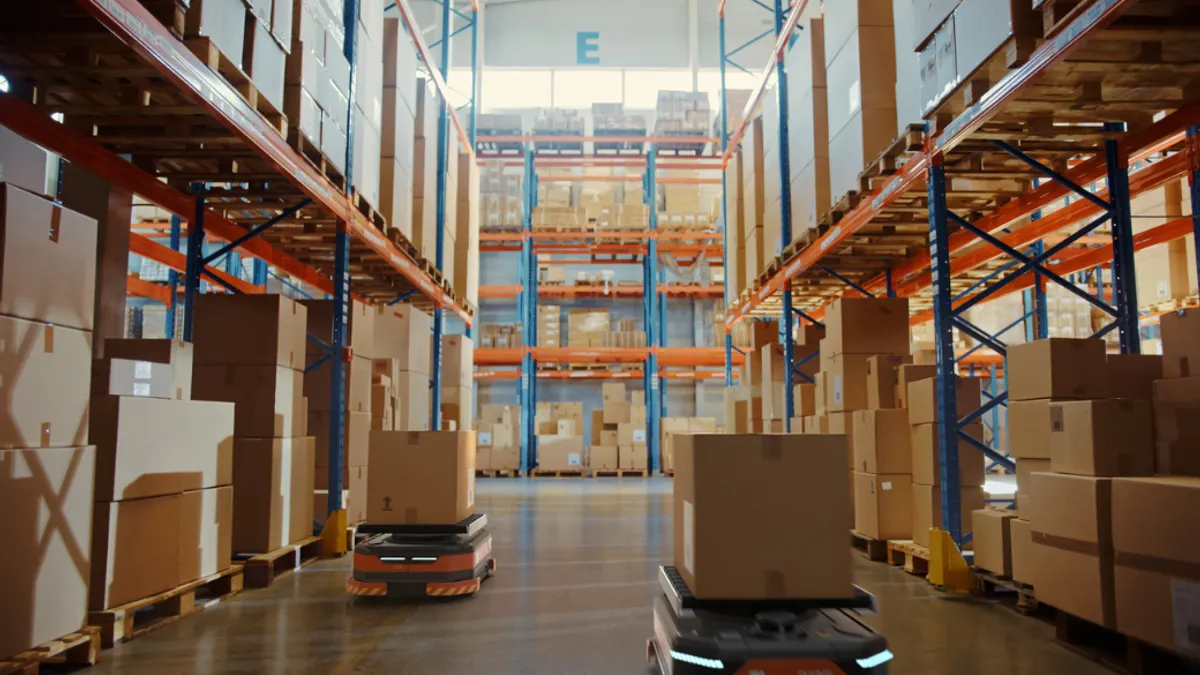
Robotic adoption in manufacturing and logistics is no longer a distant ambition — it's a present-tense reality. According to MHI and Deloitte, 83% of organizations expect to deploy automation within the next five years — and in many facilities, that transformation is already underway. AMRs are navigating warehouse floors. Automated storage and retrieval systems are moving pallets without human hands.
And then a loose, dragging film tail triggers an AMR sensor and brings production flow to a stop and someone must walk over and fix it by hand.
In a facility built around automation, manual intervention at the wrap station isn't a minor inconvenience — it's a signal that the system wasn't finished.
The weak link hiding at the end of the line
Highly automated operations are designed for speed and consistency — which means they're also more sensitive to disruption. Robotics and AMR systems thrive on predictability. When upstream processes feed product at a consistent pace and downstream packaging processes respond in kind, the whole system flows.
But film breaks, manual film cuts, dragging film tails and operator-dependent wrap cycles don't fit neatly into that model. What was once a tolerable nuisance in a manually run operation becomes a structural friction point when everything else is automated.
The financial stakes make this more than an operational annoyance. Research from ABB estimates the average cost of industrial downtime at roughly $125,000 per hour — and many manufacturers report downtime events happening on a monthly basis. In that context, even a few unplanned stops per shift add up to a meaningful drag on ROI.
The automation conversation that doesn't start at end-of-line
Ask most operations or supply chain executives where they're focusing on automation investment and you'll hear about robotic picking, AMR fleets or integrated conveyor systems. These are high-visibility investments with compelling ROI stories — and they're worth making.
But end-of-line packaging processes — load wrapping, containment, film management — have historically flown under the radar. They don't get the same boardroom attention, even in facilities where everything upstream has already been transformed.
The result is a quiet contradiction: millions invested in automated material handling, while an operator still must step in to cut a film tail or clear a jam at the end of the line.
What 'automation-ready' packaging requires
Designing packaging processes to work within an automated environment requires rethinking what we expect from the equipment. In a high-automation facility, packaging machines can no longer be treated as standalone tools that operators periodically manage. They need to function as reliable, self-sufficient nodes in a larger system.
In practice, that means equipment designed to minimize operator involvement, maintain consistent wrap quality and be easily integrated within existing floor layouts — without conveyors, ramps or a full system redesign.
AMR integration: The frontier that changes everything
The integration of AMRs into end-of-line workflows represents the next meaningful step for facilities already investing in automation. Rather than operators placing and retrieving wrapped loads, AMRs can take over — moving product in and out of the wrap station to staging, storage or outbound — autonomously and continuously.
But that only works when the wrapping process is equally autonomous. Any point of failure — such as a film tail that interferes with AMR sensors, a loose load that can't survive downstream handling, or needing an operator to intervene — breaks the chain. The efficiency gain doesn't just slow down. It disappears.
For packaging and operations leaders, this creates a clear design requirement: end-of-line wrapping systems that are built to support AMR workflows — not retrofitted as an afterthought.
The organizations gaining the most from AMR investment aren't the ones with the most robots. They're the ones who made sure every part of the line was ready for them.
Closing the loop on automation ROI
Automation is not a destination — it's a system. And systems are only as strong as their most inconsistent component.
Lantech's SL400AMR stretch wrapper was designed to operate without conveyors or ramps and engineered to seamlessly integrate with AMR workflows. The SL400AMR delivers the kind of autonomous, reliable wrap performance that today's automated facilities demand. It's not a stand-alone piece of equipment — it's the final layer that makes the rest of the automation stack perform as intended.
The most impactful automation upgrade in a facility isn't always the most complex one. Sometimes it's the one that finally closes the loop.