Companies constantly innovate and redesign their packaging to boost performance, enhance sustainability and improve marketability. Here’s a look at five recent packaging product launches or revamps on Packaging Dive’s radar.
Spinning up a new substrate
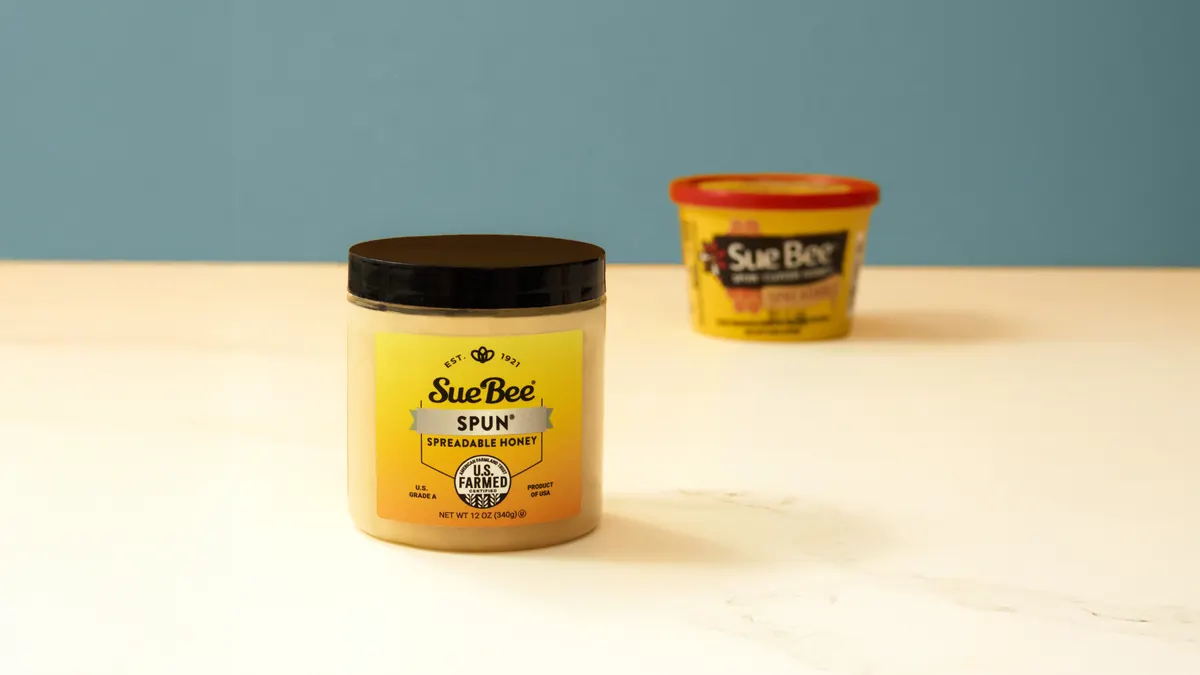
Sue Bee is switching up the packaging material and look for its spun honey product. The previous tub was made from polypropylene and was opaque, but the new polyethylene terephthalate is clear to allow consumers to see the product and its texture.
“Not only does the new design offer a more modern, streamlined look that stands out on shelf, but the clear container also puts the smooth, creamy texture of our Spun Honey on full display,” said Bethany Love, marketing manager of Sioux Honey Co-op, via email.
The PET is a thicker, sturdier material to provide a more durable structure that is less prone to damage in transit, a spokesperson said via email. The container lid also fits better than the previous version, according to the company.
Sue Bee began shipping the new packaging to select stores in November, and last week it began rolling out the revamped product nationwide.
Big chill
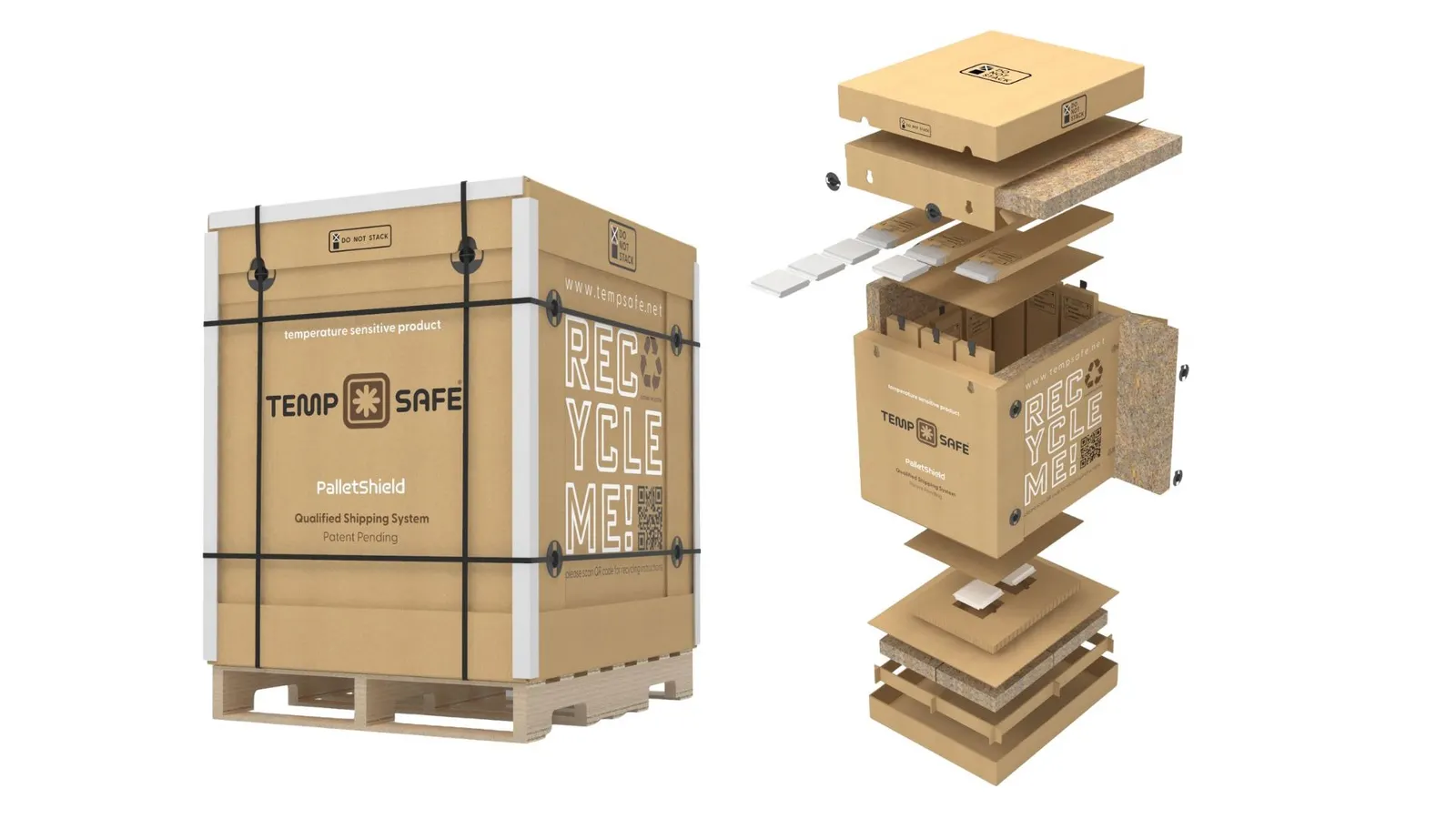
This week, Veritiv introduced its TempSafe PalletShield, a fiber-based solution for bulk temperature-sensitive shipments. It’s designed to support both frozen and refrigerated shipments of products such as vaccines, clinical trial materials and other chilled products.
The patent-pending design includes panels that lock in place to prevent edge loss and maintain structural integrity. The shipper can maintain cool temperatures for more than five days, the company says.
Veritiv also notes the components are curbside recyclable.
“There really wasn't a curbside recyclable pallet shipper on the market; that's why we created it,” Chris Bradley, chief marketing and sustainability officer for Veritiv, told Packaging Dive. “I think sustainability is a core part of where cold chain is heading.”
Going dark

UPM unveiled what it’s calling the world’s first biobased, carbon-negative pigment that can be detected by the near-infrared equipment at MRFs to enhance recyclability.
Conventional black rigid plastics contain carbon black for pigment and are not NIR-detectable, so they typically are not captured at MRFs. But UPM Circular Renewable Black is derived from lignin, a polymer that naturally occurs in plants, and is certified by various third-party standards including ISCC Plus. The company says its carbon-negative black pigment “actively captures the carbon as long as in use.”
“This innovation combines iconic deep black with full recycling detectability and a carbon-negative footprint, proving that sustainability and design excellence can go hand in hand,” said Robert Marx, vice president of commercial for UPM Biorefining, in a news release.
Spicy substrate switch
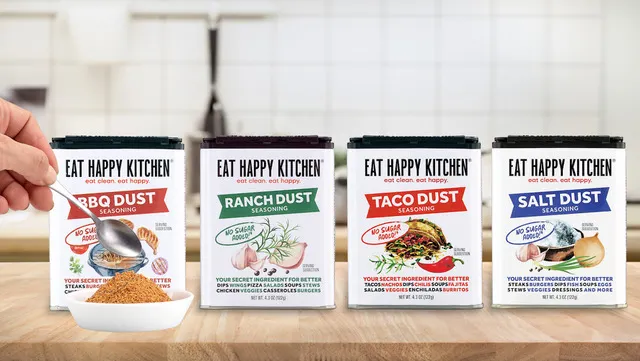
Eat Happy Kitchen changed the packaging for its spices from fiber to metal. The company says the metal containers evoke a vintage feel.
The new containers are made from tin plate sheets and have plastic lids, whereas the previous format was recycled paperboard with an aluminum plug and a plastic top, said Anna Vocino, founder of Eat Happy Kitchen, via email.
“The new tins were designed for both clarity on the store shelf and beauty on the kitchen counter, perfect for the ‘kitchen couture’ trend, where pantry staples are becoming part of the kitchen aesthetic. Everyone recognizes a vintage spice tin,” Vocino said.
The new tins began rolling out this fall, and the format switch will occur for all the brand’s seasonings.
Dreaming up greater accessibility
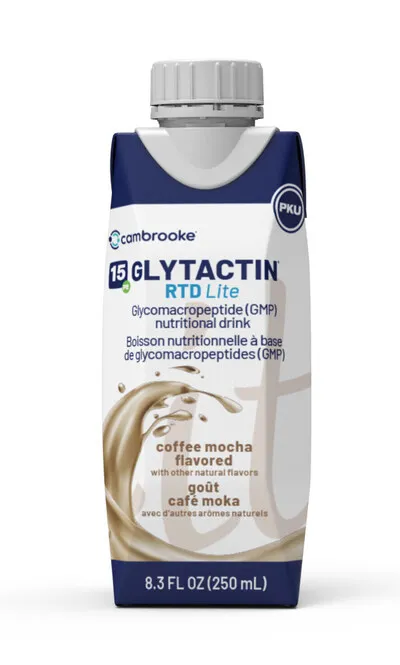
Medical nutrition company Ajinomoto Cambrooke introduced the DreamCap to simplify access to its beverages in cartons.
The ergonomic, user-friendly closure “allows patients and caregivers to open, close and store formulas with ease,” the company said in a news release. It’s also resealable.
"At Ajinomoto Cambrooke, our mission goes beyond nutrition — it's about improving lives and helping patients live a life without limits," said President Rick Jentis in the news release.