Dive Brief:
- Paper-based flexible packaging could help to tackle the problem of plastic waste and pollution in markets where small-format plastic flexibles — those sized A5 or smaller, such as sachets, wrappers, pouches and small pillow bags — have high “leakage rates,” or instances of ending up in the environment, according to a report the Ellen MacArthur Foundation released today.
- The report, which serves as a guide for how fiber-based flexibles could help reduce plastic pollution, notes the importance of putting “guardrails” in place so paper solutions deliver environmental benefits without causing unintended consequences that risk “replacing one set of problems with another.”
- So far, these flexible fiber innovations do “not yet exist at the scale, cost, and performance needed” to solve the problem, and collaboration is needed across the value chain to accelerate solutions.
Dive Insight:
The Ellen MacArthur Foundation is prominently known for its Global Commitment launched in 2018 to engage stakeholders across the plastic packaging value chain to reduce waste and pollution. Goals tied to 2025 included making plastic packaging recyclable, compostable or reusable; eliminating problematic or unnecessary plastic packaging; and increasing the amount of postconsumer recycled content used to manufacture plastic packaging.
EMF noted in its new report that flexibles, especially small-format versions, are the fastest-growing type of plastic packaging globally. They make up 80% of the plastic packaging that ends up in oceans in countries that have low concentration of formal collection and recycling systems.
Flexible plastic packaging waste and pollution is one of the three main barriers the group identified toward achieving a circular economy and curbing plastic pollution. While paper-based flexibles are not the sole solution, they are one that can be used alongside others, the report says.
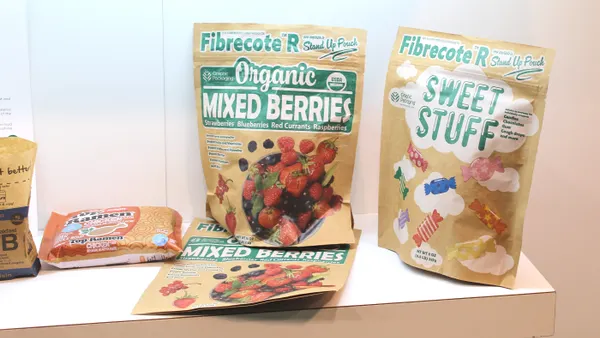
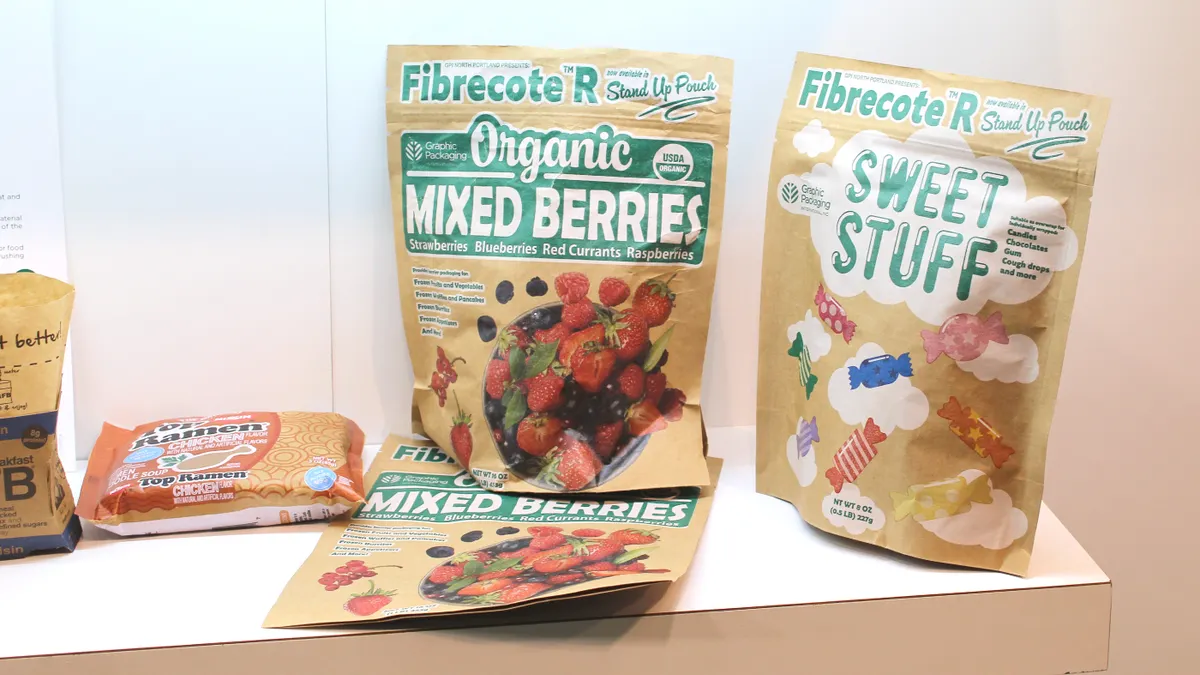
Some packaging producers already are advancing fiber-based flexibles, such as Graphic Packaging International’s Fibrecote line. But these innovations are not mainstream, and many are not for the small packaging formats cited in the EMF report. Aveda is among the brands that announced last year the development of a paper-based sachet, while Futamura is one of the packaging companies to reveal a compostable sachet to replace non-recyclable plastic versions.
EMF noted that “significant innovation and scale are required” to unlock opportunities for fiber-based flexibles to replace plastics. And it will take long-term commitments and collaboration from both industry and policymakers. “Developing and deploying responsibly designed paper-based packaging will not happen overnight. There will be interim steps,” the report says.
The report lays out six criteria that paper-based flexibles must meet:
- Be responsibly sourced
- Be responsibly produced
- Avoid hazardous chemicals and persistent plastic pollution
- Meet technical, economic and consumer needs
- Be recyclable locally
- Fit within a broader, socially inclusive circular economy strategy
Fiber-based packaging often is perceived as more sustainable because of its recyclability and biodegradability, making it more favorable if it does leak into the environment, the report says. Small-format flexibles have very low collection rates, below 10% in a number of the targeted countries, and collection rates must increase to reduce pollution. “Ultimately, improving collection and recycling or composting for small-format flexibles will require system-wide change,” the report says.
Although paper has an advantage in this space, it also has limitations. Certain barriers and coatings, including those made from polyethylene, complicate the sustainability profile equation. Using fiber also can contribute to deforestation and declining biodiversity, EMF notes.
In addition, small-sized packages can still pose operational and economic challenges in recycling systems regardless of the substrate. Sachets are a specific packaging type popular in the lower-middle to upper-middle income countries where demand for flexible packaging is rising rapidly, and which were focal points for this report. They’re viewed as convenient and cheap, but frequently end up in the environment due to lack of collection.
Markets that have formal collection systems and lower leakage rates were not targeted in the report. Southeast Asian countries such as the Philippines, Thailand and Vietnam are among those for which the report’s content is particularly relevant, according to EMF.
The report pointed out some areas where breakthroughs are needed, including improving performance of non-wood fibers; developing recyclable, home-compostable and biodegradable barriers; and installing machines used to process paper-based packaging at competitive run times. It highlighted emerging innovations in these arenas, including for pulping, silk-based coatings, PHAs, and print-applied barrier coatings.
Responsibly scaling paper-based flexibles also will require policymakers to participate in setting up “safeguards” through regulation, incentives and investments, the report says.
In November, EMF released its final progress report on participants’ progress toward the original 2025 goals while revealing an updated plastics agenda with targets pegged to 2030. It noted that while businesses took positive steps, they still fell short of the targets. That report also highlighted that Global Commitment signatories only represent 20% of the market and it will take engagement with the other 80% to get the entire market to change.