


More than a month after the U.S. Supreme Court invalidated most of the Trump administration's tariffs imposed under the 1977 International Emergency Economic Powers Act, companies are taking a variety of approaches to obtaining refunds for tariffs they paid and hoping for the best.
Only a small fraction of the more than 300,000 companies subject to President Donald Trump’s IEPPA tariffs have sued for refunds in the U.S. Court of International Trade, said Jonathan Todd, an international trade attorney at Benesch Friedlander Coplan & Aronoff. These tend to be larger firms with bigger legal budgets and/or more money at stake, he and other experts said.
More than 3,000 cases related to tariffs, duties, fees and other taxes have been filed in the U.S. Court of International Trade since the Supreme Court first heard oral arguments about the tariff case on Nov. 5., 2025, according to Manufacturing Dive research. Not all cases are related to IEEPA refunds.
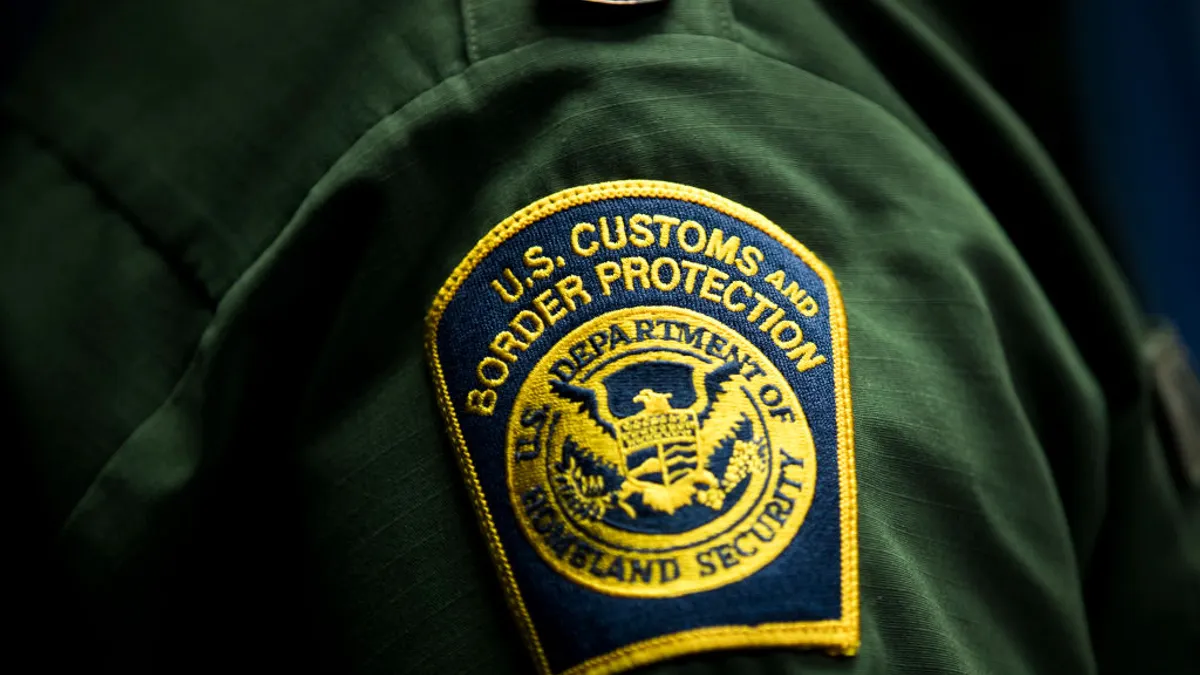
Todd said many more companies have filed administrative claims with U.S. Customs and Border Protection or are waiting to and apply for refunds through the Consolidated Administration and Processing of Entries system, or CAPE, a new CBP digital portal that is scheduled to go live in April. Others are biding their time because they’re not sure how to proceed.
“I have a number of clients who want to take every action they can, and those tend to file lawsuits," Todd said in an interview. “Others are waiting because they see this as an evolving situation that we will have greater clarity on soon.”
He added that some of his clients are reluctant to ask for refunds at all because of the administrative hassle or “for political and commercial reasons,” such as possible retribution from the Trump administration.
Refund claims could result in lawsuits
Seeking a refund could even land an importer in court.
“One of the things that’s kind of missing from the headlines is that through the CBP’s CAPE system, the party entitled to the refunds will be the importer of record,” Todd said. “But that very well might not be the party that bore the total cost.”
That’s because importers might have passed tariff costs onto manufacturers and other firms down the supply chain. This “raises the question of whether downstream customers are also entitled to refunds, such as suppliers who lowered prices for their customers,” he said.
These dynamics have resulted in unintended consequences for some importers, including being sued by other companies. “I have clients who have spoken publicly about seeking refunds for their customers, and some have found themselves as defendants in class action lawsuits,” Todd said.
Like Todd, James Kim, a customs and international trade attorney at ArentFox Schiff, said his clients are employing a variety of strategies when it comes to tariff refunds.
“The companies that are taking the most aggressive approach are filing lawsuits in an abundance of caution to make sure they can recover the refunds,” he said in an interview. “Others are filing administrative protests, while others are waiting for the CBP system to come up. No one really knows for certain what they should be doing because the Supreme Court was completely silent on the whole refund process.”
One significant problem, Kim said, is that CAPE may not capture all refund-related administrative claims because of the way it’s designed.
“When companies import stuff and pay tariffs, that’s really a deposit or an estimate of what tariffs they think they should pay,” he said. “Then CBP has almost a year to finalize that duty assessment and say the company owes more or paid too much.”
The issue is that the Court of International Trade ordered the CBP to set up a system only to handle refunds for duty assessments that aren’t yet final. CAPE probably won’t be designed to handle refunds for assessments that are final, Kim said.
Some have also criticized the CAPE process as unduly burdensome. For example, Sen. Ed Markey, D-Mass., ranking member on the Small Business and Entrepreneurship Committee, wrote a letter with other Democrats to Customs and Border Protection Commissioner Rodney S. Scott saying that refunds should be automatic rather than requiring importers to “opt in,” which is how the system will initially be set up.
“There is no principled reason for the Trump administration to conduct the refund process this way,” the senators said. “Small businesses should not have to do additional work to receive refunds on what amounted to illegal tariff payments.”
Many companies think refunds likely
In a recent KPMG survey of business leaders, 62% of respondents said they expected a tariff refund. Of that group, 28% said they would actively pursue a refund, 25% were undecided, and 9% said they would not.
“It’s a pretty big number in the trying-to-figure-it-out bucket” when it comes to deciding whether and how to seek a refund, Brian Higgins, U.S. sector leader for industrial manufacturing for KPMG U.S., said in an interview. “There’s still a lack of clarity on the mechanics of the overall refund process.”
Of those that have decided not seek refunds, 37% said the anticipated legal costs or effort outweighed the potential refund. Other respondents cited concern about negative impact on government relations and low potential refund amounts.
Fifteen percent of the survey respondents overall were manufacturers.
Higgins said he believes that importers that filed lawsuits before the Supreme Court’s Feb. 20 tariff decision are in the best position to secure refunds. That’s because the government will only have so much bandwidth, and those who filed lawsuits early will likely be higher in the pecking order, he said. However, he added for all claimants, the exact nature of the refunds and length of the process remain unclear.
Still, Kelsey Christensen, an international trade attorney at Clark Hill, was optimistic about the process overall. “It is very likely that companies will eventually obtain IEEPA refunds if they properly request them from CBP,” she said in an email.
This, she said, will require a few steps. First, a company should determine exactly what it’s entitled to and get all of its paperwork in order.
“Organize, organize, organize,” Christensen said. “It is vital for companies to identify all of their imports that had IEEPA tariff exposure and gather entry documentation so that the business is prepared to request refunds when the [CBP’s] refund portal becomes available in mid-April.”
Second, she said based on recent declarations from CBP about the process it’s setting up, “it appears that companies will need to proactively request refunds, provide CBP with the entry documents supporting their request, and enroll banking details to make sure they can receive refunds electronically.”
CBP stopped issuing paper refund checks in February, she added, so the requirement to enroll banking information online may be new for many importers.
Even though the Supreme Court didn’t address refunds in its February decision, Christensen said that shouldn’t be an obstacle.
“We did not expect the Supreme Court to discuss refunds in its tariff opinion, and we do not think that has any bearing on whether companies will or will not receive refunds,” she said. “It is common for other courts, like the Court of International Trade, to take the lead on establishing the details of a remedy process.”
Regardless of how likely it is for a company to obtain a refund, Todd said it’s important for not to think of it as a windfall. “The number one thing that everyone should do in my view is have a conversation with their accountants,” he said. “Those monies might not be available to you dollar-for-dollar.”
Moreover, President Donald Trump has instituted new tariffs, and has altered others such as for steel, aluminum and copper. He also frequently changes his tariff policies, even as they are challenged in court. As a result, experts noted that even if companies obtain IEEPA tariff refunds, there will likely be more tariffs to deal with under other legislative authorities.