A year into the “Liberation Day” tariffs, which ultimately imposed a 10% baseline tariff on nearly all imports before they were struck down, packaging companies and their customers are still waiting for the dust to settle, and in some cases feeling stretched thin on options.
In one recent example of change yet again, the Trump administration reduced tariffs on steel, aluminum and copper derivatives – while keeping the 50% rate for items made nearly entirely of the metals, such as food and beverage cans.
War with Iran in 2026 is adding fuel to the fire, further upending packaging supply chains and raising costs across the industry.
“These black swan events keep coming at us,” said Jason Wong, founder and CEO of custom packaging manufacturer Paking Duck, a U.S.-based company with an entity in China that manufactures paper, plastic, metal and glass packaging. “We just don't have time to prepare.”
Packaging suppliers and their customers in the consumer goods industry have made some incremental changes in light of geopolitical risks. Some have sought out domestic suppliers where viable or stockpiled more packaging. But by and large, brands have mostly kept their supply chains the same, swallowing costs or passing on what they can to consumers.
Wong said many of the brands he works with feel they’ve exhausted their options, and they’re just waiting to see what happens next.
What brands have — and haven’t — done to their packaging supply chains
Shubhangini Prakash, founder and CEO of New Jersey-based skincare brand Feather & Bone, made a few changes to her packaging sourcing amid 2025’s changing tariffs. As a small business, she primarily works with distributors that source the packaging. She added some alternate suppliers when prices for certain components went up.
Her company sells a skincare product for pregnant women in a twist tube, similar to deodorant. With tariffs, Prakash said the price of that packaging jumped from about 80 cents to $3 per item. “$3 for a piece of packaging that's plastic is really insane, but that's where we are right now,” she said.
She’s also looked to new sales channels to combat higher packaging costs, including partnering with refilleries to sell products in bulk. Consumers bring their own bottles to stock up on skincare products, which cuts down on packaging costs for Prakash’s business. She acknowledged, though, that refill is a “very small subset of this giant industry,” and certainly doesn’t eliminate her business’ need for single-use packaging.
When the Liberation Day tariffs were announced, Wong said Paking Duck stockpiled packaging and negotiated with some of its raw material suppliers, such as its ink vendor, to bring prices down.
In addition to cost increases over the last year, Wong also saw tariff uncertainty shake his clients’ confidence. The company lost a few clients who feared additional tariffs and switched to a domestic supplier. Switching all packaging sourcing to the U.S., however, is nearly impossible for consumer goods brands, due to the ways supply chains have been set up, Wong said.
“Manufacturing practices in China have been perfected in the last few decades. You can't just bring that to America and call it a day,” Wong said. He added that anything of comparable quantity or quality in the U.S. will be more expensive, and it’s sometimes still cheaper to import packaging, even with tariffs.
Tom Hammann, owner of CPG consulting firm WTH Solutions, said the gut reaction to tariffs is often to reshore everything. But in reality, specific packaging materials may not be available domestically, and quickly changing packaging requires robust testing before rolling it out.
Prakash said that similarly, not much packaging is manufactured domestically for the beauty industry. Before the tariffs, she remembers talking to several U.S. manufacturers when searching for a tin, and the suppliers told her the product is only made in China.
Currently, her company is sticking with its existing packaging design. It’s absorbing higher costs and hasn’t raised its prices.
“You're really at a ceiling of how much you can forward this price to the customer before you start to alienate them,” Prakash said.
While tariffs over the last year spurred some immediate cost-cutting measures for brands, CPGs have been examining their packaging supply chains for years. Hammann has seen more volatility in CPG in the last five years compared to the previous 20. Long before tariffs, CPGs cut packaging costs by changing the fluting on corrugated packaging or lightweighting a glass jar.
He’s also seen brands improve their supply chain visibility and map out packaging and other suppliers. Then, if or when a geopolitical risk occurs, “they're able to respond quickly,” Hammann said.
Maneuvering the war landscape
As consumer brands continue to navigate the impacts of tariffs on their packaging, they’re also facing another major geopolitical risk: the Iran war.
Oil price hikes have impacted petroleum-based plastics, but it’s impractical for many brands to swap out plastic for a different material. A paper bag or metal tin wouldn’t work as an alternative for shampoo packaged in a plastic bottle, Wong said.
Any packaging material change also requires a testing process, which could take longer than the war even lasts.
“You have to test it in the manufacturing plant. You have to make sure it gets through the distribution chain to your consumer or customer,” Hammann said.
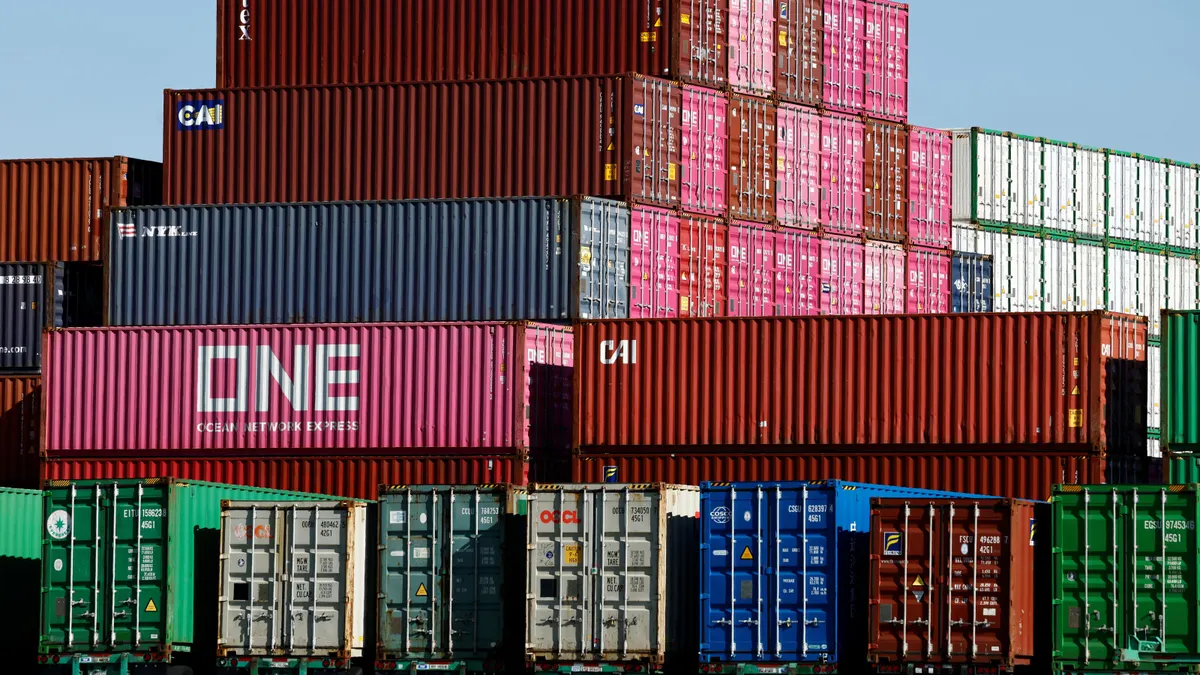
Outside of plastic, packaging as a whole is being impacted due the Middle East conflict prompting higher shipping prices, with Transpacific rates rising nearly 30% between late February and early April. Wong suspects the price hikes on other substrates won’t be as drastic as the increase in petroleum-derived plastic, but oil and shipping costs “will still have a trickle-down effect in how things are being costed out.”
Wong said packaging may be an area where brands specifically focus to save costs, whether they simplify packaging or order more supply ahead of rising prices.
The war risks are putting consumer brands in a position to “hope for the best, plan for the worst,” Hammann said. Multiple large CPGs report bracing for higher packaging costs.
Food processing company Lamb Weston anticipates the conflict will result in more volatility in packaging, CEO Mike Smith said during an April 1 earnings call. Martin Hug, CFO of chocolatier Lindt & Sprüngli, said March 10 the company foresaw a ripple effect from fuel and logistics costs, “which drive up, in the medium term, packaging material costs.”
Shane Smith, CEO of Smithfield Foods, said March 24 the company was watching “potential headwinds” including “a dynamic geopolitical environment.” He expected impacts on the cost of Smithfield’s resin-based packaging, although it’s “still too early to predict the full impact from the conflict in Iran.”
How packaging companies, CPGs can be proactive
Hammann cautioned that amid cost-saving measures, brands shouldn’t forget critical lessons learned before – including during the pandemic – about having redundancy in suppliers. “One big event like this … [and] you just unwound all the cost savings you thought you had by going to one supplier,” Hammann said
CPG brands can also revisit playbooks they ran approximately 20 years ago when oil prices were also elevated, he said. The most successful companies, he said, are always assessing risks and planning for volatility.
“They don't wait for a big crisis to go, ‘Oh, I got to do something,’” Hammann said.
It’s important for packaging suppliers to think proactively about what’s happening at their customers’ businesses, he said. Instead of waiting for a phone call from a CPG rejecting a price increase or asking for a discount, the packaging supplier could proactively visit the CPG’s plant, or have a discussion about materials, innovation and cost-saving ideas.
Building this connection gets CPGs and their suppliers out of the commodity mindset, where brands view their packaging vendors as interchangeable.
“Show that you're a real partner,” Hammann said. “That's going to be key to that longer-term relationship.”