The packaging industry is undergoing disruption and a broad reset, especially with views of sustainability, according to consulting firm McKinsey & Co. The group’s new report proposes guidelines for paper and packaging companies to maneuver through the changing landscape by adapting their strategies.
The industry is in flux due to numerous external shocks and is deeply affected by this “pressure-verse,” the report says. Factors include supply chain and workforce disruptions during the COVID-19 pandemic, tariffs, sustainability regulations, and a greater focus on regionalization.
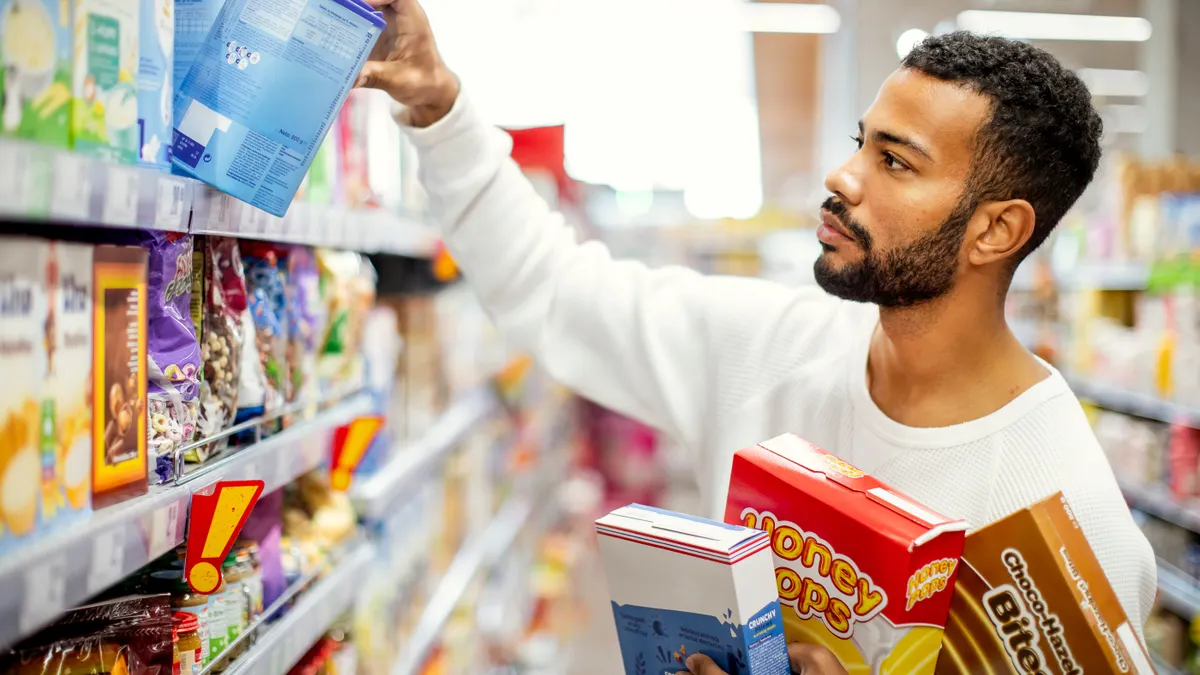
Consumer behavior — namely cautious spending amid economic uncertainty — also is highly influential. Consumers’ recent shifts to purchasing lower-priced products contributes to packaging companies’ flat to declining sales volumes with limited potential for a near-term turnaround, according to the report.
“We often see consumers going after larger pack sizes and items that might ... pack more for less volume of packaging,” said Daniel Nordigaarden, a partner at McKinsey who specializes in paper and packaging, during an interview.
The authors based their conclusions on market analysis, interviews with industry executives and a survey of more than 11,000 consumers globally.
Financial performance
The confluence of factors has resulted in weak demand and inflationary costs that contribute to decelerated growth and margins for packaging companies across all major substrates, according to the report. Overall, the packaging and paper industry delivered weak returns last year and still is underperforming the broader market index, the authors state.
Employee turnover at packaging companies has been high in recent years, including within C-suites, according to the report. A variety of considerations go into such transitions among top leadership, including tenure, said Abhinav Goel, partner at McKinsey.
“There is also M&A, which has taken place in the industry a lot in last 24 to 36 months, and which is also triggering a new infusion of leadership as companies think about how to best lead as a new, integrated company,” he said.
Striving for improvement in the current environment also is a major impetus, according to the authors.
“Given that we're moving into a new phase where finding growth is important in new pockets, new areas, etc., finding folks from inside or outside of the industry with a different perspective and that bring a new look on those opportunities — it's something that executive teams and boards are kind of willing to do at this point,” said Gregory Vainberg, senior partner at McKinsey who leads the global Paper, Forest Products & Packaging and Metals & Mining practices.
Sustainability shift
A key takeaway from the report is that consumers and CPG companies are viewing sustainability differently now than in years past, mostly due to economic and regulatory changes.
While sustainability is still important to consumers, in some cases it has taking a back seat to other considerations that have become a higher priority under current conditions, the authors found.
“It's not that people have forgotten about sustainability. It's just that it's not top of mind anymore. Pricing is taking over as the biggest thing top of mind for consumers,” Goel said.
McKinsey reported last year that consumers still put price and quality at the top of their list for characteristics that play a role in purchasing decisions. However, the growth in this space has outpaced other elements like sustainability and social impact as consumers grapple with inflation.
“More and more consumers are caring about price and quality in this environment than [during surveys] two years ago and five years ago,” Vainberg said. “The trend that we've seen over the three consumer surveys is that separation has become stronger.”
Environmental impact still lags price and quality
Based on interviews with more than 30 retailers, consumer packaged goods companies, distributors and packaging industry executives, McKinsey also identified barriers that are slowing sustainable packaging adoption. Six that stand out are: affordability, performance, lack of alignment on the meaning of sustainability, lack of clarity on regulatory standards, limited or unreliable supply, and incomplete knowledge of solutions.
Simultaneously, regulatory pressure is increasing for packaging sustainability, such as for recycled content mandates, labeling requirements and extended producer responsibility for packaging. This tracks with other industry participants’ and observers’ conclusions that packaging sustainability is undergoing a transition from being based on voluntary targets to being driven by regulation.
This movement is occurring globally, the authors said.
“Packaging regulations are implemented on different timelines and in different ways, but it's overall a trend,” Nordigaarden said.
Growth goals
Demand no longer is enough to pull packaging companies out of their underperformance, the authors said. Rather, leaders need to reshape portfolios, strengthen fundamentals and build capabilities required to compete in this lower-growth, higher-volatility scenario.
As the packaging industry undergoes a reset, the authors say companies should pay close attention to four elements key to value creation: commercial excellence, relentless cost focus, talent and leadership depth, and focused data and AI innovation.
“We believe there's an opportunity to make a real step change [in performance] in domains like commercial and procurement and operational excellence,” said Vainberg.
McKinsey anticipates only “tepid growth” for the next year or two and recommends packaging companies revisit their business strategies.
“In the current state of the market, you really need to have this kind of focus on where to play and how to win,” Nordigaarden said.