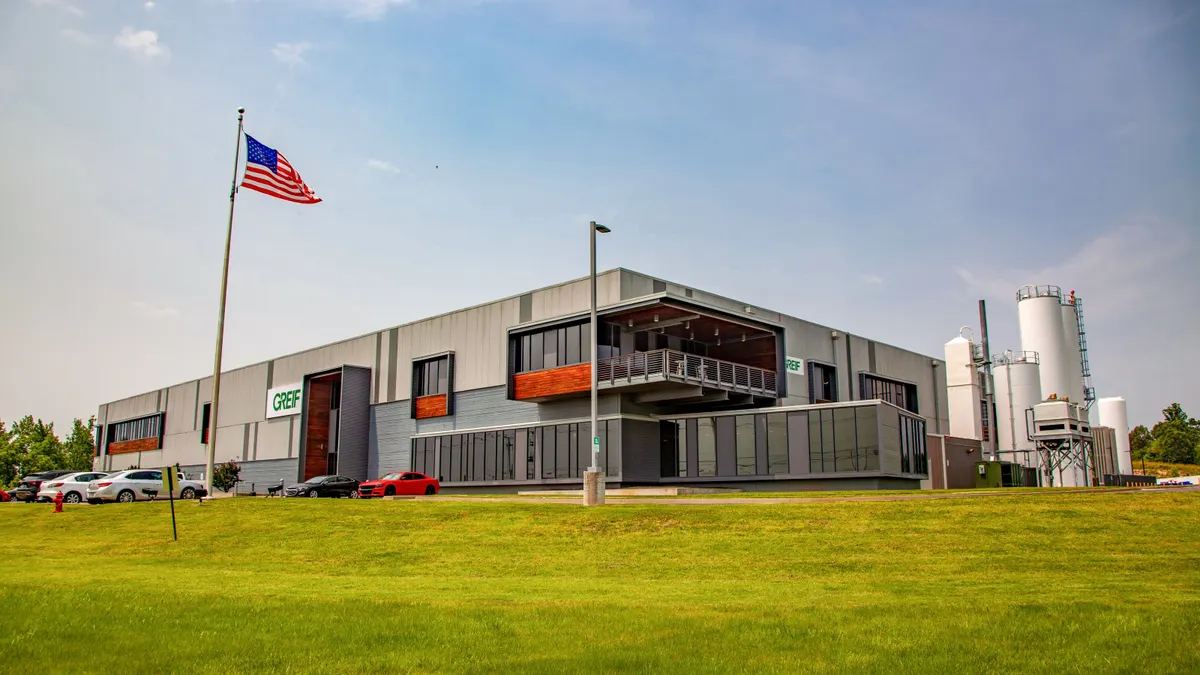
When Ole Rosgaard became CEO at Greif four years ago, he faced some attitudes of resistance to change regarding legacy business sectors. But amid an industrial recession environment and other challenges, Rosgaard and his team have executed multiple transformative changes to Greif’s structure and operations — and he has reasons for optimism in 2026.
“We will hit our targets this year. I have no doubt about it, we will beat last year,” Rosgaard said. “If we get a little bit of volume coming back, we will take off like a rocket. That excites me.”
But Greif isn’t going to sit around and wait for better times, Rosgaard said. The company is “doing what we can to grow the business.” That has included restructuring, divestitures, closures and layoffs over the last year-plus.
Notably, in December 2024 the Ohio-based company reorganized from two business units to four — Durable Metal Solutions, Customized Polymer Solutions, Sustainable Fiber Solutions and Innovative Closure Solutions.
It also launched a plan to cut $100 million in costs over three years. In September 2025 it completed the sale of its containerboard business to Packaging Corporation of America for $1.8 billion, and in October it completed the sale of its timberlands business to Molpus Woodlands Group for $462 million.
Last month, Greif reported $994.8 million in net sales for the first quarter of its fiscal year. This was down 2.2% due to broader economic conditions.
Amid all the business and operational changes, Rosgaard said he strives to keep employees at the center of strategic decisions.
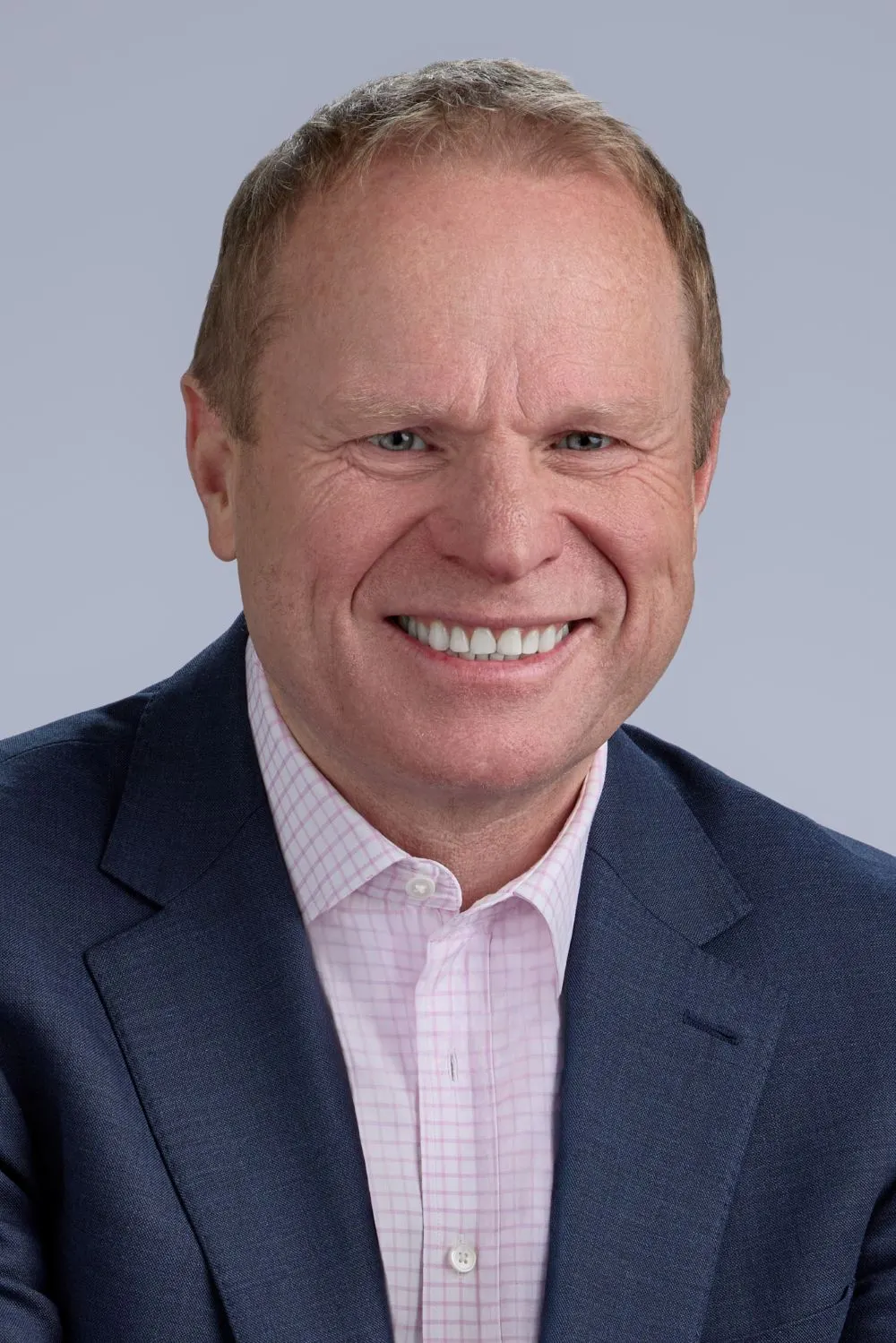
“Our first focus is on our people,” he said. “We just happen to make things and we're running a business, but the business is all about people.”
Rosgaard has been with Greif since 2015, following a career at other manufacturing companies. During a discussion with Packaging Dive, he detailed recent changes at Greif and his outlook for 2026.
This interview has been edited for clarity and length.
PACKAGING DIVE: Could you give more details about the strategy behind Greif streamlining in 2025 by divesting business units?
OLE ROSGAARD: If I zoom out and look at the legacy business, there has been in the past a lot of, “Well, we’ve always done this,” and, “We’ve always owned the timberland, we can’t possibly sell it.”
My job is to create value. We have created a goal that we want to double the market cap of Greif, and double the share price, too. When you do that, you need to look at the business very holistically to create value.
We have no need for timberlands, but it's just been sitting there for a long, long time. If you look at it realistically, the timberland generated about $9 million EBITDA a year. If we took the proceeds from a sale and applied that to our debts, we would save $18 million in interest. That's how I look at it.
We don’t want to be a conglomerate. We are a packaging company that operates in the premium packaging space. So I went to the board on that and explained this to them, and then very quickly got their approval to start a process to sell it.
On the containerboard, we have been doing that for many, many years, and we have been pigeonholed as a paper company by many of the analysts that follow us. And paper companies come with lower multiples. That was part of the problem, and I didn’t like that. I've been trying to explain to our investors that we're not a paper company. Yeah, we do paper, but we do so many other things than a paper company.
We want to be number one or number two in everything we do. In paperboard, that wasn't the case.
You have some fairly large containerboard companies out there that we compete with, and our role in this space has been to service the independent box makers. But over time, the larger containerboard companies have been buying up the independent companies. This is not an overnight thing, but we could see a pattern emerging. And we were convinced that over the next five, seven years, our customer base would just keep shrinking.
And our mills were aging, and we knew that over the next five to 10 years we would need to invest over a billion dollars in upgrading our mill system. So being the number seven or eight player in a specific market like containerboard, and operating in a market that's also shrinking, and then knowing that we have to invest a billion dollars in the future, it didn't add up to me.
Our portfolio is now really, really focused on the type of rigid packaging we want to do.
How are you doing on progress toward the goal to double those metrics?
It's going really well.
Part of that is, obviously, to focus on our portfolio and grow organically. You can’t grow just by doing M&A. A part of it is deploying capital for organic growth, which is the cornerstone of achieving the targets of doubling the value.
We have taken a significant amount of cost out of the business. We have reduced our professional workforce by about 10% — basically taking the whole management layer out. We started a few years back a Lean Six Sigma program. We’re optimizing sourcing.
All of that, we complement with M&A. But it’s not focused on transformative M&A, it’s focused on targeted M&A that complements organic growth.
Finally, we’re looking at what sort of profile we want to have for investors. We are targeting first the value investor, and eventually we want to really be attractive to a GARP investor. We believe that's our space. We pay very healthy dividends. And on top of that, with our healthy cash flow conversion and the strategy I outlined, I believe we will fit very well into that space.
Greif executives had previously discussed their desire with the restructured, four-segment organization to harness opportunities across units and break down silos going to market. Has that integrated approach materialized so far?
We still operate in a recessionary environment, and we've been in that for three years now. Part of the resilience that you have seen, that we have in this environment, is a big part of that reorganization.
Previously, we operated in strategic business units that were more or less standalone. They had their own sales force, their own management and so on. We've scrapped all that. We have strategic business units now that's led by a leader for each one. The SBUs we have now have been formed based on manufacturing technologies, not on regions like there were in the past.
If you are responsible for a region that makes all products, then you are kind of going a mile wide and an inch deep. But when you are now responsible for a global SBU that makes products based on a certain manufacturing technology — it could be closures, for instance — then you can go very, very deep and get to be really good at what you do. Those leaders that run those SBUs are primarily focused on manufacturing and operations, not sales. They only spend 10% of their time working with our sales teams.
We have extracted all our commercial people out of our SBUs and created a commercial function that is headed by a chief commercial officer, and they sell all our products. The way it was before, you would have a salesperson going to see a customer in the morning from Greif selling a specific product, and in the afternoon another salesperson would come to see the same customer selling another product. It's ridiculous, right? Now it's the same salesperson that comes to sell the whole portfolio, and that creates upsales and creates new opportunities.
You spoke today and on recent earnings calls about operating in a recessionary environment. Do you anticipate relief in 2026?
It's not just the United States. Europe is also very, very soft, and APAC and LatAm.
I'm not an economist, but I speak to a lot of economists. Every year we've been in this sort of recessionary environment, they always say, “Oh, next year, the first half will be tough, but then in the second half we will have recovery.” I've heard that for the last two-and-a-half years now, so I don't believe it anymore. And I don't see any signs that things are getting better.
Well, things are getting better, but it's just a very little bit better. So we believe that the environment we operate in now will continue for the rest of this calendar year. And that's why we're doing all the things we're doing: taking costs out and going from good to great.
If we see interest rates coming down again this year, eventually you'll see lower mortgage rates. And that will have a huge effect, because a lot of the stuff that is being sold in the packaging we make is related to the construction industry and to housing sales. Once the interest rate goes down, I think people will start using their credit cards a bit more, and you'll see some growth starting to come back. But it's not happening overnight.
Some companies try to do immediate responses to all the economic and geopolitical changes we’ve seen. Do you think it’s more beneficial for Greif to stick with a longer-term strategy or to respond with shorter-term strategies?
We have never done anything short term. We've been in business for 148 years. We've been through two world wars, countless recessions, pandemics and so on. Our main shareholders like us to do things that are long term. Our entire strategy is long term to create the platform to be in business for another 148 years.
I read the news, and I can see some of the big chemical companies out there now going into transformation mode. They're hiring consultants to reduce their workforce and so on. We started all that a year and a half ago in anticipation, because we didn't want to sit and wait for things to be better.
We will continue to make long-term decisions for the benefit of our company. That means that there may be a quarter where things go down a little bit, but we will stay with our strategy. We will stay with doing things in a long-term way, and focusing on our people.
You often reference Greif employees’ hard work, and your gratitude for them, even during difficult times. But morale and culture can take a hit during periods of change. Are you doing anything to mitigate that negative impact?
We are winning awards for our employee engagement in the company. But going through something like we've been through — taking costs out and taking 10% of our professional workforce out — that's hard when you are focusing on people.
But we’re running a business. It's a bit like a football team where you have one player you need to take out, but you're doing it to win. And you’re thinking of the broader team all the time. So I always think about the team, and the people we have taken out. We have done that with extreme respect. That's how we approach this.
The other element is, we are spending a lot of time internally explaining and communicating the “why.” Why are we now taking out 10% of our professional workforce? Why are we doing all these things?
You don't do this in secrecy. It's not easy; it's hard, it's uncomfortable. But you’ve got to face it head on as a leader.
We’ve talked about a lot of difficult things, but what are you most excited about in 2026?
I'm most excited about all the possibilities we have in front of us. We've been sort of gearing up this business like it's fine tuned. It's like a Ferrari: It's like you can hear the engine spinning.
The last four weeks, I've been traveling to plants in the U.S., in Africa and in Europe. And everywhere I go, I see the same: People are really focused, working hard on exactly the same things. What I really enjoy is seeing that they're not flying off in all different directions, regardless of where they are in the world.
This is our strategy. This is what we work on. I enjoy seeing that engagement; it's just wonderful.