Dive Brief:
- Sens. Maggie Hassan, D-N.H., and Tommy Tuberville, R-Ala., reintroduced a bill that would prohibit manufacturers from intentionally adding PFAS to food packaging. This follows the July introduction of a similar bill in the House by Rep. Debbie Dingell, D-Mich.
- If passed, the Senate bill would amend the federal Food, Drug, and Cosmetic Act, and the PFAS ban would take effect Jan. 1, 2028.
- In 2021, Hassan first introduced the Keep Food Containers Safe from PFAS Act. The following year, it stalled after passing in the Senate Committee on Health Education Labor and Pensions as an amendment to the FDA Safety and Landmark Advancements Act of 2022.
Dive Insight:
Per- and polyfluoroalkyl substances have been used in the United States for more than 80 years. But according to the U.S. Food and Drug Administration, the scientific understanding and technical instrumentation needed to test for these “forever chemicals” at very low concentrations didn’t come into play until 2012.
Discussions about PFAS have intensified since then, especially in the last five years. When used in packaging, PFAS are widely known to be effective at resisting grease, oil, heat and water, and they had been used significantly in fiber-based fast food wrappers and containers.
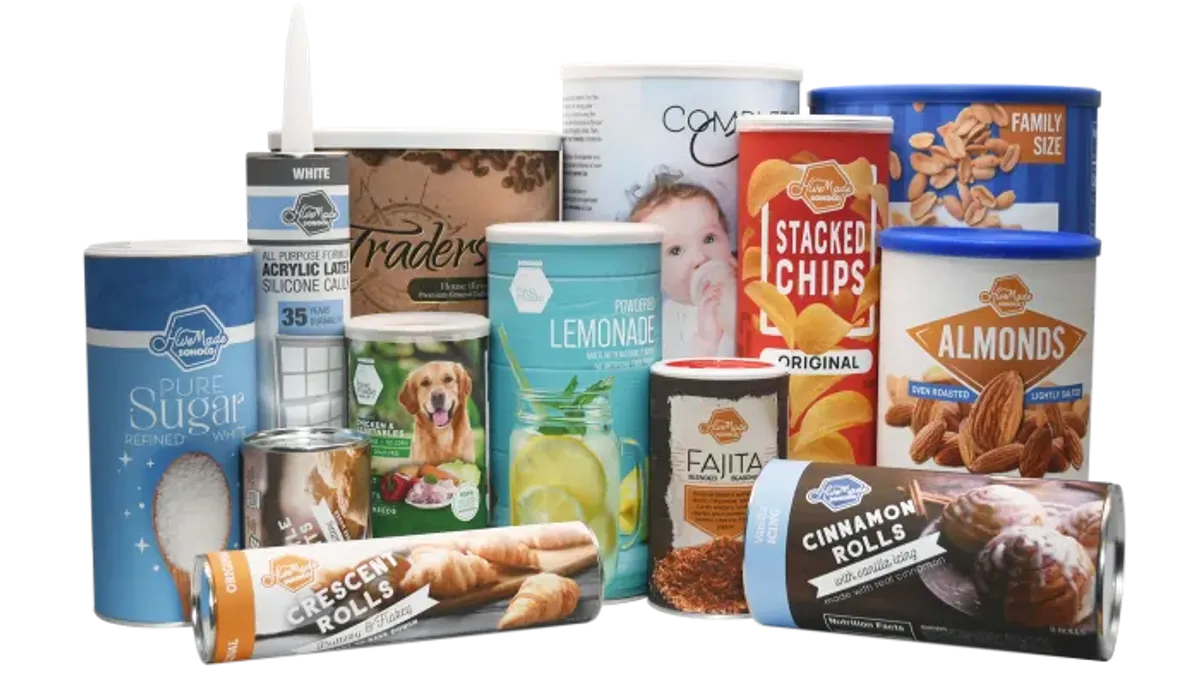
But as these chemicals increasingly raise public ire, a plethora of packaging companies have voluntarily phased out their use of PFAS and are instead developing alternatives. Various restaurants including Burger King, McDonald’s and Starbucks similarly voluntarily committed to phasing out PFAS. The chemicals also have come under scrutiny in food packaging such as for microwave popcorn and pet food.
No federal restrictions on PFAS in food packaging currently exist, but more than a dozen states have passed their own such bans. States including California, Colorado, Maine and Washington already have begun phasing in these packaging restrictions, while Maryland, Massachusetts and New Mexico are among those where regulations will take effect in the next couple years.
In 2024, the FDA announced that PFAS-containing grease-proofing substances used on paper-based food packaging are no longer being sold by manufacturers for food contact in the U.S. market. And last year the agency announced that nearly three dozen food-contact notifications regarding PFAS are no longer effective, mainly due to chemical manufacturers ceasing their production of those products.
However, the FDA has not imposed a federal ban on PFAS in food packaging. And in June, the agency denied a citizen petition that sought regulatory limits for PFAS in certain foods. Around that time, though, FDA said it’s working to establish acceptable levels for PFAS in bottled water. Proponents of the new Senate bill cite the FDA’s lack of movement on federal PFAS regulation as a key reason for advancing this legislation in Congress.
The bill would “quickly eliminate an avoidable source of PFAS exposure after years of FDA inaction,” Melanie Benesh, vice president of government affairs at Environmental Working Group, told Packaging Dive via email. “Now is the time to finish the job and protect all Americans from these chemicals, some of which have been linked to cancer, developmental issues, reproductive harm and other health problems."
Hassan has also done other work to address PFAS. In August, she hosted a meeting to discuss PFAS topics amid the Trump administration’s work to roll back certain PFAS regulations. In May, the U.S. EPA said that it would formally rescind Safe Drinking Water Act regulations for four types of PFAS that were set under the Biden administration.
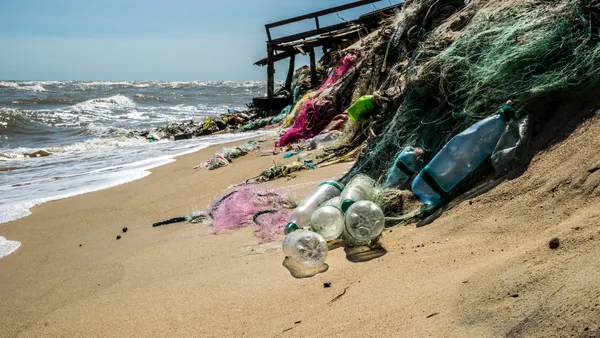
Also on the packaging legislation front, last week a team of senators jointly reintroduced the Banning Toxics from Plastic Bottles Act. It would prohibit the sale of plastic beverage containers that contain PFAS and other toxic substances. In June, the No Toxics in Food Packaging Act was introduced in the House, seeking to ban chemicals including PFAS, ortho-phthalates and BPA from food packaging and food processing materials.
Later this week, the Senate will begin a recess that is scheduled to last through the midterm elections in November. The House has already adjourned until after the midterms. This session of Congress ends on Jan. 3.