Capping off several years of notable company changes such as restructurings, M&A and executive departures, Sonoco announced this week that CEO Howard Coker would retire at the end of the year. Coker and his successor dug into what prompted a lot of the changes and what’s next, during a Tuesday discussion at the Baird Industrial Conference.
“I'm particularly proud to have led Sonoco through a defining period of transformation,” said Coker. “We have reshaped Sonoco into a more focused, resilient enterprise.”
Coker said he had worked with the board on a succession plan over the last couple years, and the board recently approved elevating President of Consumer Packaging Ernest Haynes to CEO as of Jan. 1.
“This leadership transition represents continuity, not change, in Sonoco's strategic direction and core values,” Haynes said. “We are certainly inheriting a strong foundation that positions us well for the future.”
Top role transition
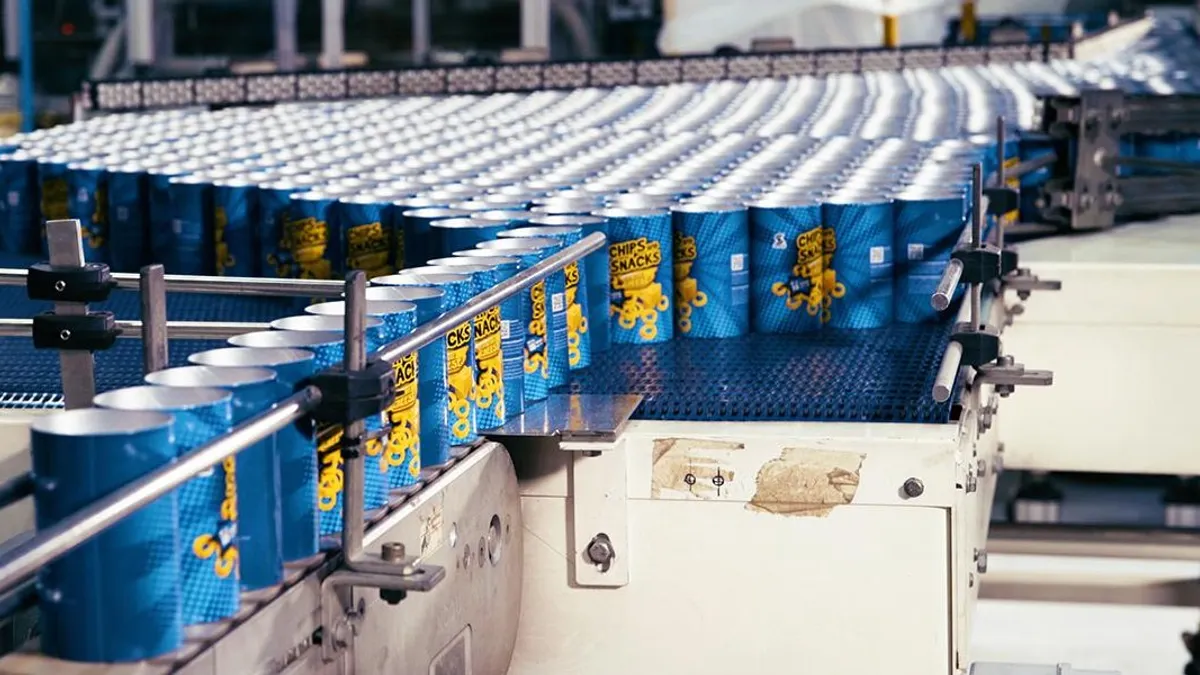
Upon becoming CEO in 2020, Coker recognized that Sonoco had two particularly “terrific franchises” for which it is the largest global producer: uncoated recycled paperboard and paper canisters.
He reports these solid businesses held opportunity. But at the same time, “we spent too much time looking out the window as opposed to looking in the mirror,” Coker said. “What I meant by that was just because there's another market over there that seems to be growing, do we have a right to serve that market? Do we have a right to win? Do we have a right to develop a position?”
Those thoughts prompted him to develop a strategy that kept focus on what appeared to be working while also driving a vast amount of change within the company.
Sonoco acquired Ball Metalpack in 2022. In February 2024, the company switched up its business units, creating four core businesses: metal packaging, rigid paper containers, industrial packaging and the then-newly combined flexibles and thermoforming unit. Later in 2024, it acquired European metal packaging company Eviosys.
In 2025, Sonoco divested its flex-therm business and its temperature-assured packaging business. Last year also brought various leadership departures and a new CFO.
Haynes was announced as president of the Americas consumer packaging segment in November 2025 during another restructuring that brought together metal packaging and rigid paper containers; a counterpart was also named for a similar consumer packaging division in Europe. In August, Haynes was appointed president of global consumer packaging amid a restructuring that merged consumer packaging’s two geographical divisions.
Coker reports pride in growing annual revenue from approximately $5 billion to roughly $7.5 billion. Despite all the company changes, “how we've managed to maintain the culture has just been probably one of the more prouder things that I can pass on to our team,” he said.
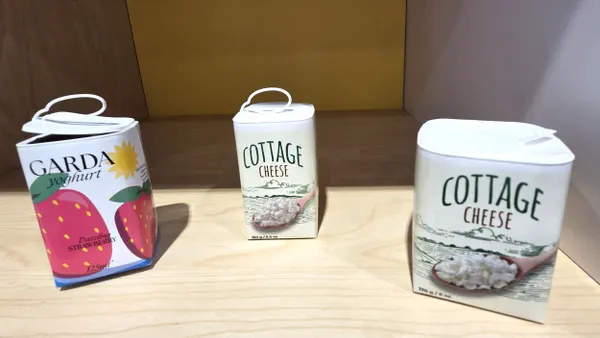
Haynes’ experience at the company spans consumer and industrial in both paper and metal. He said the company’s focus on innovation will drive growth going forward. That’s especially true for the paper cans business, he said, noting desires to further beef up that presence in global markets including Europe and South America. There’s also room for growth in the metals business.
“We have a rock-solid foundation. We have terrific assets around the globe,” Haynes said. “Our ability to accelerate execution will be really important over the next two years, and that's an incredibly big part of what my focus will be.”
Virginia mill investment
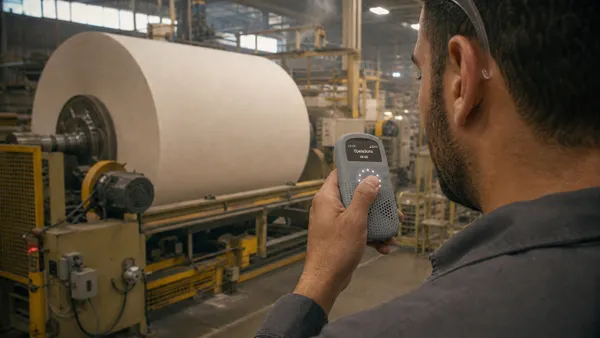
Last week, Sonoco announced a $40 million investment to modernize its Richmond, Virginia, URB mill. That move is tied to strong demand and mill utilization rates “running in the mid-90% range,” Coker said.
Construction is slated to begin early next year and will occur in phases, with the second phase scheduled to end in late 2028. Minimal disruption is expected during construction, so the mill should maintain its 120,000-ton annual production throughout. The project will result in 9,000 tons of additional annual capacity.
The URB produced in Richmond will support end markets experiencing strong demand, including reels on the industrial side and paper cans on the consumer side. While URB is a “tough grade to manage with all of the SKUs, etc.,” Coker said, “this investment reflects our confidence in the future of the market.”
Navigating the near term
Haynes reports excitement about taking over as CEO and inheriting “22,500 folks who are entirely focused on driving profitability of the company.” However, he also sees some difficulties in the near term.
“[What] I'm inheriting is a macroeconomic environment that is incredibly challenging. What we do not expect is that to change, and so our ability to be a nimble partner for our customers and to go forward will be a part of my strategy,” Haynes said.
CFO Paul Joachimczyk reiterated a theme from the company’s Oct. 23 earnings call: The consumer packaging segment didn’t meet expectations. Volume and mix was down 3% year over year.
Conversely, he highlighted productivity gains that occurred in the third quarter despite difficult external conditions: “North America URB trade sales increased 10% year over year, and mill utilization remains strong at 94%.” URB price increase realization in September is helping the company recover higher input costs.
The company will work to maintain and expand gains on the industrial side, even though innovations in that sector are “not sexy, but they sure make a difference to the market and our customers,” Coker said.