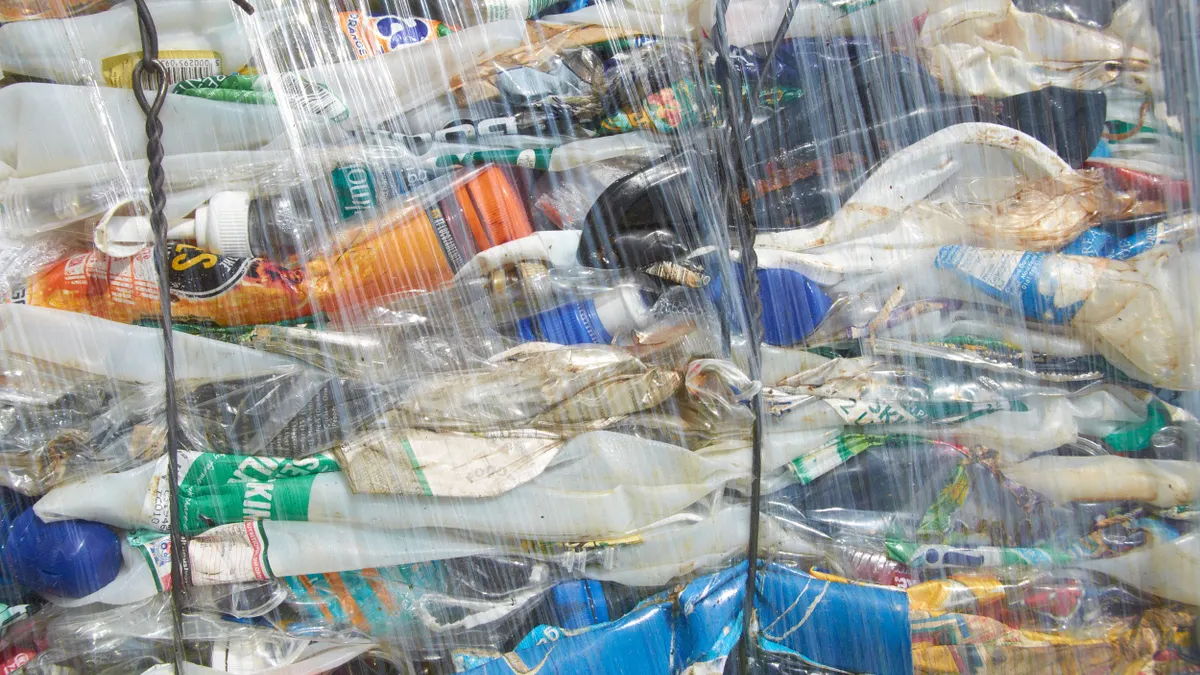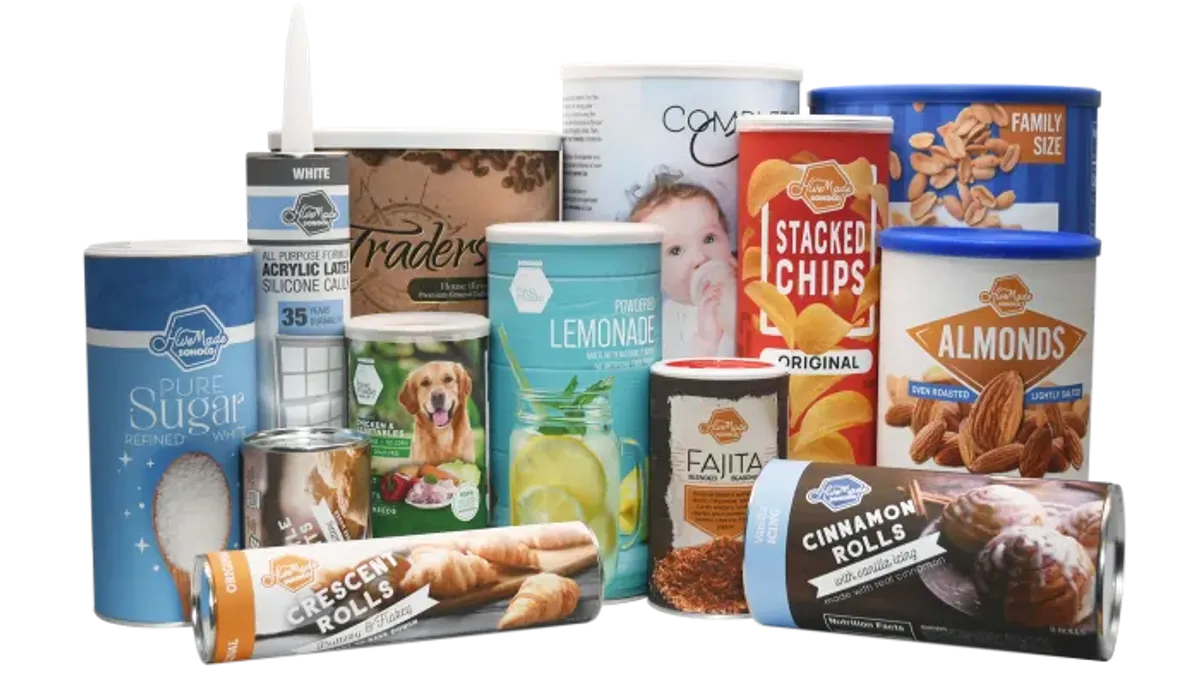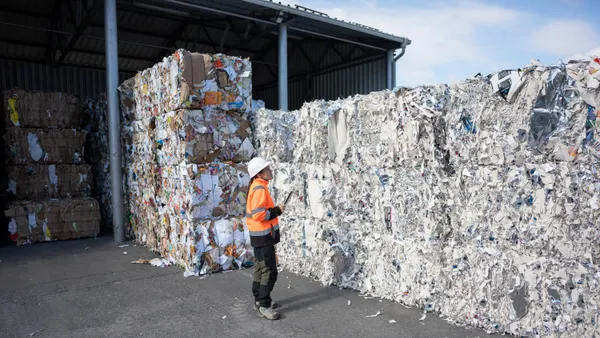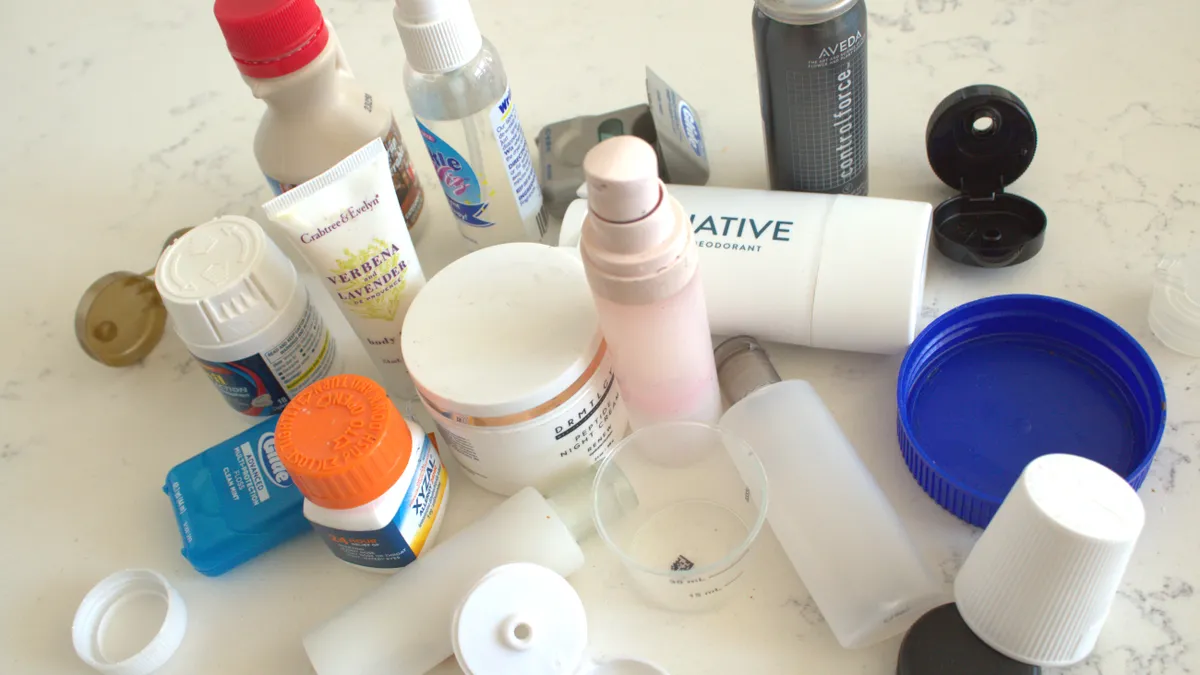
ROSEMONT, Ill. — Small-format packaging proponents are getting a sustainability win: Pilot projects are demonstrating how to sort these items at MRFs for recycling rather than sending them to disposal. In some cases, all it takes is reconfiguring existing equipment, according to speakers at the Packaging Recycling Summit on June 15.
Closed Loop Partners’ Center for the Circular Economy announced in June that its Smalls Consortium was moving to the next phase of efforts to recover small-format packaging. The focus is to field test at recycling facilities in California, where implementation of the state’s extended producer responsibility for packaging law, SB 54, is under way. The group is working with brands including L'Oréal, Kraft Heinz and CVS Health, as well as producer responsibility organization Circular Action Alliance, to make recycling of small-format packaging viable.
“I'm optimistic. And I think we'll learn a lot over the coming year in terms of how this all stitches together,” Sarah Pamplona Santos, senior project director at Closed Loop Partners, said during the session.
The problem
How to handle small packaging at end of life has long vexed brands and MRF operators, because the items have been considered too tiny for equipment to effectively capture. Thus, these items generally are not accepted in residential recycling programs, although some consumers still include the items in their bins.
“We're using billions of units of small-format packaging in the U.S., and a fraction of them are wishcycled,” said Pamplona Santos. “Most of it we're removing and sending directly to landfills.”
When small-format packaging enters a MRF, the first piece of equipment it encounters is the trommel, or glass breaker, speakers said. When small pieces of broken glass pass through the rotating metal discs, small-format packaging rides along as a contaminant.

While the Association of Plastic Recyclers defines small format as packaging under two inches in two dimensions, items larger than that cause issues, too. For example, products such as deodorant sticks or polypropylene tub lids, which could be three inches or more, ideally should end up in the container line but often don’t. The industry colloquially refers to these items as “medium smalls” or “large smalls,” according to Pamplona Santos.
Work on small packaging is needed not just to capture a commodity that otherwise is sent to disposal, but also to clean up the glass stream, explained Scott DeFife, president of the Glass Packaging Institute. He mentioned a discussion with a California MRF operator indicating smalls contribute to contamination in the glass stream that can exceed 50%.
In addition, smalls “became a much more urgent issue” when California passed SB 54, because small-format packaging was part of its own category, DeFife said. He also noted work in Colorado, another packaging EPR state, to reduce the number of times disposed residuals are transported.
“The more you move it, the more expensive it is going to be for the entire system. So there's a benefit to the recovery of the small packaging ... but it also benefits the system in having more efficient cleanup and less cost of transportation and disposal for the PROs,” DeFife said.
The solutions
The equipment being tested to capture small-format packaging is “not super technical rocket science,” DeFife said, pointing to typical MRF trommel screens and vacuum systems. Rather, the pilot partners have reconfigured where each component is positioned along the line.
“The equipment exists to do it. I would say almost any MRF can do it. The larger ones probably have the volume to make those investments on their own,” DeFife said. “It just hasn't necessarily been deployed.”
He described how Baltimore had a significant glass contamination problem, so a GPI member used “some extra equipment that they had left over from from their primary glass processing in Baltimore” to create what they referred to as a “pre-clean facility.” That took the incoming stream from a 50-50 blend to a 90-10 blend of recovered material versus contamination.
While speakers noted that recyclers also are adding smaller screens at certain facilities, there’s a limit to how much they can shrink the size before preventing glass pieces from making it through.
The next step is to secure end markets and offtake agreements to ensure the collected material is recycled and used. An initiative from Closed Loop Partners’ Smalls Consortium over the last 15 months has worked to identify ideal MRF equipment for capturing these items, while also engaging reclaimers to establish end market demand.
It’s not enough “if we can sort it and then it sits in a pile,” Pamplona Santos said. “It really needs to move through the system and be pulled through.”
She also noted that additional work is still needed in the field to smooth out certain aspects of small-format packaging recycling, such as shipping and handling.
“Unlike your HDPE jugs or your PET bottles, small format packaging doesn't bale in the same way,” said Pamplona Santos. “Then you're really looking for alternate modes of being able to handle that, whether that be super sacks or gaylords or things of that nature, which have additional costs to be able to process and move.”
She hopes that in less than three years, the partners will achieve success in real-world small-format packaging recovery and recycling in at least one key end market in California. The partners also want to capture and use more data to answer questions about tonnage recovered, postconsumer recycled content generated, carbon emissions avoided and other metrics. That data can be used across the state to further scale such systems.
“In a future state where we are able to actually sort, sell, process this material, being able to have conversations in communities with customers and people using this packaging to get it out of landfill and into a stream where it can be processed, it will be transformative,” said Pamplona Santos.