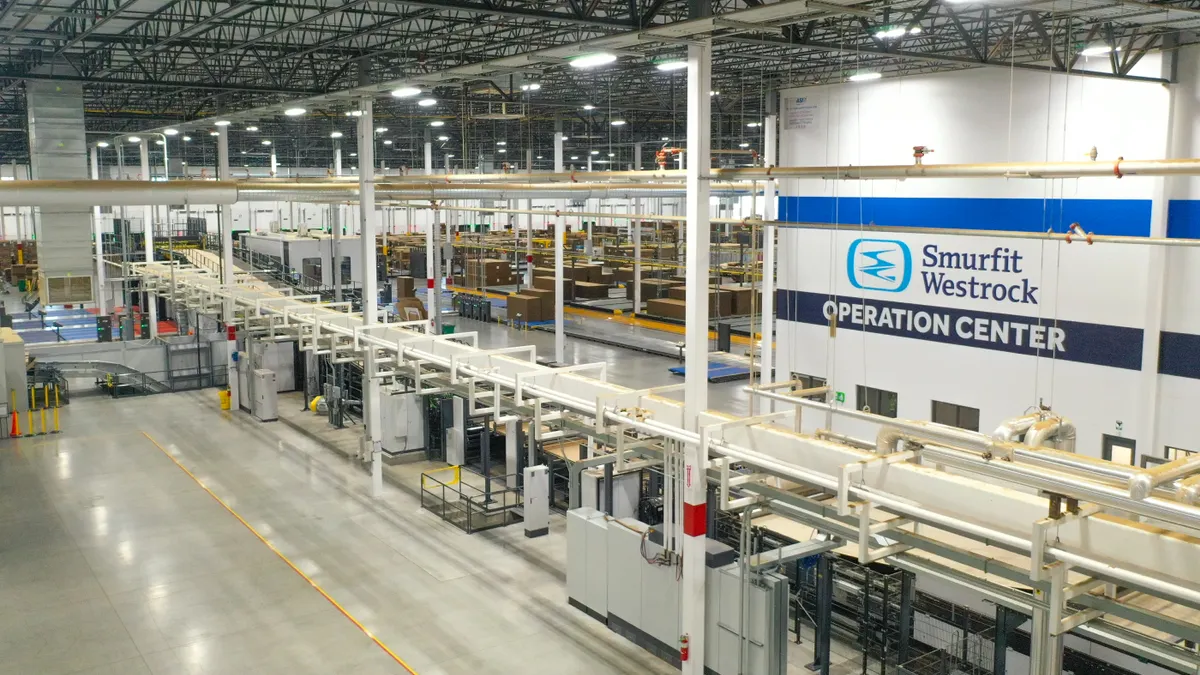
“Super” is an adjective that gets thrown around casually in modern society, but Smurfit Westrock's leadership believes it’s a suitable label for its year-old, large-scale corrugated box manufacturing plant in Pleasant Prairie, Wisconsin.
It was the first facility that top management colloquially called a “superplant” during a groundbreaking in June 2024 under WestRock, which months later became Smurfit Westrock. Now the box plant is among an elite few in the company’s network that bear the descriptor. Such hubs are designed to serve key regions of high demand and volume, in lieu of having multiple nearby plants. For instance, SW closed a legacy plant in nearby North Chicago, Illinois, around the time the superplant opened.
So what specific qualities define a superplant? The designation signifies scale, a high level of advanced automation and the capability to meet all of a complex market's corrugated needs.
The $136 million, 595,000-square-foot Wisconsin facility produces approximately 3 billion square feet of corrugated boxes annually, “which is about three times a typical corrugated box plant today,” said Don Sparaco, Smurfit Westrock president of corrugated packaging for North America. The plant was completed in April 2025, and production began the following month; product lines include pre-print, white top, recycled board, kraft, high performance liners, wet strength and food packaging. Up to 200 people now work there.
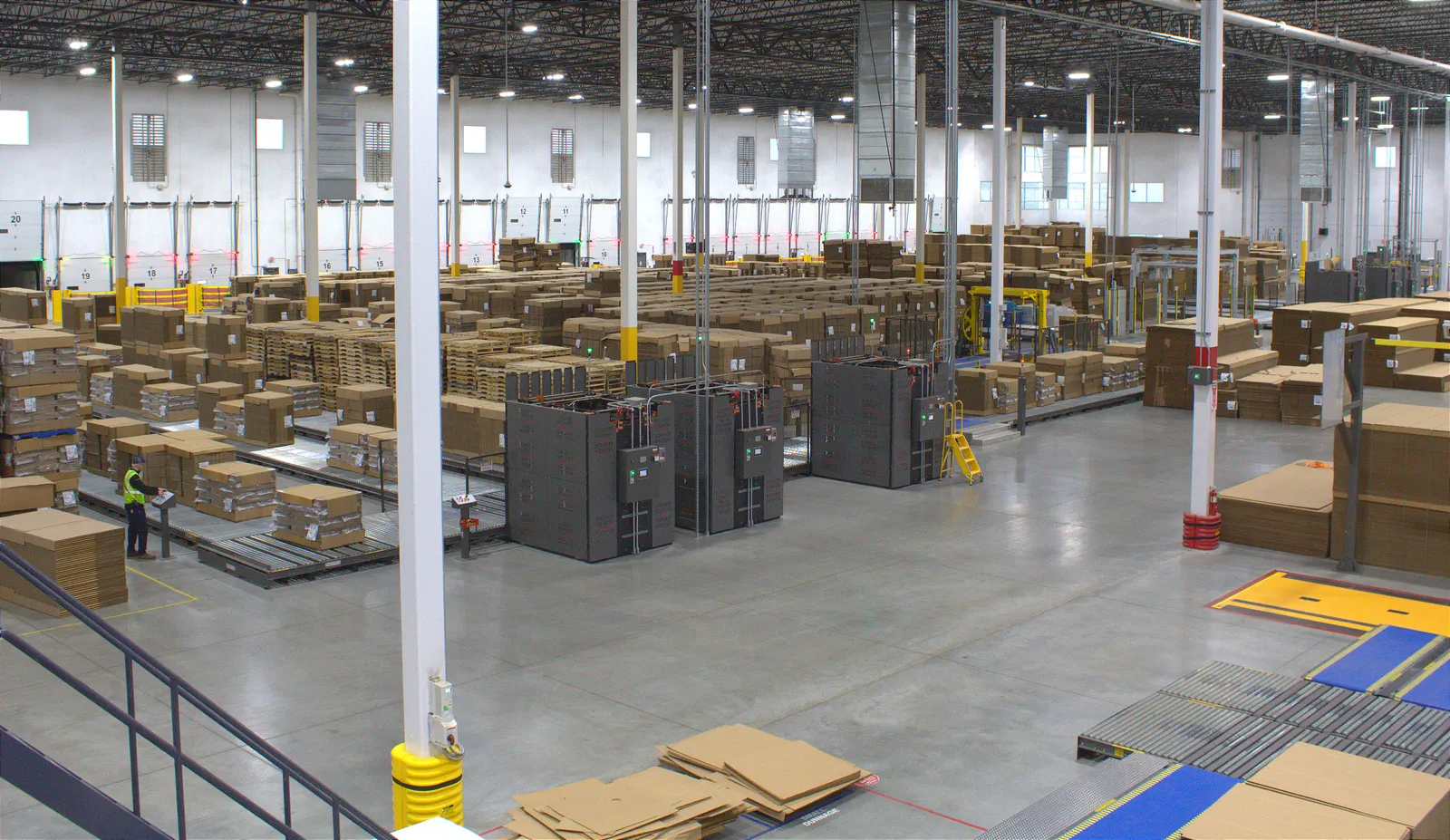
The plant manufactures a variety of boxes to satisfy the growing demand in the Great Lakes market. These include mid-sized slotted cartons like moving boxes, rotary die-cut boxes like those for pizza, jumbo boxes for industrial use such as with chemicals and produce, and small options for healthcare and beauty.
Location is a key attribute this plant has going for it.
Pleasant Prairie's pastoral name contrasts with the industrial boom the village has experienced during the last 15 years as major companies create and expand their campuses along Interstate 94. The village is home to Uline's corporate headquarters, Amazon has an ever-growing footprint there, and confectioner Haribo placed its first U.S. manufacturing facility in Pleasant Prairie in 2023.
Around the same time as the plant groundbreaking in 2024, the Wisconsin Department of Transportation granted the village $885,000 for a project to develop a rail spur to connect the box plant site with the Union Pacific mainline. Smurfit Westrock uses this rail access for inbound shipments of raw materials such as paper and starch. WisDOT also noted the investment’s capability to attract other businesses with rail needs to the area.
The box plant is strategically positioned along the Wisconsin-Illinois border to serve the greater Chicago area, which is considered one of the top regions in the United States for corrugated box consumption — second only to the greater Los Angeles area.
This consumption is driven in part by Chicago being the nation's food and beverage manufacturing capital, home to giants including Conagra, Kraft Heinz and Mondelēz International. Chicago is also one of North America’s main transportation hubs and the largest and busiest freight rail hub in the U.S., handling an estimated one in four of the nation’s freight trains daily.
In short, an enormous proportion of America's consumer goods and raw materials travel through Chicago — and they tend to do so in corrugated boxes.
“It was certainly one area that we’ve had on our radar to modernize our assets, to optimize our footprint and to serve existing as well as new customers,” Sparaco said. “Investing in the Great Lakes area was the right thing to do.”
Pleasant Prairie is one of only two facilities in North America that Smurfit Westrock refers to as a superplant, with the other in Longview, Washington. The latter opened in November 2023, and Smurfit Westrock incorporated dozens of best practices learned there when developing Pleasant Prairie.
“A lot of them have to do with the engineering and the flow of the material through the plant,” Sparaco said. “Every time we do a modernization or an expansion or a greenfield plant, we make sure that we document all of those learnings.”
Automatic pilot
The level of automation at the plant allows Smurfit Westrock to use less labor in operations than at traditional box plants while improving safety and consistency.
“A facility engineered like we have here in Pleasant Prairie uses about 60% of the labor that a traditional box plant would use because of that automation,” Sparaco said.
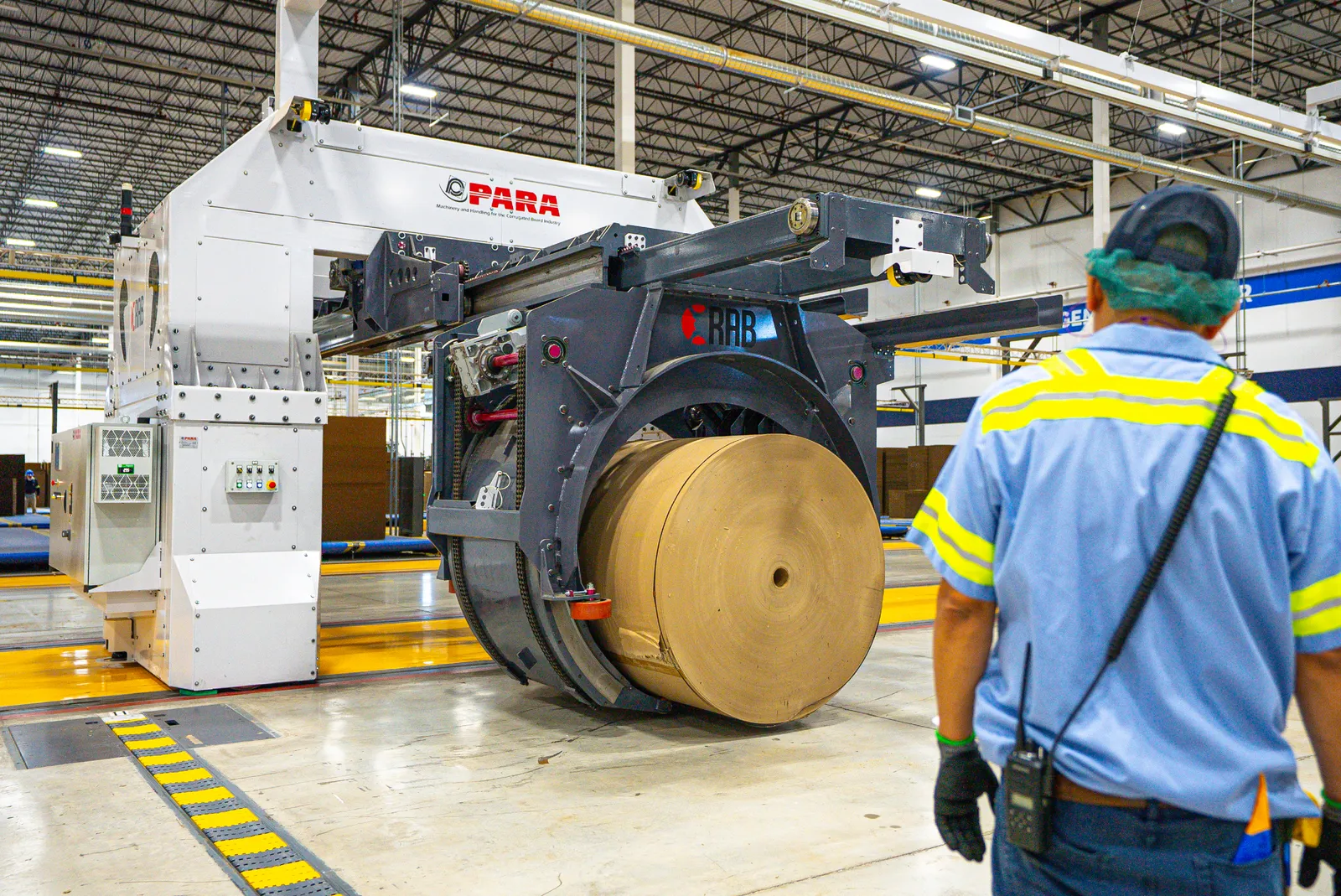
One of the prominently visible examples of modern equipment is the Para Crab roll stock delivery system. The floor-mounted system picks rolls and transports them from storage to the single facer without human interaction. It operates on standard floor tracks to allow for manual delivery during equipment maintenance downtime.
The space requirements for Para Crab mean it isn't suitable for every plant. However, where possible, “every time we modernize or conveyorize a facility now, we add that technology,” Sparaco said. The machinery's precision helps to cut down on damage to paper rolls caused by human error.
The 132-inch wide BHS corrugator is about 80% automated, said Eugenia Rivero Loyola, senior manager of financial planning and analysis. The system produces corrugated at high speeds while monitoring processes and control functions, including for temperature, steam and tension.
The "zero defect" system for quality control automatically kicks out defective products in real time. Issues worthy of ejection include folds, splices or bonding deficiencies with the corrugated.
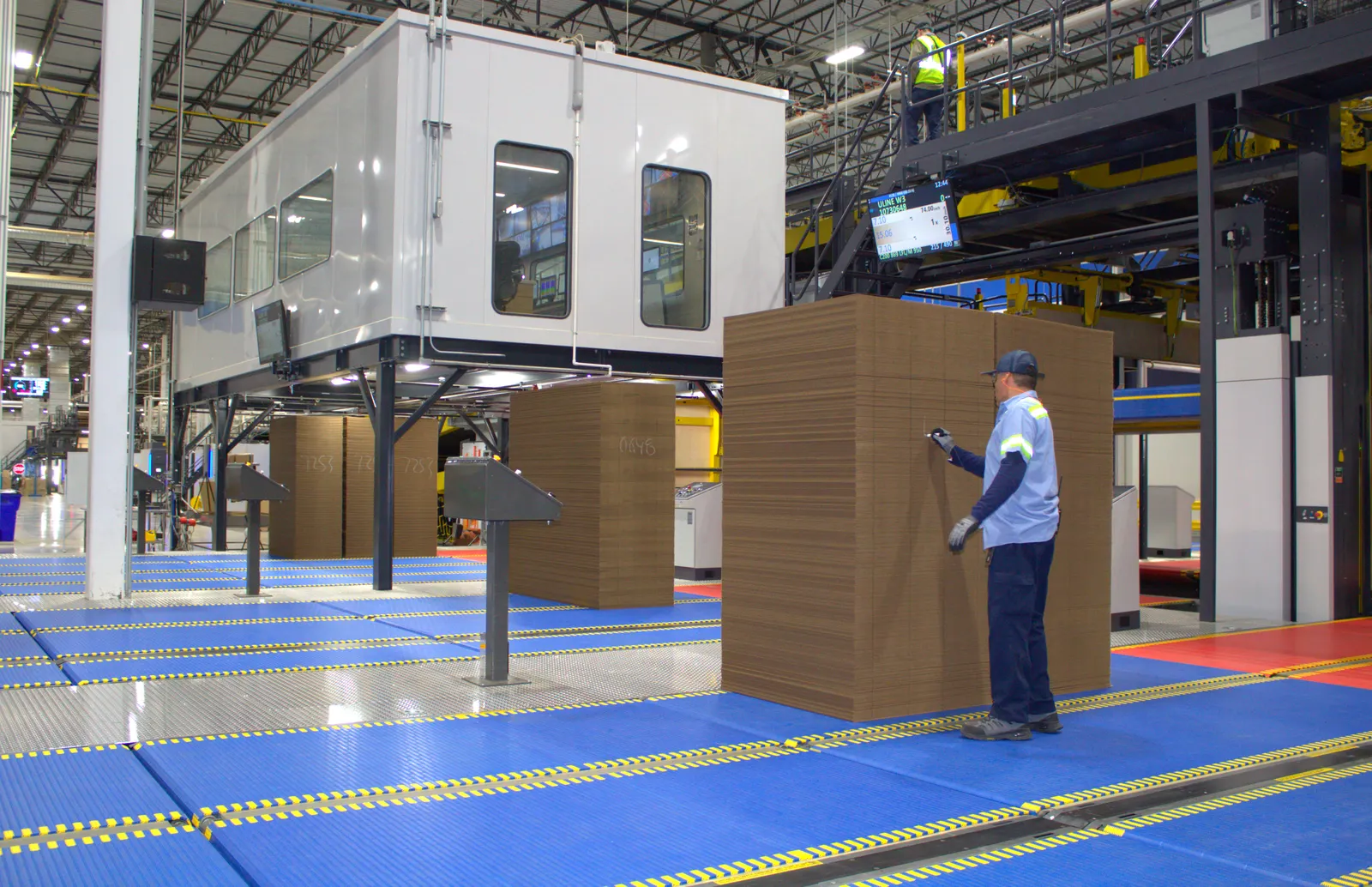
Employees oversee operations from an elevated, monitor-filled control room that overlooks the corrugator. The automation simplifies operators' jobs and the ability to get ahead of any issues, Rivero Loyola explained. It alerts operators if conditions fall outside of set parameters at various points on the line faster than a human on the floor could spot potential problems and radio details back to the control room.
“Let's say that you're running something successfully, but on the rest of the back end you're starting to see warp. They can actually click a check mark and make the paper look like the one that you liked,” she said. “It's a very cool adjustment of tension and warp.”
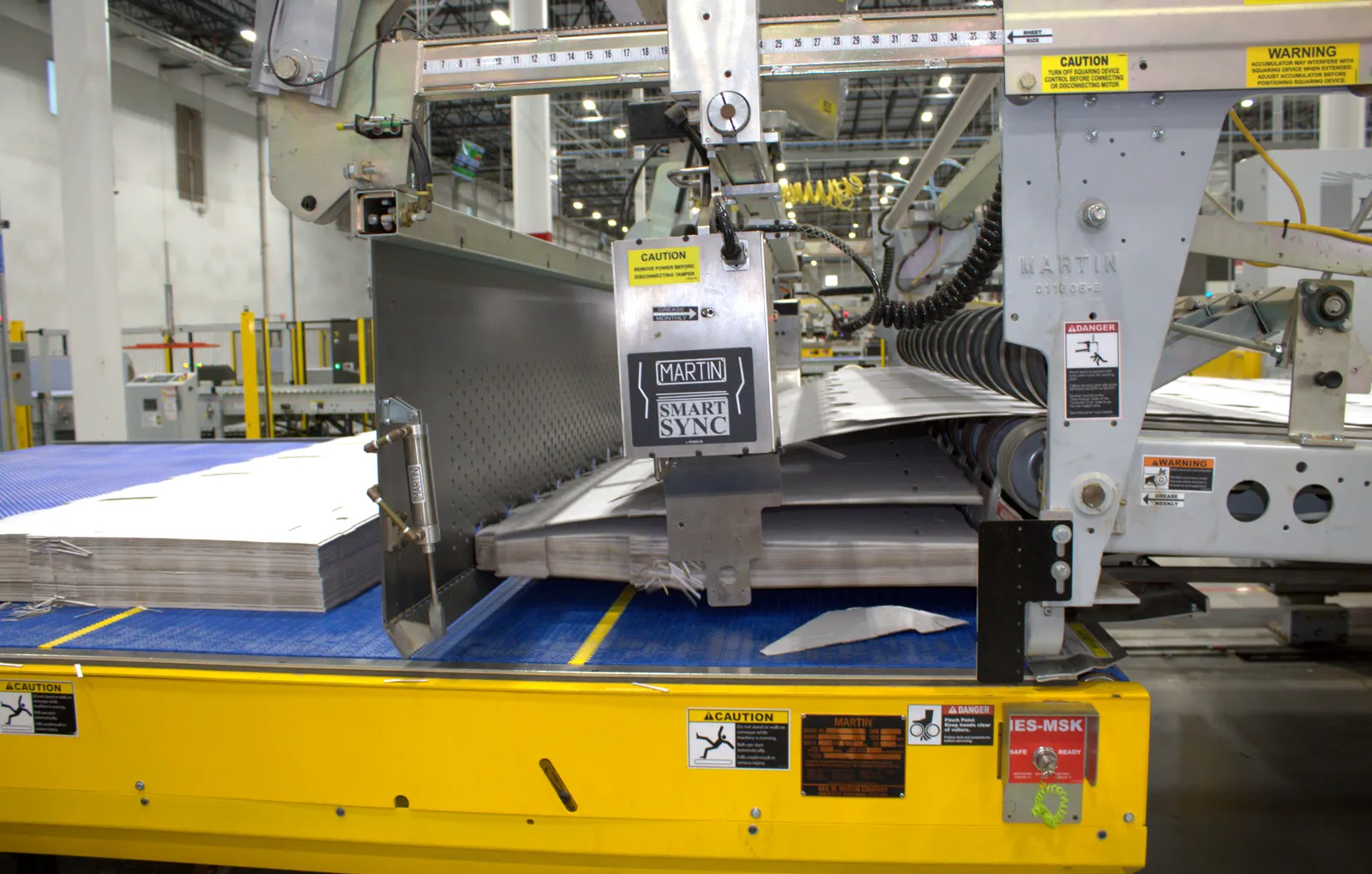
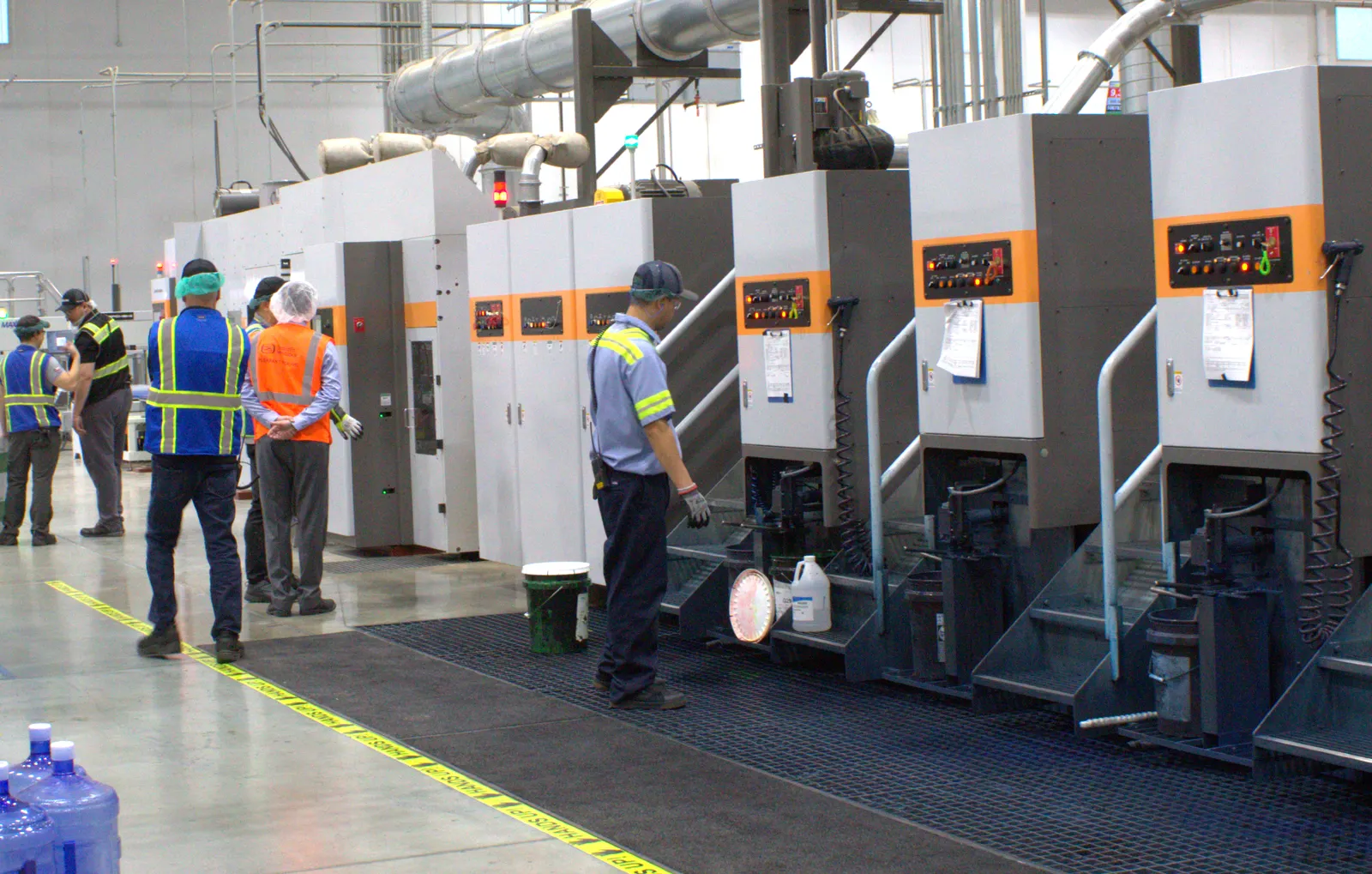
On the converting side, Pleasant Prairie has two Mitsubishi Heavy Industries EVOL Flexo Folder Gluers that include automation and robotics. At maximum speed, they can produce up to 350 boxes per minute. The plant also has a Ward 66-inch Flexo Folder Gluer and a BGM Jumbo Flexo Folder Gluer with die-cut capabilities. The two Bobst rotary die cutters can operate at a maximum speed of up to 12,000 feeds an hour.
Automation also comes into play for some less prominent processes like with the stitching wire machine that reinforces box strength, especially for industrial or other heavy-duty applications.
“There are little things that you don't think about capability-wise that just make the difference with the quality of the box that we can provide the customer,” Rivero Loyola said.
Automation also is peppered throughout pizza box production, including for manufacturing the white top and at the rotary die-cut machine. As with producing other products, robotics are incorporated for certain pizza box packing and sealing functions.
“We're very excited about all this technology that we're able to support our team with,” Rivero Loyola said.
Safety net
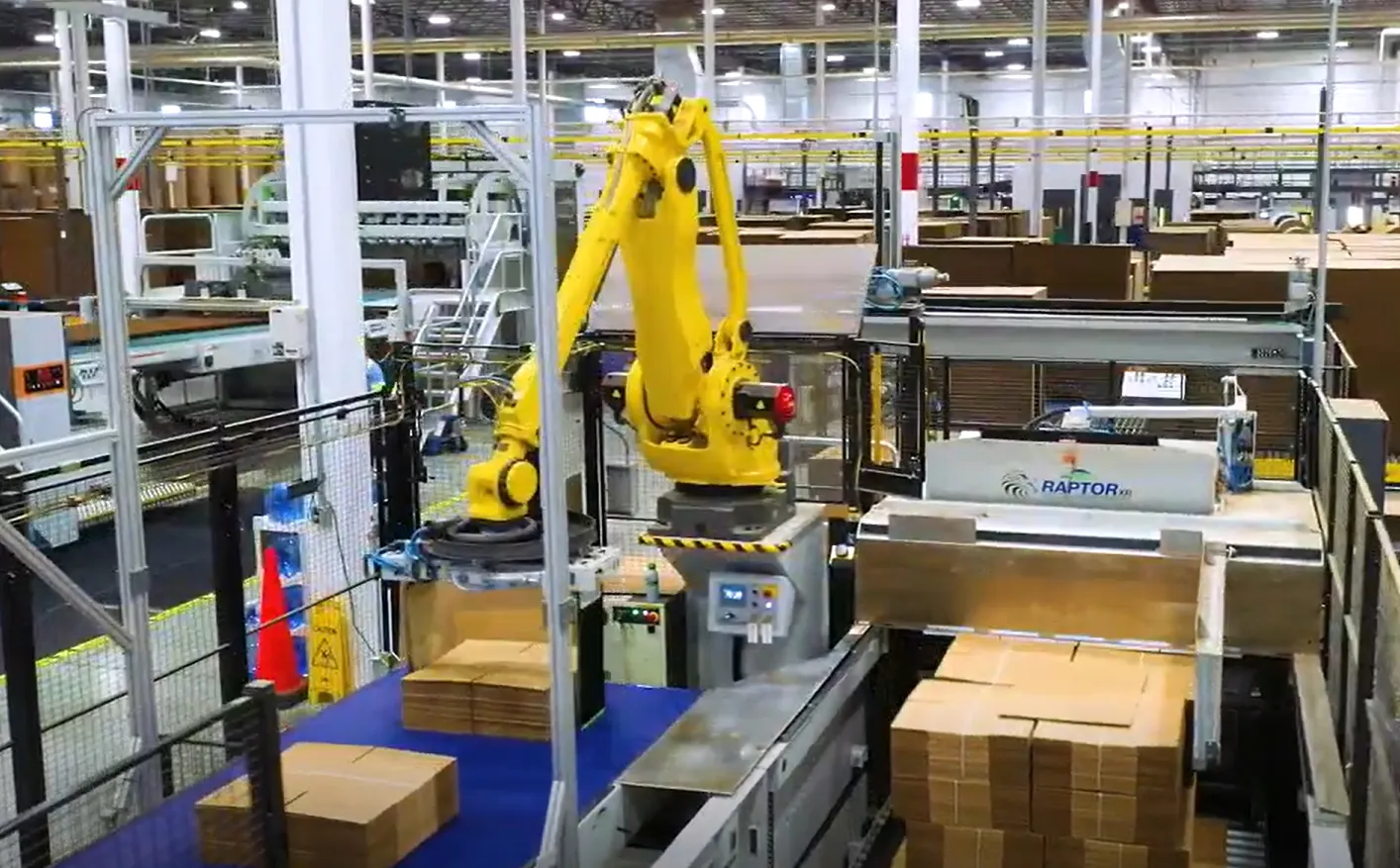
Pleasant Prairie has integrated robotics throughout the plant, especially for a variety of back-end processes including packing, sealing and palletizing. This isn’t just for speed and efficiency enhancement, but also to improve safety.
Pointing to the Para Crab moving toward roll stock, Sparaco said, “It's a much safer work environment where you don't have that pedestrian-clamp truck interface.”
The Raptor bundle handling and load forming robot automatically grabs incoming bundles of finished products from a conveyor and builds stacks according to the inputted pattern. When it achieves the required layers, the stack is discharged. Using robotic palletizers eliminates the need for human fork truck drivers to combine multiple units, or for manual handling.
“It really makes it safer. You don't have employees lifting or straining to move things,” Rivero Loyola said.
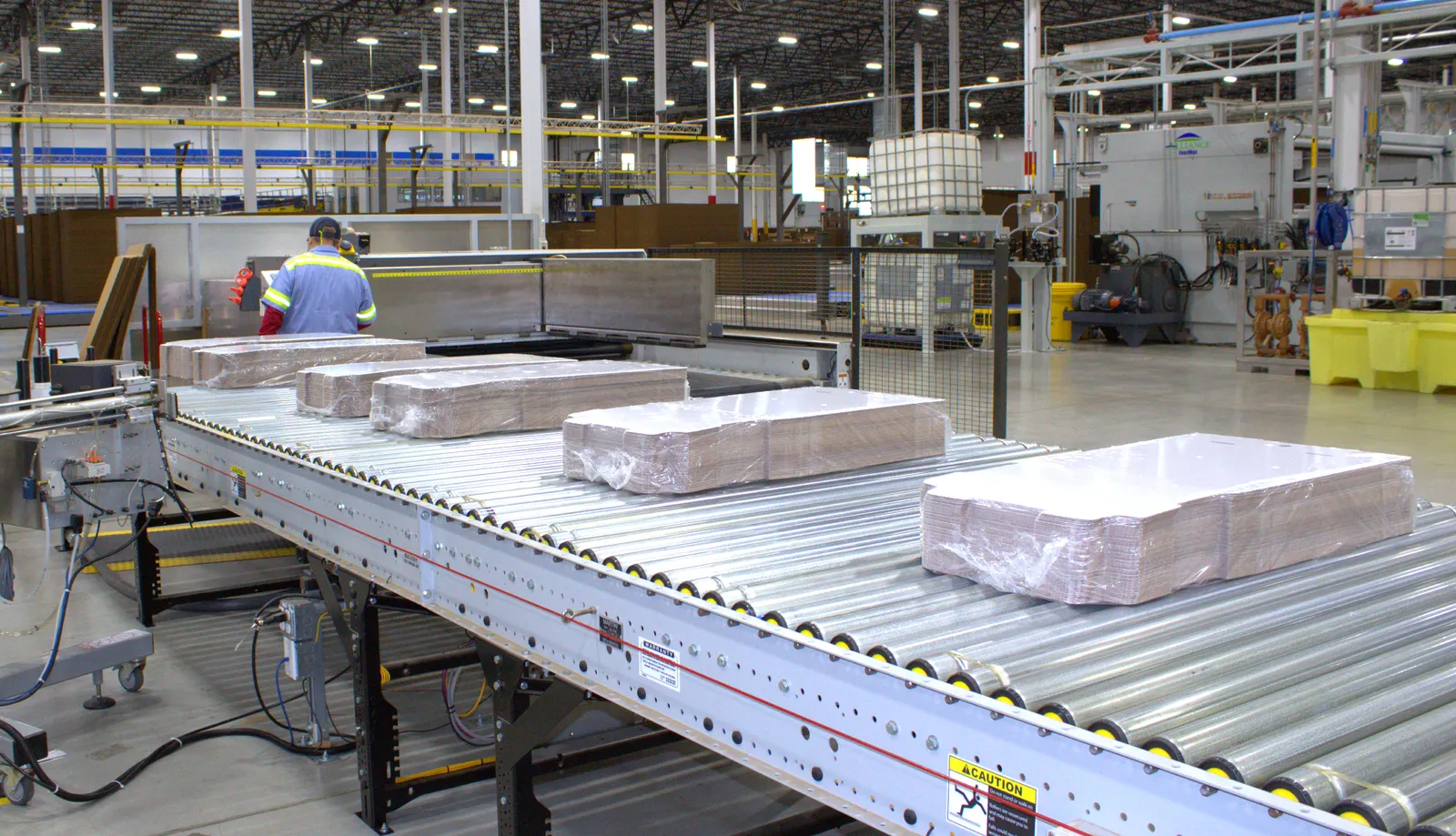
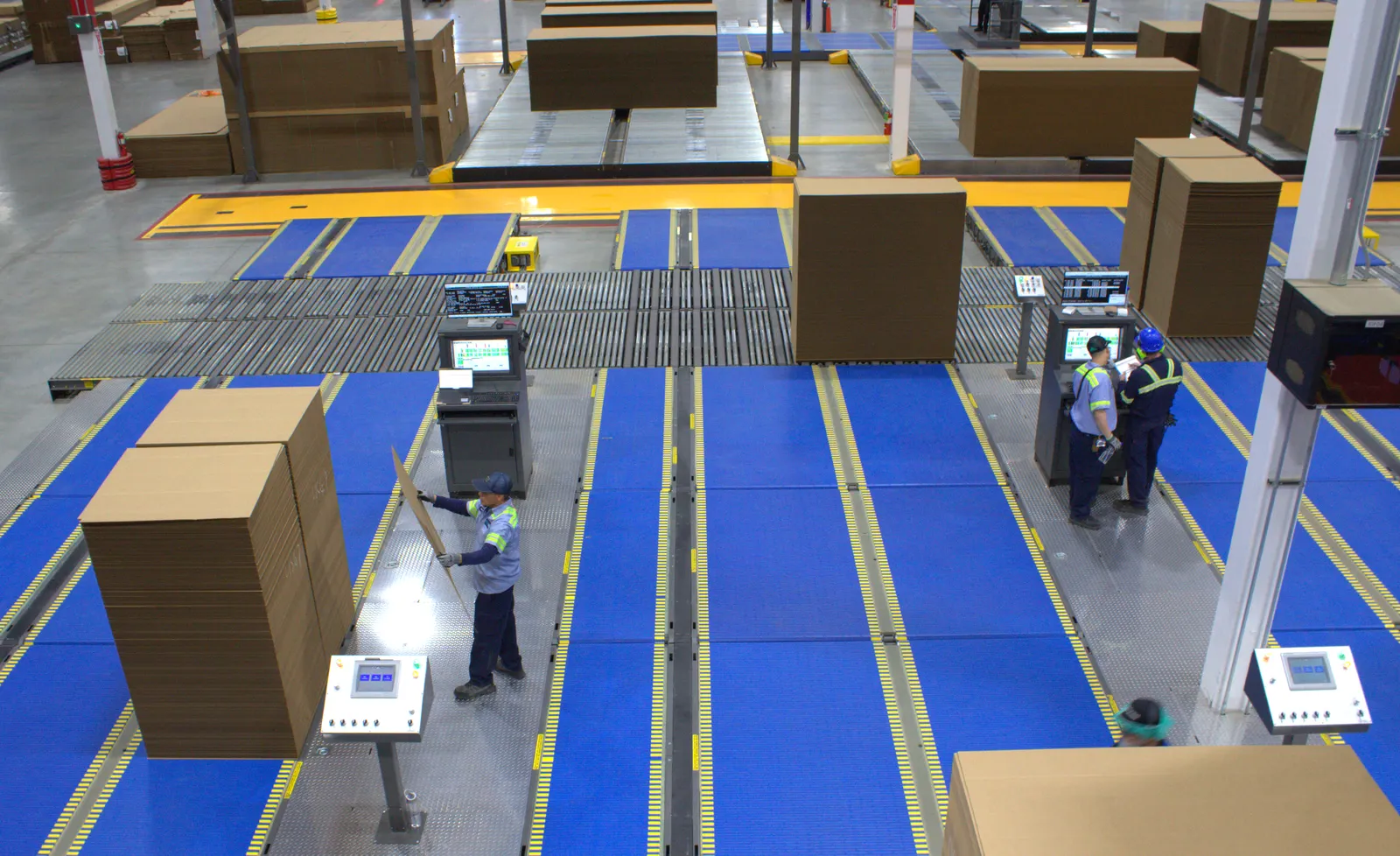
“Conveyorization” is the name of the game at Pleasant Prairie, broadly referring to integrated, automated material‑handling systems that move product through the plant. This includes conveyors, such as the blue ones that transport stacks to employees for inspecting and marking, but also other automated transfer and handling solutions.
“Everything in this plant, including all of the corrugated board that comes off of our corrugator, is transported by belted conveyor,” Sparaco said. “So we no longer require people to manually transport board from point A to point B.”
The corrugator also has some specialized features, such as sound enclosures to reduce the work environment noise levels, Sparaco explained. Another intentional plant design feature to improve employee safety and comfort is that “we also do our best to engineer the airflow,” he said, noting that “especially where summers are hot and muggy, there's a better airflow and temperature gradient inside the facility.”
“All of those little things make a difference — especially at the elevated speeds that our equipment runs here,” Sparaco said.
Getting up to speed
To accompany all the investments in automation at Pleasant Prairie, Smurfit Westrock also invest in employee training. The company’s goal was to move humans into higher value-add positions while letting the equipment do the repetitive and hazardous work.
“We not only train them in a classroom setting so they can learn the basics about the machinery and how to safely operate it, but then we do hands-on training out on the machinery itself,” Sparaco said. “Every piece of equipment is just a little bit different” and requires fresh training, even for operators who have worked on similar units.
The typical onboarding process there takes three weeks. A lot of employees don't need to start from scratch because they came to the Pleasant Prairie site from other Smurfit Westrock facilities, including the previous North Chicago site.
“Many of our employees transferred into this plant and already had a great background and understanding of how to manufacture packaging,” Sparaco said. But even so, “we know there's a learning curve — and sometimes it's a steep learning curve — as we bring in new machinery, and we qualify that machinery.”
Leadership also prioritizes developing a positive employee culture, he said.
“That's the culture that we want to have: where people are excited to come to work and they feel good about what they accomplish and the team they're on. They feel like they belong,” Sparaco said.