Dive Brief:
- Re:Lid USA is bringing its resealable, recyclable aluminum can lids to market for the first time thanks to a partnership with beverage brand incubator L.A. Libations.
- On Thursday the partners introduced canned water under the L.A. Libations name that will feature Re:Lid’s closure that can be resealed up to 14 times. They’ll initially be available at Gelson’s Markets, a Southern California grocery chain.
- St. Charles, Illinois-based Re:Lid USA, which licensed the technology from European company Re-Lid Engineering, plans to introduce production stateside. It hopes to have a U.S. site identified by the fourth quarter.
Dive Insight:
Re:Lid USA has worked with Liechtenstein-based Re-Lid Engineering for about five years to advance a product for the U.S. market.
Development, testing and production thus far has been on a pilot line in Germany, and the cans are shipped to the United States. Establishing a domestic manufacturing presence will improve transportation efficiency, costs and sustainability, said Re:Lid USA CEO Bill Brandell.
The only non-aluminum element is 0.2 grams worth of a thermoplastic elastomer sealant for the portion of the device that recloses; this helps to prevent leaking. That amount of material “is essentially nothing” and allows the product to be considered an all-aluminum, recyclable container, Brandell said.
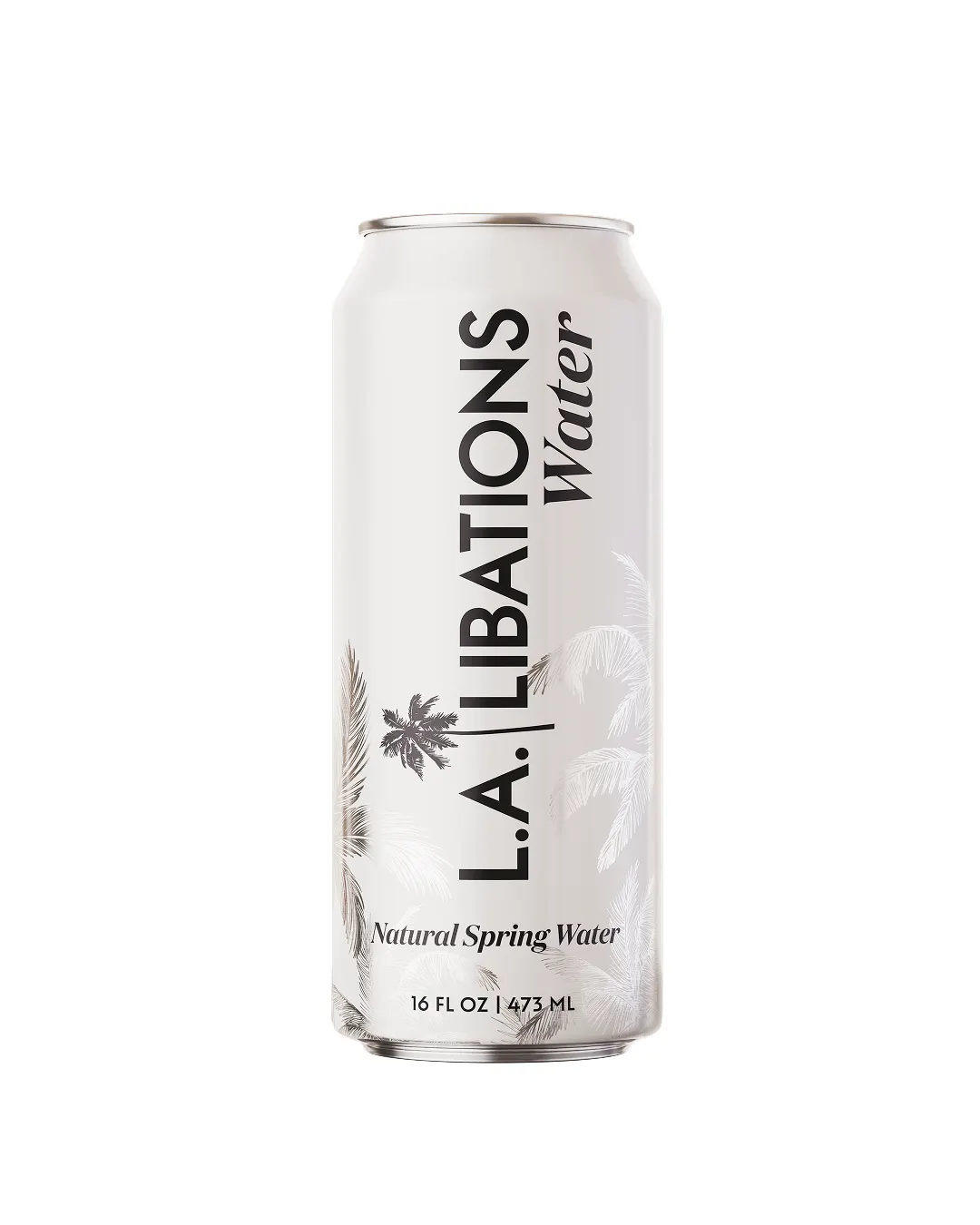
Partnering with L.A. Libations was key to bringing the product to market. L.A. Libations understands emerging beverage brands and market opportunities, in addition to where packaging differentiation could have a high impact, Brandell said. The partners began talking in June 2025 and by year’s end decided to launch a water product in a can with the resealable lid.
“It’s something that the [beverage] industry has been looking at,” and inquiries especially are coming in from those who are interested in a more consumer-friendly container that isn’t plastic, Brandell said. “It gives you the functionality of a bottle, but without the [plastic] issues.”
There's a lot of demand in California, in particular, for aluminum packaging for water due to legislation to phase out single-use plastics, including bottles. Certain municipalities have passed sweeping bans for single-use plastic water bottles, while others have implemented more limited sales bans such for a narrower range of sizes or at government facilities and events.
“So the alternative is to use an aluminum bottle or to use a standard can,” Brandell said. “The feedback to the brands ... is that people like water out of a can, but they like the bottle functionality — they want to be able to open and close it.”
The resealable can solution costs less than aluminum bottles, Brandell said. Plus it supports the growing consumer desire for on-the-go beverages.
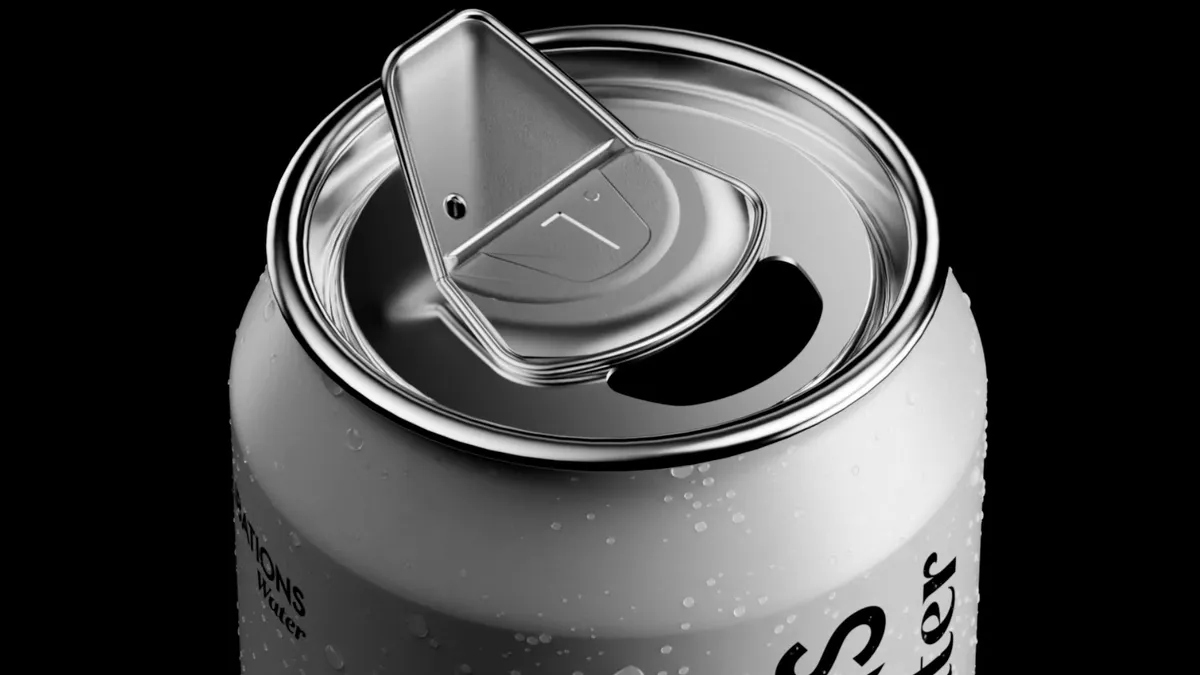
Re:Lid USA aimed to release a product that was intuitive for consumers to use and easy to manufacture. The three-piece product uses a typical blank shell from any canmaker — standard 202 or 206 — and Re:Lid USA fabricates it into the reclosable lid by adding two other components made by suppliers in Switzerland. Consumers open the tab like a typical can and then slide the device to reveal the aperture. The user can slide the tab back and press it down to reseal the aperture.
“The nice thing about this is it's really simple. It's one of those things where when you talk to anybody, they’re like, ‘Why didn't somebody already invent that?’” Brandell said.
The simplicity also is intended to aid filling or co-packaging operations. While the complexity of competing products tends to require significant adaptations to lines, Re:Lid USA’s drops into existing lines easily with minimal adjustments, according to Brandell.
“That’s an important factor of the total cost for beverage companies: What’s their pack fee going to be?” he said.
Alongside the search for a domestic manufacturing location, in the coming months Re:Lid USA plans to introduce a version for pasteurized products to accompany the current cold-fill option. While Brandell envisions the company eventually could have multiple production sites, going to market in a more controlled manner via the L.A. Libations partnership — rather than with a beverage giant that would require huge volumes — is the ticket for now.
“It'll take us some period of time to have the high volume where we could have an impact on some other brands. But in the interim, this gives us great visibility and experience across different beverage segments,” Brandell said. “We feel like we have an opportunity to have an impact.”