North American containerboard production had its largest drop in years during the first quarter of 2026, according to data from the American Forest & Paper Association. Box shipments also declined, according to quarterly data from the Fibre Box Association.
The more than 8% year-over-year decline in containerboard production that AF&PA reported for Q1 is the largest such drop in at least two years; the organization only has the last two years worth of its quarterly data posted publicly.
While an 8% decline is significant, it “is not unprecedented,” said Mark Pitts, AF&PA interim vice president of industry affairs, via email. He pointed to certain larger production declines in recent years, such as during Q4 2022 when production fell by more than 16% year over year and operating rates dropped to roughly 81%. That time period generally is viewed as when markets corrected following the COVID-19 pandemic demand boom.
Q1 2026 showed the largest year-over-year containerboard production decline in two years
This trend follows the large number of North American facility closures producers announced in 2025 that resulted in a historic, nearly 10% cut in industrywide production capacity. The last of the announced closures occurred earlier this year.
The Fibre Box Association’s data shows a 1.9% year-over-year decrease in box shipments in Q1. That figure is “a little worse than expected but still directionally in line” with the 1.3% to 1.8% decrease that Bloomberg Intelligence projected in November, said Ryan Fox, corrugated packaging market analyst, via email.
Multiple companies had reported during earnings calls earlier this year that they experienced production and shipping disruptions, along with extra costs, because of a winter storm in late January. Packaging Corporation of America again detailed the negative impacts during its Q1 earnings call last week.
Company executives also discussed how geopolitical and economic factors have contributed to market volatility, but volumes improved as the quarter progressed. Analysts broadly had expected to see some level of improvement with industrywide demand and shipments in Q1.
In an April 26 memo to investors, Michael Roxland, senior paper and packaging analyst at Truist Securities, noted the “inclement weather early in the quarter significantly impacted shipments,” resulting in January actual box shipments dropping 7% year over year. That impact lessened in February with a 1.7% year-over-year decline, he said, and then shipments rose to 3.4% in March.
Volumes are mixed but improving, said George Staphos, BofA Securities analyst, in an April 27 memo to investors. He based that conclusion on the AF&PA and FBA quarterly reports along with three BofA industry sessions with companies and contacts. Paperboard volumes “are (to put it generously) sluggish with potential for improvement,” Staphos said.
Observers had expected the rash of facility closures to boost operating rates, and that happened in late 2025 when rates rose to the low 90s; Staphos had projected rates could reach the mid-90s this year. However, even taking into consideration the closures that were finalized in February, Q1 operating rates remained flat year over year at 91.6% and were down sequentially from 92.3% in Q4 2025, Roxland noted.
Containerboard price increases strongly correlate to operating rates. With operating rates ticking up in recent months, analysts weren’t surprised when major producers announced $70 per ton price increases to take effect in March.
With an unexpected dip in recognized containerboard prices in February followed by increases in March and April, Fastmarkets RISI has recognized a year-to-date net increase of $50 per ton. While the Iran war and persistent inflation have tempered analysts’ expectations for another increase, broadly they predict full recognition of the already announced hikes. “[P]ricing momentum should catch up by 4Q,” Staphos said.
Analysts had pointed out in recent months that any improvements for the containerboard industry would not be swift and instead would likely trickle in throughout the year. Staphos reiterated that in Monday’s note, which mentioned volumes are “gradually” improving.
Part of the gradual improvement involves working down containerboard inventories from the long-standing oversupply. AF&PA’s data shows mill inventories ended the first quarter 3% lower than in Q4 2025. Collectively, inventories declined by approximately 198,000 tons in March, Roxland said. “Looking forward, it is possible for inventories to decline further,” he said.
AF&PA also released quarterly data for boxboard, showing a 2% year-over-year production decline. The industry operating rate was 85.7% in Q1, down 1.5 points year over year.
Solid bleached sulfate remained essentially flat year over year, with Roxland pointing to a 0.3% drop and an operating rate of 81.9%. Uncoated recycled board production declined 5.3%, while coated recycled board and uncoated kraft decreased 0.7%.
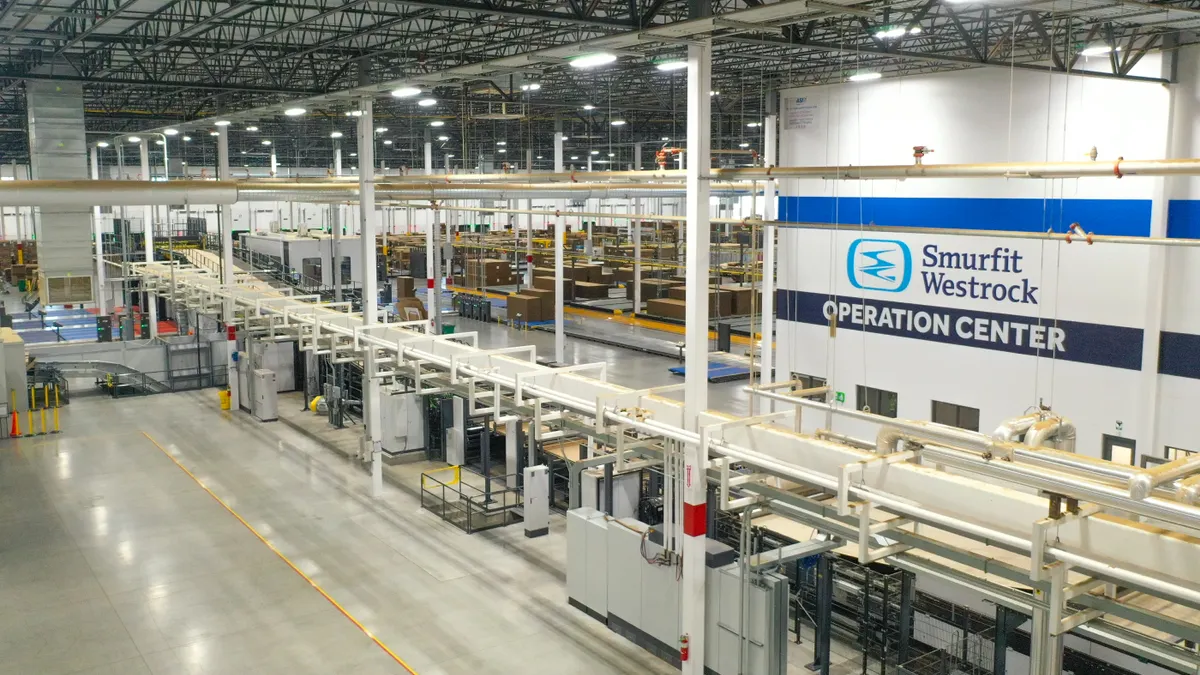
Pricing stayed flat across boxboard grades in Q1. To support an SBS increase, further capacity closures would be needed besides Clearwater Paper’s recently announced curtailment at its mill in Cypress Bend, Arkansas, and Smurfit Westrock’s closure in La Tuque, Quebec, Roxland said.
AF&PA is currently conducting its annual industry capacity survey. The results will be released prior to its Q2 report and could prompt the group to revise its Q1 2026 data.