Dive Brief:
- Butterfly Equity has acquired ePac Flexible Packaging, the companies announced Thursday. Deal terms were not disclosed. ePac leadership will remain in place.
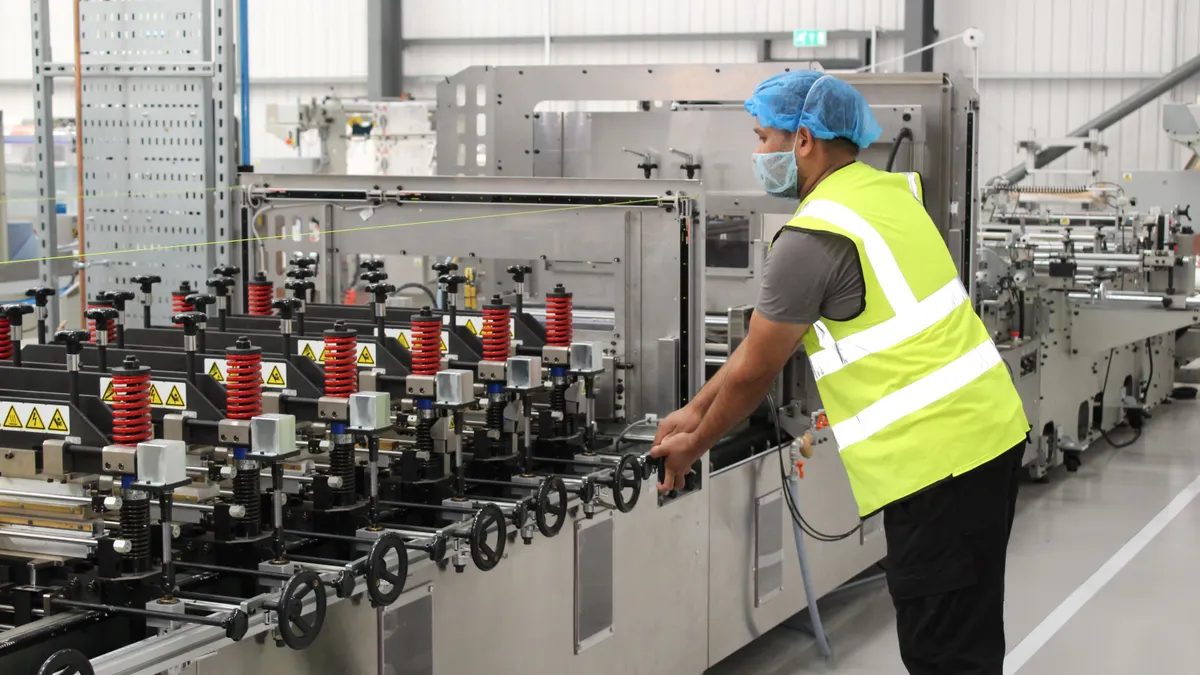
- ePac, which primarily specializes in digitally printed pouches with 15-day turnarounds for CPGs, says the deal will accelerate growth. It’s the first packaging investment for Butterfly, which is based in Los Angeles and focuses on high-growth players in the food and beverage sector, with holdings like Orgain, Bolthouse Fresh Foods and Chosen Foods.
- While ePac largely serves food customers, co-founder and CEO Virag Patel also highlighted potential growth ahead in pet food as well as nutraceuticals.
Dive Insight:
ePac was founded in Wisconsin in 2016 amid changing tides in CPG markets, aiming to serve smaller and medium-sized brands that demanded faster and more flexible packaging suppliers. It drew the attention of larger packaging players: Indevco acquired an equity stake in 2017, and Amcor announced investments in 2021 and 2022.
“It's hard to ignore that these brands exist out there, and it's frankly also hard to ignore that if you can elevate their packaging, they can be competitive in the market space with any other brand out there,” Patel said. “When a Costco calls, or Whole Foods calls, can they react quickly enough to be on that shelf at the right time?”
The opportunity is bigger than meets the eye. According to a report last year from Bain & Co., while these types of “insurgent brands” accounted for less than 2% of market share in their respective categories, they accounted for nearly 39% of incremental category growth in 2024.
Investing in the companies that enable those high-growth brands is central for Butterfly, which was also founded in 2016.
From Butterfly’s perspective, ePac is “very well aligned to what the disruptive side of the food and beverage market needs,” said Eric Tommarello, managing director at Butterfly. “We hear repeatedly from the companies in our portfolio ... they need flexibility and they need short turnaround times.”
“The problem set that ePac was formed to solve has only become more and more attractive over time,” Tommarello added.
ePac suggests the tariff situation the past year has been a tailwind, given the company’s ability to print and ship locally. “I think we're well positioned to continue to capture more of that market that way,” Patel said. Now operating globally, ePac has 14 interconnected sites within the U.S. and Canada that “play off each other,” Patel said, allowing a customer to start small and scale if they grow larger.
Looking ahead, Patel projects digital printing will only grow in packaging. “And as the technology evolves, we can continue to also advance to bigger and bigger customers and more complex customers.”