This audio is auto-generated. Please let us know if you have feedback.
By the numbers: Q1 2026
Net sales: $2.16B
Up 1.7% year over year
Net loss: $43M
Compared with $127M in net income in Q1 2025
- Overview: Graphic Packaging International’s sales volumes improved as the first quarter progressed and were up 1% year over year, executives reported during an earnings call Tuesday. Consumers remain cost conscious, but “we are encouraged to see customers increasingly taking actions to restore volume growth,” said CEO Robbert Rietbroek. The food category performed well, he said, namely for protein-heavy products such as yogurt, bars and refrigerated meals. Meanwhile, volumes for food service lagged.
- Business reviews and restructuring: During Q1, the company completed its previously announced 90-day business review and subsequently launched actions to cut costs and drive profitability. Cost-reduction measures drove approximately $10 million in savings in Q1, and that momentum should pick up in Q2, said interim CFO Chuck Lischer. A key move was to reduce the workforce by more than 500 employees, most of whom were salaried. This was a combination of layoffs and eliminating open positions, amounting to nearly 3% of all roles, or 10% of full-time salaried positions globally, Rietbroek said.
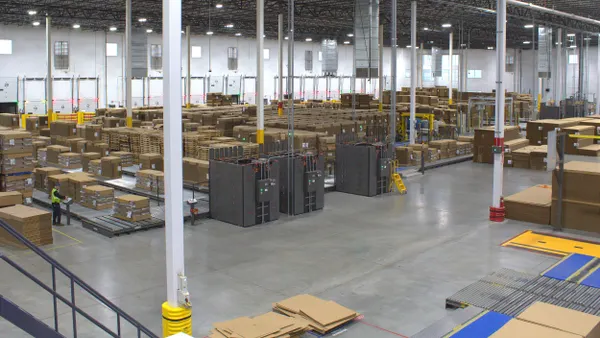
- Near-term priorities: The company also canceled some low-return projects and expects to save $200 million from that “over the next few years,” Lischer said. These include automated warehouse projects in Texarkana, Texas, and Kalamazoo, Michigan, which resulted in a one-time write-off of $40 million. Rietbroek outlined five near-term priorities as part of the ongoing rework, largely built around focusing on core competencies and shedding non-core assets. “I am confident all these actions will deliver the $60 million in cost savings announced last December,” he said.
- European divestiture: The company confirmed in April that as part of the streamlining it would sell Istra, a subsidiary in Croatia that GPI acquired from Swedish company AR Packaging in 2021. GPI is in the final stages of completing the transaction and expects it to close during the second quarter.
- Pricing: Executives confirmed a $60 per ton price increase for bleached cupstock to take effect May 8, which they say will offset inflationary costs, including higher input costs related to the war with Iran. Cupstock has a resin barrier coating and resin prices have increased, Lischer explained. “While this price increase will be realized in Q2 for non-index-based paperboard sales, most of our affected contracts require price recognition by the industry's third-party index before we can pass it through our packaging business,” he said. GPI is also evaluating price increases for other products.
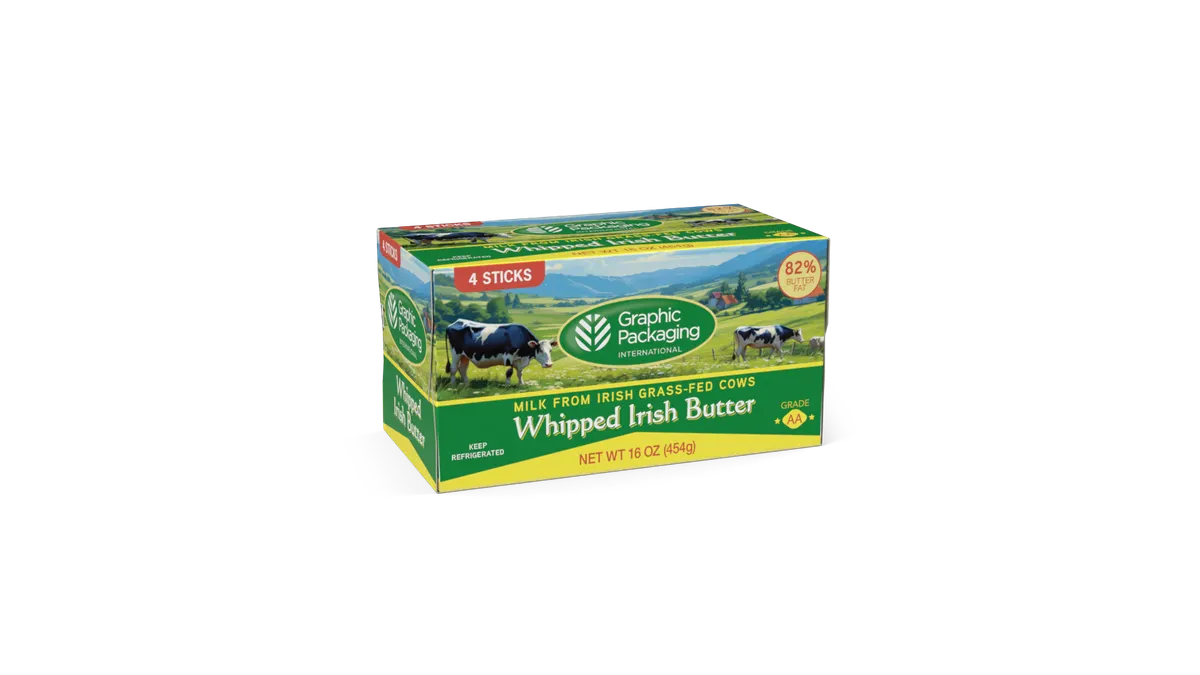
- Innovation: Expansion in core markets will require innovation, particularly for options considered more sustainable or that enable a plastic-to-paper swap, Rietbroek said. GPI touted that it filed for 13 new patents during Q1 to join its approximately 3,100 other patents. Rietbroek also described a recent partnernship with an unnamed customer for private-label butter packaging that uses GPI’s PaceSetter Rainier 100% recycled paperboard, expected to hit store shelves in the coming weeks.
- Sustainability: The private-label butter example illustrates the move from bleached paperboard to a 100% recycled alternative to boost the customer’s sustainability profile, Rietbroek said. Also on the sustainability front, GPI announced in April a virtual power purchase agreement with NextEra Energy, through which the utility will build a 250-megawatt solar energy plant in Texas. Operations are slated to begin at the end of 2027.
- Outlook: Executives expect geopolitical and economic factors will continue to elevate certain commodity costs, with a projected $10 million of additional costs in Q2 compared with Q1. Incremental inflation in the first half of the year is projected to be $30 million more than initially expected. Executives reaffirmed the guidance of $700 million to $800 million in adjusted free cash flow. Lischer noted an expected $450 million in capital expenditures for the year, compared with $935 million in 2025. “We’re moving out of a heavy investment cycle to a cash harvesting cycle,” he said. GPI also plans to pay down $500 million in debt in 2026. Referencing the restructuring and cost cutting, Rietbroek said: “We’re doing all the right things and the right work to set ourselves up for a great 2027.”
Correction: This story has been updated to reflect that GPI is taking steps to cut $60 million in costs.