Snacking giants Mars and Mondelēz International each recently released their 2025 sustainability reports with updates on packaging portfolio changes, noting areas where they made progress but fell short of previously stated 2025 ambitions.
Mars
The company reported that it reduced virgin plastic by 5.9% in key categories compared with a 2019 baseline. That reduction came amid an increase in PCR use, including utilizing 100% rPET in club jars of candies such as M&M’s, Skittles and Starburst.
| 2025 targets | 2023 | 2024 | 2025 |
| Transform 100% of portfolio into reusable, recyclable or compostable packaging | 61% | 64.1% | 67.6% |
| Incorporate 30% recycled content in packaging | 1.5% | 7% | 9.2% |
“The pace of progress remains closely linked to the readiness of these systems and the availability of food-safe recycled materials in many markets,” Mars wrote, aligning with comments in previous years about insufficient recycling infrastructure. “We continue to work with industry partners, governments and NGOs to strengthen recycling systems and help accelerate the transition toward a more circular packaging economy.”
Mars had flagged slowdowns to progress in 2024, noting that “design and infrastructure changes needed are taking longer than we anticipated” and it was unlikely to fully meet goals by the end of 2025.
The company, as a founding member of producer responsibility Circular Action Alliance, touted its EPR advocacy. And last year it co-founded the US Flexible Film Initiative with Mondelēz, PepsiCo and others, intended to fund film and flexible plastic packaging recycling initiatives in California.
Mars, as with Mondelēz, previously exited the U.S. Plastics Pact and no longer notes alignment with the Ellen MacArthur Foundation’s Global Commitment.
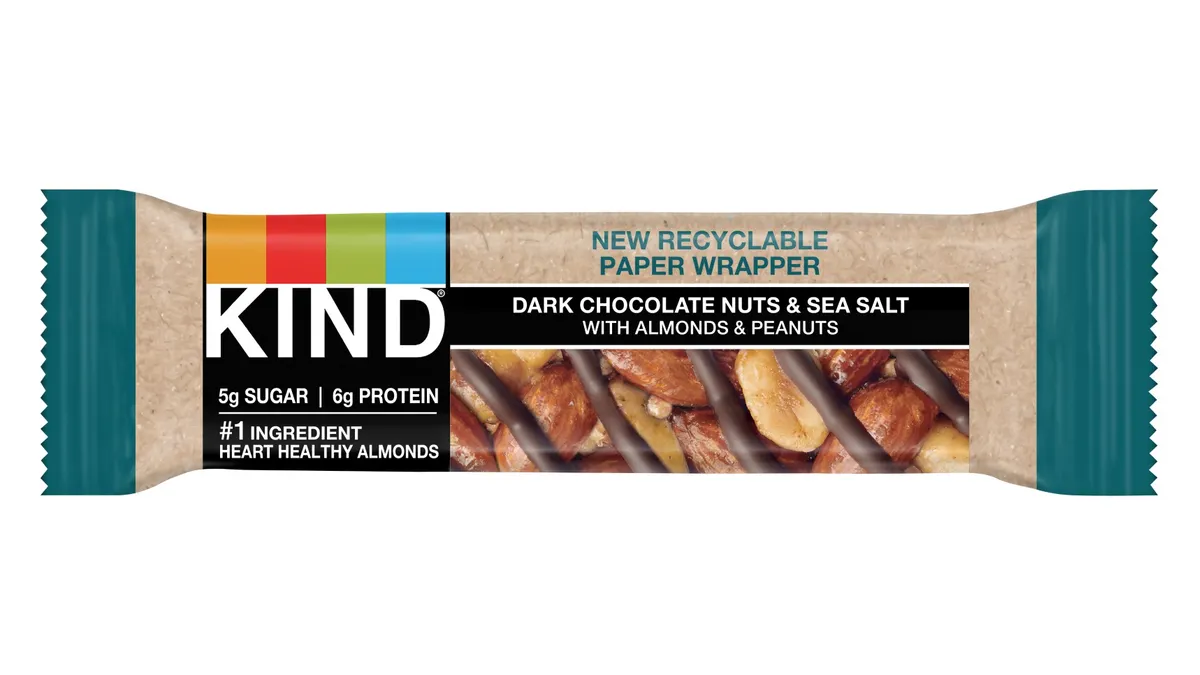
Last year the company announced the up to $250 million Mars Sustainability Investment Fund, which in part focuses on recyclable or compostable alternatives to flexible plastics. Mars also touted research into chitin-based coatings on compostable films. Kind Snacks, which is owned by Mars, also ran a pilot of paper wrappers at select Whole Foods stores in 2025.
Mondelēz
With 2025 having come and gone, Mondelēz is looking ahead. “Due to rapidly evolving regulations, changing consumer & customer needs, the complexity of implementing novel packaging solutions across a complex global network, and the slower-than anticipated scaling of circular systems,” the company now aims to achieve recyclability, recycled plastic and virgin rigid plastic reduction targets by 2030.
| 2025 targets | 2023 | 2024 | 2025 |
| Design 98% of packaging to be recyclable | 96% | 96% | 96% |
| Reduce overall virgin plastic by 5% from a 2020 baseline | +1.7% | 4.6% | 11.5% |
| Use 5% recycled plastic content | 1.4% | 1.6% | 3.7% |
“With a strong pipeline of projects due to be implemented, we are confident in our ability to further reduce our use of virgin rigid plastic toward 2030,” the company wrote. Rigid plastics make up only about 6% of Mondelēz’s portfolio by weight; its packaging portfolio is dominated by corrugated, paper and flexible plastics.