As Walmart had anticipated, it did not meet certain 2025 private-label packaging sustainability targets, according to a recently released FY2026 ESG Report.
Outcomes of Walmart’s 2025 targets for global private brand packaging
| Goal | FY2024 | FY2025 | FY2026 |
| 100% recyclable, reusable or industrially compostable | 68.2% | 66.1% | 64.3% |
| Reduce virgin plastic 15% (vs. FY2021 baseline) | +8.17% | +4.11% | +4.12% |
| 17% of plastic packaging made from PCR | 7.4% | 7.6% | 10.7% |
| 20% of plastic packaging made from PCR — North America specifically | 7.3% | 8.2% | 12% |
Walmart’s FY2026 reflects activities and initiatives from Feb. 1, 2025, to Jan. 31, 2026.
Reversing the trajectory of plastic use was particularly challenging. Walmart said that despite its overall increases in virgin plastic use, it “continued to lower virgin plastic packaging intensity,” or weight per net sales dollar.
“Although we did not achieve our 2025 packaging goals, we continue to make progress in some areas, for example, increasing the use of PCR content in private-brand plastic packaging,” the report notes.
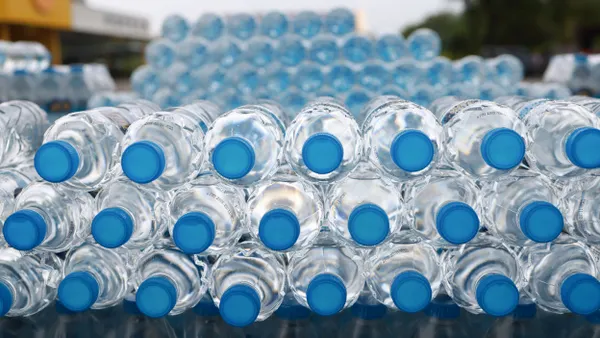
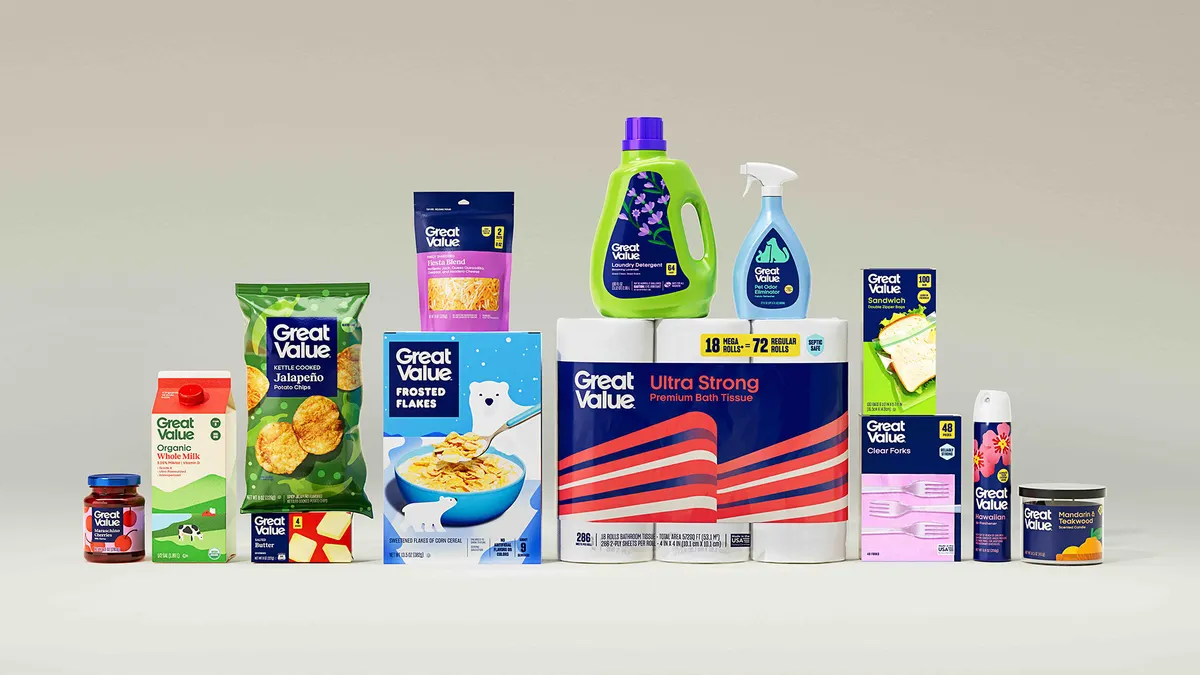
One example of a change in its private-label packaging is rolling out label-free packaging for Great Value 40-pack bottled water to lower plastic use and improve recyclability. Walmart reported that this launched in three distribution centers in 2026, with plans to scale.
“Progress across our packaging metrics continues to be influenced by trade-offs among product protection, food safety, cost, regulatory requirements, recycled material availability, evolving supplier portfolios, and changes in packaging formats that are not yet recyclable at scale,” Walmart stated.
Walmart is not currently listed among signatories to the Ellen MacArthur Foundation’s 2030 Plastics Agenda for Business. Walmart previously exited the U.S. Plastics Pact. The company listed three main guiding principles for optimizing packaging design:
- Eliminate packaging that is not required by law or otherwise necessary for safe handling, labeling, transportation or storage: Examples include rightsizing e-commerce packaging, cutting down on plastic packaging for home goods and promoting reusable bags.
- Design packaging for recycling to improve recovery outcomes and reduce waste: Examples include plastic-to-paper conversions across home good and e-commerce.
- Increase use of post-consumer recycled content to reduce reliance on virgin plastic: Examples include partnering to improve supply of PCR and incorporating PCR where meeting performance, quality, supply, cost and regulatory requirements is feasible.
“We will continue measuring, reporting, and advancing our packaging strategies,” the company said.