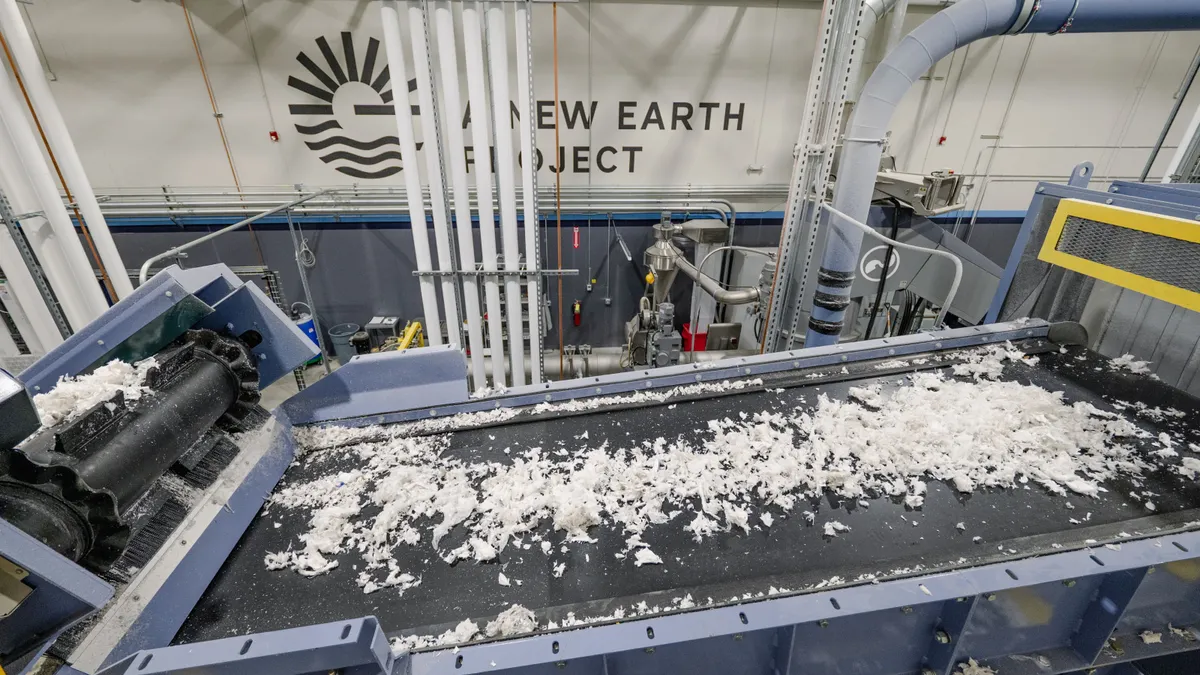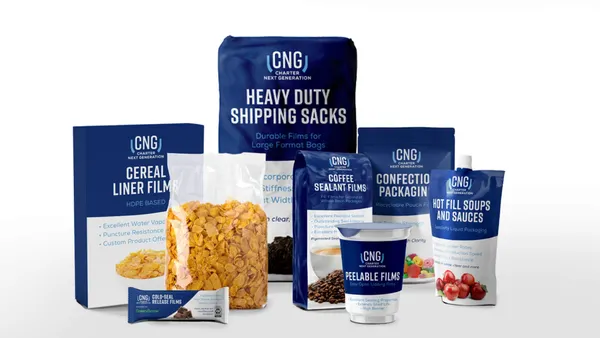
Increasing the amount of postconsumer recycled content in its films is key to Charter Next Generation’s sustainability strategy. CNG demonstrated this in its 2025 sustainability report released last week and during an Oct. 19 presentation at Pack Expo about using food-grade PCR in flexible materials.
In its sustainability report, CNG said it reduced scope 1 and 2 greenhouse gas emissions by 23% in 2025 compared with the prior year. It aims for a 42% reduction by 2030 and a 90% reduction by 2050. The company also reported diverting more than 23 million pounds of outbound waste from landfills in 2025.
Last year, CNG increased its PCR use by more than 30% compared with 2024, according to the report. Greater PCR use is “the big driver of circularity for our materials,” said John Garnett, CNG senior vice president of technical, sustainability and innovation, during an interview after the Pack Expo educational session.
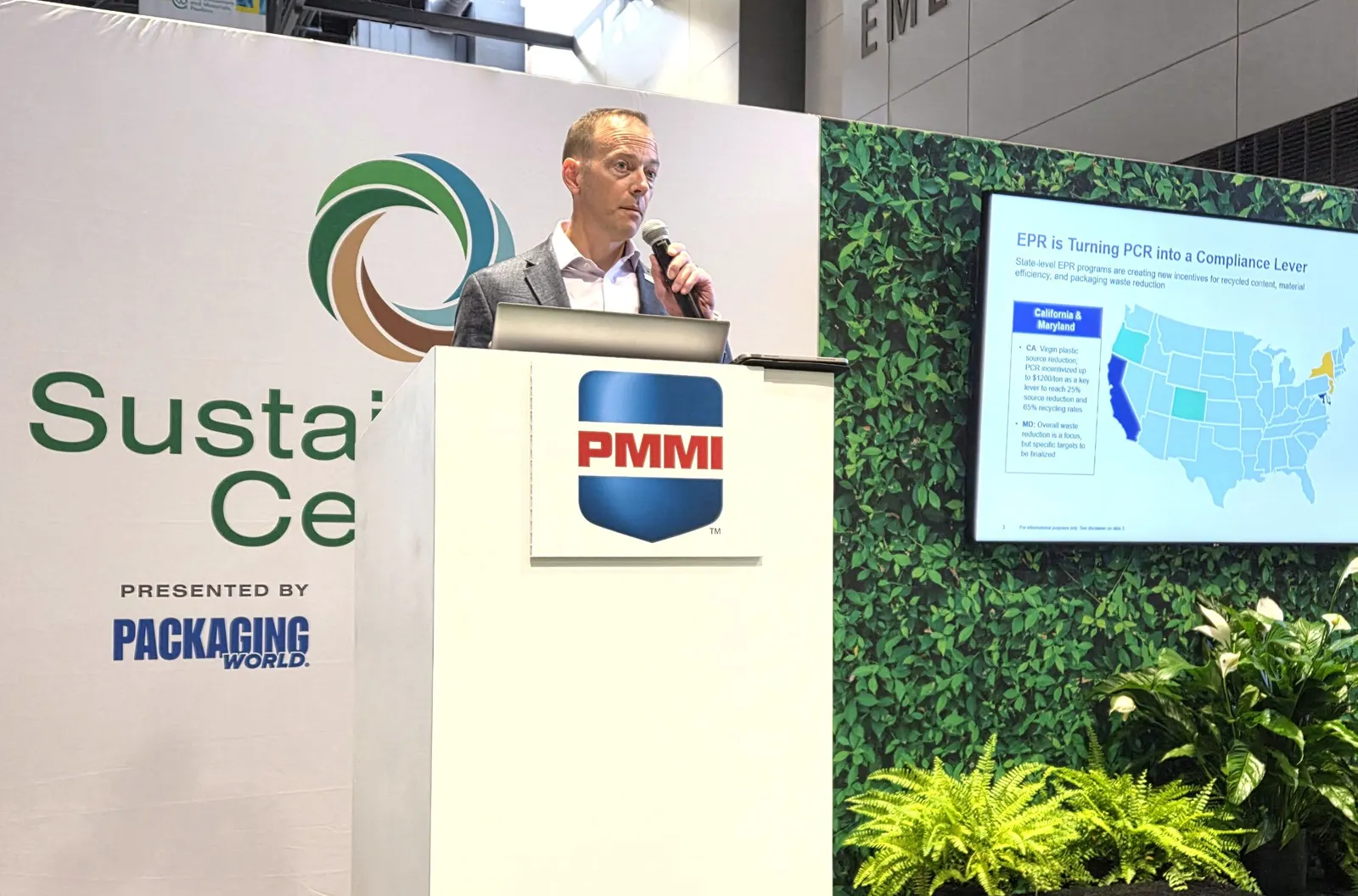
CNG publicly discussing how it ups the PCR in its films ultimately helps to create more demand and end markets for recycled content, he said. Therefore, CNG decided to present at Pack Expo 2026 about its food-grade PCR work, namely a study conducted with industry partners to assess the safety and performance of PCR in film for food applications.
“You can see in the really, really high-performing application the demonstration of what's possible, and the demonstration that it's a viable business,” Garnett said. “And that then helps with momentum for the rest of the market.”
Extended producer responsibility for packaging laws also are helping to drive demand for PCR. “With the EPR incentives that are coming through, the interest from down in the value chain continues to increase,” he said.
PCR formulation is not one-size-fits-all, Garnett said. Three common film PCR applications include overwrap for paper towels or tissue; shrink bundling, such as for water bottles; and printed, laminated structures such as food-grade, stand-up pouches.
“Most importantly for food, we have to have regulatory compliance,” Garnett said. “We see food-grade PCR as one of the most challenging applications in the PCR space.”
PCR use must comply with FDA requirements for food contact, food safety and chemicals of concern. This applies across the food product supply chain, “ensuring that all of the facilities back to the PCR manufacturer are food-contact compliant,” Garnett said.
During audits, CNG found that 100% of high-density and 90% of low-density PCR sample results came within regulatory thresholds for chemicals of concern.
“As we do business with food-grade PCR, we are committing to do the ongoing testing of those materials to ensure there's confidence in safety,” Garnett said. “We want to see the highest quality PCR, and we spend a lot of effort qualifying the right suppliers.”
In addition, structural properties such as stiffness and toughness are important. Producers must “make sure that the package can stand up to the supply chain as it moves through,” Garnett said.
PCR manufacturers also create value by making sure their materials do not contain any odors or tastes that could be passed into the food. Ensuring PCR consistency also is important, considering material varies across batches and inconsistent material can harm demand.
CNG is conducting additional PCR study phases. It’s working with flexible packaging converter Printpack on tests for finished packages.