Lasers are not a newfangled technology. But equipment evolutions are causing brands to take more interest in laser marking directly onto packaging in lieu of conventional labels.
Speed and image resolution limitations previously prevented laser marking from achieving wider scale beyond the small marks, such as sell-by dates, where it has been used on packaging for decades, sources say. Now, the technology has advanced and brands see it as a sustainability play.
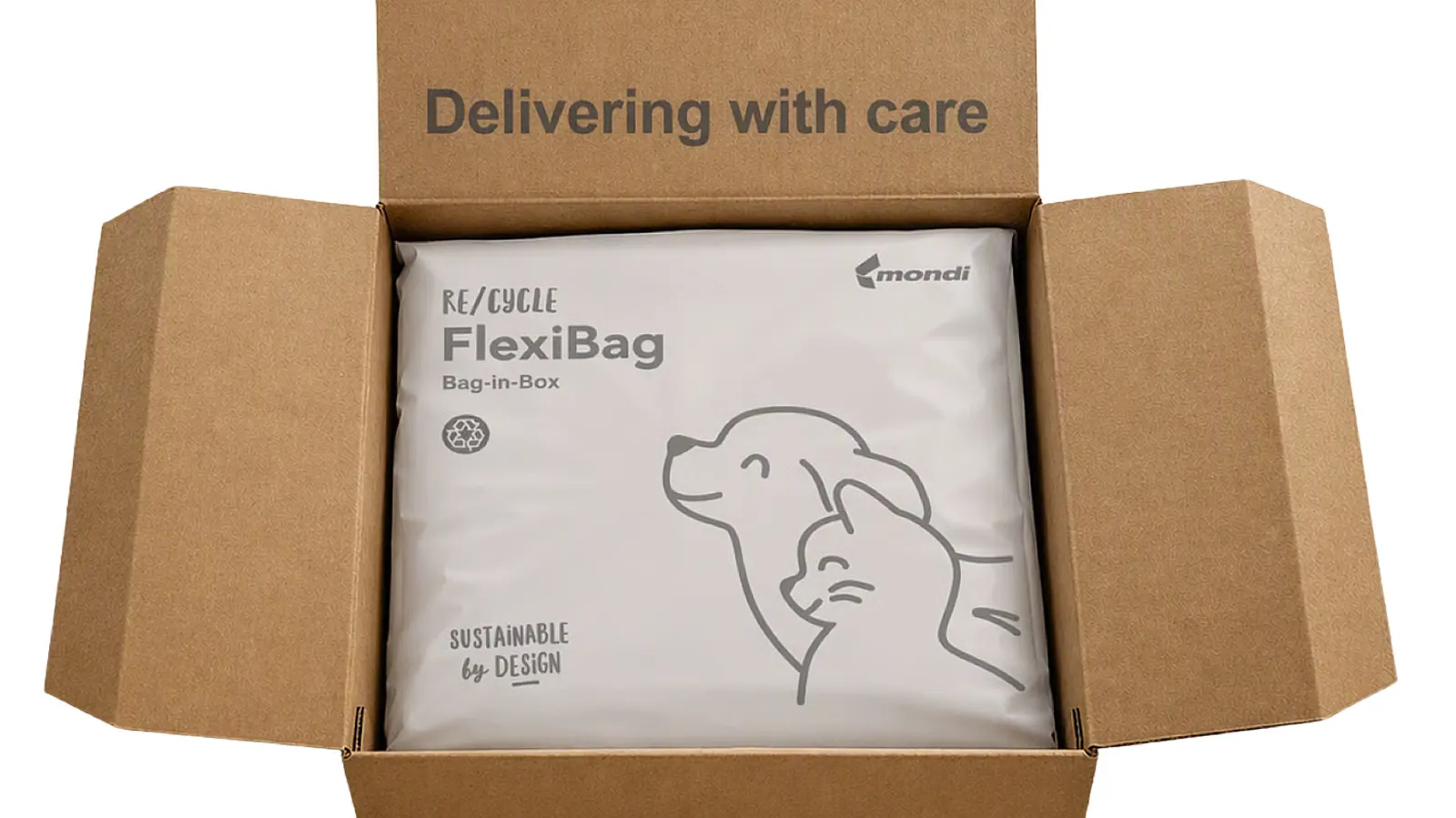
Laser marking reduces the amount of materials used to decorate packaging, such as inks, adhesives, shrink films and paper or plastic labels. United Kingdom-based paper and packaging company Mondi unveiled a laser marking concept in August, emphasizing alignment with design for recycling strategies.
That product is intended for bag-in-box and e-commerce packaging. It consists of a corrugated box containing flexible packaging that is decorated by laser marking, but it can be adapted to a variety of flexible packaging applications. The laser marking eliminates the need for conventional decorative printing and plates, according to Mondi, and also offers customers shorter lead times.
Procter & Gamble set out to improve packaging sustainability via laser marking and approached technology company LasX Industries, which resulted in a multiyear partnership. P&G's key goals were to reduce material and ink use and to boost recyclability by creating a monomaterial structure. The partners went public with their innovation collaboration in 2024 and announced last fall that they brought the technology to market on caps for Tide laundry detergent.
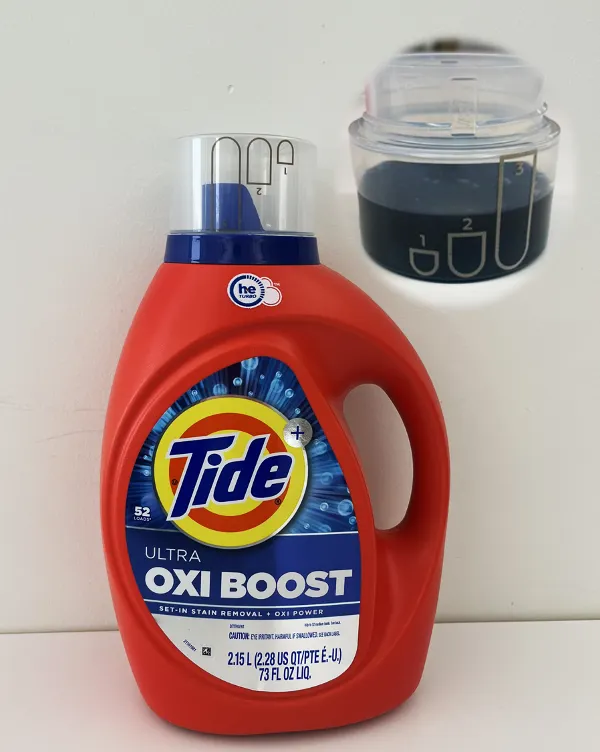
"We took the cylindrical cap that we have on Tide, and we [added] dosing marks on one side, and on the other side we have messaging," said Teo Medellin, director of global corporate packaging sustainability at P&G. The company has used what it dubbed Lazrmark on various rigid polyethylene and polypropylene containers.
Previously, laser marking solutions weren't practical "at high speeds and with the high resolution that the packages need” while still being attractive for a mass-produced package, he said. The Cincinnati-based CPG sought out LasX because of that company's expertise "to understand how to scale up the proposition. And that's where we are today," Medellin said.
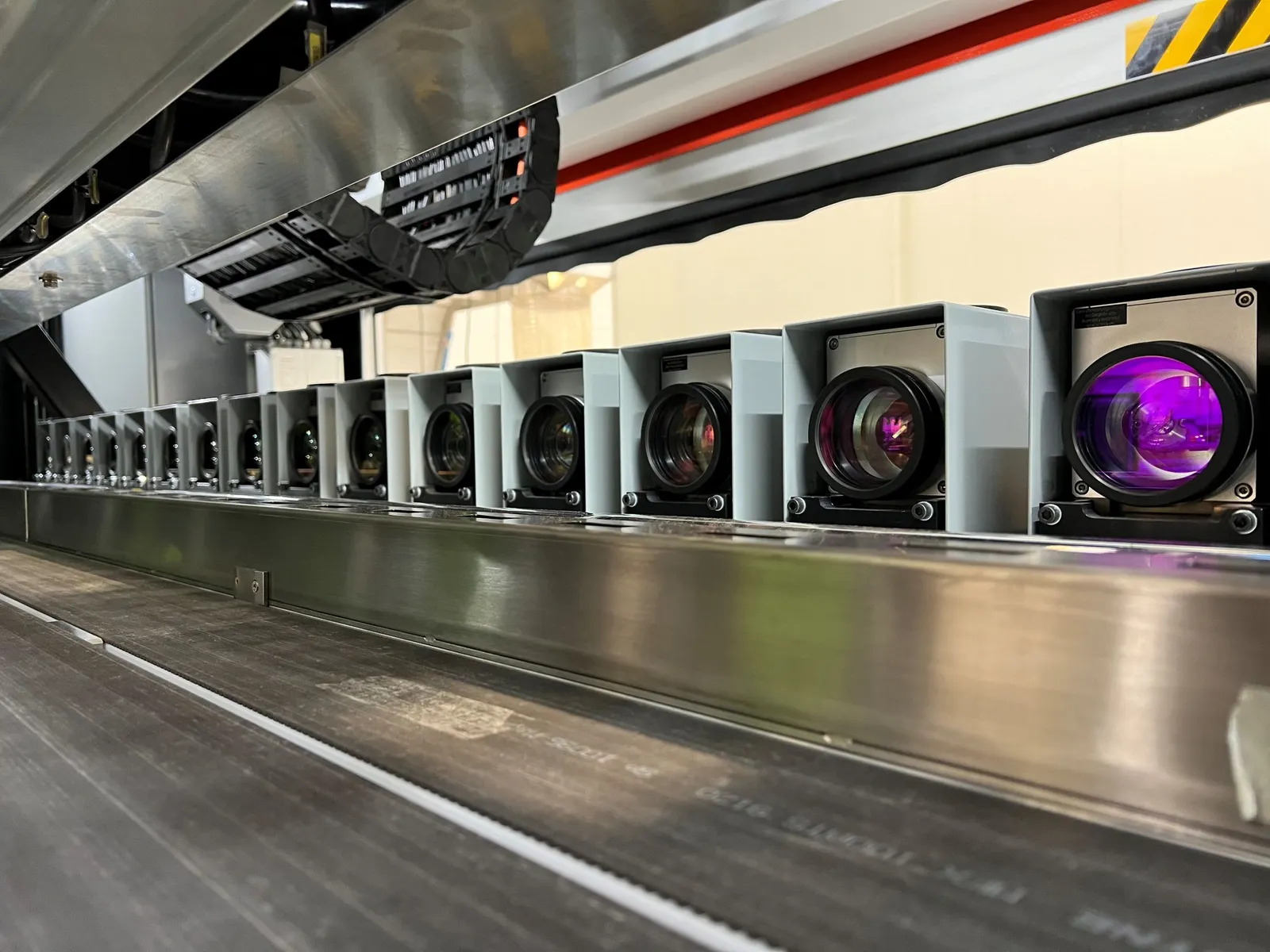
The primary changes with laser marking in recent years have been with the controls and software, said Ethan Dinauer, vice president of global solutions at LasX. The digital workflow allows for quick file changes and no consumable materials. The company’s systems can operate at a speed of 400 bottles per minute or more, depending on size and complexity of the artwork.
"This emergence of high-frequency pulse lasers can be paired with modern scanner technology to unlock unique speeds while maintaining resolutions that are required for full graphics printing," he said. "High frequency pulse lasers have advanced at rapid rates, and also some of the wavelengths that are required to address some of these packaging materials have improved."
The systems typically pulse the laser 1 million to 4 million times per second for packaging decoration applications, Dinauer said. The Minnesota-based company's current controller can support up to 10 megahertz.
"If you would have thought [before] about putting that in a 24/7 packaging environment, you would have said there's not the reliability for it — and potentially not the price point to create the economics," he said. "But those sort of wavelengths have matured in the last five to 10 years."
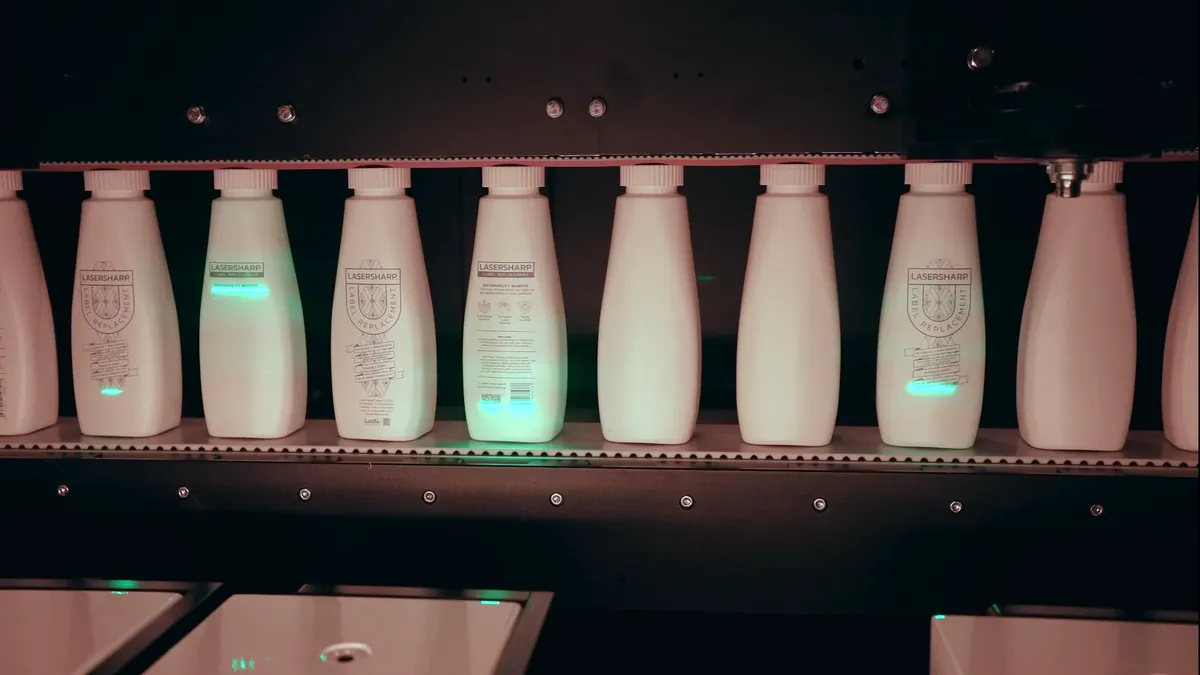
LasX has commercialized the solution as LaserSharp Marking. The 28-year-old technology company is experiencing rapid demand growth from the packaging sector, especially since publicly discussing the P&G project in recent months, Dinauer said. One of the four other consumer packaged goods companies LasX has engaged with has ordered equipment within the last three months.
Reaping fruits of labor
The proprietary Lazrmark technology has been recognized by the Association of Plastic Recyclers and RecyClass as meeting or exceeding guidelines for packaging recyclability.
Laser marking technologies integrate into packaging production lines. LasX provides both laser modules and full turnkey laser sections, depending on customer needs, Dinauer said.
The ink-free laser marking technology uses a pulsed laser beam to alter the surface of packaging or a product. While people are most familiar with a laser carbonizing, or "burning," a surface, LasX technologies use four different methods: ablation, which removes material; reduction, which darkens the material; foaming, which briefly melts the surface and produces a slightly raised mark; and changing the material's crystalline structure.
Laser marking doesn't smudge, rub off or fade like inks can. Laser beams also have fewer restrictions on marking over packaging contours and hard-to-access areas compared with laying down labels on a surface. The systems are said to involve fewer moving parts and have lower maintenance requirements than printing with inks. Plus, technology suppliers say speed and lower material use add up to cost savings for customers.
"In addition, there's a general increased demand for truly unique serialization of a product," Dinauer said. "Not just from a manufacturing perspective, but potentially even from the things you can get out of unique QR codes per object. The technology to do that is really unlocked by lasers."
Laser marking is applicable to nearly all packaging substrates, including fiber, glass and metals, Dinhauer said, and production rates vary based on material. However, its use in the industry so far "is still dominated by polymer constructions," primarily rigid plastics.
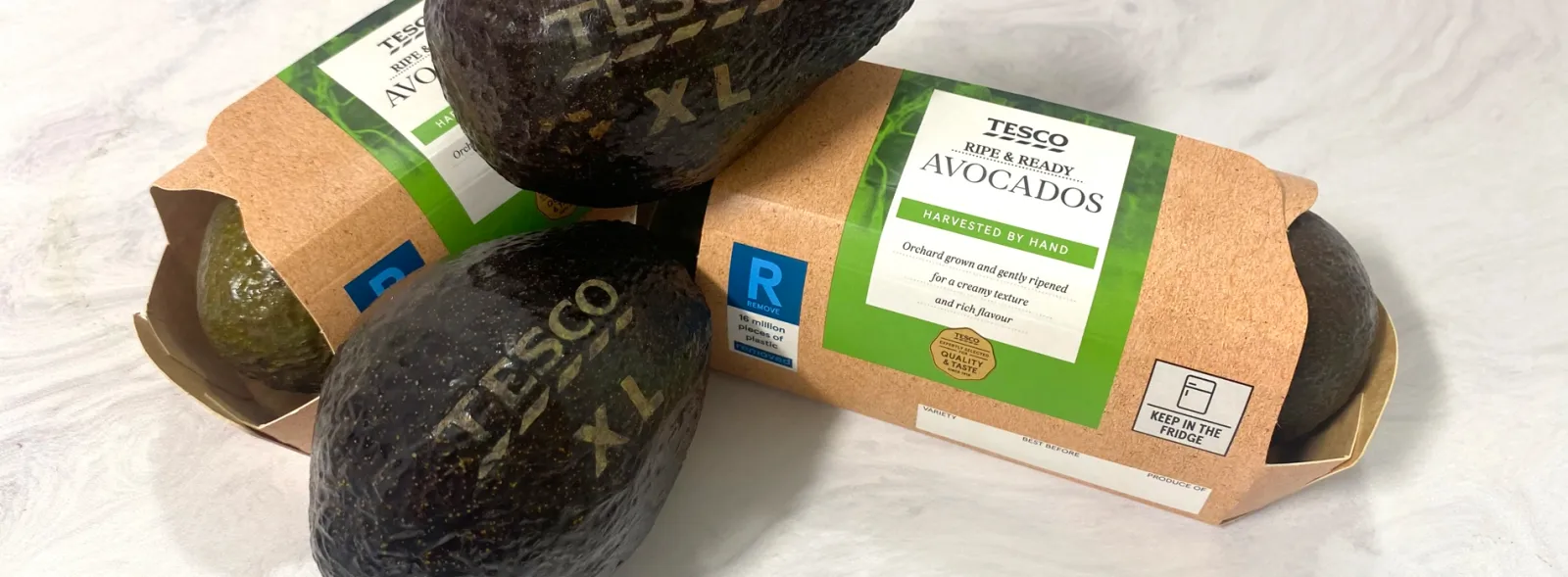
In a quirky twist, laser marking technologies also are being tested for use directly on products — including organics such as produce. U.K.-based grocer Tesco announced two years ago that it had tested laser etching on avocado skins as an alternative to using plastic produce stickers.
A few other trials for these so-called “tattoos” have emerged, including with mangoes, bananas and citrus fruits. However, the practice has not yet become mainstream.
While LasX could offer laser engraving on organics and has proven such capabilities in the lab, so far no major food companies have requested that option, Dinauer said.
Growth prospects
Laser marking for packaging has potential for significant market expansion, sources say.
Dinauer doesn't anticipate that movements like Sunrise 2027 — the global packaging project to shift from 1D barcodes to 2D codes, such as QR codes — will slow the laser marking momentum. "There's going to be continued desire to embellish your products or have unique information on the products, just as much as labeling will still be a thing four or five years from now," he said.
That said, he does wonder how long the market will be satisfied with the current monochromatic nature of laser marking. The technology typically produces grayscale marks, although additives can increase contrast, he said. The true run rate is unknown, but “there's a pretty large market for it in terms of ... laser marking for monochromatic applications,” Dinhauer said.
LasX has invested $2 million in recent years to establish an innovation center at its home base in Minnesota to help customers and prospective customers test laser processes.
P&G continues looking at possibilities for expanding laser marking to other products in its portfolio, and also to other packaging substrates besides PE and PP. The company doesn't intend for this method to completely eradicate conventional labels, but rather to complement them.
"It's an additional tool for packaging designers," Medellin said. "Really, I could say that the sky is the limit in how you could use this technology."