Packaging M&A predictions for smaller deals and private equity engagement are already playing out in 2026. But the Iran war introduced a curveball that could alter the M&A landscape for multiple quarters, if not the remainder of the year.
“It really adds a layer of uncertainty to this whole environment,” said Xinnan Li, senior analyst for packaging and logistics at RaboResearch. “We weren't expecting — obviously — events like this. I think this really could throw off the agenda this year for a lot of people.”
Prior to the war, companies were adjusting to geopolitical movements such as tariffs. Those trade measures had impacts, but generally current rates are considered “milder” and more manageable than those that President Donald Trump initially proposed, Li said. The Iran conflict not only introduces another complicating geopolitical factor, but one that touches numerous industries, thanks in large part to the skyrocketing price of fuel.
Geopolitical and economic uncertainty tends to cool M&A activity. Notably, it can influence companies' valuations.
“Uncertainty really inhibits deals. People are going to wait to see if there's clarity” before moving forward with new transactions, Li said.
Overall, stocks experienced their worst quarter in nearly four years during Q1 2026, largely driven by fallout from the Iran war. Packaging is among the hardest hit industries, with stocks experiencing a sell-off throughout March. This performance and other uncertainty trickles into M&A, sources say, and could prompt companies to delay announcements or even not proceed with deals, depending on ongoing conditions.
Packaging companies still have announced deals throughout the first quarter, including since the Iran conflict began on Feb. 28, according to Packaging Dive’s tracker of M&A deals with a North American presence.
That pace is slower than industry observers initially had predicted. “Underlying demand for packaging has not been as robust in the first quarter as expected, and that's really hindered M&A activity,” said Cael Pulitzer, managing director who leads the packaging investment banking practice at Brown Gibbons Lang & Co.
Certain sectors are experiencing increased numbers of transactions. Notably, those sectors are not directly tied to packaging and container manufacturing and sales volumes, but rather to adjacent areas such as distribution, co-manufacturing and machinery, Pulitzer said. These neighboring categories are seeing market growth while packaging and container companies' performance lags.
“One of the reasons why we really like distributors is they can be nimble. They're more consumer focused,” Pulitzer said.
He highlighted the strong tie between consumer spending and packaging demand. Consumer spending has been sluggish in an inflationary environment that is exacerbated by the Iran conflict. If the war ends soon, dynamics could change for M&A the remainder of the year.
“I would think the strategics would pivot back to being more M&A focused to drive growth,” Pulitzer said, noting expectations for “steady, recession-resistant growth dynamics — but not double-digit-plus growth dynamics that we saw in ‘21 and ‘22.”
Tracking Q1 trends
Numerous analysts predicted that 2026 would bring packaging companies to the M&A table as a means to drive growth and shareholder value at a time when stock prices and sales volumes have been sluggish. They're sticking with that theme, considering data available about Q1 packaging demand so far hasn't shown significant signs of improvement.
Packaging executives especially are focusing on programmatic M&A, pursuing multiple small-to-medium deals instead of one or two large deals to achieve specific goals, according to a recent report from consulting firm McKinsey & Co.
“Over the last few years, the industry has seen ups and downs in volumes, and now they are again at a crossroad where the consumer spending and behaviors are changing,” said Abhinav Goel, partner at McKinsey and co-author of the report. “So packaging companies are trying to find ways to continuously grow and maintain the trajectory that they had during COVID.”
Illustrating this trend, Packaging Dive's M&A tracker shows CCL Industries and SupplyOne each announced two acquisitions in Q1. SupplyOne also announced multiple deals throughout 2025.
Going after multiple smaller transactions is a shift from the megadeals trend that peppered 2024 and 2025. Those large dollar-value deals mostly are in the past, sources say.
“A lot of the megamergers have happened already, and there's not a ton of room for more of those huge deals to happen,” Li said.
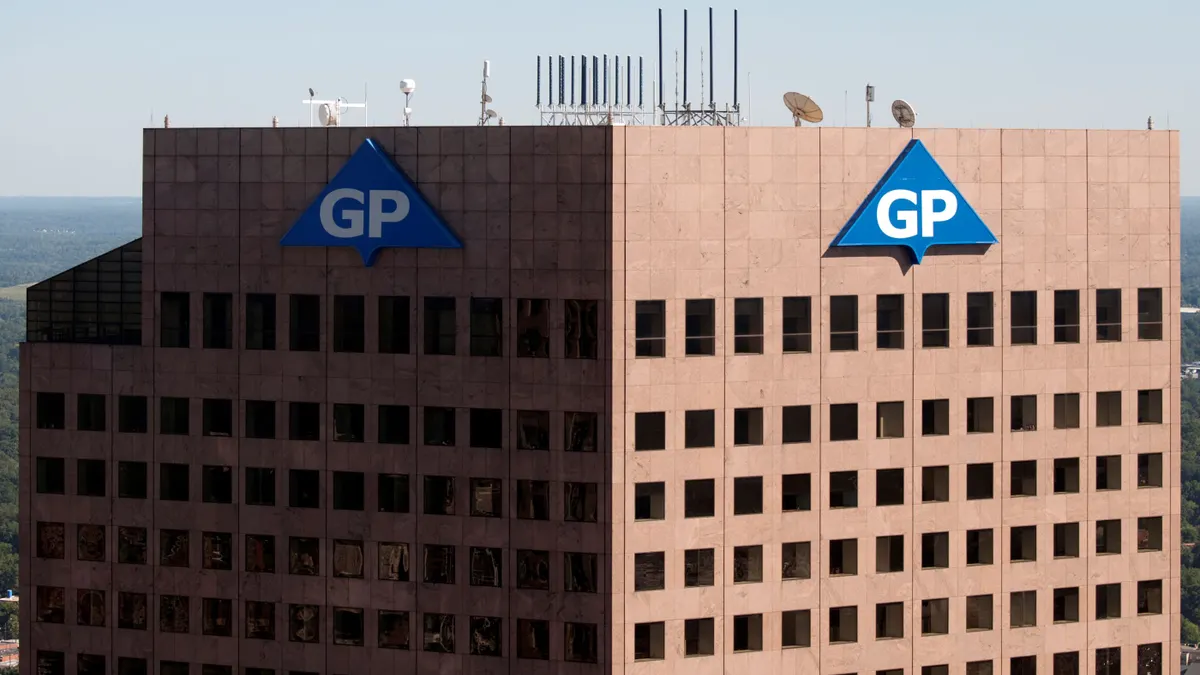
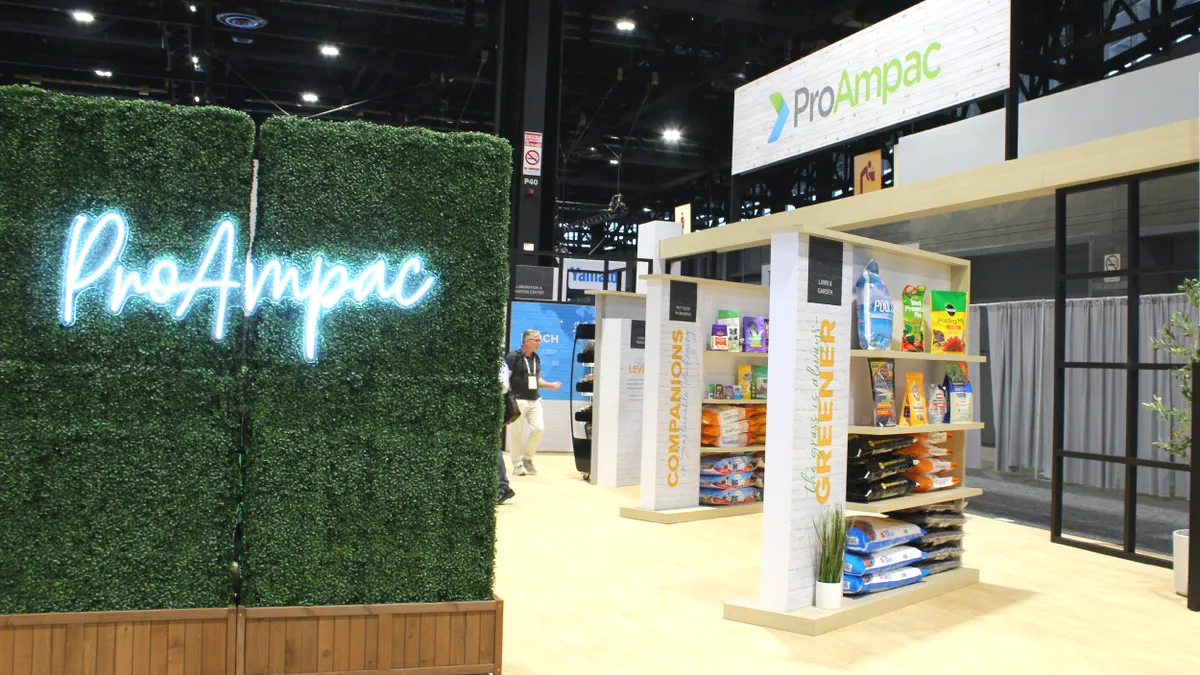
While Cincinnati-based ProAmpac completed its $2.1 billion acquisition of Chicago-based TC Transcontinental Packaging in March, that dollar amount is not at the same scale of the megadeals the last couple years. For instance, Memphis-based International Paper disclosed that its acquisition of London-based DS Smith in 2025 had an enterprise value of $9.9 billion.
IP is a bit of an exception to the waning megadeals trend. The company announced in January that it would make a big move to split into two geographically-centric companies, just one year after acquiring DS Smith.
International Paper CEO Andy Silvernail has since discussed how this is due to IP initially overestimating the global synergies and instead realizing the regional nature of the North American and European markets. Thus, the growth benefits IP seemed focused on during the early days of the acquisition appear unlikely to develop in the company's current state.
“I think the leadership really has growth in mind,” Li said of the decision to split. “When they merged, they rationalized some of their capacities. So that's already done. But then, where is the next wave of growth coming from?”
It's not yet clear if international deals in general will fall out of favor due to tariffs and other factors. But “international M&A is always difficult,” Li said, noting such transactions in the packaging space generally are less prevalent than regional ones.
“When you're looking at the deal, it's really simple just to combine the two companies mathematically on paper. But in reality, there is so much more nuance,” she said. “And I think that's exactly what IP and DS Smith found out.”
Private equity activity still prevalent
Despite less robust than expected M&A activity in Q1, private equity is still a strong player.
“Private equity is hungry for acquisitions,” Pulitzer said. “Right now, private equity actually views packaging as a very opportunistic sector.” PE understands packaging hasn't been performing well “and they want to be a part of the 'rebound' that is sort of looming,” he said.
“As we move out of this packaging recession, there's going to be more and more attractive businesses in the marketplace. And given the fact that there's so much private equity that wants to deploy capital in packaging, I see a lot more new platform deals in the near future,” Pulitzer said.
Plus, previous PE activity in packaging over the last five to seven years means the space is ripe for exits in 2026 and 2027.
“Their money has a time frame where they need to realize the returns for their investors. We're kind of coming up to that now,” Li said. “The only way to realize returns is to exit somehow.”
2026 outlook
Although Trump updated the nation Wednesday night on the Iran war and suggested it could be finished in another two to three weeks, it's impossible to know how long it will actually last. Already, it's past the one-month mark, edging beyond the four to five weeks he first predicted. The longer it drags on, the more negative effects are expected for businesses — and the longer a period of depressed M&A activity.
“If it's over, let's say, in the next few weeks or months, then very well we could see the second half of this year coming back up,” Li said. “But if it drags on, like Russia in Ukraine, then we really don't know.”
Until then, the economic challenges and uncertainty are expected to continue influencing consumer spending, packaging demand and the volume of M&A transactions.
“If the global political environment settles and we see inflationary normalization, and the consumer is starting to spend again, then I see packaging on a path toward recovery,” Pulitzer said. “I do anticipate the year will improve [for M&A activity], but largely will be aligned with the overall performance of the sector.”