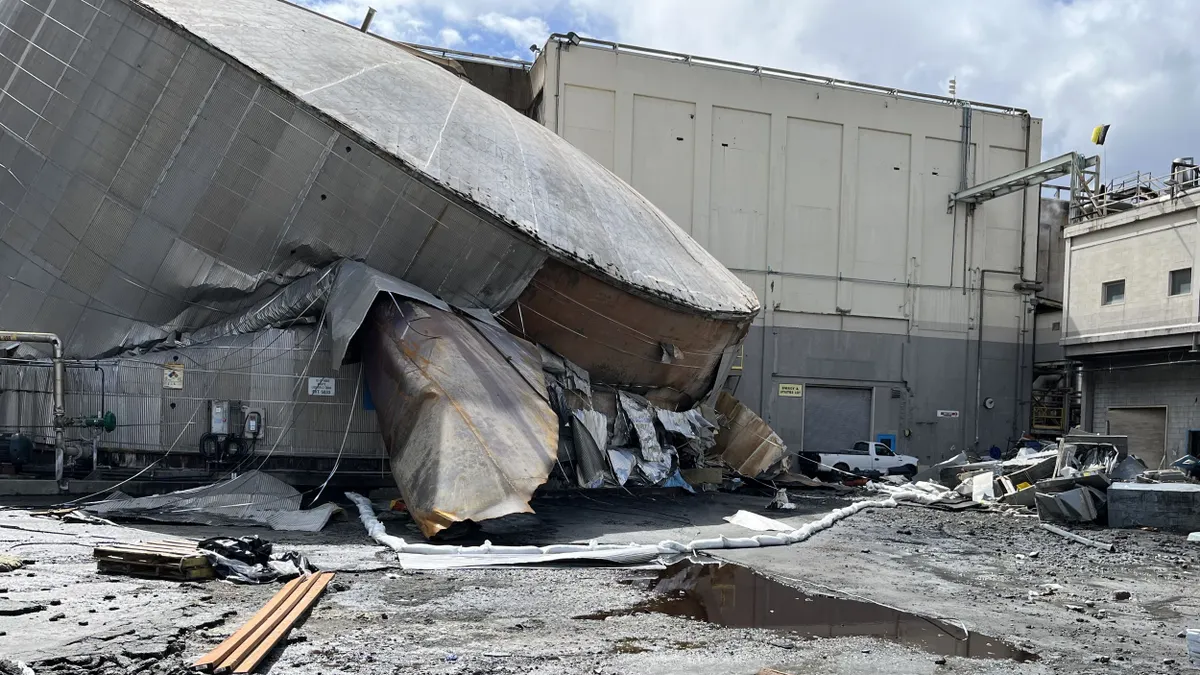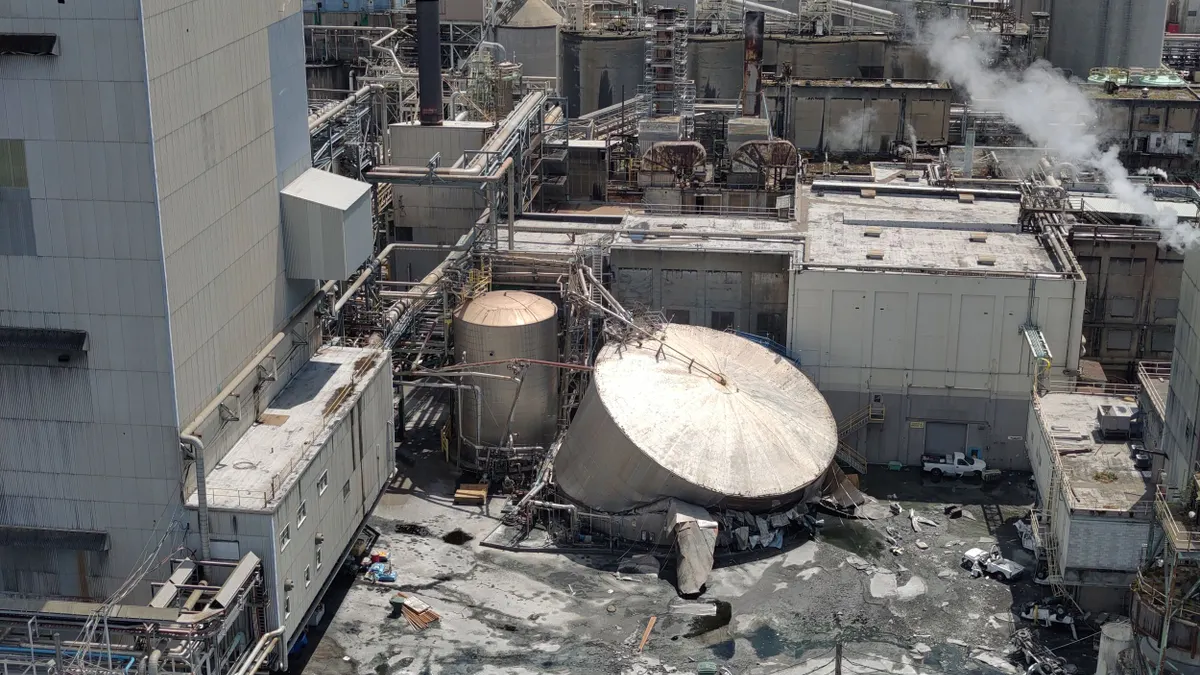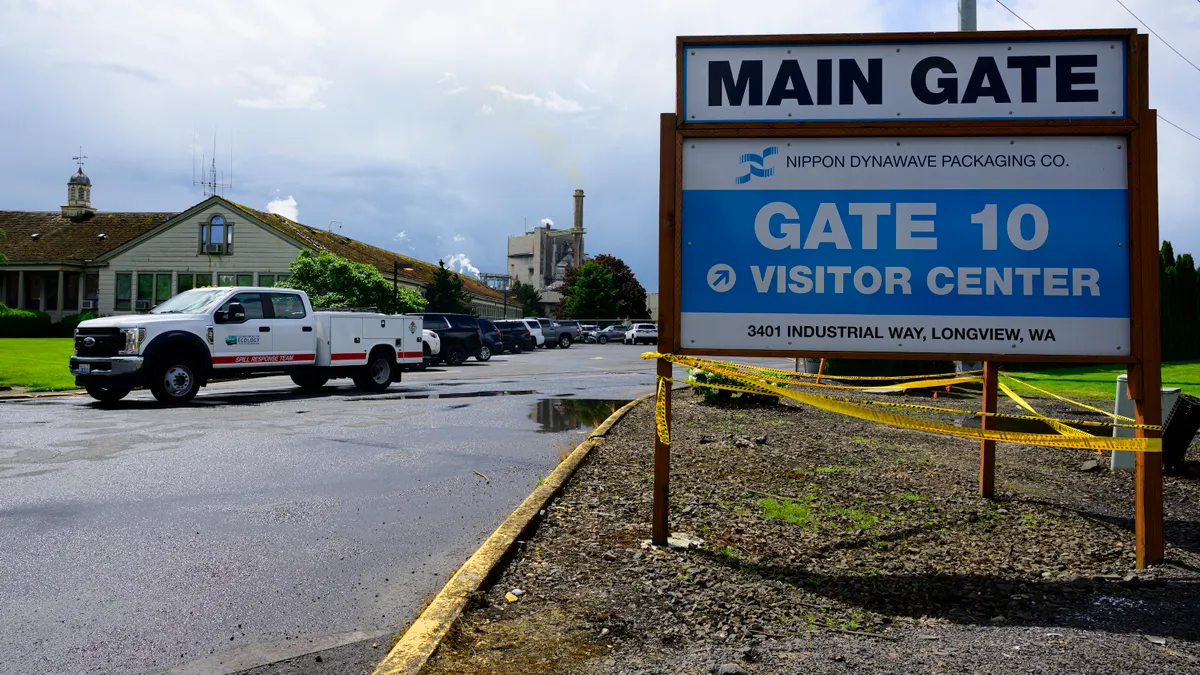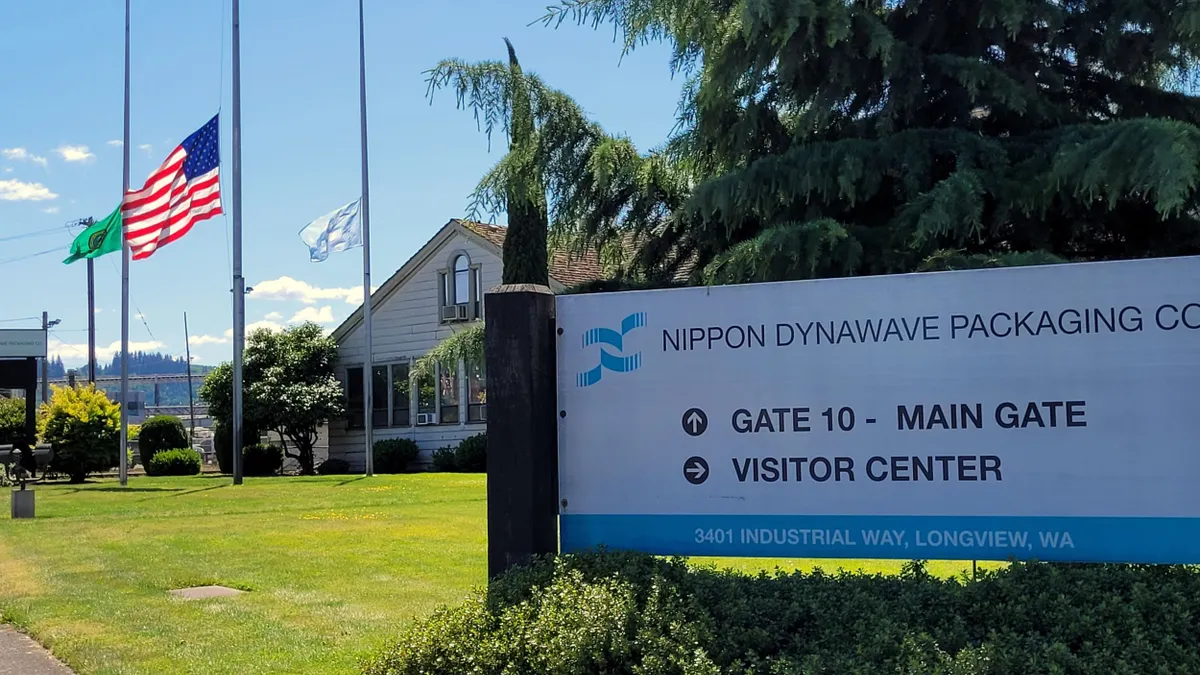
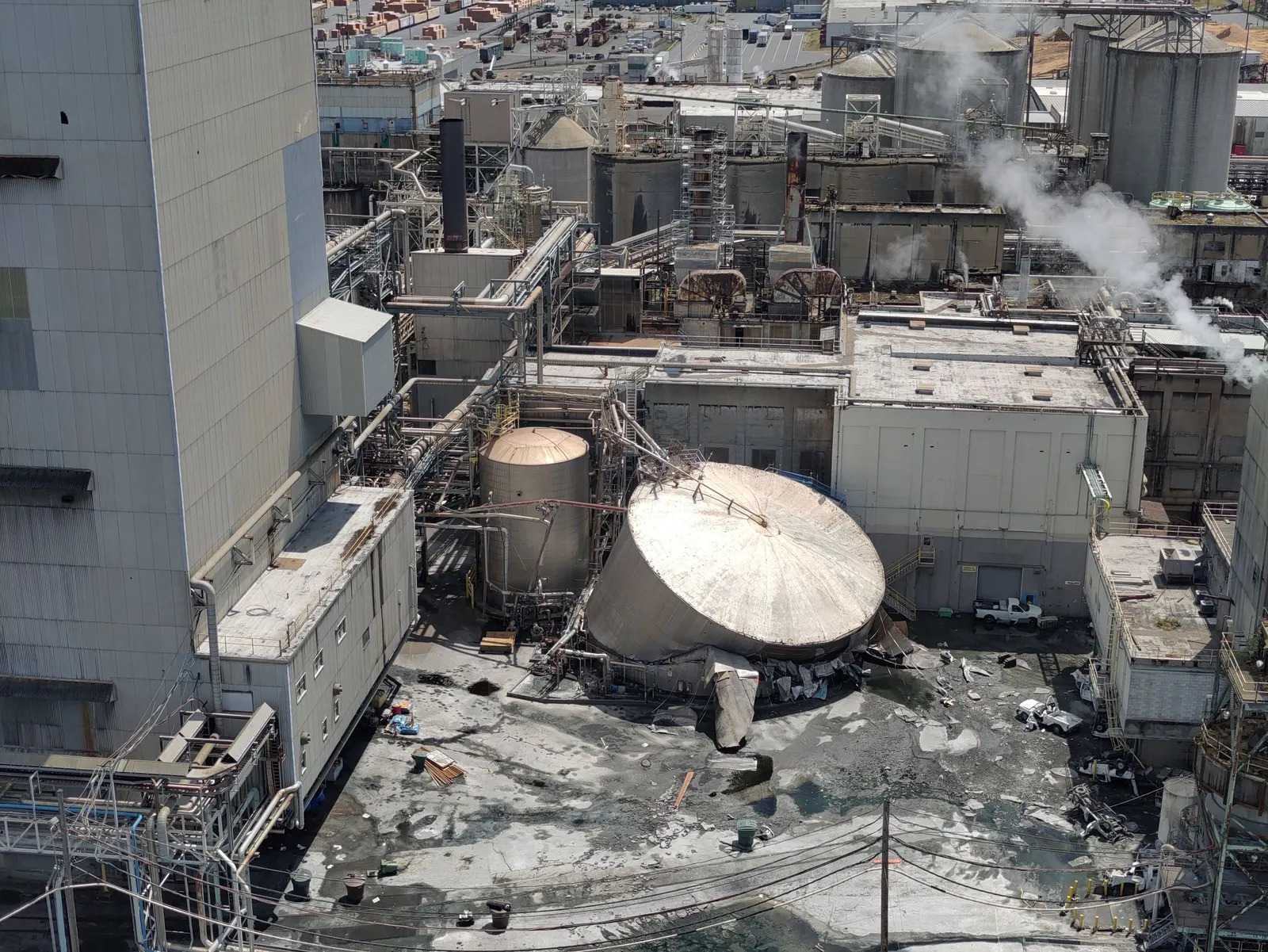
LONGVIEW, Wash. — Travelers near Nippon Dynawave Packaging Co.’s pulp and paper mill in Longview can smell freshly cut wood from the multiple nearby businesses that produce lumber, paper and packaging. Absent is the recognizable odor emitted during wood pulping, due to the mill's nearly complete shutdown since a deadly white liquor tank implosion there May 26.
The implosion is being called one of the deadliest U.S. workplace incidents in decades. NDP's Japan-based parent company Nippon Paper confirmed in a statement Sunday that 11 people died and eight more were injured.
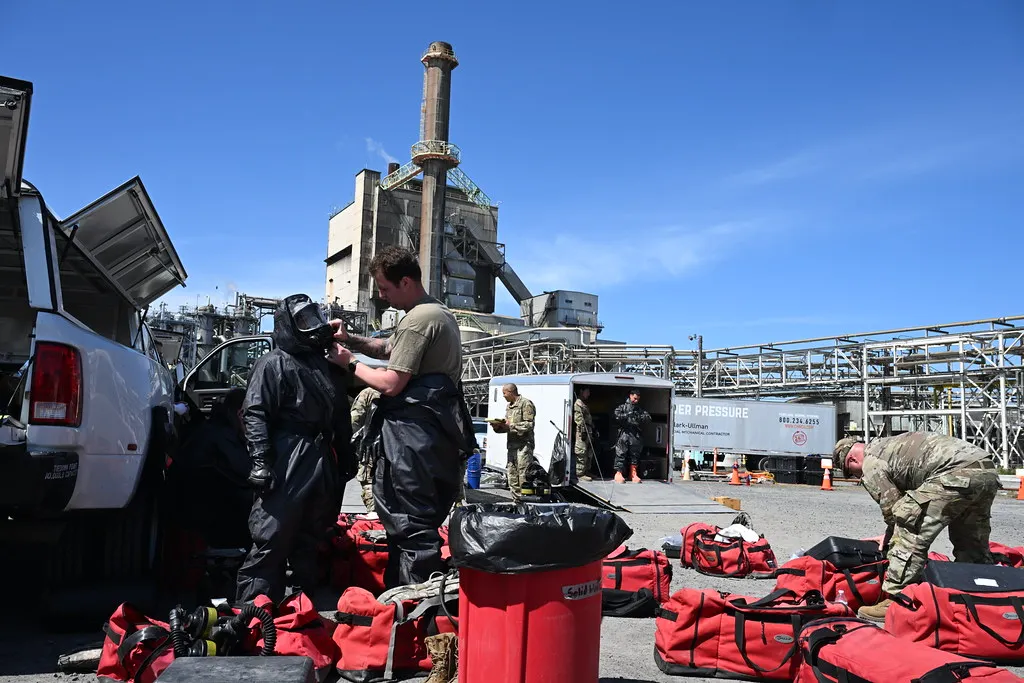
NDP largely ceased operations at the paper mill following the implosion, Oregon Public Broadcasting reported. The Washington Department of Ecology, the Washington National Guard and the U.S. Chemical Safety and Hazard Investigation Board are among the local, state and federal groups on site to assist with cleanup and investigations into the disaster.
The pain and sense of loss are palpable in this 38,000-person community in Southwest Washington, as well as in the surrounding areas of the state and neighboring Oregon. Gov. Bob Ferguson called for Washington state agency buildings' flags to remain at half staff through sunset on June 7.
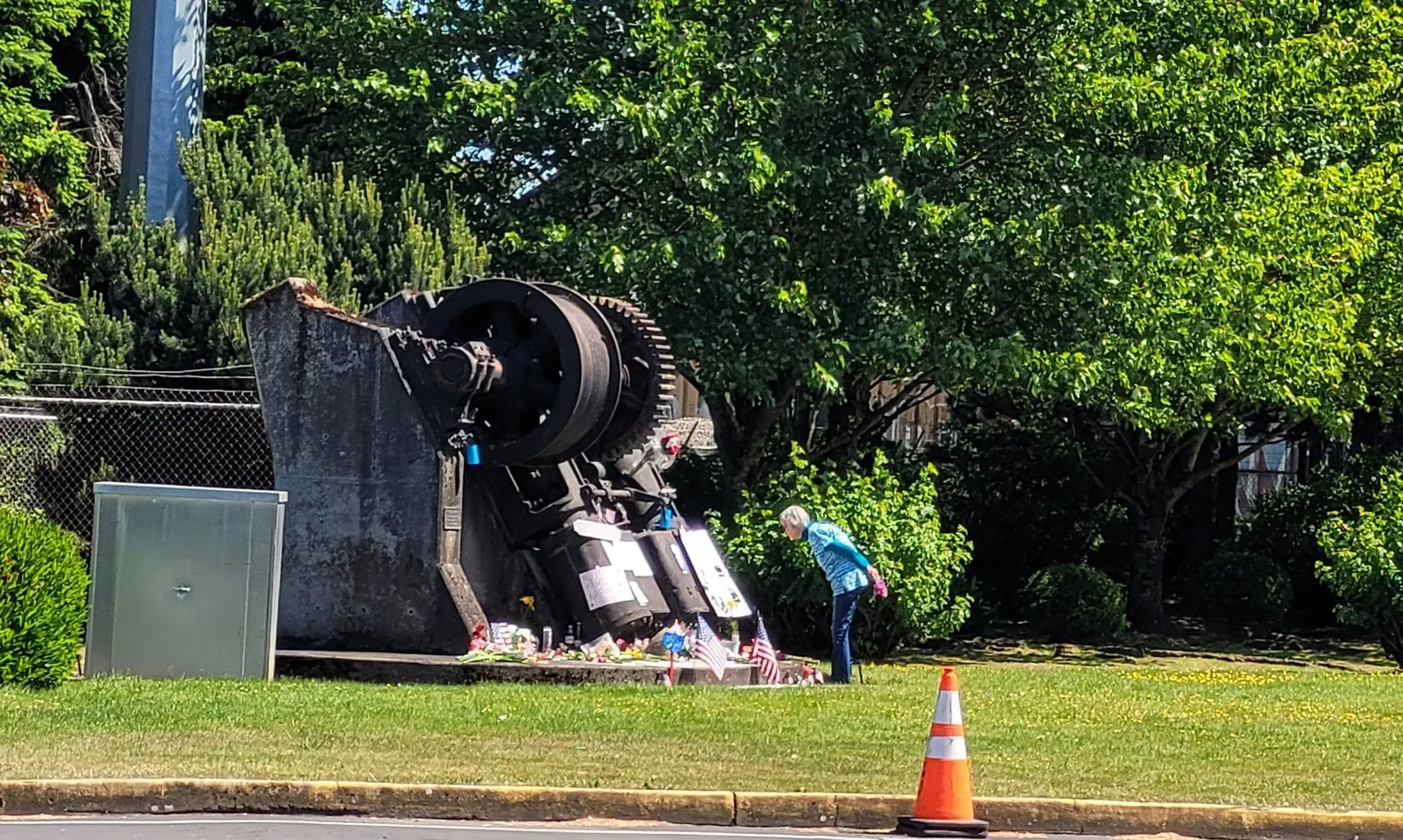
Tears and stoic, strained faces were visible on people who were near the NDP site over the weekend. Mourners have left signs and other objects at a makeshift memorial near the business’s entrance.
Losses ripple through community and industry
For generations, Longview has had the distinction of being a “mill town,” even as the industrial strip has grown to include other industries such as metals production. Locals describe a tight-knit community where nearly everyone knows someone who has worked at one of the wood or paper mills.
The mills’ influence stretches throughout the region. Braden Beisse told Packaging Dive that Longview is his hometown, although he currently lives 50 miles south of there in Portland, Oregon. For several summers, he worked at the North Pacific Packaging Co. mill that is adjacent to NDP's campus — both had been previously owned by Weyerhaeuser, which still has a lumber mill there.
“I’m devastated to think how this tragedy took so many innocent lives and the countless families impacted. My heart goes out to all the brave men that perished and were injured — as well as their loved ones,” said Beisse, who currently is senior key account director for cybersecurity at Omdia. (Informa TechTarget is the publisher behind Packaging Dive and the parent company of Omdia.)
“My hope is that eventually positive outcomes arise that help avoid anything like this ever happening again,” he said.
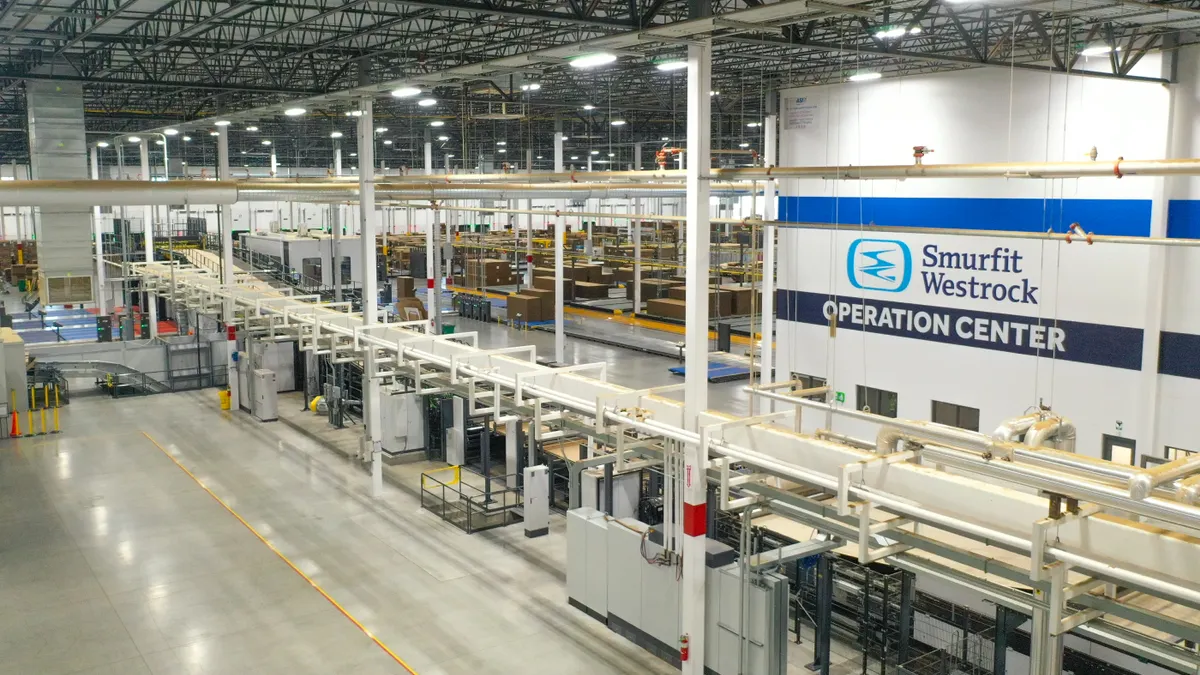
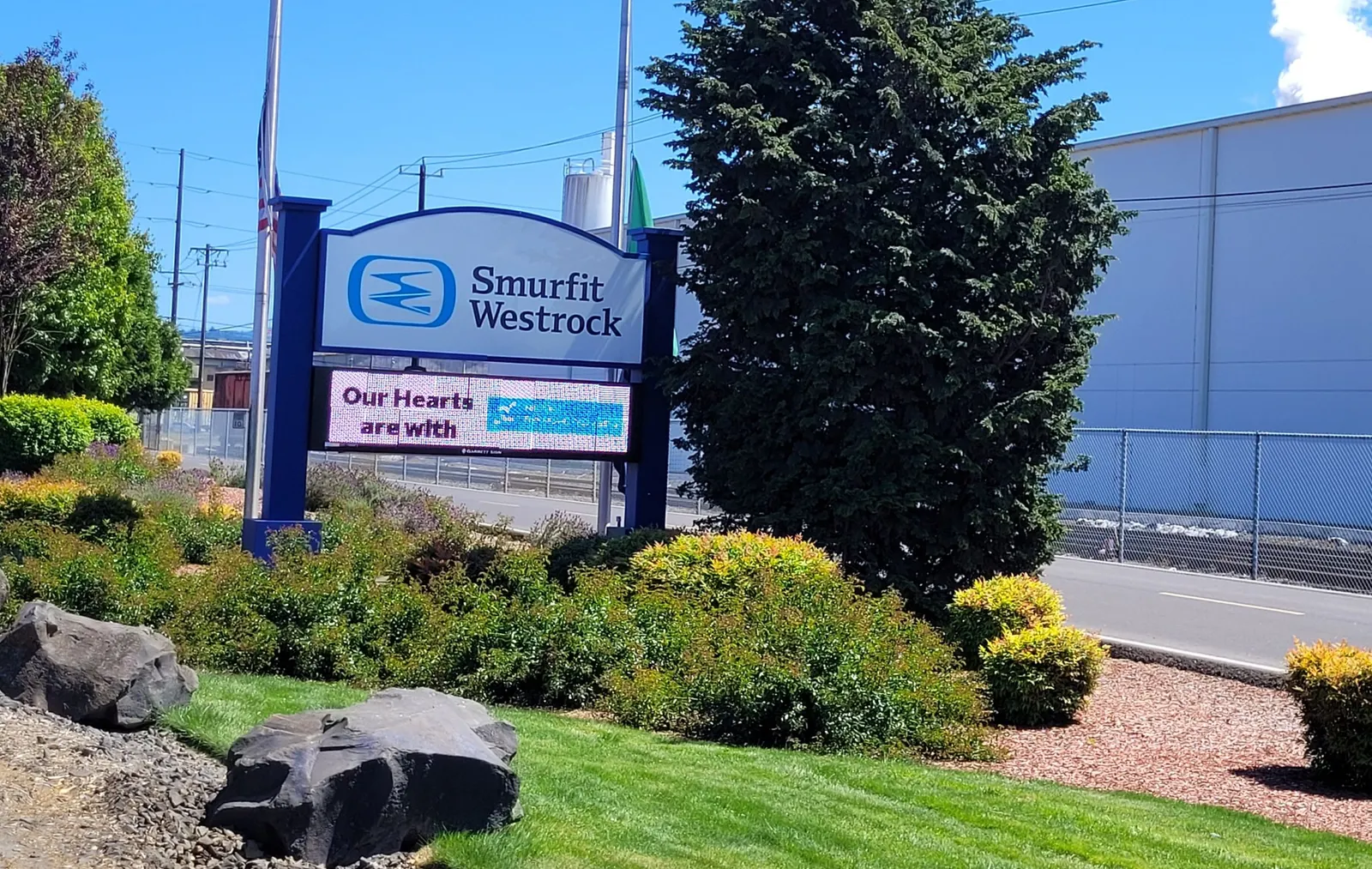
Neighboring businesses display messages of solidarity and support. Among those is a digital message at Smurfit Westrock's Longview corrugated plant a couple miles up the highway from Nippon Dynawave. Smurfit Westrock said operations and production at its Longview facility were not affected by the incident at NDP.
International Paper made a similar statement of support via email. “[O]ur hearts go out to the team at Nippon Dynawave and their families,” said Amy Simpson, head of communications for North America.
IP announced in April that it would acquire North Pacific Packaging Co. from private equity firm One Rock Capital Partners for $360 million. IP initially had expected the Norpac acquisition to close in the third quarter. The company didn't indicate whether the NDP incident would affect the deal closure or timing.
“We are optimistic that the transaction will move forward as planned. We continue to gather information and are in close contact with the Norpac team,” Simpson said Monday.
Norpac did not respond to a request for comment.
Potential supply chain disruptions
Nippon Paper continues to state that the Longview incident’s impact on production, shipments and financial performance is still being assessed. But the paper and packaging industry is beginning to get a sense of current and potential future supply chain effects from the production curtailment.
Analysts are flagging that fallout from the Nippon Dynawave incident likely will ripple through the paper and packaging industry. The Longview mill produces roughly 300,000 metric tons of paperboard for cartons and cups annually. It exports much of that to parent company Nippon Paper in Japan, according to a Sunday note to investors from Michael Roxland, senior paper and packaging analyst at Truist Securities, citing information in a May 29 memo from Fastmarkets RISI.
“Our sense is that Nippon Dynawave’s participation in US cupstock is somewhat nominal,” Roxland said, adding that Graphic Packaging International and Georgia-Pacific are the two largest North American cupstock producers and account for more than half of the market.
“Should Nippon Paper need to replace that tonnage while the Dynawave mill is down, it could purchase tonnes on the open market in North America, while its domestic cupstock business could seek other suppliers, affording a slight benefit to industry operating rates,” Roxland said. This could be positive for domestic liquid packaging paperboard and marginally positive for cupstock producers, including GPI, Clearwater Paper and SW, he said.
The NDP plant manufactures paperboard for liquid packaging such as gable-top cartons. It only produces the fiber material used for carton converting, not cartons themselves, according to the Carton Council. The group does not have data on how many cartons are converted from NDP's paper, and it's unclear whether and to what degree the incident could affect broader gable-top carton supply. Nippon Dynawave is not currently a Carton Council member. If domestic carton supply is disturbed, it would be further upstream than during a carton shortage that occurred in 2023 and stretched into 2024.
The NDP mill also produces northern bleached softwood kraft pulp. It supplies Norpac with approximately 75,000 metric tons of kraft slurry pulp annually, Roxland noted. With its pulp supplier taking downtime indefinitely, Norpac is at risk of experiencing disruptions, analysts suggest.
With the incident only occurring a week ago and investigations ongoing, observers aren't yet offering firm projections of when Nippon Dynawave might restart operations in Longview. Fastmarkets RISI speculated the outage could last anywhere from a few weeks to six months, depending on the extent of damage, outcomes of various investigations and securing alternative chemical supplies.
The American Forest & Paper Association, of which NDP is a member, did not directly respond to questions about potential disruptions at paper and packaging facilities or to carton supply chains. It referenced a statement jointly released Friday with the Northwest Pulp and Paper Association noting that the groups are monitoring the situation “to fully understand the root cause of this incident and identify measures that can help prevent similar tragedies in the future.”
Earlier in May, parent company Nippon Paper announced it would raise liquid packaging prices more than 10% starting July 1 due to raw material price increases stemming from the war with Iran. On Monday, the company issued another notice about war-related cost increases, announcing a more than 15% price hike to start July 21 for all white paperboard, cup-based paper, processed base paper and packaging paper.
Monitoring environmental impacts
The magnitude of this tragedy’s impact on Longview community members is clear, but the environmental implications are still unfolding.
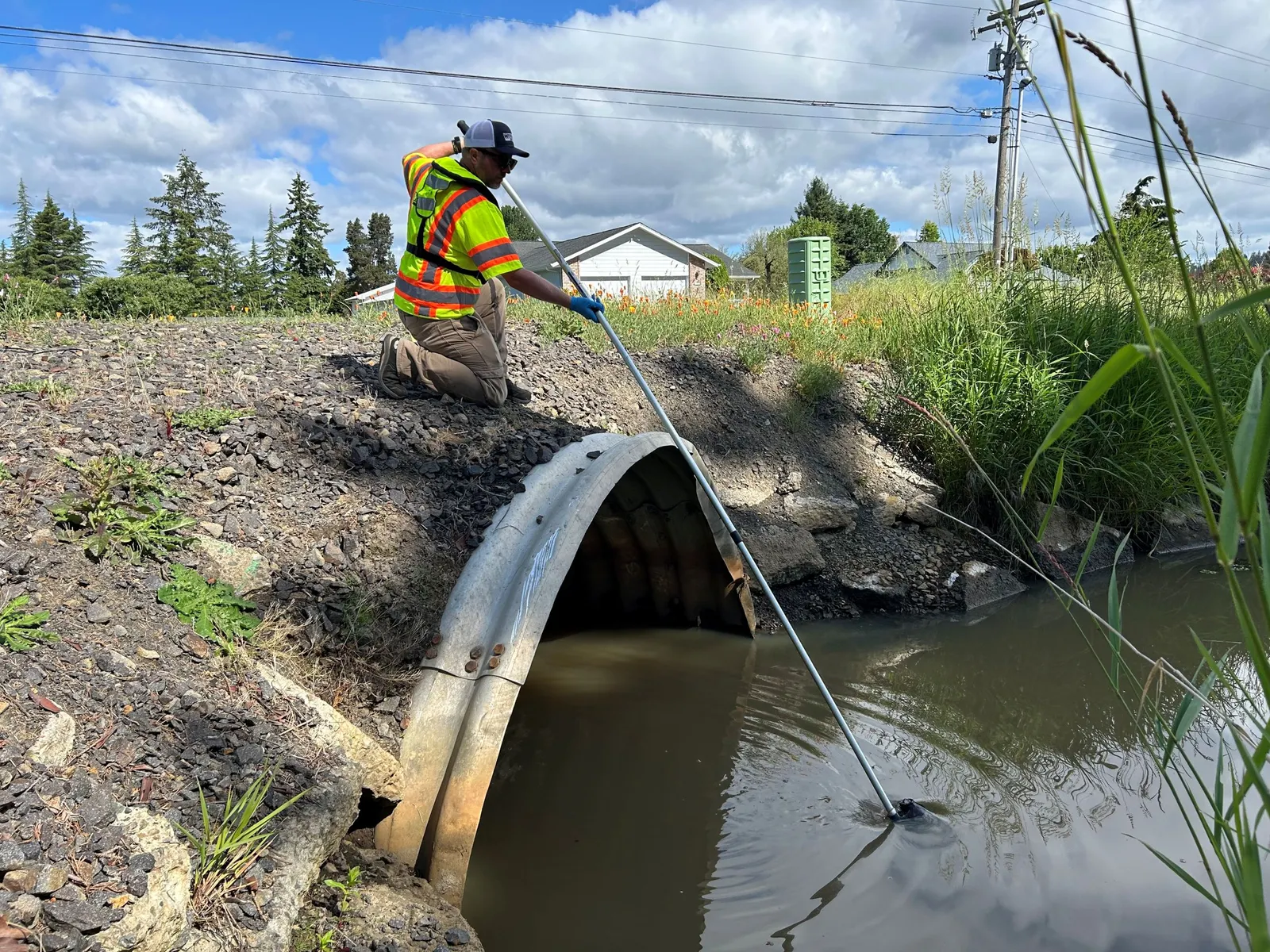
The tank had a 900,000-gallon capacity and was estimated to be two-thirds full at the time of failure, according to Ecology. Some chemicals made their way into drainage and dike systems that flow into the Columbia River. Since the spill, crews have been working to pump and flush water throughout the system, which helps to dilute the chemicals, the agency said.
All fluid discharge from the NDP facility to the dike system ended Monday morning, so emergency flushing operations have ceased for now. The Consolidated Diking Improvement District #1 is leading the exterior ditch flushing efforts with oversight from the U.S. EPA, Ecology and the National Oceanic and Atmospheric Administration.
Ecology told Packaging Dive that most of the spilled white liquor did not leave the site, and cleanup continues inside the facility. NDP and its contractor Republic Services are leading the interior cleanup, with oversight by Ecology and the EPA. Vacuum trucks with pumps are removing waste, and all material is being processed on-site at NDP in its wastewater treatment plant, according to Ecology.
The agency has been testing water and air pH levels at numerous points in the vicinity. Ecology confirmed that both are safe, noting the water is pulled from a groundwater aquifer and undergoes treatment.
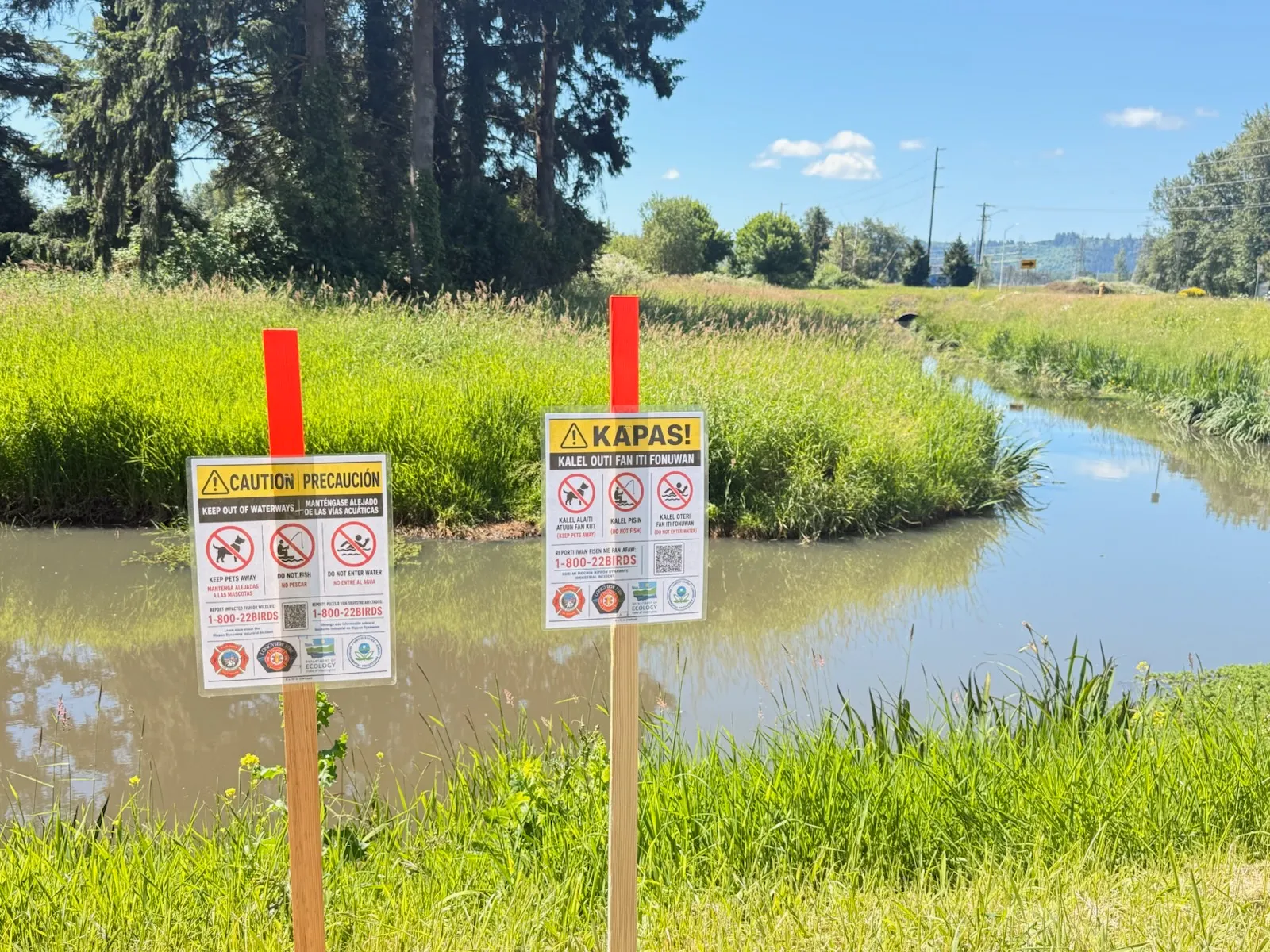
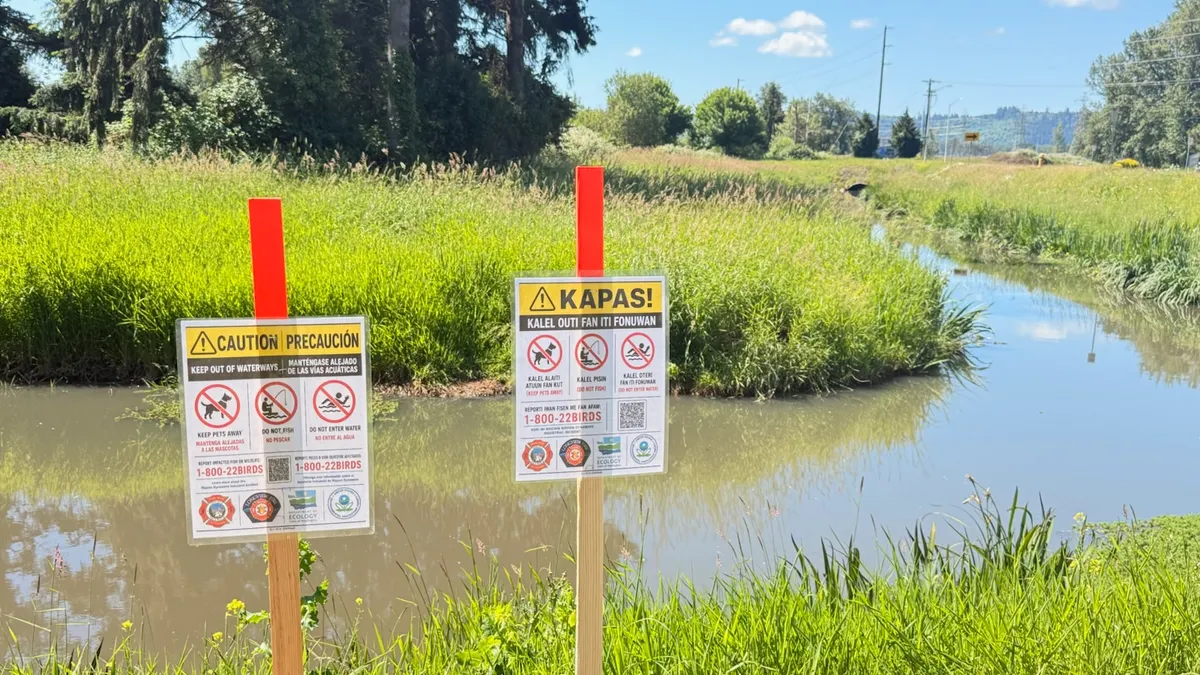
However, the chemicals that leaked into surface drainage ditches and other waterways have resulted in the collection of more than 2,450 dead fish as of Tuesday. Some American bullfrog tadpoles also were affected, according to Ecology. The agency still urges residents and their pets to stay away from the waterways, and hundreds of signs are posted in multiple languages warning community members of potential danger.
On Tuesday, crews will fly a large drone over the affected area to conduct an aerial inspection of the ditches.
Editor’s note: This story has been updated with additional information from the Washington Department of Ecology regarding the white liquor tank and affected wildlife.