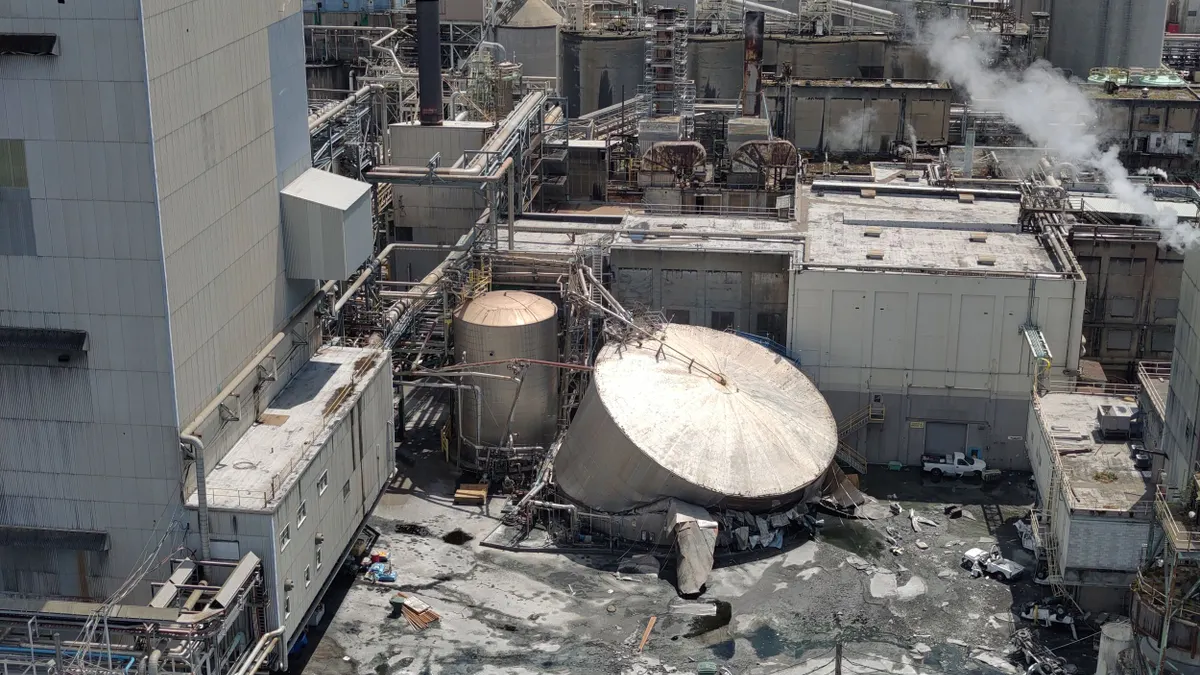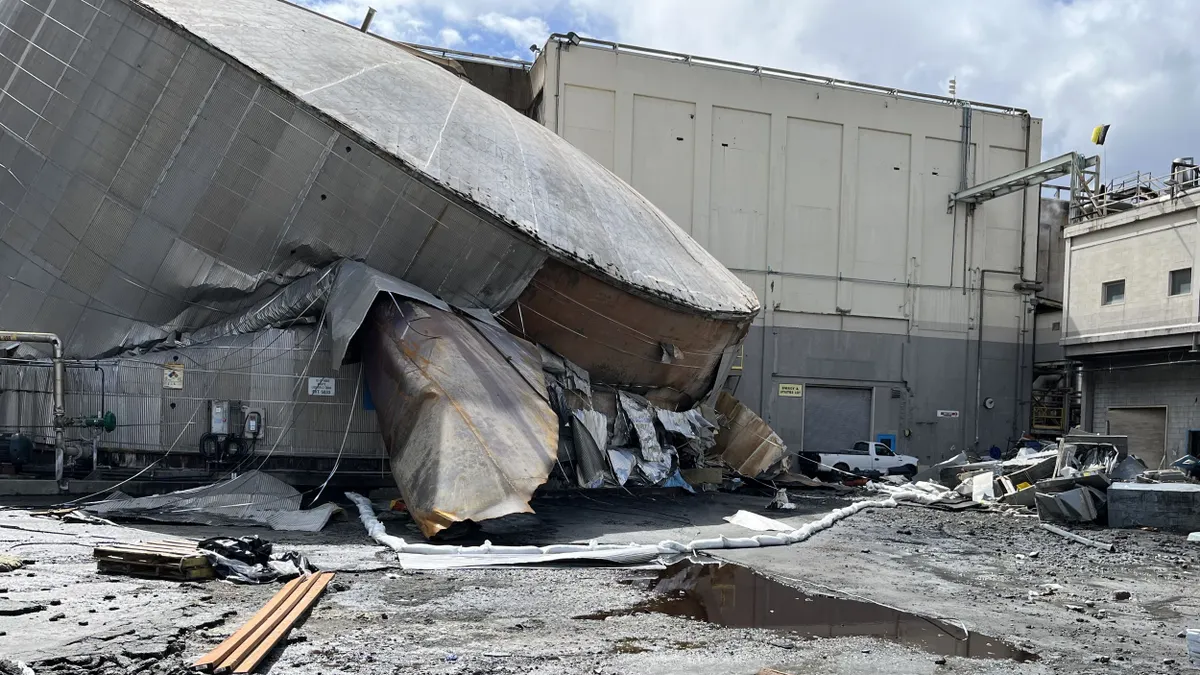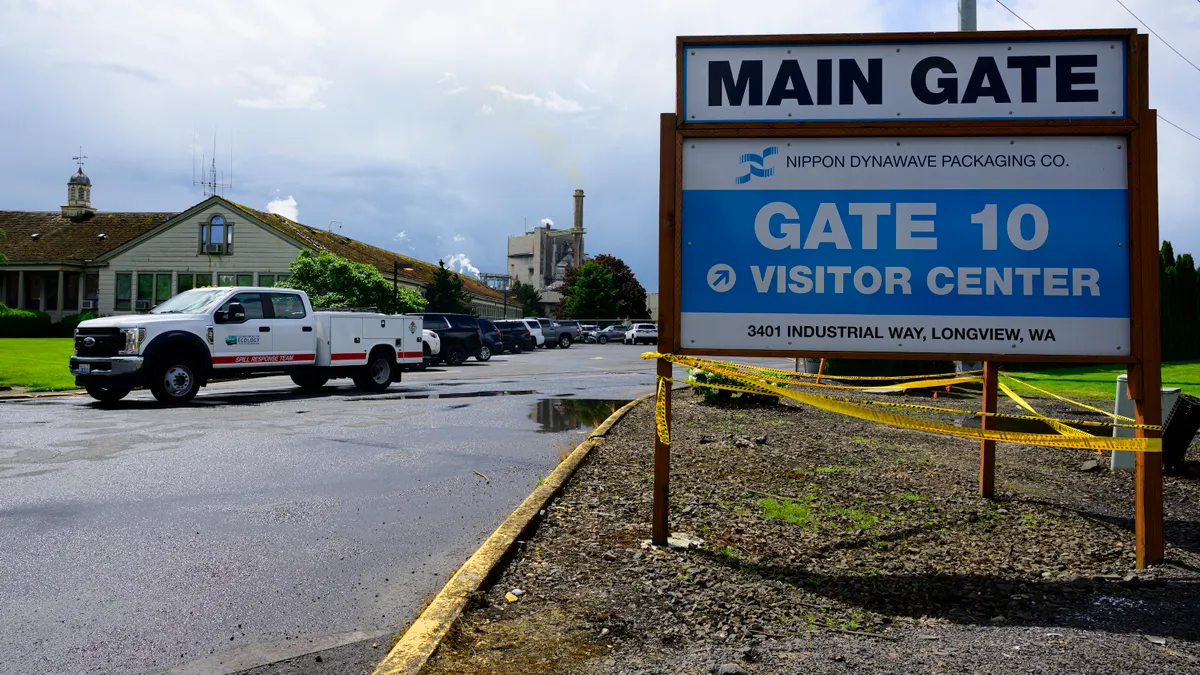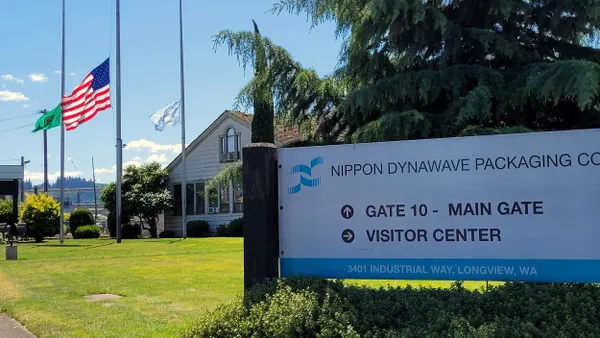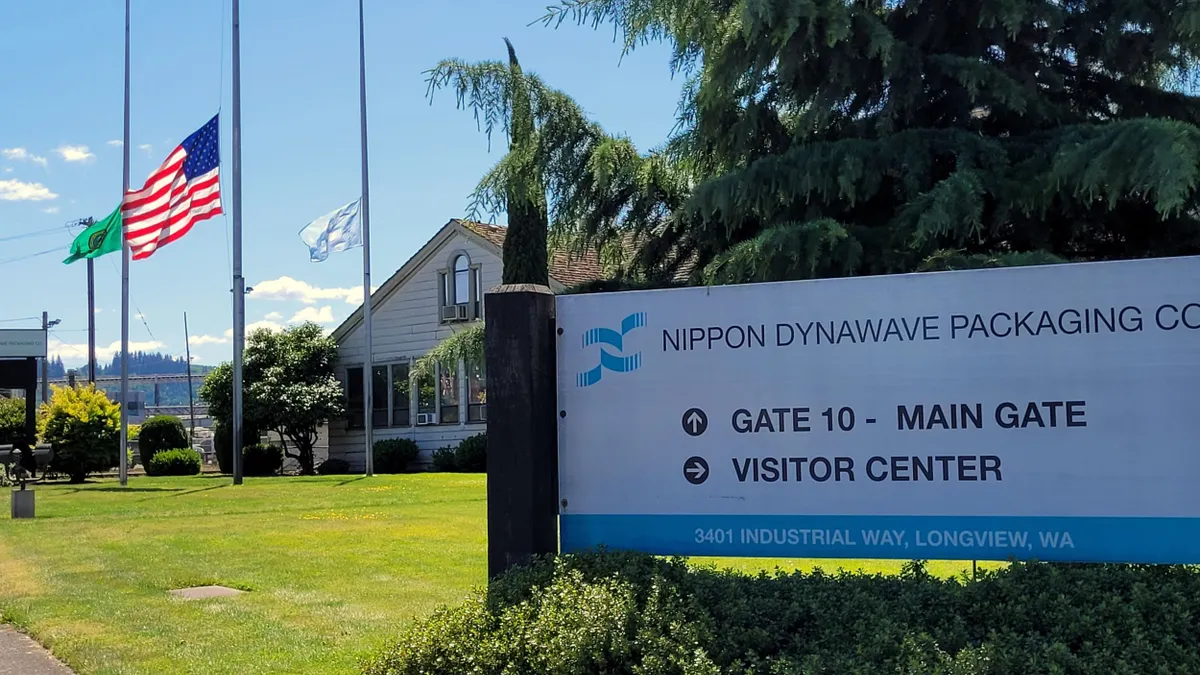
Nippon Dynawave Packaging employees will soon return to work at the Longview, Washington, pulp and paper mill that has largely been idled since the May 26 white-liquor tank implosion there that killed 11 people and injured eight others.
The goal is to get the “majority” of employees back to the facility on or around Oct. 12, and after that reentries will be on a staggered schedule to be determined by NDP, said Scott Tift, president of the Association of Western Pulp and Paper Workers, during a Thursday interview. AWPPW is a labor union representing NDP workers.
The entire pulp and paper mill employs about 550 people, according to the Washington Department of Ecology. It produces market pulp as well as paperboard for liquid packaging. A small number of employees previously had been called back to the site for limited operations, but full production remains stalled.
NDP said in July that the facility “continues to operate at very limited capacity” but that the “vast majority of normal mill operations remain suspended.” It did not specify which functions were operational.
For employees that won’t yet return, Nippon Dynawave Packaging agreed to extend pay through at least Jan. 17, a company spokesperson confirmed in a Thursday email. “The extension covers employees as NDP, in coordination with the agencies overseeing the site, completes removal of the impacted tank and other out-of-service equipment,” the spokesperson said.
In July, NDP told all employees they would receive pay through Oct. 11, extending the prior Aug. 8 pay timeline. The union has worked with the company in phases “to make the timeline stretch out a little bit farther each time,” Tift said.
In the months since the deadly incident, the union and company have met numerous times to navigate the complexities of the situation, Tift said. “The goal has always been to work through the problems, create a new safety culture there, and bring the facility back online.”
The two parties’ discussions had never been about permanently shutting down the plant, he said, acknowledgeing that it’s natural in situations like these for employees to fear such action.
“The best thing that we can do for the workers, for the community, is to work towards a safer workplace and have that support” in the form of employment assurance and pay extensions, said Tift.
The employees who return this month to departments that aren’t yet operational will “receive assignments supporting safety, recovery, and readiness, including safety reviews, job safety analyses, training, housekeeping, and painting,” according to AWPPW. The NDP spokesperson said the return to work will continue the “necessary steps to bring operations back online.”
An additional three hours of on-call pay in place under a previous agreement will end on Oct. 11. Under the new agreement, standard on-call pay provisions will take effect Oct. 12. The company told employees in a letter Thursday that it knows that on-call pay has been important up until this point, but it’s now “moving toward more predictable schedules” and contractual provisions alongside the pay extension to January.
Thus far, NDP has provided access to onsite and offsite mental health professionals, and that will continue, Tift said.
Rebuilding and restarting phases
In August, NDP started dismantling the failed tank. Although employees largely are slated to begin reporting to work in a week and a half, the facility will not resume full production yet.
“There's many processes that were down that have been started up,” said Josh Estes, AWPPW spokesperson. “We're working towards full operation and full restart. We're just not there yet.”
It’s important to recommit to safety culture, including “ensuring that the equipment and all of the protocols are consistent and transparent,” he said. All parties need to make sure “everything that is done is led with a safety mindset.”
AWPPW has emphasized from the start that observers should not draw conclusions about the disaster or its causation until investigating agencies release their final reports. That sentiment held true in August after the U.S. Chemical Safety and Hazard Investigation Board released its preliminary report on the incident, which came two days after the Department of Ecology cited NDP for 35 environmental violations related to the implosion.
“There are clearly reasons for concern and questions that need to be answered regarding the inspection of that tank and how we got to a place where it could have failed,” Estes said. “But if we don't hold the line steadfast that we are not going to make assumptions until we know exactly what caused that tank failure, we jeopardize the integrity of that full investigation.”
The CSB found that NDP had been informed about tank safety concerns during three separate inspections in the months leading up to the disaster. However, the preliminary report says NDP did not take the tank out of service nor conduct repairs. While noting its investigation was still ongoing, CSB members reported being “greatly concerned” about the findings.
NDP issued a statement following that preliminary report release saying it was “deeply disappointed” and CSB had “failed to include important facts and context regarding actions taken by NDP and the timeline of events before the May 26 incident.”
The company declined to comment on specific findings until the investigation is complete.
Moving forward
NDP and AWPPW both expressed their desire to continue collaborating. That includes rebuilding trust “and making sure that we work together to identify all the gaps, fill those gaps and make the place safer going forward,” Estes said.
CSB is scheduled to release its final report on the implosion in spring 2027; the independent, nonregulatory federal agency does not issue citations or penalties. The Washington Department of Labor & Industries is the main enforcement authority for the NDP site, and it’s conducting its own investigation. That agency’s report is due Nov. 22.
Despite the progress this week, no parties have offered a hint at when the mill might restart. Both NDP and the union said the pay extension will help to provide employees with some stability through the holidays and into the new year.
“This is another phase of the process of bringing the facility back online and back to full production,” Tift said.