Dive Brief:
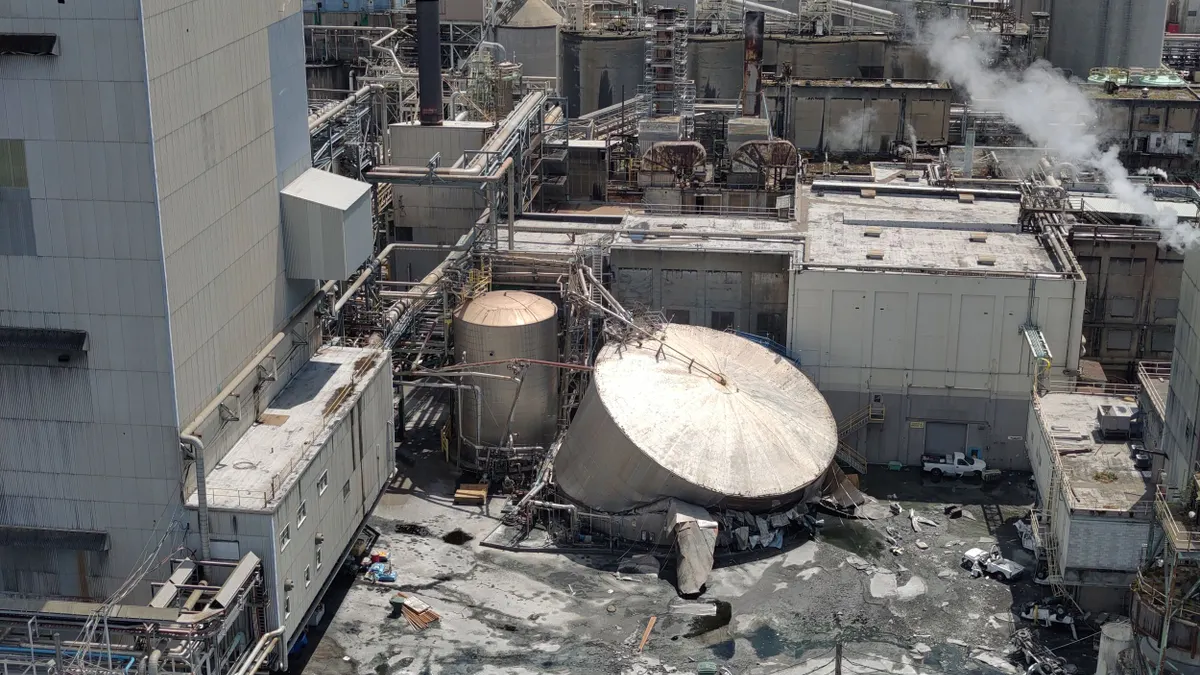
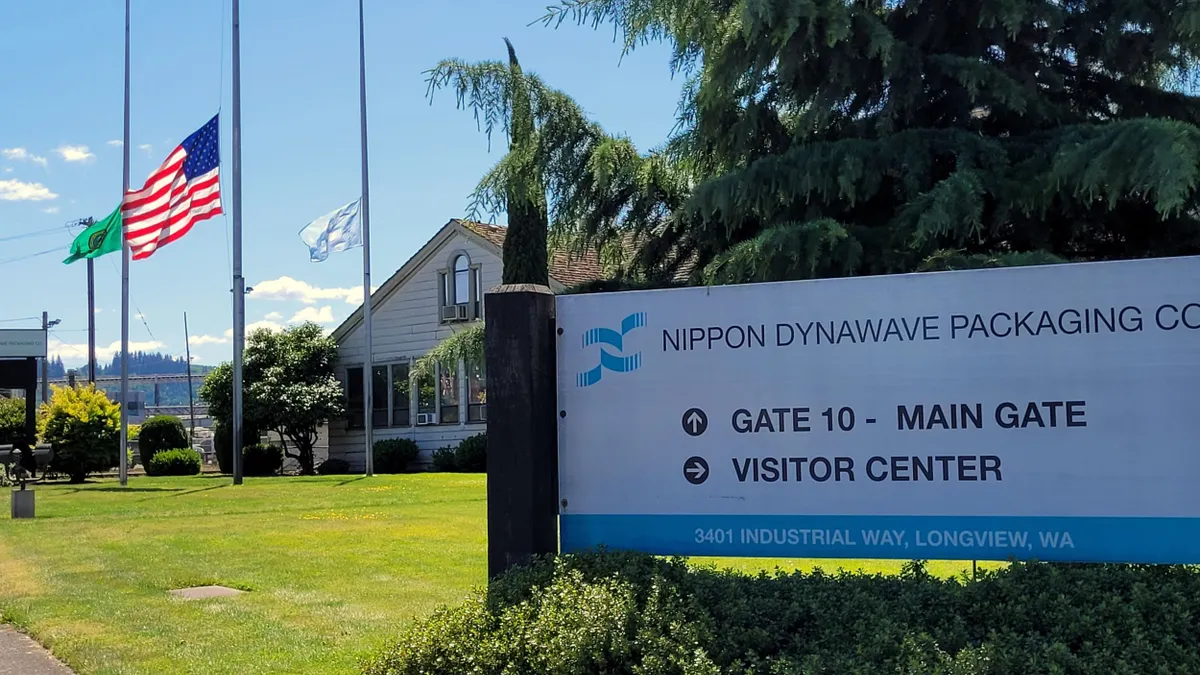
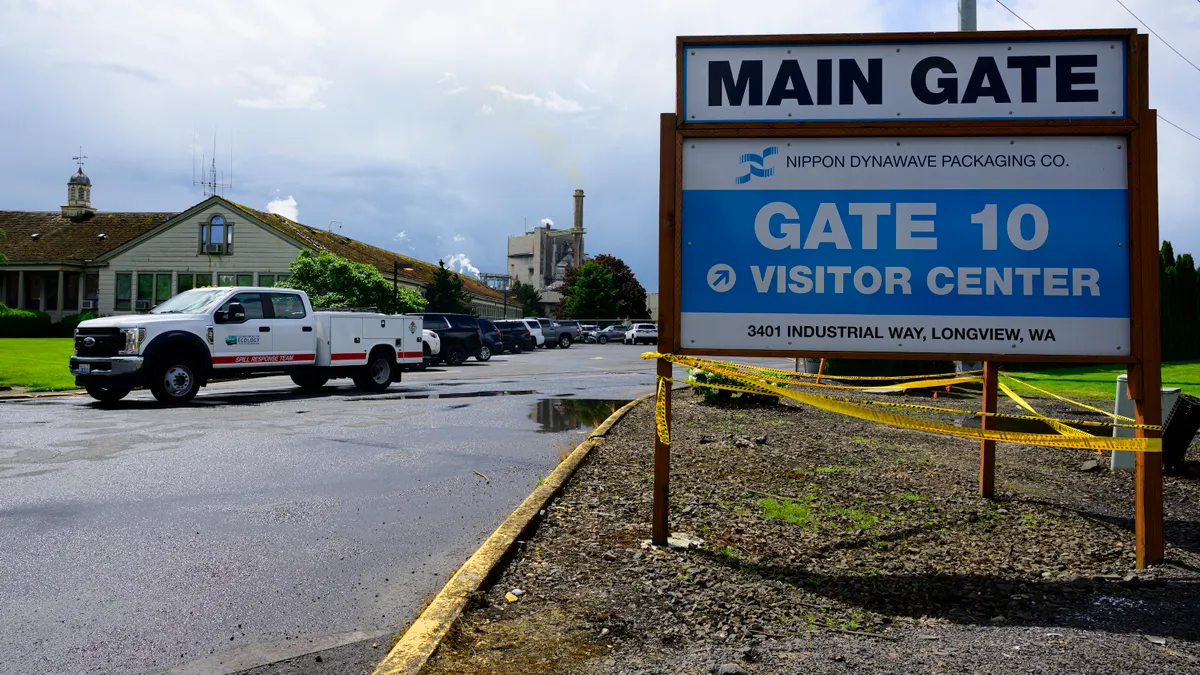
- The U.S. Chemical Safety and Hazard Investigation Board found that repeated inspections raised concerns about the white liquor tank at Nippon Dynawave Packaging in Longview, Washington, prior to that tank’s deadly tank implosion on May 26. The federal agency detailed its preliminary findings in a Friday morning update.
- CSB said that an inspection in July 2025 found portions of the tank’s exterior shell had thinned below the minimum safe thickness. An inspection report said the tank was “[n]ot fit for continued service” without repairs and had a “[h]igh likelihood/consequence of failure,” yet it remained in service until this year’s implosion.
- Earlier this week, Washington’s Department of Ecology cited NDP for 35 environmental violations related to the implosion, and the Washington State Department of Labor & Industries separately cited NDP for a safety violation unrelated to the tank implosion.
Dive Insight:
CSB’s investigation of the NDP disaster is still ongoing, and it’s expected to release its final report in spring 2027.
The agency said in Friday’s update that it found NDP conducted two additional tank inspections, in October 2025 and February 2026, confirming the July 2025 conclusion that substantial portions of the tank’s shell were below the calculated minimum safe thickness. But NDP “still did not internally inspect or repair the tank shell, remove it from service, or reduce its operating conditions before it failed,” CSB said.
“Although the CSB’s investigation is still ongoing, we are greatly concerned that the tank was not promptly removed from service or properly repaired after the clear findings in the inspection report,” said CSB Chair Steve Owens in the update.
The Association of Western Pulp and Paper Workers, the union representing NDP workers, said in an emailed statement that CSB’s findings are “deeply troubling.”
“The update raises urgent questions about how technical findings and recommendations concerning the tank were communicated, evaluated and incorporated into decisions about its continued operation,” said Josh Estes, AWPPW spokesperson.
Estes noted that while CSB’s interim update provides important information, it does not offer a complete picture of the incident or establish causation and responsibility for the tank failure. He cautioned against speculation and emphasized AWPPW’s commitment to accountability.
“We understand the frustration created by the questions that remain unanswered and believe continued communication with the families must remain a priority as additional facts are verified,” Estes said. “AWPPW will not minimize the seriousness of the information released, but we will also not draw conclusions about causation or responsibility beyond what the evidence currently establishes.”
Senator Patty Murray, D-Wash., also issued a statement Friday about CSB’s interim update.
“Three months ago, Longview endured an unthinkable tragedy and suffered enormous loss,” she said. “We know this will take time—but one thing is apparent: this community deserves answers and accountability. Every worker has the right to come home safely at the end of the day.”
Law firm Arnold & Itkin, which represents family members of the brothers Tyler and Bradley Covington who were killed in the May incident, also emailed a statement Friday.
“The CSB’s finding that it was known that this tank was ‘not fit for service’ and posed a ‘high likelihood of failure’ from inspections months before is nothing short of alarming,” said Kyle Findley, an attorney with Arnold & Itkin. “When safety inspections and recommendations don’t lead to action, danger becomes a reality that causes devastation to human life. We will continue to work tirelessly to ensure those responsible for this horrific accident are held accountable and their families receive justice.”
CSB’s interim report notes that a “process upset” on May 26 required NDP to stop sending white liquor from the tank to the digestor where it would have been used to produce pulp from wood chips. No white liquor was leaving the tank, but white liquor continued to enter it. That caused the tank level to rise to approximately 90% full by 6:22 a.m. local time, CSB says.
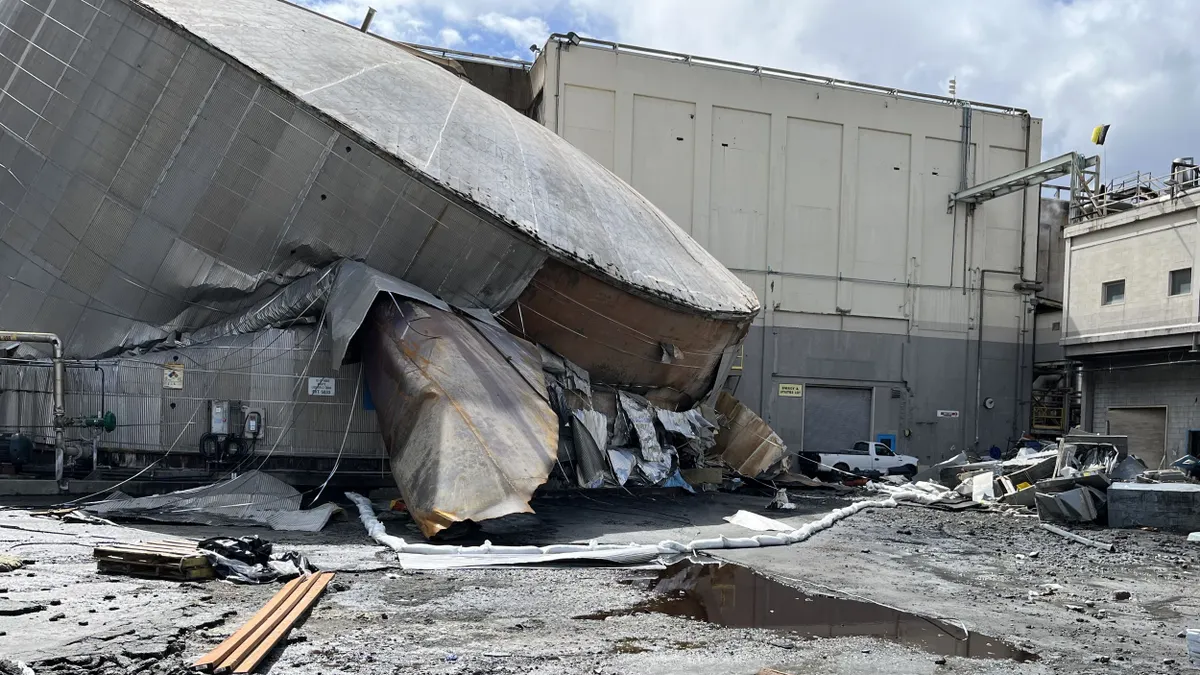
At about 7:09 a.m., the tank catastrophically failed and spilled approximately 900,000 gallons of the scalding, corrosive liquid. The outdoor tank flooded the surrounding courtyard and nearby buildings where employees were gathered.
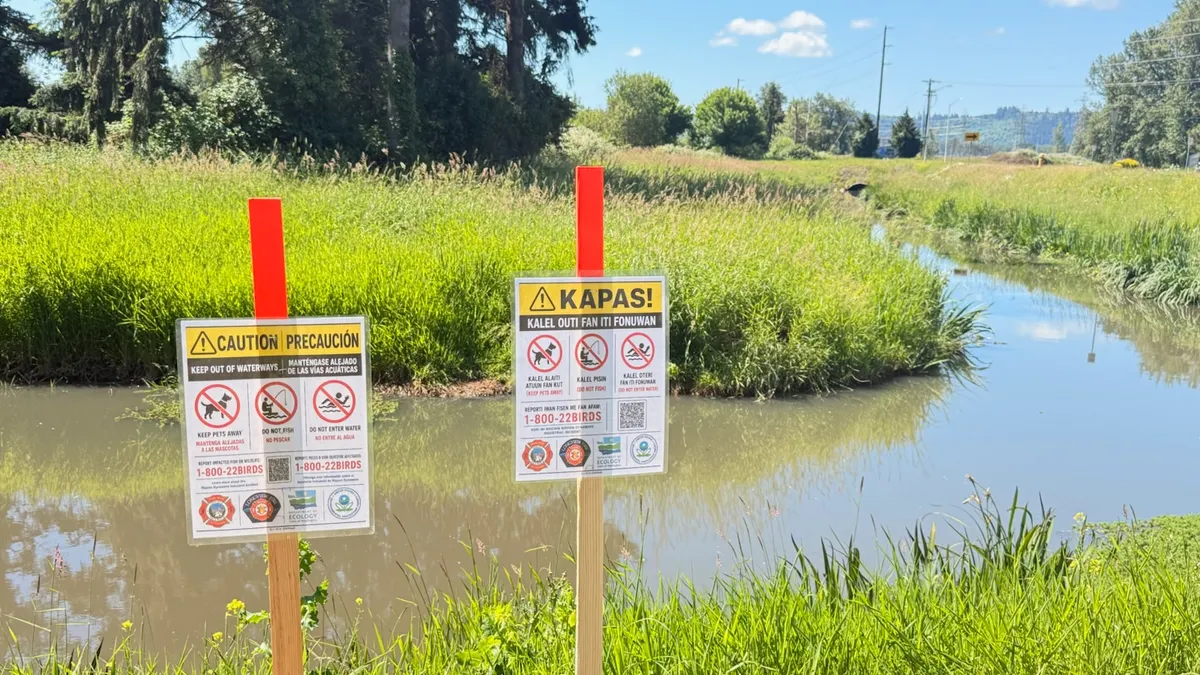
Those findings align with photos that Washington’s Department of Ecology released in June when site cleanup was underway. Some images showed the cinder block wall separating the facility’s break room from the courtyard had been damaged during the implosion when debris, such as facility trucks, pushed against it. Local news outlets had reported that casualties were likely heightened because the implosion occurred during a shift change, and more workers than usual were in or near the break room and an adjacent administrative office area at the time.
As an independent, nonregulatory federal agency, CSB does not issue citations or penalties. Washington’s L&I is the lead agency with enforcement authority, and it’s conducting its own investigation into the tank failure. It has until Nov. 22 to issue a report.
The citation L&I issued to NDP this week is related to a separate investigation launched in March to examine a safety violation stemming from a broken valve handle. NDP has 15 days to appeal. L&I launched a second unrelated investigation in May following a drain failure at the site which caused an approximately four-foot-deep sinkhole that an employee fell into. That investigation is ongoing.