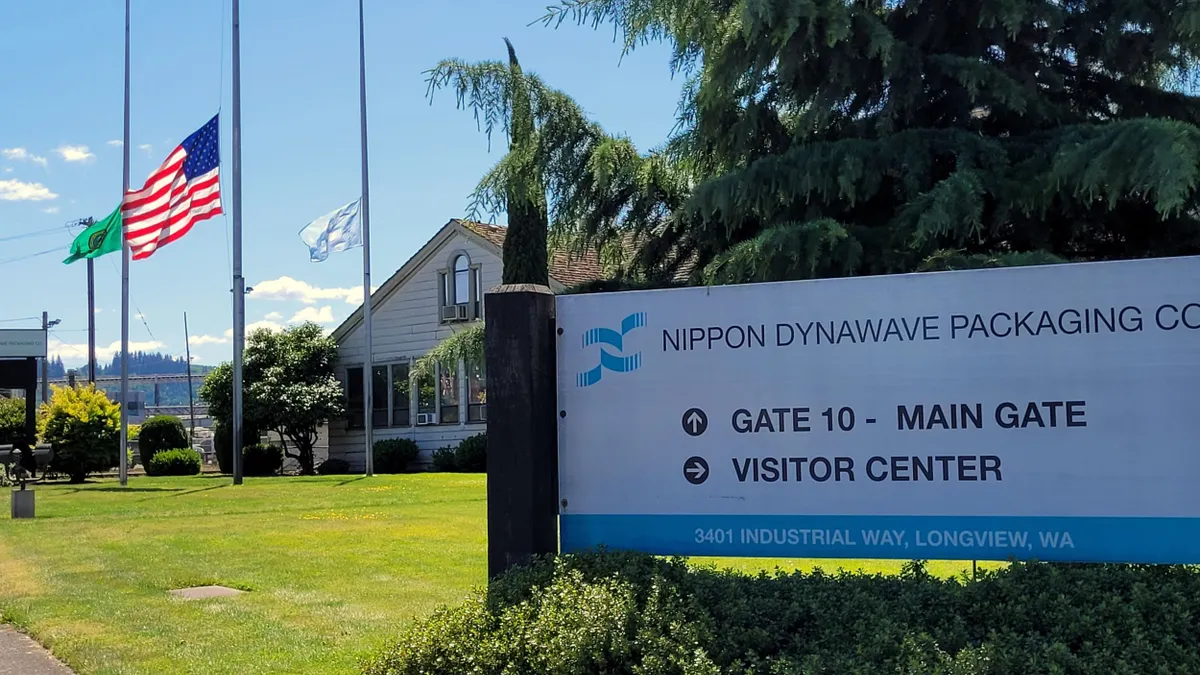
Authorities are offering a closer look at the aftermath of the May 26 disaster at the Nippon Dynawave Packaging mill in Longview, Washington. The community is trying to make sense of what happened amid ongoing investigations, and analysts are assessing potential wider market implications.
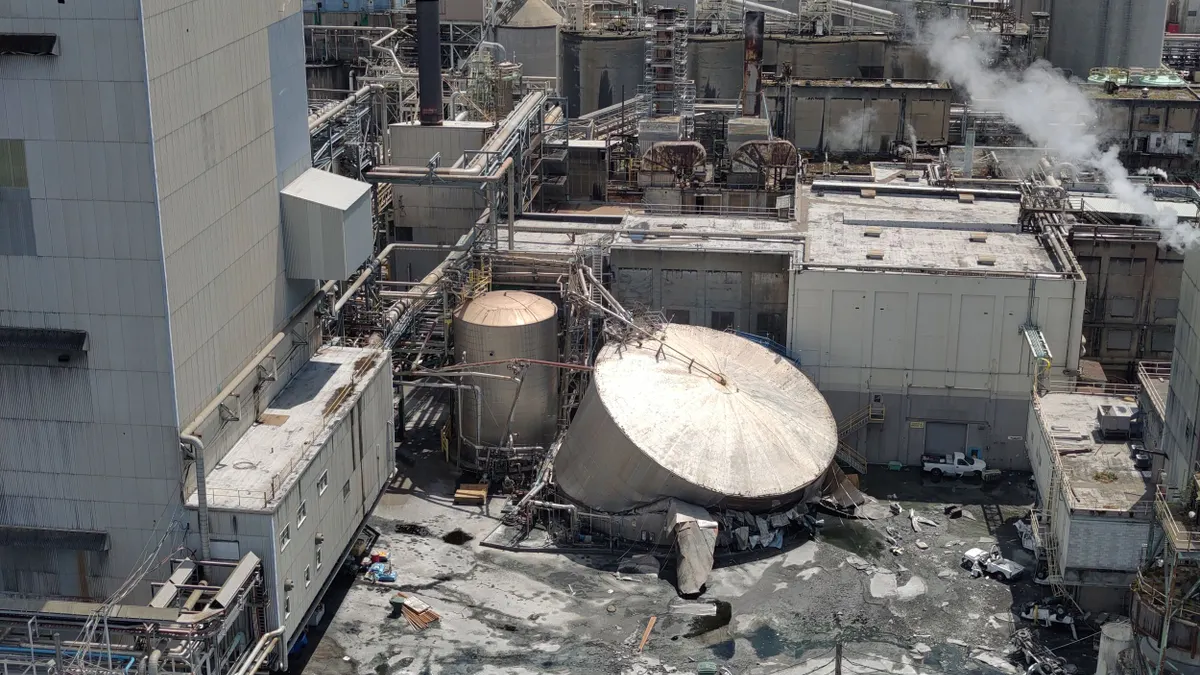
The white liquor tank implosion there two weeks ago killed 11 people, and the facility has remained mostly shut down since. The Washington Department of Ecology released new photos of the aftermath and cleanup, and the labor union representing some workers cautioned people not to draw conclusions about the incident simply based on the photos.
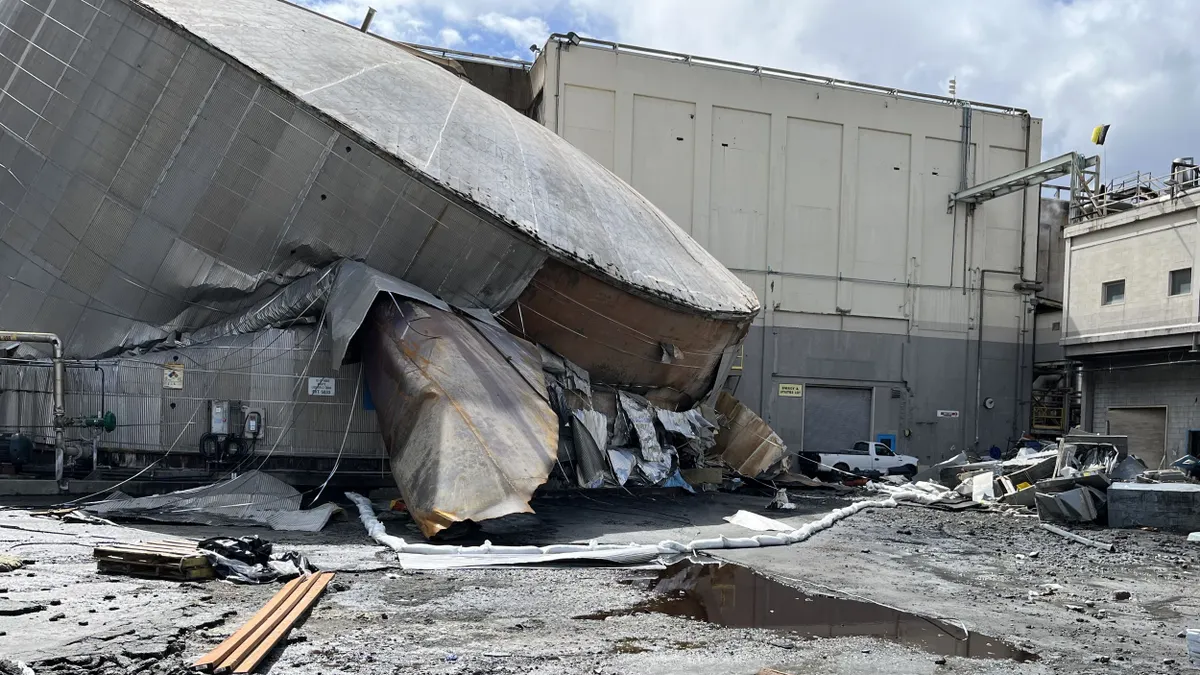
The new post-implosion photos show the tank with a hole in the side and sandbags placed around it to contain any remaining contamination because rain moved into the area, Ecology explained in an emailed update on Sunday.
Assessing the aftermath
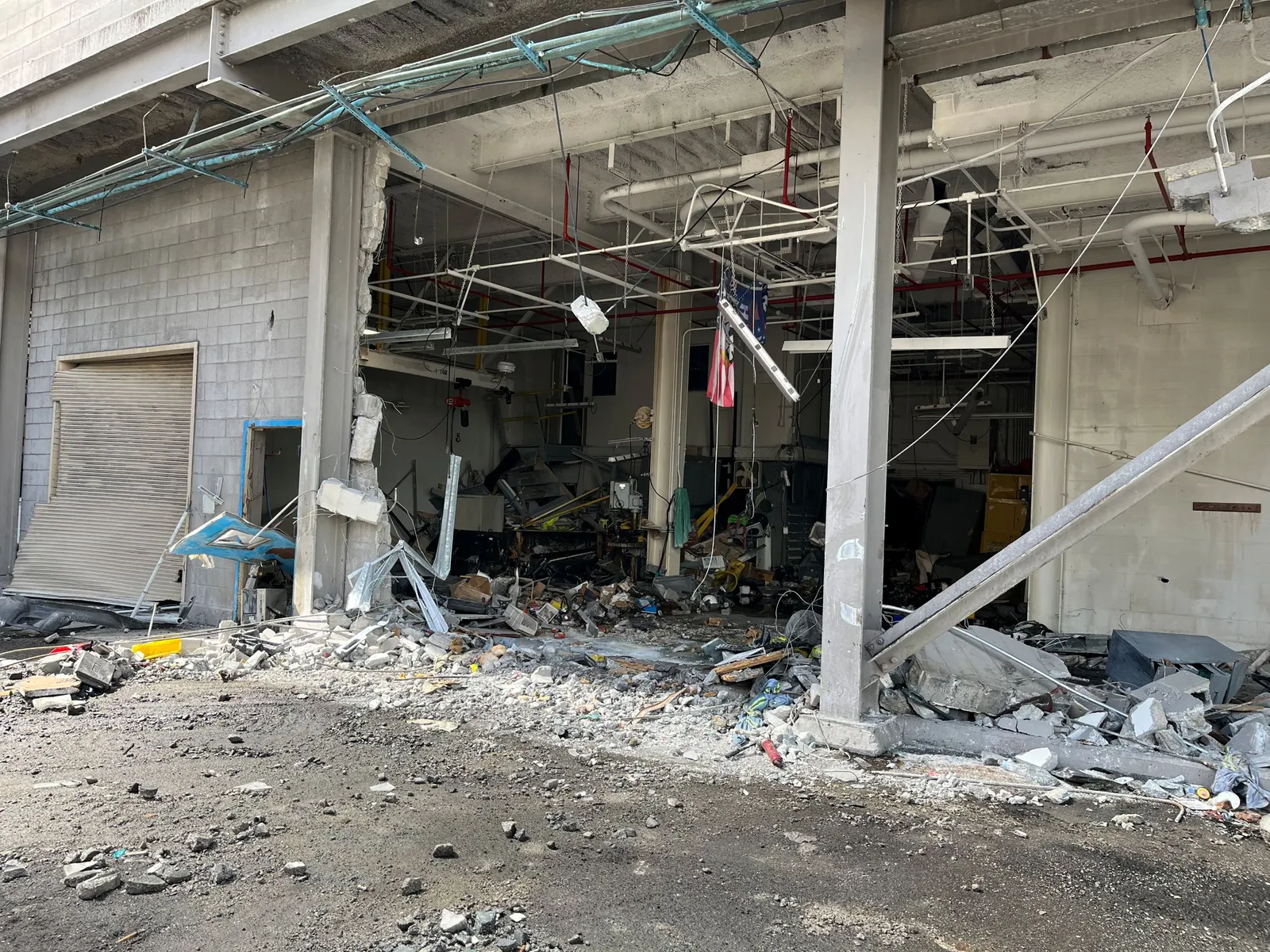
In addition, the agency posted photos showing a clearer view of the facility’s break room following the removal of nearby damaged vehicles and employees’ personal items.
The cinder block wall separating the break room from the courtyard where the tank stood was damaged during the implosion when debris, including facility trucks, pushed against it, according to Ecology. Crews removed the wall during recovery operations.
Local news outlets have reported that casualties were likely heightened because the implosion occurred during a shift change, and some workers were in or near the break room and an adjacent administrative office area at the time.
The Association of Western Pulp and Paper Workers, the labor union representing some NDP employees, included a statement in Ecology’s Sunday email. AWPPW said the Joint Information Center in Longview is coordinating with Nippon Dynawave Packaging to release photographs “to provide general situational context regarding certain onsite conditions and portions of the ongoing cleanup effort.”
The union cautioned that the photos should not be construed as providing conclusions about incident causation, workplace conditions, regulatory compliance or other factors, and it asked for continued sensitivity and respect for those affected by the disaster. AWPPW confirmed multiple investigations are ongoing and onsite conditions evolve as response and cleanup operations progress.
“The public understandably has questions and wants information about what occurred and the conditions onsite following this tragedy,” said Josh Estes, AWPPW spokesperson and incident response liaison, in the statement. “Our priority remains supporting those affected while ensuring the ongoing investigative and response processes are allowed to move forward appropriately.”
Industry impacts
Meanwhile, analysts and fiber companies continue to assess impacts on the industry from NDP’s production downtime.
Observers have been monitoring how significantly the shutdown could disrupt other producers’ operations, especially at North Pacific Packaging Co. — owned by International Paper as of Thursday — whose mill is adjacent to the Nippon Dynawave site. Norpac purchases approximately 75,000 tons of kraft slurry pulp from NDP annually.
As far as effects on other companies, “the mill outage is unlikely to notably improve supply/demand conditions in SBS folding carton,” according to a Monday note to investors from Michael Roxland, senior paper and packaging analyst at Truist Securities. The incident should not meaningfully impact producers such as Graphic Packaging International and Smurfit Westrock, but could marginally benefit Clearwater Paper, he concluded after consulting with Truist’s boxboard sources.
Since the May 26 shutdown, GPI and Clearwater shares have outperformed the market based on the idea that, if permanent, the NDP closure could help to rebalance supply and demand for solid bleached sulfate folding carton material, he said.
GPI does not produce much SBS folding carton, Roxland explained, but that grade’s price weakness could bleed into other grades, including coated recycled board and coated unbleached kraft. Overall, SBS remains in oversupply, according to Roxland, even after SW’s February closure of one machine at its mill in La Tuque, Quebec, and Clearwater’s April announcement that it would temporarily halve SBS production at its mill in Cypress Bend, Arkansas.
Truist’s contacts also highlighted that Nippon Dynawave Packaging mostly produces liquid packaging board, a niche SBS grade, so the shutdown would only have a modest industrywide impact on SBS folding carton. Plus, NDP largely exports its material to parent company Nippon Paper in Japan, further reducing the domestic impacts.
Truist’s contacts also anticipate the NDP mill closure is not permanent. They speculated the facility might be able to reopen in two to three months.