Dive Brief:
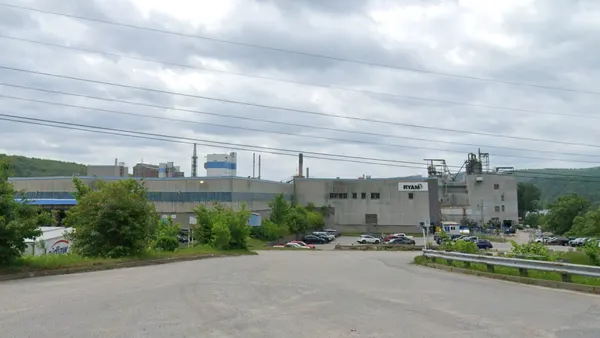
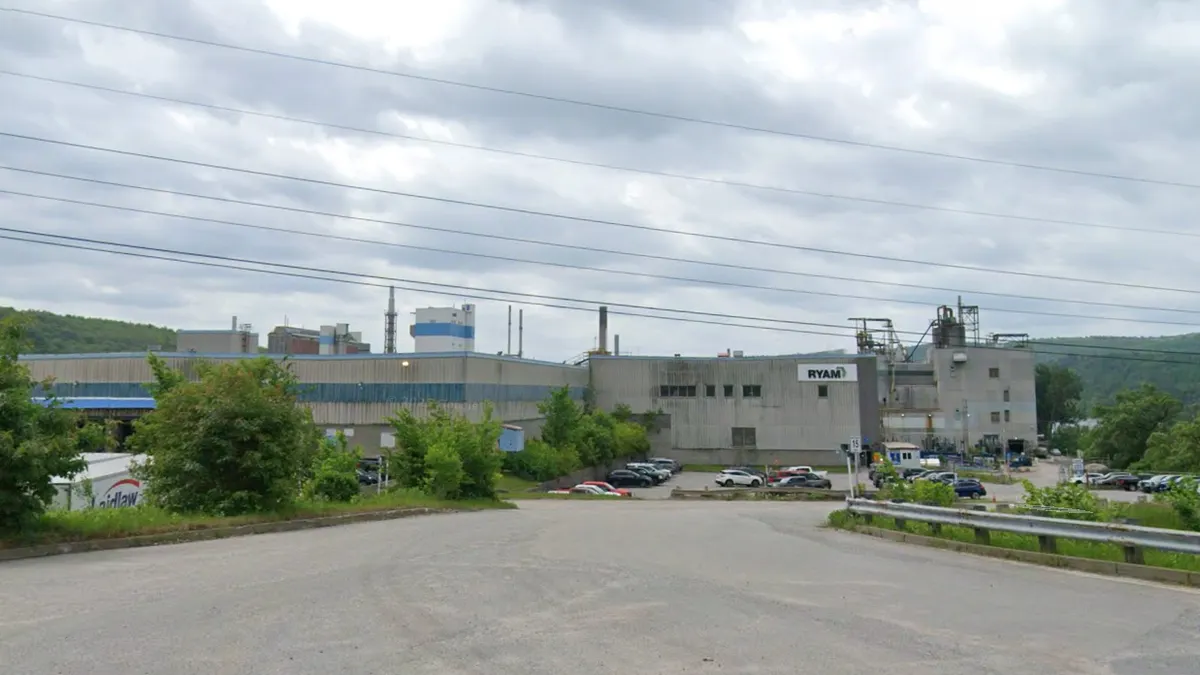
- Jacksonville, Florida-based Rayonier Advanced Materials has idled its pulp and paperboard mill in Témiscaming, Quebec, according to Unifor, Canada’s largest private sector union. The company said tariffs contributed to difficult market conditions that made business unsustainable, according to multiple local news reports.
- More than 400 employees are reportedly affected, with roughly 300 of those being union workers. Unifor said in a news release that it’s still working to “secure the future of the Témiscaming mill.”
- Neither Unifor nor RYAM responded to requests for comments.
Dive Insight:
Speculation has circled for more than a month regarding potential impacts to the packaging industry from the U.S.-Canada trade war, but now more companies are disclosing concrete business impacts.
This week, Montreal-based paper packaging and envelopes maker Supremex announced a restructuring plan that includes laying off 6% of its workforce, with the company citing an estimated $10 million to $12 million hit from tariffs. Le Journal de Montreal reported that tariffs also prompted Ohio-based glass packaging manufacturer O-I’s decision to indefinitely shut down two of six production lines at it Pointe-Saint-Charles plant in Montreal, with anticipated layoffs for nearly 20% of the 340 employees; up to 70% of products manufactured at the plant reportedly are exported to the U.S.
Wood and paper products and raw materials are heavily traded across the border, raising tariff concerns from companies and trade groups in both countries. Like RYAM, many fiber companies also have operations both in Canada and the U.S.
Unifor has organized a National Day of Action for Forestry to take place Oct. 16 at mills across Canada. It’s part of a broader campaign to support the sector and raise awareness of an ongoing “perfect storm of crises impacting Canadian forestry,” including the trade conflict, economics and environmental conditions. In a 20-minute video posted on the event website, the union strung together clips illustrating the widespread importance of wood and fiber industries to the country’s citizens.
In late August, RYAM announced its intention to suspend Témiscaming mill operations in September, but that was postponed until October, according to Unifor. Following the August announcement, a company spokesperson told The North Bay Nugget that the shutdown will affect all onsite operations except a boiler and a wastewater treatment plant.
RYAM gained this mill when it acquired Tembec in 2017. RYAM has idled the Témiscaming mill in the past, and in 2023 the company announced it was exploring the possibility of selling it. In 2024 it closed the adjacent high-purity cellulose plant. The company website suggests Témiscaming is RYAM’s sole paperboard production site.
The company has faced ongoing financial and corporate challenges. Private equity firm American Industrial Partners offered to buy RYAM in November 2025 for twice its trading value, noting interest in cellulose fibers. But RYAM’s board rejected the offer in December. AIP acquired International Paper’s global cellulose fibers business in January.
In April, RYAM announced that it would “explore strategic alternatives,” including a potential sale of the company or a merger. In June, shareholder Mill Pond Capital urged the company’s board to conduct a full sale, noting that “RYAM has reported a loss from continuing operations every year since 2019.”
Simultaneously upon that April announcement, the company disclosed the resignation of CEO Scott Sutton, who had been with the company for less than four months. Daniel Krawczyk was named CEO in June.
The company most recently reported earnings in August, charting a $33 million loss from continuing operations during the second quarter. Krawczyk said during his first earnings call as CEO on Aug. 5 that RYAM ships about 75% of its paperboard into the U.S. market, making it sensitive to tariffs.
“When we look at the tariffs surrounding our paperboard products, it has the potential to materially impact the economics of our paperboard and high-yield pulp business,” he said. “We're working on the expected commercial actions with our customers to understand how we can offset those as well as operational responses that we can take to mitigate any negative effects on the business.”