Companies constantly innovate and redesign their packaging to boost performance, enhance sustainability and improve marketability. Here’s a look at four recent packaging product launches or revamps on Packaging Dive’s radar.
Casting light on containers
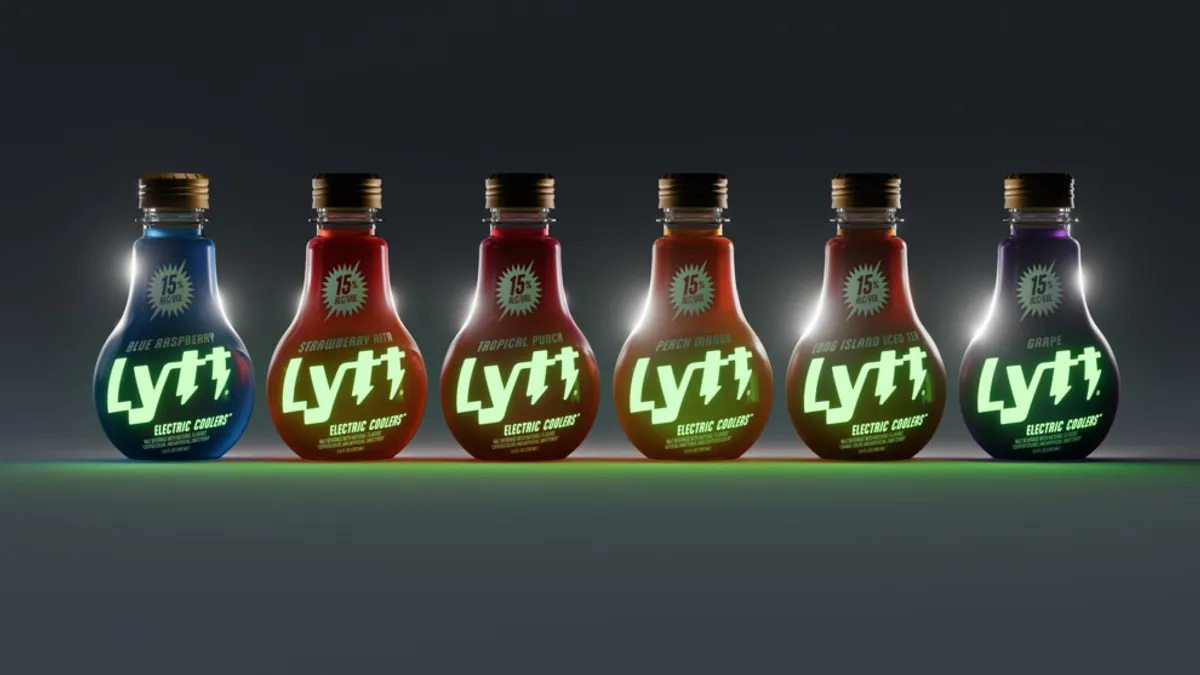
The Boston Beer Co. introduced a new single-serve malt beverage, Lytt Electric Coolers, sold in unique packaging. The lightbulb-shaped containers are patent pending and feature glow-in-the-dark branding.
The 6.8-ounce plastic containers are resealable and recyclable, according to a company news release. It says the drinks are “packaged using materials that have been designated as widely recyclable by How2Recycle.”
“As the first Boston Beer venture into plastic containers, identifying widely recyclable materials for Lytt’s single-serve container and resealable closure was paramount to our path forward,” said Jill Westra, senior manager of sustainability at Boston Beer, in the news release.
Lytt founder Michel Myara introduced Lytt as a line of herbal-infused malt cocktails, and then expanded into hard seltzer six years ago, when the product was sold in cans. The format change comes after Boston Beer, the parent company for Sam Adams, Truly Hard Seltzer and Twisted Tea, acquired the brand. The lightbulb-shaped containers began rolling out this week in select markets in Florida, Illinois, Ohio, Texas and Washington.
Into the black
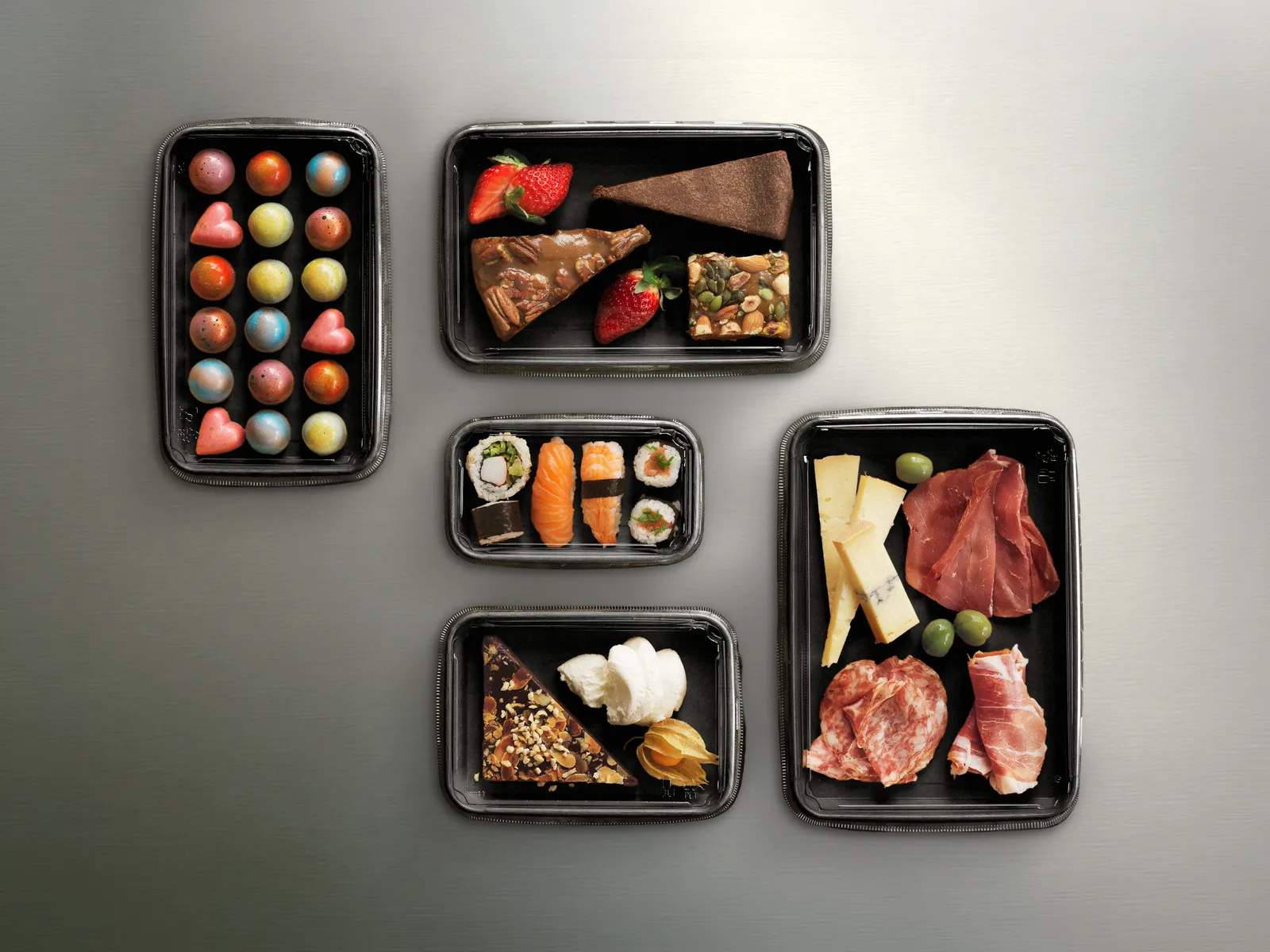
Sweden-based Duni Group developed a collection of foodservice packaging made from black paper. The products, Tray Contrast and Ronda Contrast, are intended to be an alternative to black plastics, which present challenges for recycling.
The black fiber-based trays and bowls have a barrier and are manufactured without PFAS. They’re mainly designed for use with cold food but can be used in applications up to 70 degrees Celsius, or about 158 degrees Fahrenheit.
The color presents a favorable backdrop for food presentation, the company said in a news release.
"We see a clear need for packaging solutions that both strengthen the visual expression of food and work in practice,” said Matilda Pettersson, category manager for boxes and bowls, in the news release. “[W]e have developed a black paper-based alternative that is adapted to existing sorting flows and at the same time meets the trade's requirements for functionality, visibility and handling.”
Adding luster
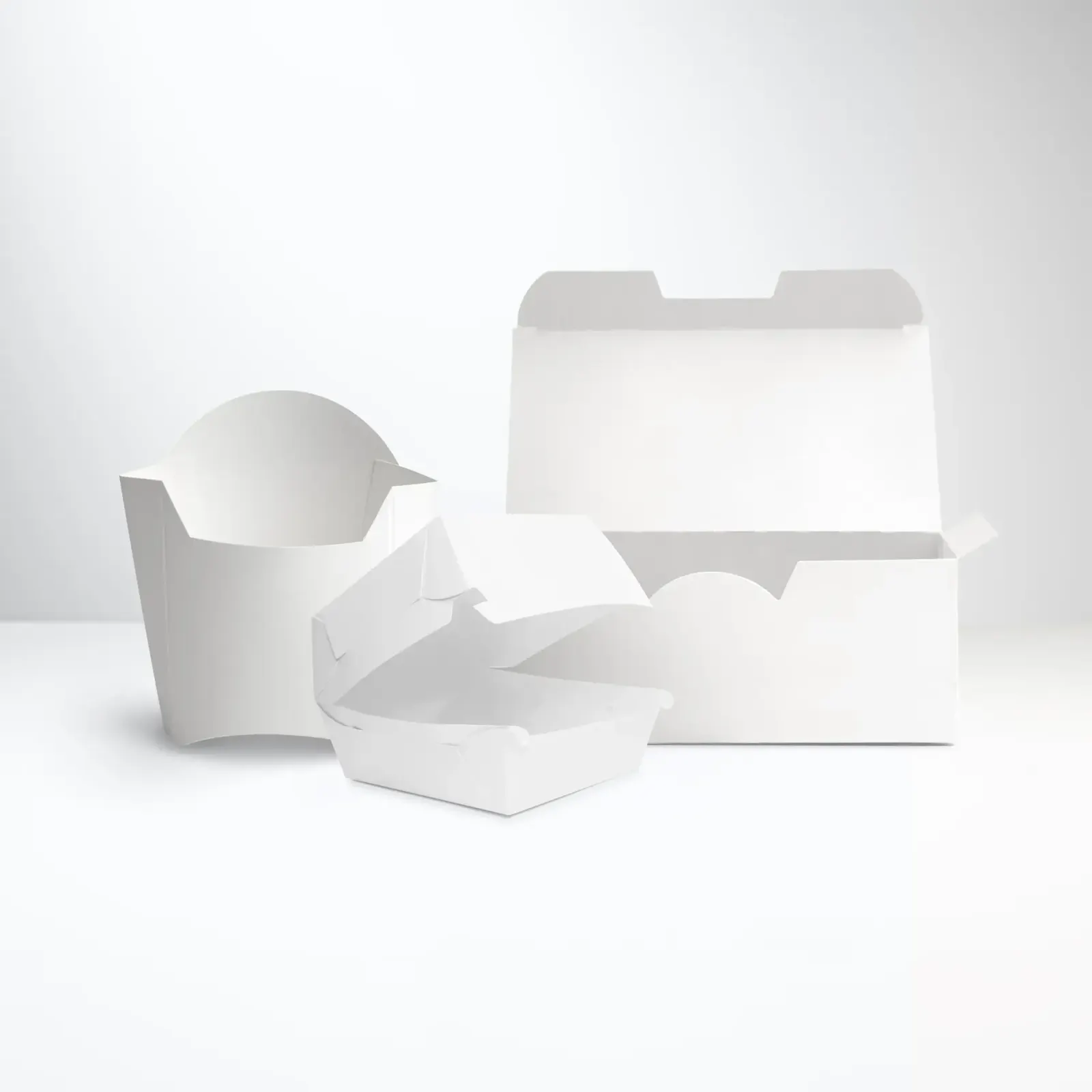
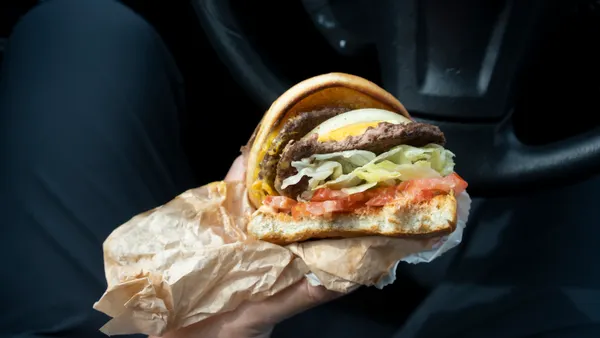
Sappi North America launched LusterFSB OGR, a solid bleached sulfate board for foodservice that resists oil and grease without the use of a polyethylene coating.
"Food service packaging is under pressure to move away from plastic,” said Paul Bortolan, vice president of sales and marketing, in a news release. The new product “delivers the barrier performance food service requires while supporting the sustainability goals our customers and brands are working toward."
One side of the board has a smooth clay coating, and the other has “a proprietary grease barrier coating.” It’s intended for use in applications such as quick service, takeout and bakery. LusterFSB OGR is manufactured at Sappi’s Somerset Mill in Skowhegan, Maine.
The fiber-based products are recyclable and designed to be home composted, according to the company. In addition, “converter scrap and offcuts can be baled with standard SBS, eliminating the special segregation requirements that come with poly-lined alternatives.”
Path of grease resistance
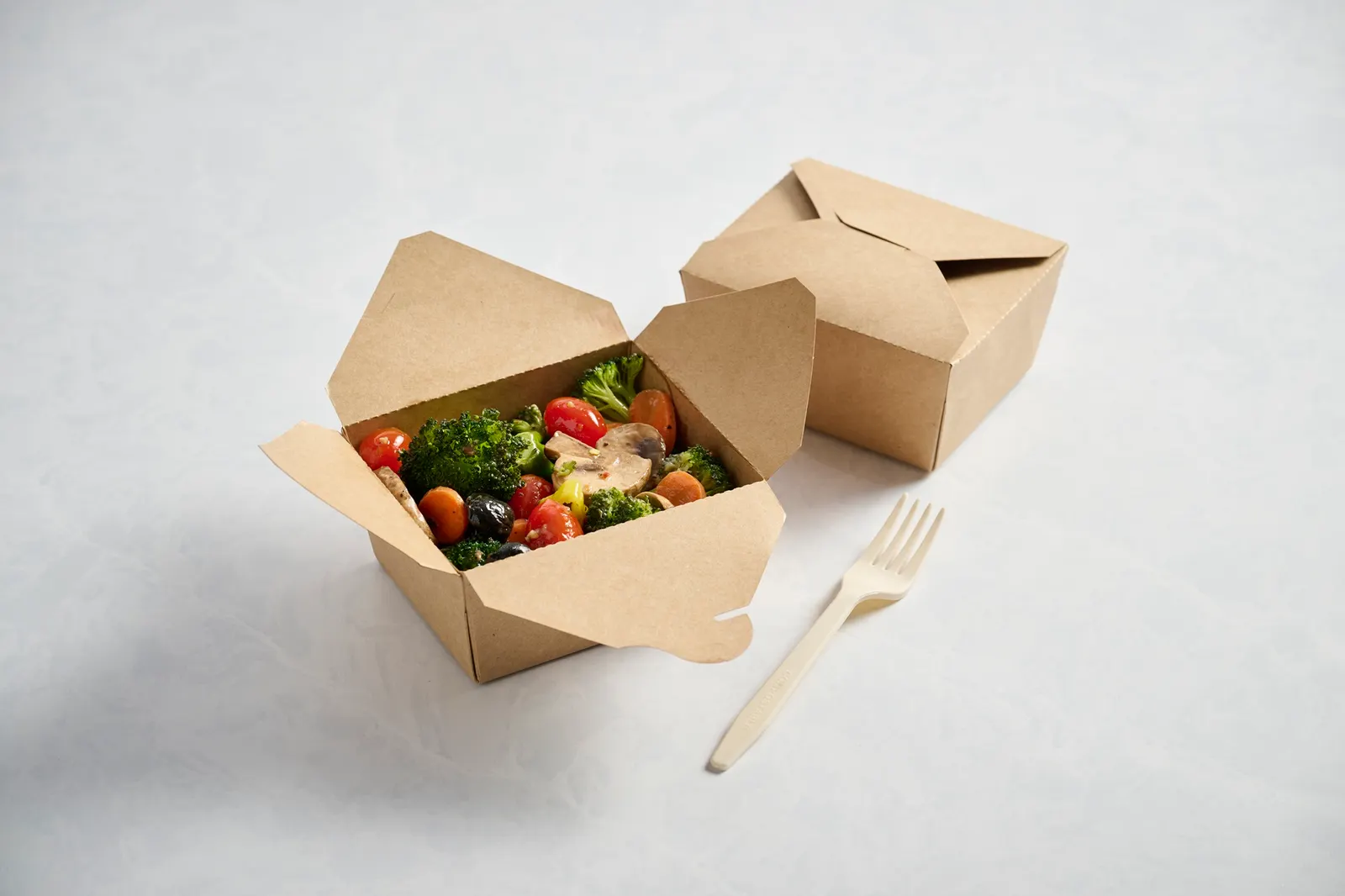
Massachusetts-based CJ Biomaterials, a division of South Korea-based CJ CheilJedang, announced the commercial availability of a new PHA compound for extrusion paper coatings. The non-toxic, biobased and compostable coating is intended to provide liquid, oil and grease resistance for food and foodservice packaging, including hot and cold paper cups, the company said in a news release.
The product is made by fermenting sugars and contains no PFAS, according to CJ Biomaterials. It is “the first extrusion coating to be formulated with amorphous PHA (aPHA) and semi-crystalline PHA (scPHA).” The material is soft and flexible, which improves processing compared with more brittle options, the company says.
The product runs well on lines designed for PLA extrusion coatings so converters can easily make a transition, the company says.
CJ Biomaterials says it has secured home and industrial compostability certification from TÜV Austria, and it’s working toward similar certification from the Biodegradable Products Institute.