Editor's note: This is the second article in a series about private and public-sector efforts to scale reusable packaging systems in the Portland, Oregon, area.
"Bring your own" isn't just a practice for carrying beverages into a party or restaurant. An Oregon law is helping the bring-your-own-containers concept catch on — notably in the Portland metropolitan region, where the local government launched a complementary reuse initiative for food-related businesses.
In May 2023, Gov. Tina Kotek signed a law allowing residents to bring their own reusable containers to food establishments, along with signing a separate polystyrene foam ban, and the Oregon Health Authority had to adopt rules for BYO to take effect by June 30, 2024.
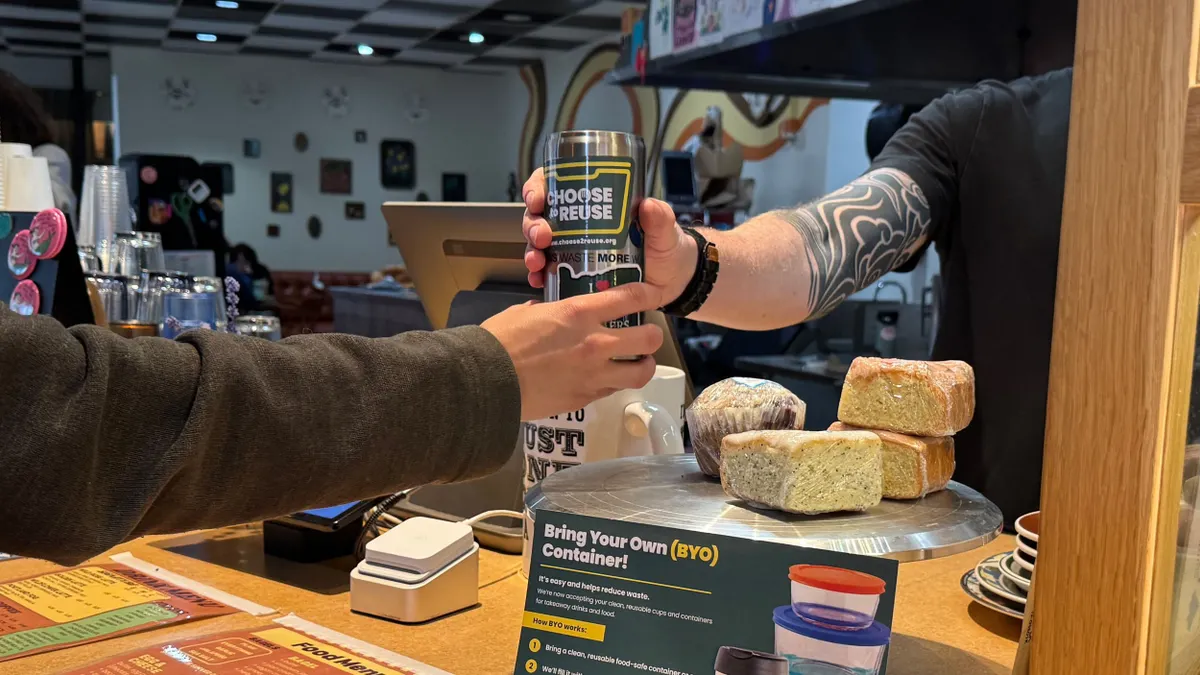
Metro, the regional government in greater Portland comprising 24 cities in three counties, oversees the region's waste and recycling, including reusable packaging programs. It used the state's opt-in BYO law as a launchpad for the regional Choose to Reuse campaign, which is designed to encourage residents to bring their own reusable cups and containers to food and beverage businesses. It also guides businesses with incorporating the practice.
"A lot of people here, if not most, really care about recycling and recycling rules and getting it right. We're working hard to remind people that the third 'R' — reuse — should come first,” said Gia Ballash, Metro public affairs specialist. “Portland is this exciting area, in that people really do care so deeply about the environment, and I think we have a little bit of a leg up in that.”
Area residents already have familiarity with reuse, and the region is known as a leader in the practice, thanks to years of legwork by nonprofits and private businesses. For instance, local nonprofit Waste-Free Advocates leads the Reusable Portland Coalition, which also counts private businesses Okapi Reusables and Revino among its steering committee members.
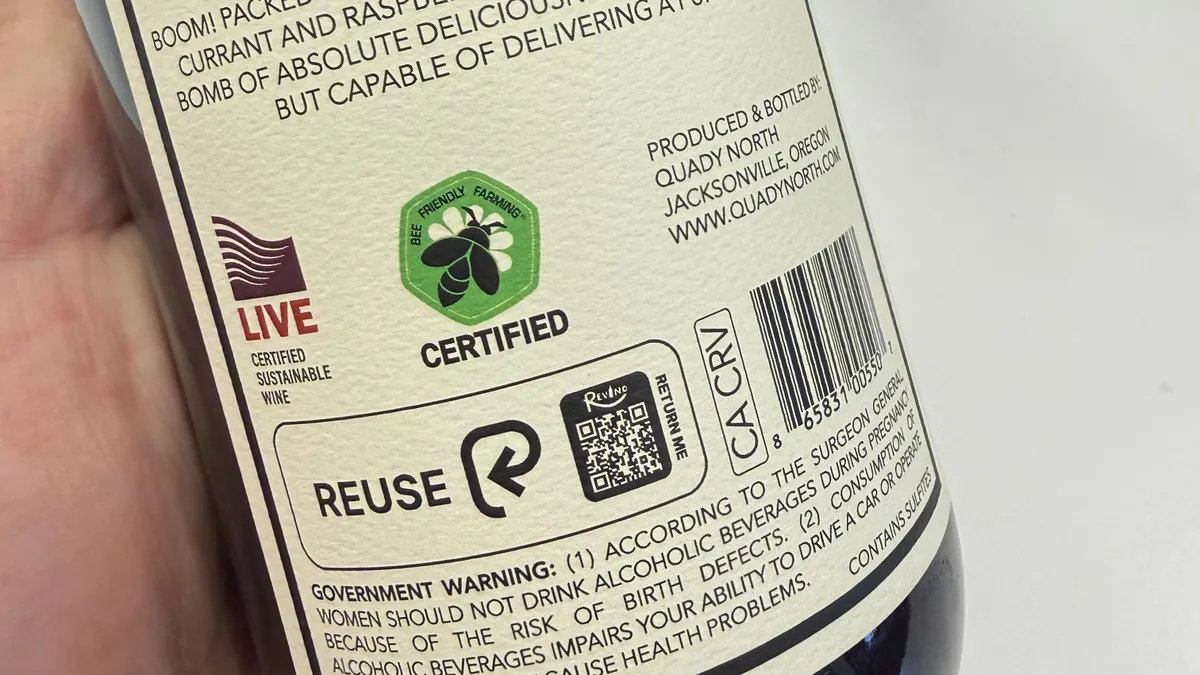
The latter recently expanded its open-loop reusable wine bottles business into Washington and California. Revino has also received $250,000 in state funding to expand its Oregon wash line. With this expansion it plans to offer washing and sanitization services to all types of beverage producers, such as beer or kombucha, to enable their reusables programs.
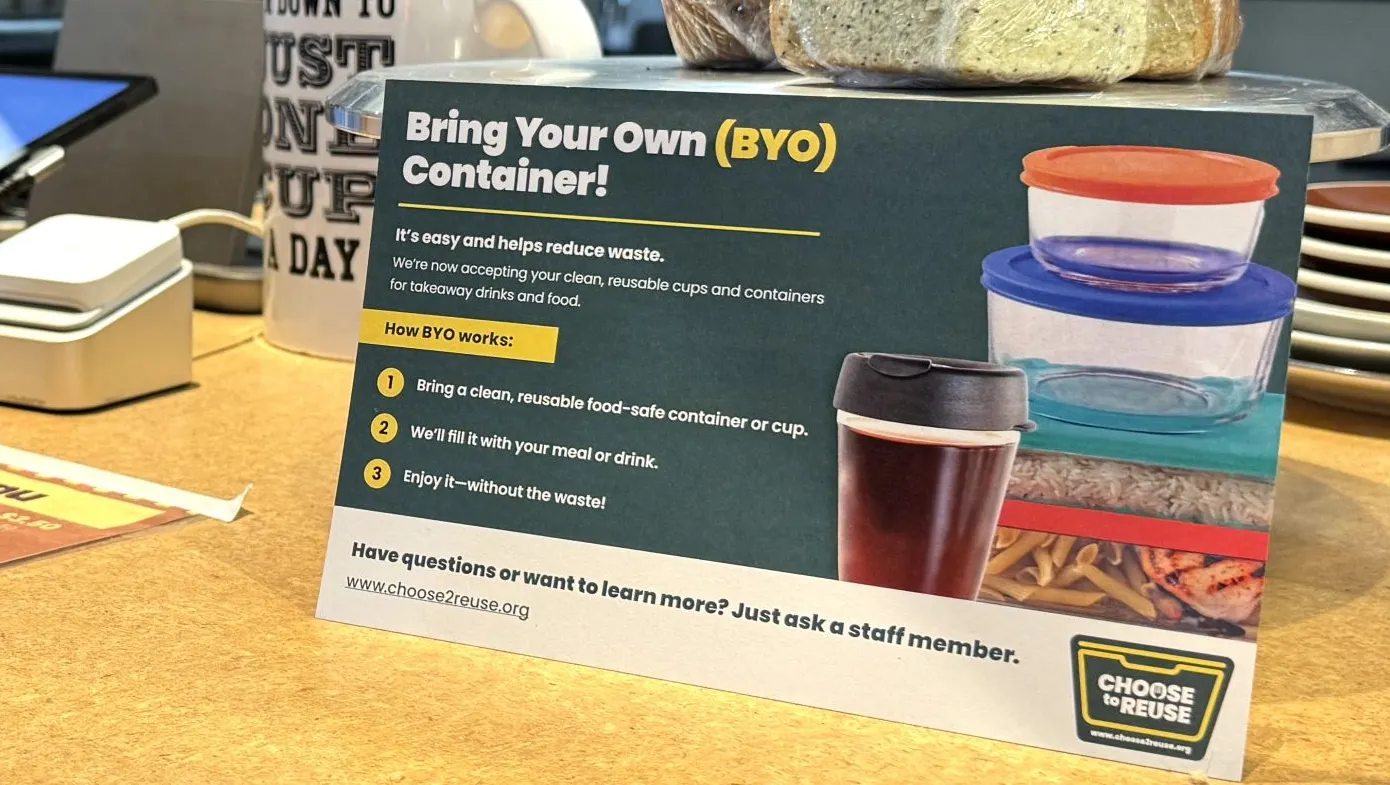
With Choose to Reuse, Metro is going for a more direct form of reuse support. Staff assist businesses with program aspects such as identifying suitable single-use products to swap out for reusable ones and navigating processes to implement their own BYO programs, said Dena Hastings, Metro waste prevention program manager. As part of the initiative, participating food businesses need to put in place a written plan and post signage, she said, and they need to have an understanding of which containers customers are allowed to bring in.
As part of the messaging campaign, Metro has created signs and stickers. It also developed informational business cards that residents can leave at local establishments where they'd like to see BYO adopted.
"This is still pretty early days for this campaign. Right now, it's still in the messaging [phase], trying to further our reach and build brand awareness around this campaign," Hastings said. "Without having a consumer awareness campaign that rode alongside the Choose to Reuse business efforts, it was going to be a bit lopsided. So we have put concerted effort into creating a consumer-facing page that sits alongside our business page."
Other regional reuse initiatives
Metro's work also includes other reuse initiatives, both for service ware and a variety of other items.
The Metro Council adopted a 20-year Regional System Facilities Plan in March 2025, which recognizes the need for reuse investments. The Reuse Impact Fund is the first measure to be implemented from that section, aiming to provide multiyear, flexible funding for nonprofits to grow the reuse economy in the Portland area. In November 2025, Metro awarded three-year grants ranging from $10,000 to $150,000 per year to 16 organizations — most of which are for reuse for products besides packaging.
Currently, Metro is partnering with Waste-Free Advocates on a pilot program incentivizing businesses to adopt their own in-house reusable foodservice ware program. Waste-Free Advocates manages the program and Metro funds it, providing up to $500 each for three businesses to help cover the costs of replacing single-use cups, containers and service ware with reusables. It plans to examine takeaways from the pilot to potentially inform the development of a formal program in the future.
Collaborative effort
Metro is tracking Choose to Reuse program uptake, and it's accepting feedback from all involved to inform program evolutions. So far, the food trucks segment is leading early adoption of Choose to Reuse, Metro found.
The regional government also will continue to utilize insights it gained when researching reuse in other regions, including California, Seattle and Toronto. Working hand-in-hand with nonprofits and private businesses also is a key piece of launching successful waste reduction programs.
"This wasn't done alone. This was a big lift, and it was a collaborative lift," Hastings said.
While right now "reuse is a hot topic, for sure," she said, Metro prefers to take a slower, measured approach to implementing and expanding the Choose to Reuse program to ensure greater success.
"We don't want to get ahead of ourselves. I think we want to be mindful of who we're working with and what's happening in the moment, and build upon that," Hastings said.