Canmakers are tight on capacity amid positive signs in food, alcoholic and non-alcoholic beverage markets alike.
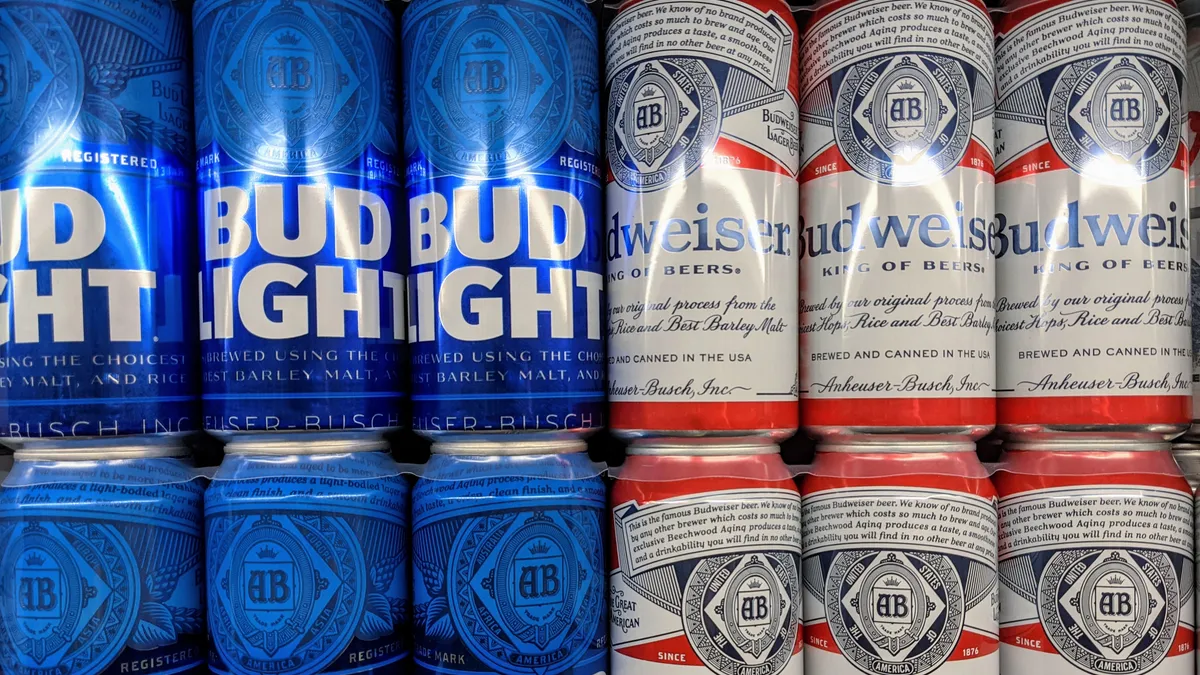
While beer has been a lagging market in recent years, Anheuser-Busch, the world’s largest brewer, reported its first sales volume increase in three years during a first quarter earnings report on Tuesday. Meanwhile, non-alcoholic beverage giant Coca-Cola highlighted popularity of mini cans in convenience settings and the role of price pack architecture during its April 28 earnings call, when it also shared positive results.
During recent Q1 recaps, major beverage and food can suppliers discussed demand trends, impacts from tariffs, heightened energy and material costs stemming from the war with Iran, upcoming customer promotions and more.
Ball
Ball sees big opportunities with beverage customers on the horizon this summer.
“When I go into our plants and our factories around the world, be it in Europe, in South America or in the U.S., at least one of the lines is running a World Cup label,” said CEO Ron Lewis on the company’s May 5 earnings call. The same goes for plants churning out products marking America’s 250th anniversary celebration.
“So clearly, our customers are looking forward to taking advantage of some exciting consumer-driven marketing activity this summer,” Lewis said. While Ball can’t yet estimate the impact, the company is pleased that cans offer “an amazing billboard for them to talk about that promotion,” whether in multipacks or different singles sizes.
The energy drink category “continues to grow unabated,” Lewis said. “As it grows, we’re excited to help our customers.”
“We are sold out for this year. We are more than 90% sold for next year, and we’re more than 50% sold for the balance of the decade,” Lewis said.
Ball is looking ahead to commissioning a new plant in Millersburg, Oregon, later this year, with an expected $35 million in startup costs. Executives also teased the potential for a future new plant on the East Coast, probably in North Carolina.
Ball does not have direct business in the Middle East and is passing through any elevated commodity costs to customers, executives said.
Looking at the remainder of 2026, “we continue to expect volume growth at the low end of our long-term range of 1% to 3%,” said CFO Dan Rabbitt.
Crown Holdings
Crown’s global beverage shipments increased 5% during Q1. In fact, March was Crown’s highest shipments month ever, CEO Tim Donahue said on an April 28 earnings call.
“The aluminum beverage can market in North America is steadily growing across multiple categories due to new product launches and convenient packaging,” Donahue said. “We expect strengthening demand into what should be a very tight can supply situation this summer, with our current full-year growth estimate unchanged at 2% to 3%.”
Additionally, food can volumes were up 3%.
While tariffs are “poor policy by any measure,” Donahue said, they don’t seem to be having a near-term impact and aren’t expected to have long-term damage.
Donahue acknowledged mounting inflation pressure on consumers, but is less worried about that impacting can consumption: “we do much better with consumption when people stay closer to home,” he said. “As we sit here today, it feels like we're going to be into a very strong summer.”
As competitors have also noted, capacity is a key limitation. “We’ll do our best to sell every can we can at the right price and satisfy the market. Certainly, contract customers come before spot customers,” Donahue said.
Unlike some competitors, Crown does have locations in the Middle East. It sees its sites in Asia being especially advantageous in the coming months. In the second and third quarters, “depending on the length of the Middle East conflict and the Strait of Hormuz blockage, where some suppliers cannot ship to India, we will pick up some cans into India from our operations in Southeast Asia,” he said.
Ardagh Metal Packaging
AMP saw beverage can sales fall by 1% year over year, which the company said was in line with expectations. Carbonated soft drinks and energy drinks were sources of growth, as were specialty can volumes. Like its counterparts, AMP also reported seeing more promotional-type cans ahead of the World Cup.
“Looking into 2026, we continue to expect industry growth of a low single-digit percent,” while the company expects some “softness” in its own business following contract resets, said CEO Oliver Graham on an April 23 earnings call.
“We anticipate 2026 being a transition year with a small volume decline and with a more favorable second-half volume versus the first half,” he said. “We expect to return to growth in 2027, at least in line with the industry on the back of additional contracted filling locations.”
AMP clarified that it has no manufacturing operations in the Middle East and no significant direct supply chain exposure. While conflict didn’t materially impact Q1 results, Graham said AMP continues “to monitor the geopolitical environment and the associated volatility in input costs — in particular, energy, freight and certain direct materials.” AMP anticipates “some moderate input cost increases in the second half.”