Editor’s note: This is the third article in a series about private and public-sector efforts to scale reusable packaging systems in the Portland, Oregon, area.
PORTLAND, Ore. – The Portland area has established itself as a national leader for introducing reusable packaging systems. Now, achieving scale is the name of the game. Operators believe that’s attainable thanks to the sheer number of systems aiding consumers’ growing familiarity with the concept.
Portland-based Bold Reuse is a key player scaling its closed-loop reusable packaging systems. It aims to have a presence in 30 cities and achieve $100 million in revenue by 2030, said Heather Watkins, co-founder and chief revenue officer, stating the company reached profitability about two years ago. The business is material agnostic and works with packaging suppliers including Dart and Waddington North America.
Nationwide, Bold partners with more than 20 sports teams along with entertainment venues, schools, corporate campuses and other partners. Besides cups, it handles foodservice ware for customers such as Seattle Public Schools and for meal delivery in the San Francisco Bay Area.
It now has operations in six U.S. metropolitan areas: Portland, Chicago, Phoenix, San Francisco, Seattle and Kansas City, Missouri. Bold has serviced a couple events in Michigan under a partnership with Dart’s Solo reusable cup line that launched last month, and it hopes to launch a wash line there in the fourth quarter, according to Watkins. Plus, it’s working to build out operations in Bend, Oregon, by September.
To get to its 30-market goal, Bold finds that the low-hanging-fruit areas are those in states with extended producer responsibility for packaging regulations — and potentially grants — to support reusables systems.
“Where there is no regulation, there are no dollars and there’s lower interest,” Watkins said. “We get interest in places like Alabama, but if there's no other support besides that one client, we can't move in there yet. It doesn't make business sense.”
In markets like Chicago, a variety of potential customers are interested besides the sports and concert events that have previously partnered with Bold. But it's harder to scale there compared with markets where EPR laws already are on the books, Watkins explained, even though Illinois state lawmakers are considering such regulation.
Last year, Oregon became the first state to implement a packaging EPR program. Those fees, along with tariff-related fees, are driving up single-use packaging costs, she said.
“People are starting to see single-use costs increase by 40% a year because of the changes in the industry,” which drives interest in reuse, she said.
Scaling operations
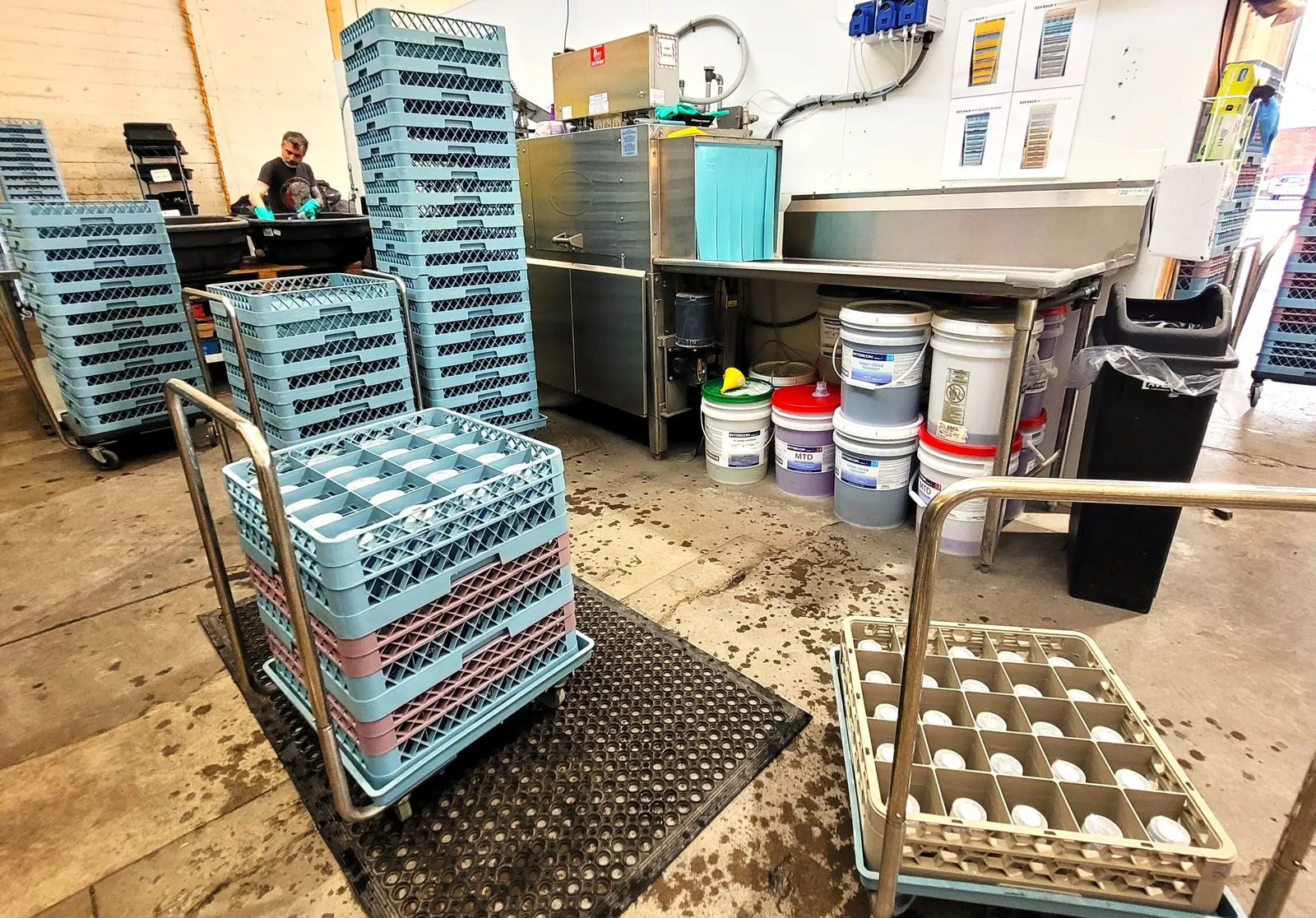
Bold Reuse has been headquartered in southeast Portland for about five years, and the facility also serves as the regional operations hub.
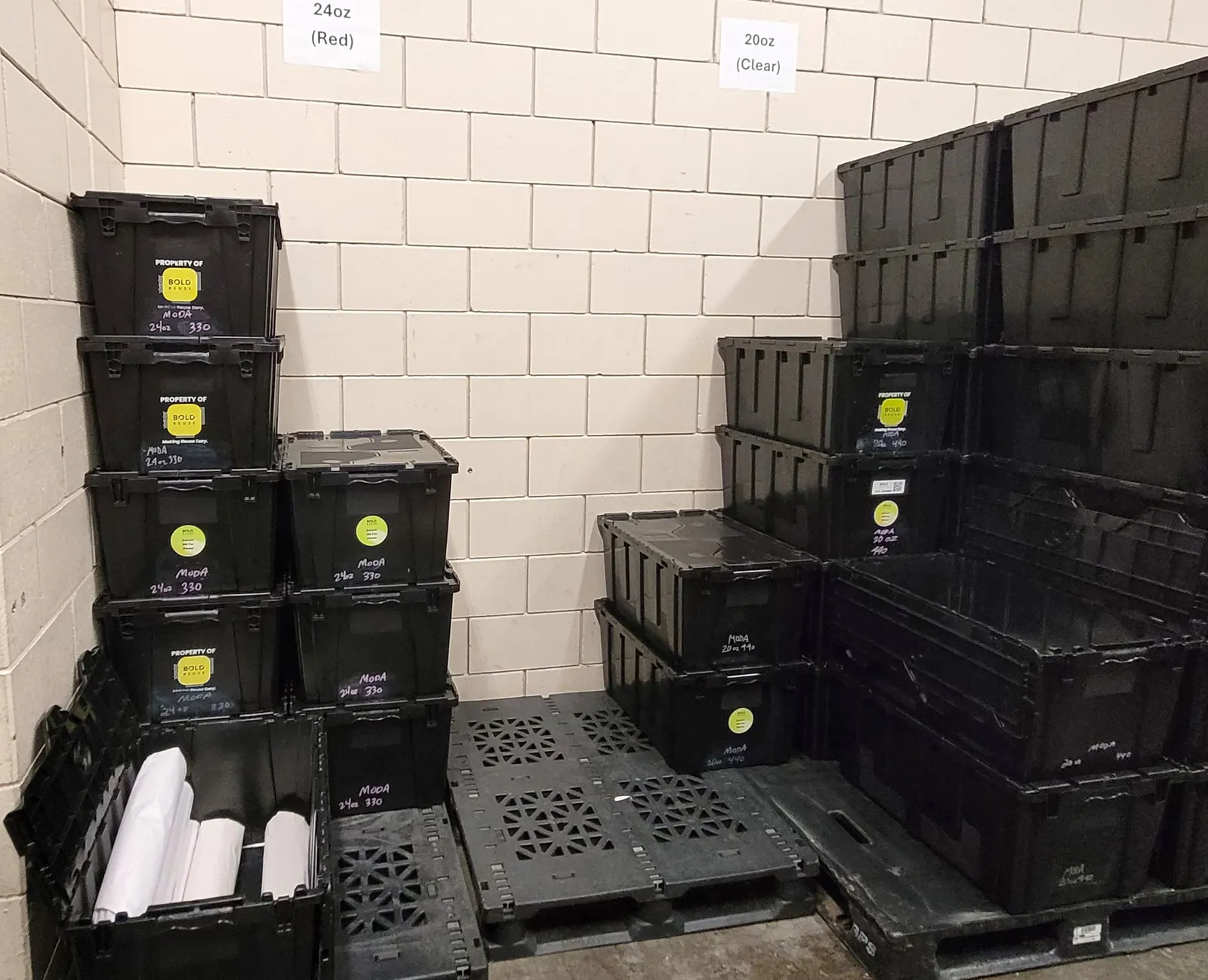
Items collected are taken to the 10,000-square-foot warehouse and sorted before going into the dishwasher. While trash is pulled and discarded, reusables that might be especially dirty or greasy go through a pre-spray.
“This is all about speed, how we make sure it’s super efficient to pack and prep,” Watkins said. “Because this is where we can shave pennies off to make it cheaper for the client and us to make money doing it.”
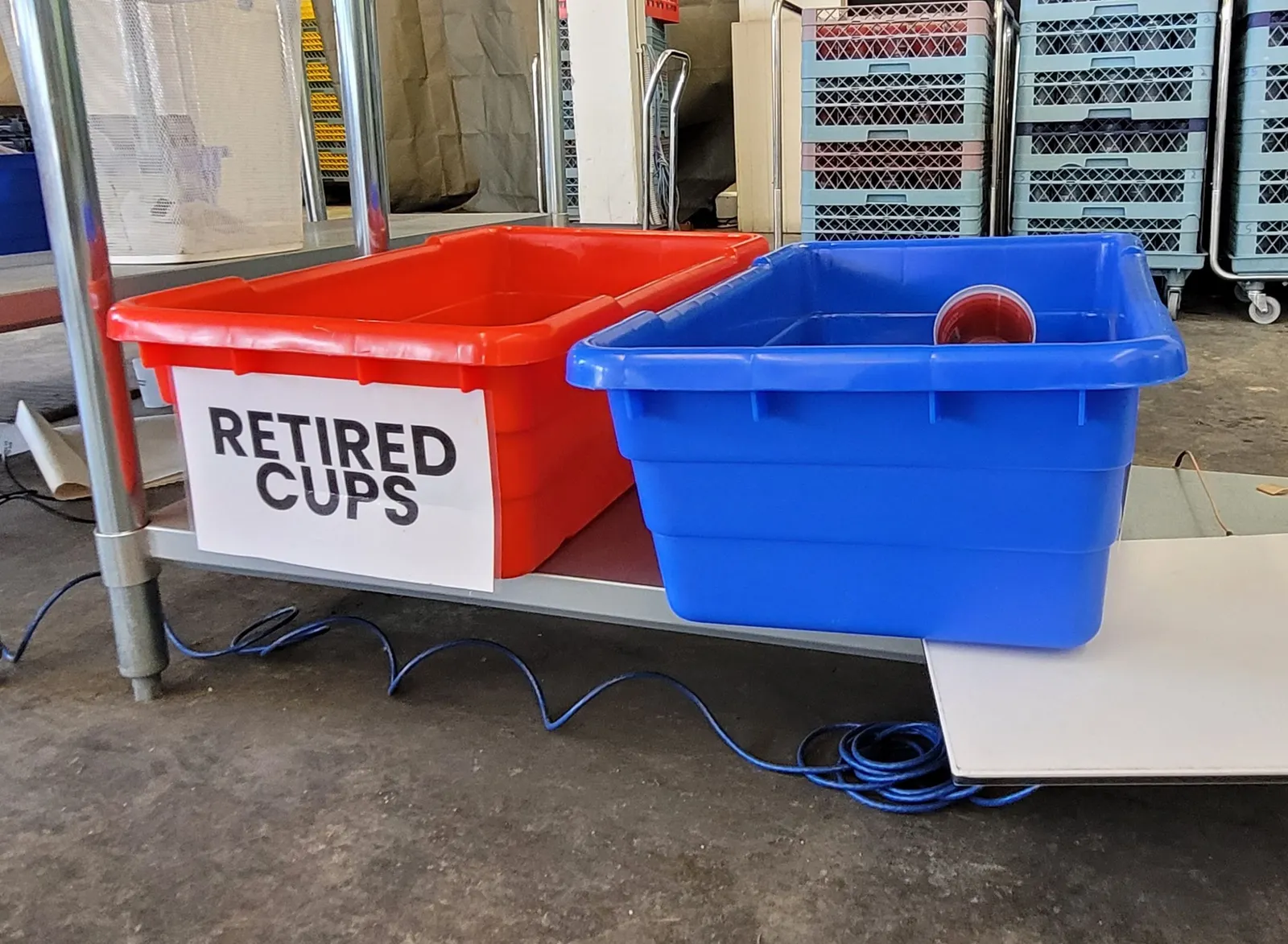
Employees check every cup to ensure integrity, searching for issues like cracking. Those that are still suitable for use but need another cleaning get set aside; for example, roughly 5% to 10% from Portland’s Moda Center, home of NBA team the Portland Trail Blazers, typically need rewashing. Items that are too damaged are retired. While less than 1% overall are retired, the number can be higher for individual customers that have particularly high standards for the cups put back in circulation, Watkins said.
Reusables are segregated by customer at the warehouse. This cuts down on stock discrepancies, undercharging or overcharging that can occur with some pooled systems, Watkins said.
“I think why people really love working with us is the data accuracy. This is only their stuff, and it's not being shared across multiple pools,” she said. “If you have a shared pool, they might go short in a product line because they've given it to somebody, and then another customer is low.”
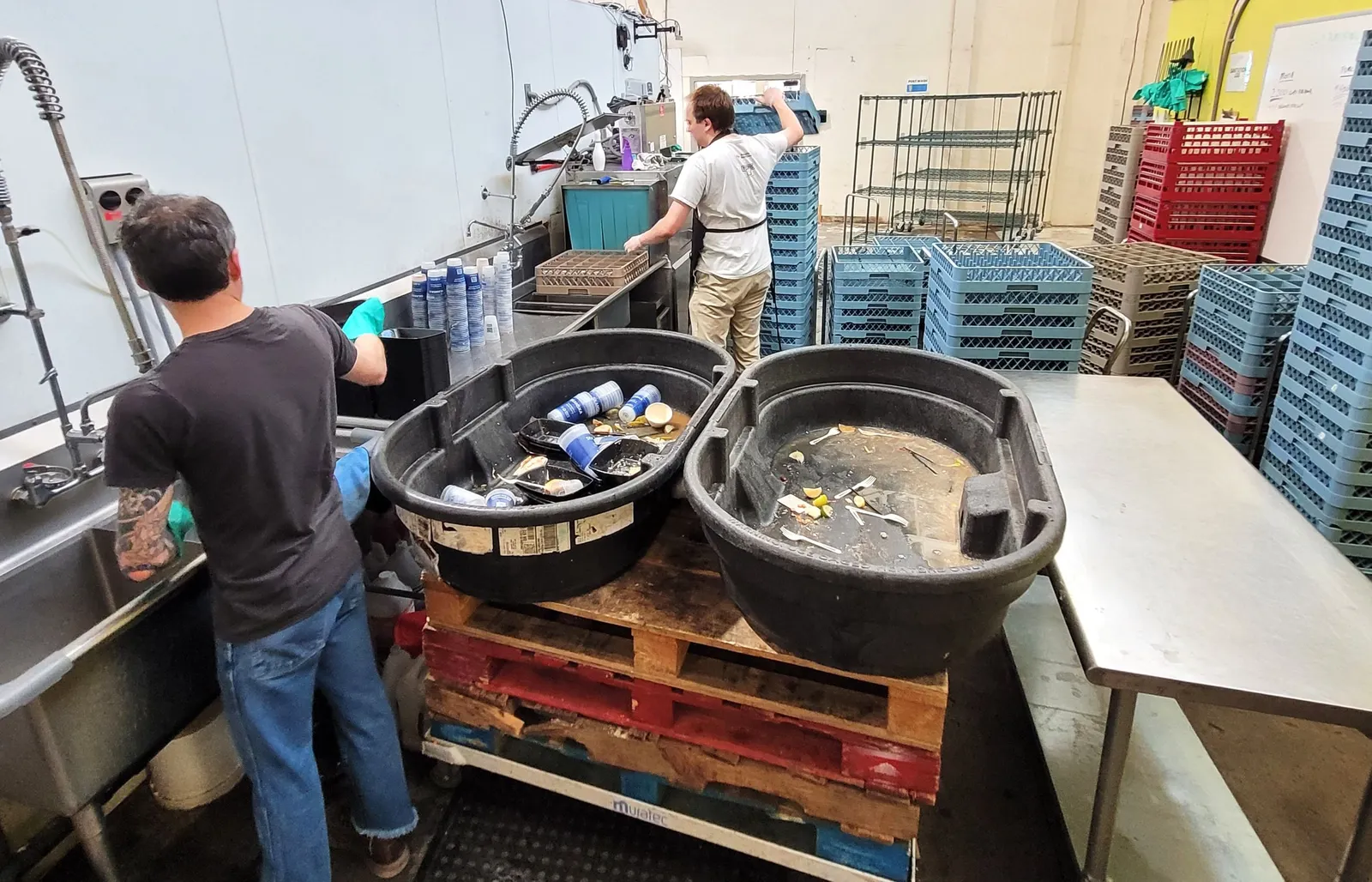
Return on investment has transformed through various operational iterations and streamlining.
“We're profitable in every single one of our warehouses. I don't think very many people in the industry are,” she said. “To scale, reuse needs to be cost comparable to what else is on the market, so we are trying at every stage to figure out how to do that.”
Bold needs to handle about 50,000 reusable items per month to make a profit in a market. It's currently examining the feasibility of setting up operations in Pennsylvania and in Boise, Idaho, among other places, and the best strategies for expansion.
The company’s revenue ambitions could lead to considering globalization or an acquisition, Watkins said. “But in no scenario will we allow our company to die or be in a worse place. Our ethos, our mission, is always critical to whatever happens next.”
Keeping it local
Last month, Bold expanded in entertainment via a closed-loop reusable cups program in its Portland-area homebase.
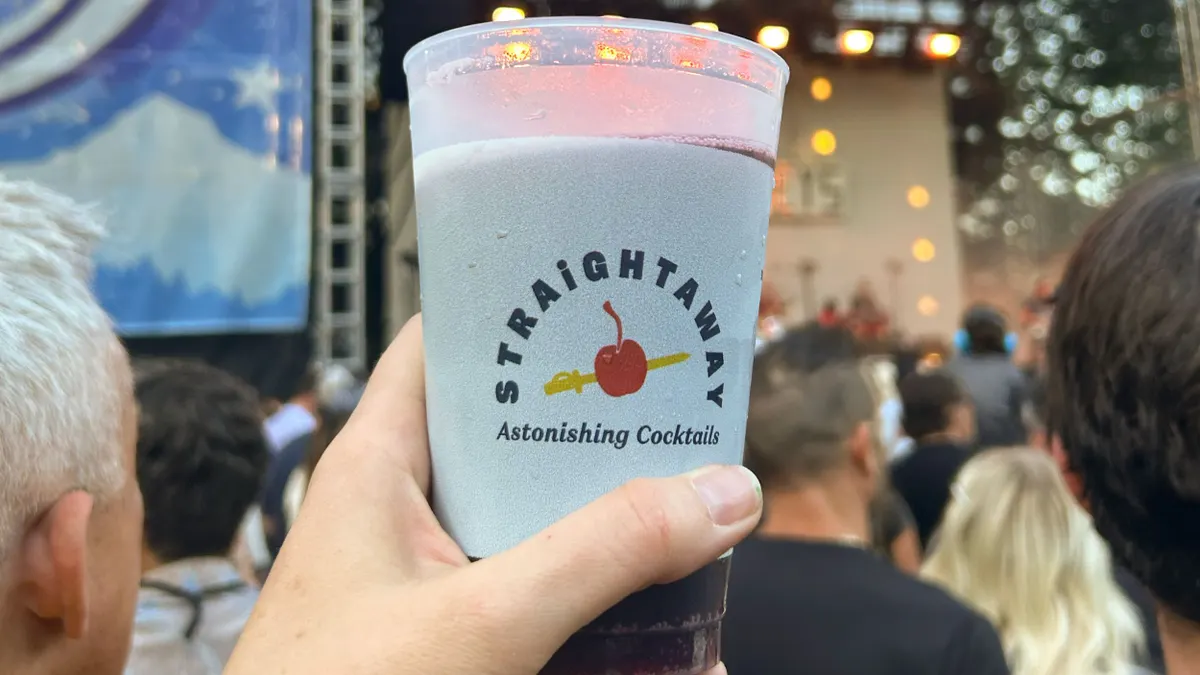
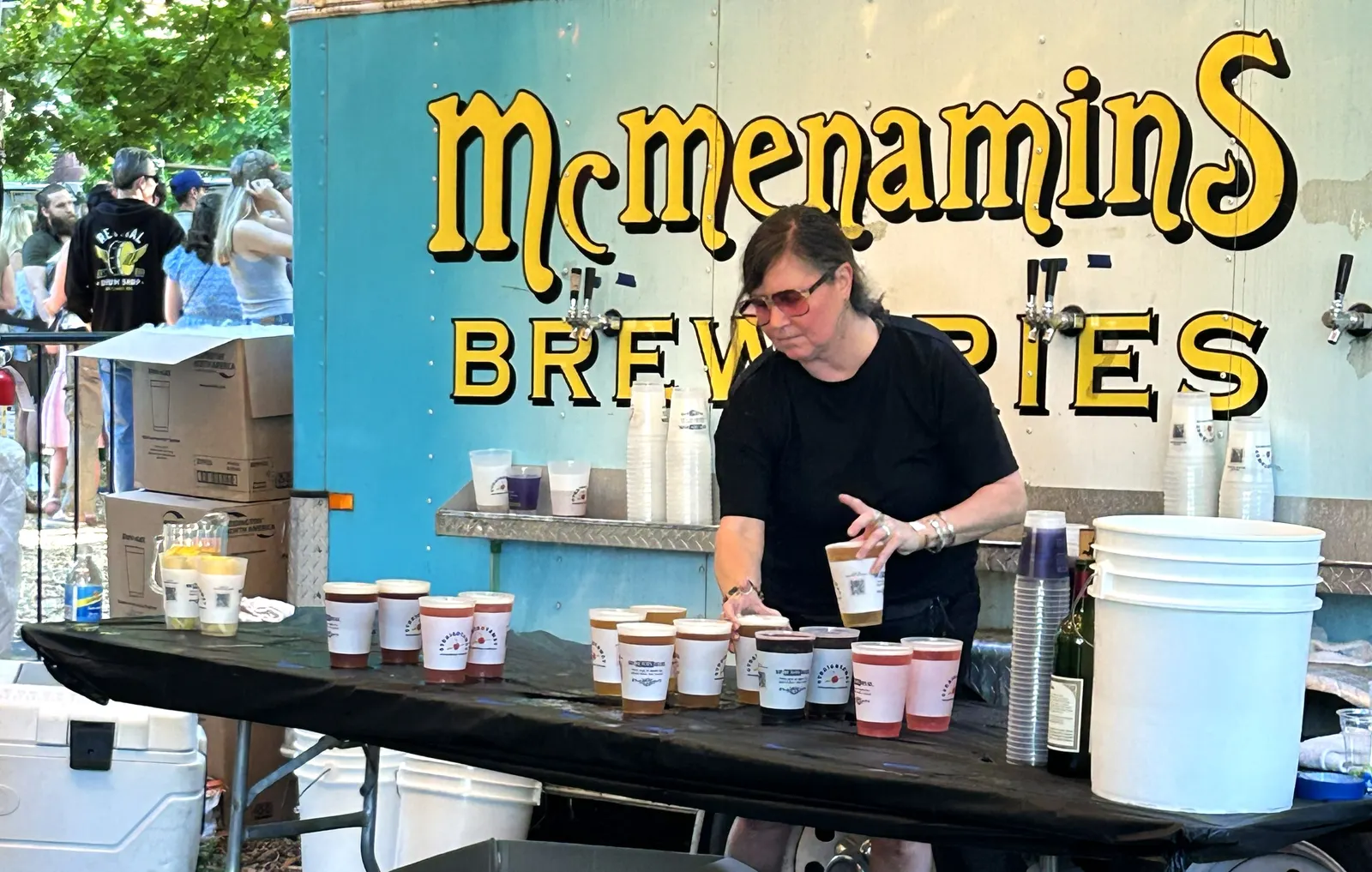
It partnered with McMenamins, a family-owned chain of restaurants, breweries, hotels and other entertainment venues in the Pacific Northwest, and with Portland-based sponsor Straightaway Cocktails, a B Corp. The partnership kicked off at a May 27 concert by The Black Keys at McMenamins’ Edgefield venue in Troutdale.
“I wouldn't call it our first foray into reusables. While the definition may be different, we reuse old buildings,” quipped co-owner Conners McMenamin, referencing the company's custom of rehabilitating historic buildings for their entertainment establishments. “It's a familiar mission to us,” although entering the reusable foodservice packaging space as an alternative to single-use products is “a new adventure.”
This initiative is for beverage cups at two McMenamins outdoor concert venues, and partners are in talks about the possibility of expanding the multiyear contract to include indoor spaces. Consumers won’t notice much change when purchasing beverages, other than the reusable polypropylene product “is a nicer cup than we've served in the past,” McMenamin said.
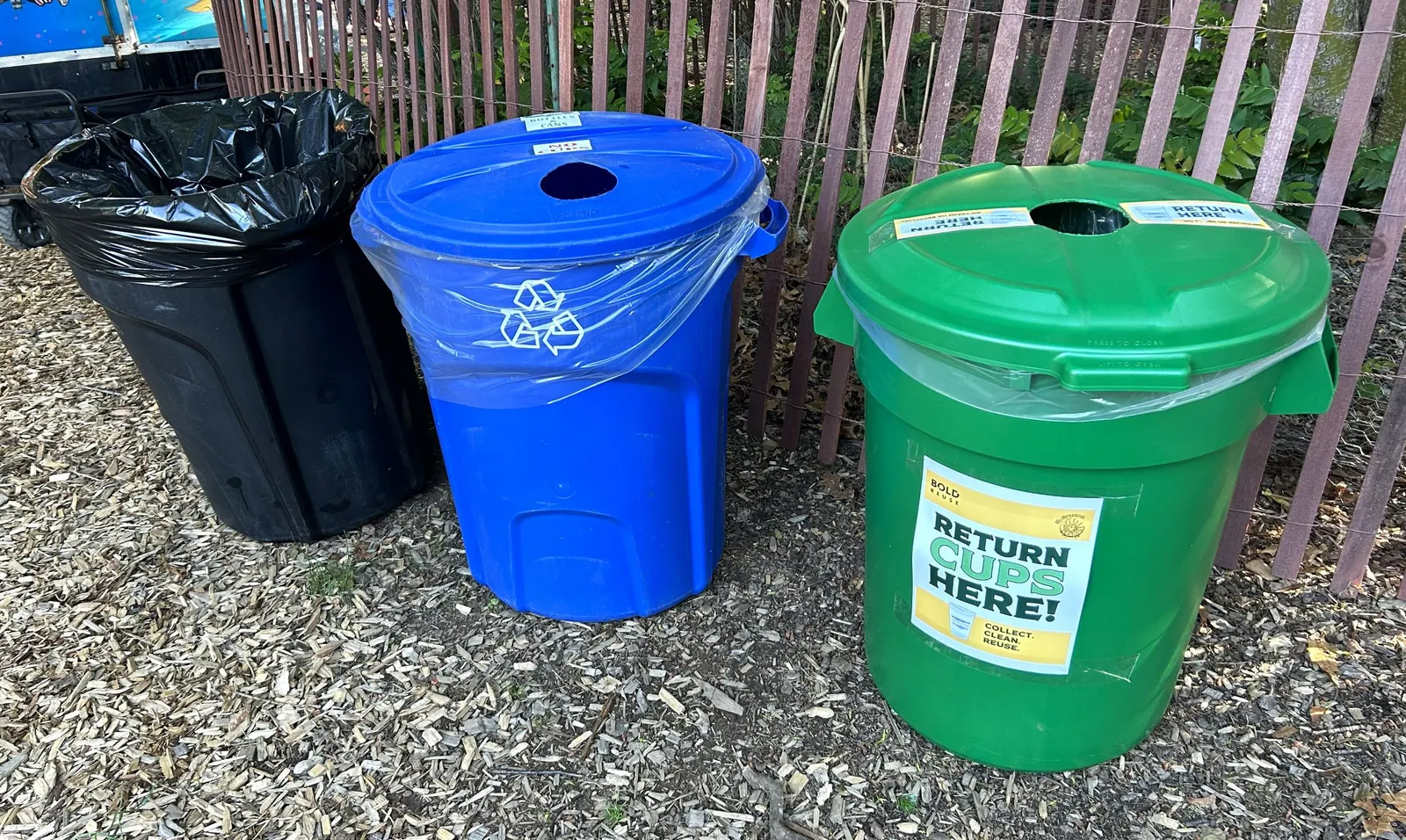
On the collection side, the entertainment venues now have bins for the reusable cups next to trash and recycling bins. The company continues to work on signage improvements, but so far it hasn't needed the level of consumer education that reuse programs might in other areas.
“The Portland customer is pretty savvy” and familiar with the concept, McMenamin said.
Bold transports the collected cups to its Portland washing site and then redistributes the clean items to McMenamins. The partners are gathering and analyzing data about the cup return rate and developing strategies to improve it. The goal is 90%, and “we're getting there; we’re close,” McMenamin said.
Although some companies view the cost of reusable packaging systems as a barrier, that's not how McMenamin sees it. “If a lot of people throw the cups away, that's a big swing and a miss. But if you do reusables the right way, then yeah, it saves money, and it's great.”
It was important for the chain to connect with a program partner who knew how to “make sure that it actually worked for everybody, and that it actually accomplished the mission of saving the piles and piles of trash that we would take out of our venues,” McMenamin said. “Bold Reuse has proved that over and over again.”
Blazing trails
One of those proof points comes from Bold’s work to launch a reusable cups pilot program at Portland's Moda Center in 2022, which became a permanent, full-arena initiative, dubbed Rip City Reuse, in September 2024.
A key reason the Moda Center embarked on its reuse journey was the adoption of Oregon's EPR law that would make single-use packaging more expensive. Another factor was potential regulatory changes that would render the arena unable to actually compost its compostable service ware; previously, the arena used single-use, compostable cups made from polylactic acid.
“This [reusables program] looked at one of our highest volume streams, and just transitioned that before it even became an issue. And it's just eliminating the waste in general. It saves us a lot of money on hauls annually,” said Brittany Saulsbury, director of sustainability for the Portland Trail Blazers.
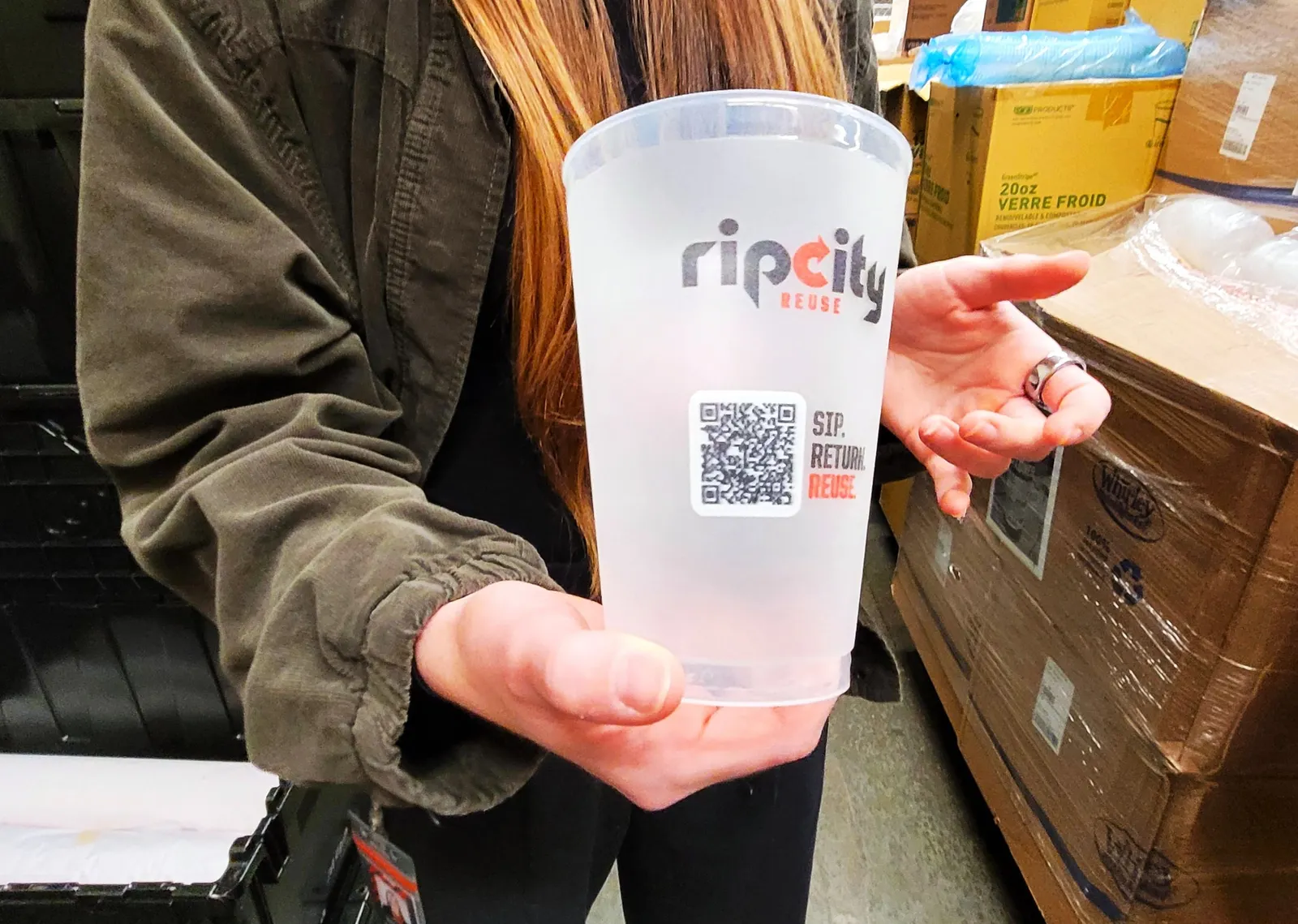
The reusables program is for all events year-round at the Moda Center, not just Blazers games. The initial pilot was for food trays, but the format quickly shifted.
“We realized that that was pretty expensive, because we were basically replacing a five-cent paper boat with a more expensive durable tray,” Saulsbury said. “So when we transitioned to full-arena, we actually looked to cups, because the cost differential there is much smaller with a disposable cup versus a reusable cup.”
Approximately 10,000 to 12,000 beverages are served during a typical Blazers game, and the number varies for concerts, she said. While the cup return rate was about 75% the first year, in 2025 it was around 80%, and this year it is consistently between 85% and 90%.
“Our fans are getting used to the program. They've really adapted to it, and they're doing the correct behavior of returning the cups now,” Saulsbury said. “I think in the beginning there was confusion. ... Getting that education down with our fans was important.”
While collecting just one reusable item is easiest for fans, the arena eventually aims to expand back into foodservice ware as well. However, making the entire venue 100% reusables might be “unrealistic” in the near term, Saulsbury said, noting that in addition to cost barriers for food trays, certain packaging materials of certain weights pose security and safety concerns if they're used as projectiles or weapons.
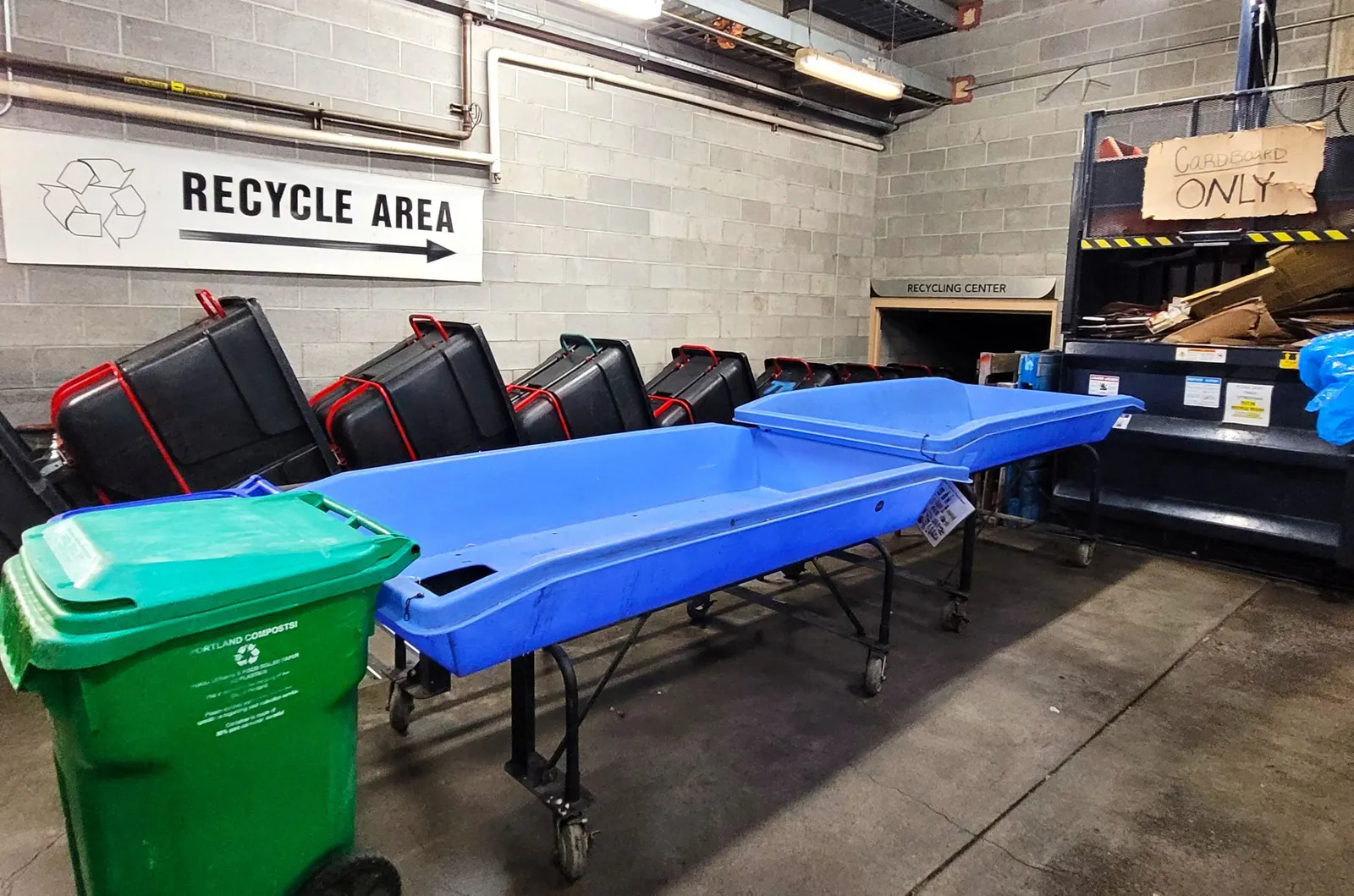
During events, crews pre-sort collected recyclables and compostables in the Moda Center's waste and recycling room, and they move operations outside for a post-sort when the event ends. Reusable cups that end up in the wrong bin — about 10% — are recovered and bagged with the others that Bold picks up for washing.
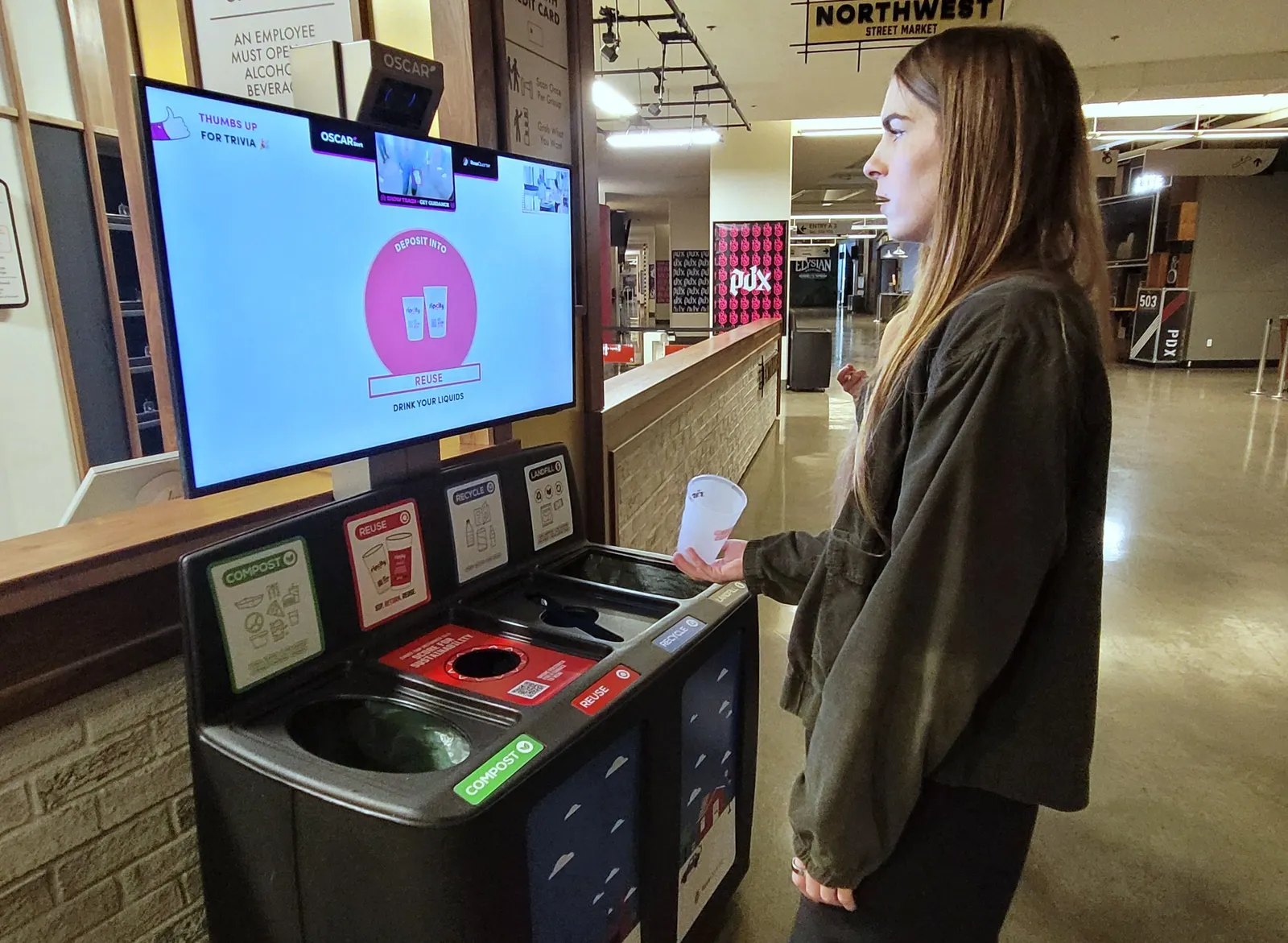
More than 200 reusable cup collection bins are positioned throughout the arena, and recently the venue added 10 kiosks that also have artificial intelligence-enabled digital screens. A camera spots the item a consumer is holding, then the computer system identifies it and guides the user regarding the correct bin to use. The kiosk also has other features to interact with and educate users, such as trivia games.
Bold and the Trail Blazers released a life cycle assessment in May suggesting carbon emissions for the Rip City Reuse polypropylene cups are lower than three types of single-use cups, on a per drink basis: 82% lower than PP cups, 74% lower than compostable PLA cups, and 55% lower than compostable paper cups. This year, the program is nearly at cost parity with the previous single-use packaging system.
Saulsbury has advice for other businesses exploring reusables programs: “Make sure you’re looking at it holistically." Her team realized it could save about $25,000 a year in waste hauling costs. "The higher our return rate is, the better our return is in terms of financials, because we aren’t having to buy new inventory.”
While Bold continues to evolve the Rip City Reuse program, it’s expanding sports partnerships in Portland and nationwide. And it will continue working to make each market more profitable.
“We’re profitable in every single one of our warehouses, and I don’t think many people in the industry are,” Watkins said. “People think it’s hard. But with a little bit of courage to try something new and get out of the old way of thinking, we’ve proven it’s possible.”