Dive Brief:
- Two bills in California that could change how compostable packaging is defined or labeled passed in committees last week.
- SB 1031, backed by state Sen. Catherine Blakespear, aims to more clearly distinguish compostable products and packaging from non-compostable alternatives, and calls for further study of the potential health impacts of degraded compostable plastics and related chemical additives. It also seeks to restrict “compostable except in California” labeling that has cropped up on some products.
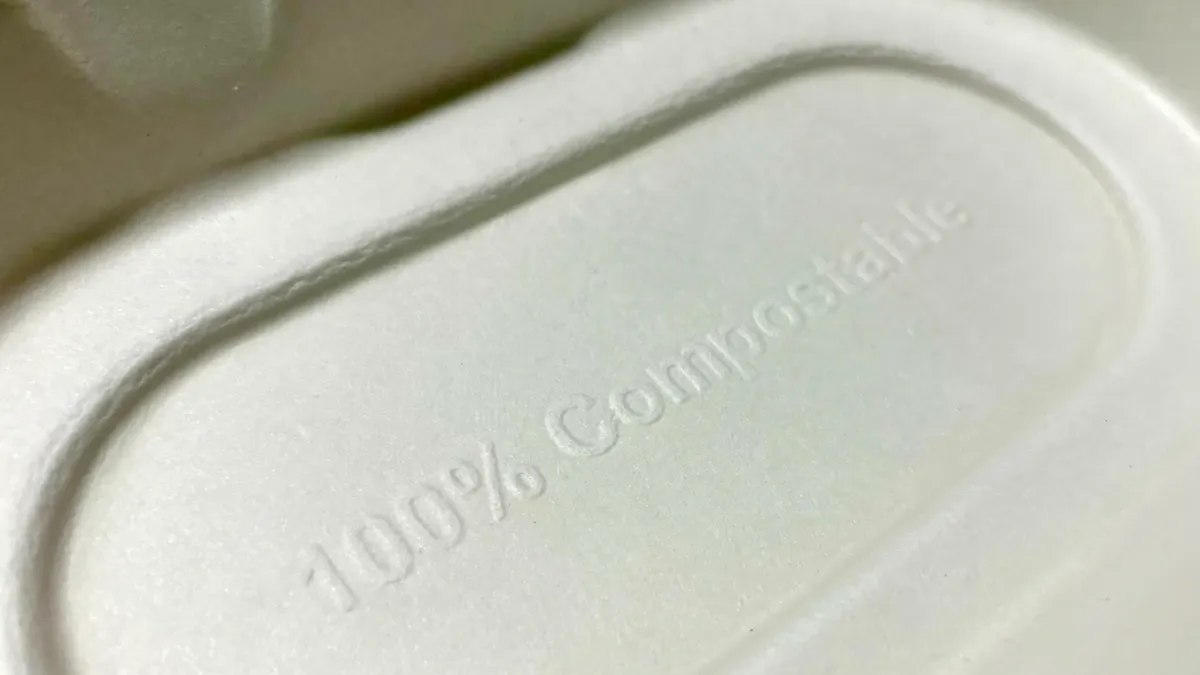
- AB 1812, backed by Assembly Member Cecilia Aguiar-Curry, aims to restrict “compostable” or “home compostable” labeling for products made wholly or partially of plastic.
Dive Insight:
The path forward for compostable packaging in California remains hazy. California law AB 1201 is due to be enforced in mid-2027. That law requires any product labeled “compostable” to be an allowable agricultural organic input under the requirements of USDA’s National Organic Program, but federal definitions haven’t been updated to reflect that. The Biodegradable Products Institute, which certifies and advocates for compostable packaging, has been seeking state and federal solutions to reconcile this issue that currently threatens the future of compostable packaging in the California market.
The regulatory situation for compostables in California is further complicated by interplay with SB 54, California’s upcoming packaging extended producer responsibility and source reduction law, and SB 1383, its existing organics diversion law. To achieve those laws’ packaging and food waste goals, “you've got to start making it possible for compostable products to work,” said Rhodes Yepsen, executive director of BPI.
The compostables bills currently in play do not address those underlying issues, according to BPI. The group sees a few different paths forward to pursue its goals in California. At the state level, these bills could be amended, or BPI could seek a sponsor for a new bill next year. As far as a potential federal solution, BPI says its USDA petition is still pending.
“We continue to do our outreach to USDA, and have started outreach to Congress members as well, talking about the urgency of this,” Yepsen said. There could also be a solution through the farm bill, he said.
Conversely, Californians Against Waste says it supports the additional labeling clarity that SB 1031 could provide. But, like BPI, Ameripen and a host of other groups, it was not in favor of AB 1812 as written.
“AB 1812 could eliminate critical tools California relies upon to meet its organics diversion and plastic waste reduction mandates,” CAW Director of Advocacy Nick Lapis wrote in a recent letter. “At its core, AB 1812 treats all compostable polymers as inherently problematic rather than distinguishing between applications that create operational challenges and those that directly advance state environmental goals.”
CAW called for legislation that offers tailored exemptions, potentially for food scrap bin liners, compostable coatings for paper foodservice ware, coffee pods or produce stickers. CAW also said local governments must retain authority to determine compatibility with their recycling and composting systems. AB 1201 implementation could be stronger if third-party certification and labeling requirements are made mandatory, CAW wrote.
SB 1031 passed in a 5-2 vote and was re-referred to the Senate appropriations committee. AB 1812 passed in an 11-0 vote and was re-referred to the Assembly appropriations committee.