Dive Brief:
- A federal judge has set a trial date for April 10, 2028, in an ongoing class-action lawsuit against Colgate-Palmolive that alleges the company displayed “misleading” recyclability statements on certain toothpaste tubes. The jury trial is expected to last approximately 10 days.
- Now, the discovery period continues. In court documents, attorneys indicated their intention to subpoena MRFs and waste management companies operating in California, including WM and Republic Services, for additional information.
- This follows the judge in July denying Colgate-Palmolive’s request to appeal the class that the court assigned for the lawsuit. The request to appeal had temporarily paused progress on the case.
Dive Insight:
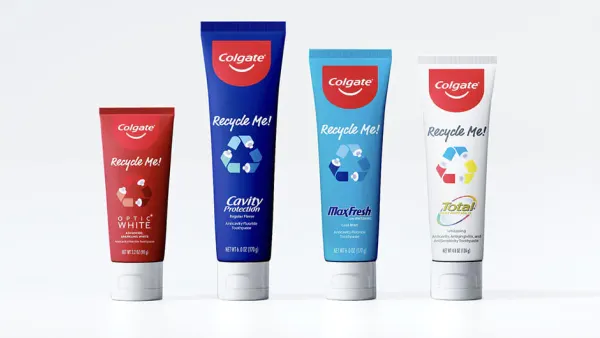
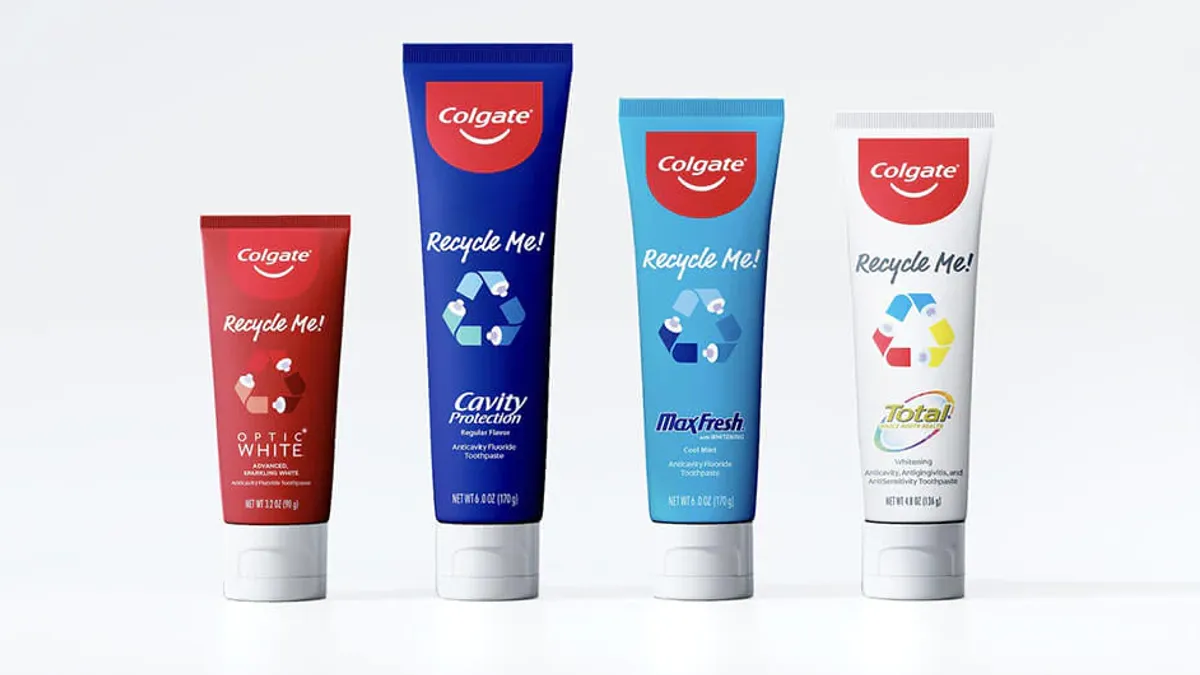
Three consumers initiated this case in 2023 in the United States District Court for the Northern District of California and intended for it to be a class-action lawsuit. The plaintiffs took issue with packaging for certain tubes of Colgate and subsidiary Tom’s of Maine toothpastes that showed messaging such as “recyclable tube,” “first of its kind recyclable tube” and/or the chasing arrows recycling symbol. In 2024, Judge Joseph Spero denied the consumer packaged goods company’s request to dismiss the suit.
So far, “the entire litigation has just been about defining what the class is,” which is common in class-action lawsuits, said Emmanuel Hurtado, an associate at Stubbs Alderton & Markiles. After reviewing the complaint, Hurtado spoke to Packaging Dive based on his antitrust defense expertise, but he is not involved in the case.
Colgate-Palmolive says it “invested five years of research and development into creating a first-of-its-kind recyclable tube made primarily of #2 HDPE plastic — the same widely recycled plastic used in soap and detergent bottles.” It then began labeling some, but not all, tubes with recyclability claims as it transitioned to the new tubes over a five-year period.
It is not only possible to recycle the tubes, the CPG said, “they are recycled in California through the widely available #2 HDPE recycling stream.” Colgate’s website introducing recyclable toothpaste tubes currently bears a footnote cautioning consumers, “Your community may not yet accept tubes for recycling. Check locally.”
Plaintiffs say the California MRFs where their collected materials end up for recycling do not accept such tubes and consumers paid more for the products with recyclability claims. They also say that toothpaste tube recycling is not available to a majority of California residents. The defense claims the plaintiffs are not sure of the price they paid for the products or where their recyclables actually go.
The court granted the plaintiffs’ motion for class certification on April 1, 2026, and Colgate-Palmolive appealed shortly after that.
The court certified a class of all people who purchased a Colgate or Tom's of Maine brand toothpaste product that displayed “recyclable tube” language on the outer package in the state of California from Aug. 29, 2019, until the lawsuit was filed in 2023.
Colgate-Palmolive argued in its appeal that the class should be narrowed and questioned if the court made multiple instances of a “manifest error.”
The standard to appeal is very high, Hurtado said. “You have to show that the district court's decision was manifestly erroneous, like completely wrong.” While more discussions about reasoning may have occurred during in-person or virtual meetings, the judge did not file documents describing why he denied the appeal in July. “He declined to even consider the appeal, basically,” Hurtado said.
Colgate-Palmolive said in its appeal that it had transitioned approximately 200 toothpaste SKUs to the new packaging by the time the plaintiffs brought the lawsuit. The CPG said that the packaging was manufactured without any recyclability claims for approximately 40% of the class period.
“[D]uring the time the Claim did appear on the ten representative SKUs, it appeared only on the back or side of the cartons 57% of the time,” the appeal document states.
The judge’s denial of the appeal means the class status is now set in stone. In recent weeks, plaintiffs’ attorneys submitted graphics and messaging they intend to use to solicit members of the class to join the lawsuit. They proposed that the solitication period lasts for two months.
Now, the case proceeds to discovery and attorneys will examine the actual issues at hand, including liability and damages. As part of discovery, attorneys said in court documents that they plan to subpoena WM, Republic and potentially other companies operating in California. While these subpoenas initially are indicated to be just requests for documents, attorneys could choose to call these companies as witnesses in depositions or the trial, Hurtado explained.
Although the judge set the trial to begin in April 2028, these dates often serve as placeholders and can get changed as the litigation progresses, Hurtado said. Date changes nearly always are to grant more time rather than to pull the trial earlier. All that considered, this case seems to be far enough along so the named date “might be a good estimate of when it's actually going to go to trial,” Hurtado said.
This lawsuit is just one example of legal action inspired by packaging labeling and greenwashing concerns. In July, a judge granted a preliminary injunction to block enforcement of SB 343, California’s “truth in labeling” law, which was slated to take effect Oct. 4.