Dive Brief:
- A coalition of packaging companies filed petitions this week with the U.S. Department of Commerce and the U.S. International Trade Commission requesting investigations and antidumping and countervailing duties for “unfairly traded” imports of corrugated pizza boxes from China, Malaysia and Turkey.
- The group calls itself the American Pizza Boxes Manufacturers Coalition and is composed of Smurfit Westrock and Pratt Industries, according to a news release from Wiley Rein, the law firm representing the coalition. The United Steelworkers union also jointly filed the petitions.
- Next, Commerce is expected to determine within 20 days whether to initiate investigations, and the USITC is expected to issue a preliminary determination within 45 days, the law firm said. The full process could take about a year, and final determinations are not likely until late 2027.
Dive Insight:
About 3 billion pizza boxes are manufactured in the U.S. every year, Pratt Industries says. The company is considered one of the nation’s top pizza box producers and touts its 100% recycled content products. Smurfit Westrock is commonly considered the producer of the most pizza boxes in the U.S. Prior to the company’s formation via merger in 2024, legacy company WestRock had forged partnerships with foodservice giants including Domino’s and Pizza Hut on initiatives to boost pizza box recycling.
The American Pizza Boxes Manufacturers Coalition says there has been a surge in volumes of unfairly traded pizza box imports from China, Malaysia and Turkey since 2023. These imports increased by 130% between 2023 and 2025, and have grown further in 2026 so far, the group says.
These actions have caused “significant declines in production, shipments, profits, and employment” within the U.S. pizza box industry, according to Wiley Rein’s news release. The law firm declined Packaging Dive’s request to provide additional comments.
The coalition says that the named countries are “dumping” pizza boxes in the United States. The USITC defines dumping as a foreign producer selling a product in the U.S. below that producer's sales price in its home market, or at a price below its cost of production. The coalition claims the boxes are being dumped in the U.S. at rates ranging from 96.62% to 568.5% from China, 110.73% from Malaysia, and 120.65% to 210.37% from Turkey.
The group also alleges that the Turkish government provides “artificial advantages” via subsidies to that country’s pizza box industry. Plus, it says there’s evidence the Russian government provides cross-border subsidies that benefit producers in Turkey.
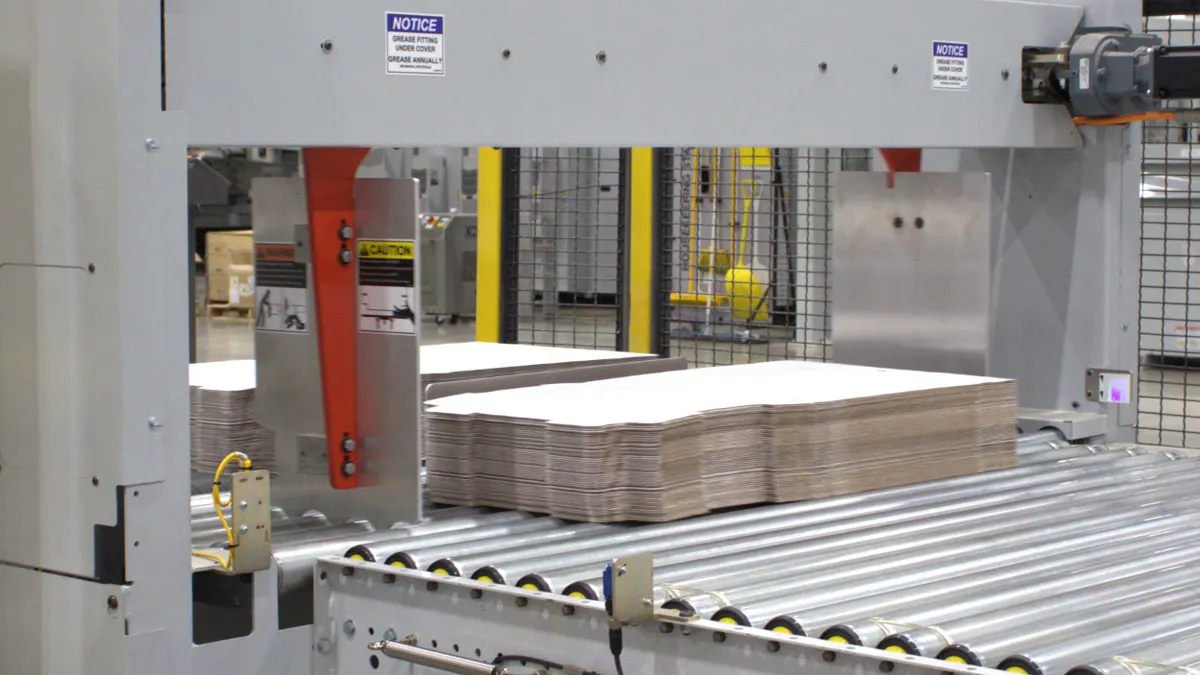
The products cited are finished or unfinished and assembled or unassembled pizza boxes, including ready-to-assemble corrugated cardboard die-cut blanks. The boxes are at least five inches long, at least five inches wide, and no more than four inches high.
The federal government accepts petitions related to antidumping and countervailing duty cases on a rolling basis and launches investigations where it sees fit. The duties are separate from, and added onto, other country- or material-specific tariffs.
The USITC determines whether a domestic industry is materially injured or threatened by unfairly traded imports, and Commerce issues duties. Antidumping duties are designed to offset the amount by which a product is sold at less than fair value, and countervailing duties are intended to offset foreign government subsidies.
The USITC and Commerce have advanced other packaging-related trade cases in 2026, including for PET films and molded fiber products. In July, Commerce issued an antidumping duty order for polypropylene corrugated boxes from Vietnam.