There’s a first time for everything: Emerald Packaging this month acquired the manufacturing assets of a Blower-Dempsay Corp. location in Santa Ana, California, marking the first acquisition in the family-led company’s 63-year history and the establishment of a second location.
Growing demand pushed the company to expand beyond its single Bay Area location. Positioning its second site in Southern California offers proximity to major customers in that area as well as in Arizona, Texas and Mexico, said CEO Kevin Kelly.
“Having a second factory introduces a whole new wrinkle into actually running a business, so I know we’re going to have a learning curve. But the equipment’s the same, it's close to home, and our customers are excited — so I think they'll give us a bit of leeway as we get up to speed,” he said in an interview. “We are excited about this opportunity.”
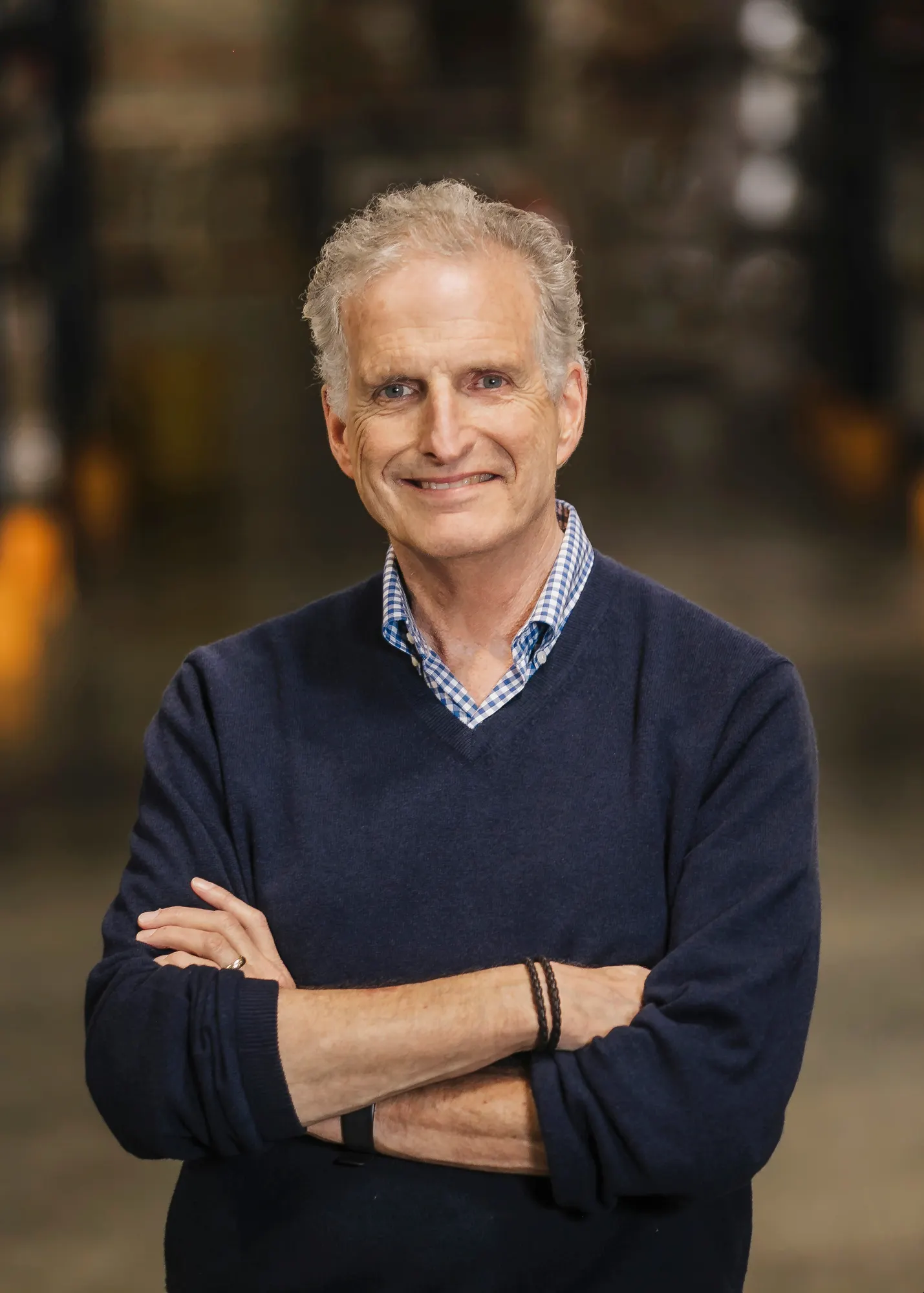
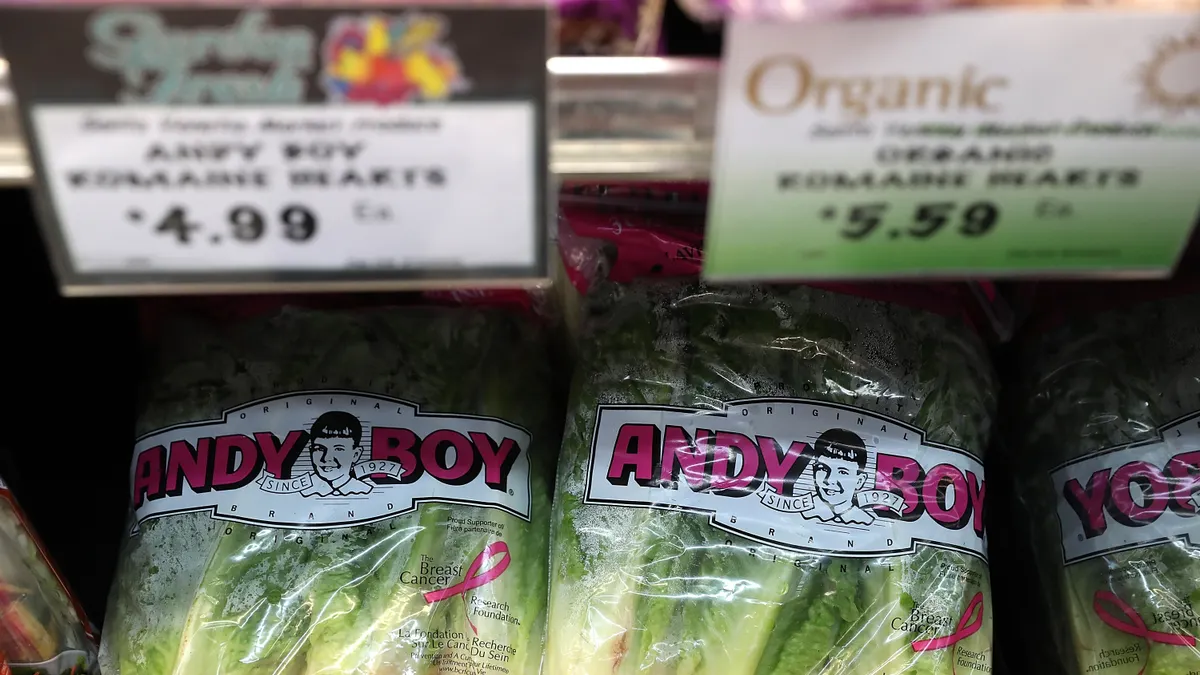
Kelly’s father co-founded the flexible packaging company in 1963. The company is a significant supplier to the produce market, listing D’Arrigo California, Taylor Farms and Wada Farms among its key customers.
For years, the company has touted its use of postconsumer recycled content in its flexible packaging. Emerald entered that space “because I was tired of doing nothing,” Kelly said. “PCR just seemed practical to me.”
But the shifting regulatory environment in California and elsewhere — specifically the advent of extended producer responsibility programs — is prompting Emerald to reassess how it addresses sustainability for packaging.
This interview has been edited for length and clarity.
PACKAGING DIVE: What made an acquisition more attractive than doing a greenfield buildout for your second facility?
KEVIN KELLY: Greenfield is just a lot more expensive, a lot more time going through the permitting process. To get a building, say in Arizona or Southern California, takes a very, very long time. We were able to buy a business that’s in place, equipment that’s in place. Compared to buying equipment and sticking it in a new building or an existing building in the Los Angeles area, this was just far simpler for us. I would hate to try and manage a building process or a whole buildout there from Northern California; that would have been a lot more complex.
Should we expect to see Emerald make more M&A moves, whether that means purchasing additional companies or even being acquired itself?
We looked at being acquired ourselves a couple of years ago, and in the end discarded it. The only money that’s out there anymore is private equity, and I just didn't feel like private equity valued the folks who have been with us for 10, 20, 30 years. I don’t think private equity values the culture we’ve built — which was, to some degree, familial. They're just looking at squeezing out the last dime, and I don't think any of the family members, including the retired ones, felt comfortable with that.
We have a younger generation, non-family, and in the end decided to have them lead the way forward. So, in a lot of ways, this acquisition is being driven by non-family members who really want to expand, and people in their 40s and 30s who've been with us a long time, who we have a lot of trust in and respect for.
As far as buying another company: Maybe five years out, you know? But for now, I think we're going to try and manage our way into this one and take it one step at a time.
What other things have notably changed now compared with when the business was founded?
Oh my gosh, so many things have changed! For one, the equipment’s so much more technical.
And now I spend almost all my time on public policy, and my father had no interest in that. I can’t not have an interest, just given all the extended producer responsibility programs that are being put in place, and how I have to shepherd my customers through them.
Most of our production goes into the produce industry — salad bags, baby carrot bags, stuff like that — and those folks aren't really sophisticated when it comes to government affairs. They’re really counting on me to help them get through these laws that are really complicated and different state to state, so that's where I spend my time.
I’m sure if you asked my dad, even 10 years ago, is this what his son’s going to be doing, he’d just shake his head and say “no way.” But here we are. You really have to pay attention to environmental concerns in a way you didn't have to in 1963, or even in 1996 when I came into the business.
What are some ways emerging regulations in California are playing into your sustainability thinking?
My thinking on sustainability now is really driven by those EPR laws, and to some extent it’s arguing for an exclusion for packaging. For instance, produce packaging is basically modified atmosphere packaging, which regulates oxygen in and CO2 out.
Part of what I do is explaining to regulators, explaining to the producer responsibility organization, what it is we do and why it’s important. Secondly, looking at the exclusions which SB 54 allows. But more realistically, looking at exemptions, because right now there's no replacement for the plastic we use. Compostables can’t replace it.
You can thread PCR — postconsumer resin — into some packages, but not every package. You can't use PCR in modified atmosphere packaging because you lose control of that O2-CO2 ratio; it’s just too mixed.
But we got out in front on PCR, and that turns out to be something that SB 54 is encouraging. We’re working on compostables, again encouraged by SB 54. We’re working on fiber options for produce, but those really are another 5, 10 years away — and we've already been working on them for two years.
The Western Growers Association is the main trade association helping our customers. I spent an hour on the phone with them this morning as they’re preparing documents to help their members apply for exclusions or exemptions to meeting the rates and dates of SB 54.
I talked to legislators in Sacramento, and they were already talking about rewriting SB 54 in three or four years, when the unintended consequences become more obvious. But you can see the unintended consequences, and provisions in the law, that just are completely unrealistic that industry needs to be working towards. I’m not a believer in letting industry off the hook, but I think we have to have to have realistic time frames.
I think the regulators will come to those conclusions. And when we reform these laws, there’ll be more realistic dates and rates in there that industry will have to stretch for, but can probably get there.
The industry hasn’t yet seen as much PCR demand from brands as hoped — largely because virgin resins are cheaper. You’ve recently talked about the inflationary environment we’re in, including impacts of the Iran war. Does that affect your view on including PCR in your packaging?
I think the danger here is that companies will say, “Oh, we have to cut costs so out goes the PCR.” This happens all the time with progress, where cost ends up becoming a consideration.
I think we're going to hold the line on PCR. We’re going to continue to use it. I just don't see any justification for not. The gap is basically the same between virgin resin and PCR today as it was, say, five months ago. I don't think prices will remain high forever.
It's just hard to predict what's going to happen with this administration. So I think staying the course is the best way forward.
And listen, I think the grocers are going to have to pony up here. They’re going to have to be part of the solution. They’re going to have to take cost increases. The consumer is going to have to bear a penny or two pennies to pay for the material they want — survey after survey says consumers want more sustainable packaging.
The cost question has been the main issue holding back sustainable packaging for 30 years. The technology is all there, we just haven’t scaled it because no one's willing to pay for it. Folks have to be willing to pay for it; people like me can’t eat it all.
Earlier this year, Emerald joined the US Flexible Film Initiative. Why did the company want to be involved in this, and what role do you hope to play?
We wanted to be involved for the same reason we jumped into PCR: We want to see if flexibles can actually be recycled with a subsidy. And to provide a roadmap for Circular Action Alliance to take some of the money raised in the EPR programs in Oregon and California and put it into reforming recycling systems so that flexibles can, in fact, be recovered.
We’re going to see here through USFFI whether that can actually be done. The preliminary belief is, yeah, it can. But there’s a long way to go. The systems aren’t there with recyclers and reclaimers to do it at the levels that they need to be in a real EPR system. But that just goes to the need for investments.
The brands are driving it, so we’re an associate member. Our role is really pointing out what kind of material, the quality of the material to actually end up back in film itself. USFFI has really been focused on getting materials to recyclers and to reclaimers. We are focused on end markets. So I think we have a slightly different role to play than everybody else, and I think they would say it's important to have us there.