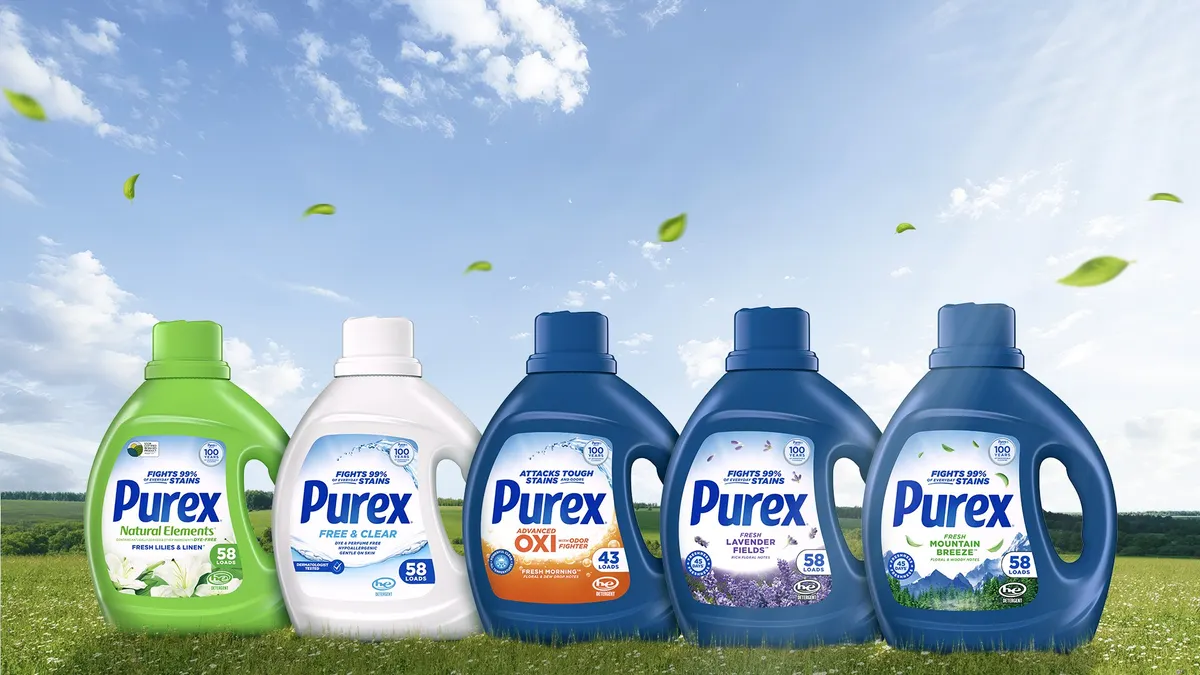
Henkel, the global CPG behind home products like Dial soap and All laundry detergent, launched new “mid-term” sustainability targets on Tuesday. The company reflected on where it ended up on 2025 targets in its newly released sustainability report, noting it took lessons to set “adjusted, ambitious and realistic targets and commitments for the period up to 2030.”
| Category | 2025 target | 2025 result | 2030 target |
| Recycled content | At least 30% share of recycled plastic for all packaging of consumer goods products | Recycled plastics: 28% | Increase recycled plastic share in consumer packaging to at least 35% |
| Recyclability | 100% of packaging designed for recycling or reuse | Designed for recycling: 88% | 100% of packaging designed for recycling or reuse |
The company also says it will emphasize designs that minimize the use of packaging material and support reuse, while increasing the share of renewable packaging materials. Henkel remains a participant in the U.S. Plastics Pact and is a signatory to the next era of the Ellen MacArthur Foundation Global Commitment.
Henkel says it was limited in design for recycling in areas like flexible packaging, where “viable recycling solutions” or necessary infrastructure in certain markets “was lacking.” In regard to shortfalls in recycled content, the company cited “volatile market conditions, technical challenges, portfolio shifts and volume effects across regions.”
Plastic remains Henkel’s most widely used packaging material, but plastic tonnage declined from 267,272 metric tons in 2024 to 255,977 in 2025. Overall packaging weight across substrates fell 4.6% year over year.
Plastic still dominates Henkel's portfolio, though packaging weights are down
Innovations in packaging formats and coatings
Recent innovations include compact product formats for laundry detergents like Persil and Snuggle in North America. Smaller bottles mean more cases can fit on each pallet, which means fewer trucks and related emissions. Henkel reported that these efforts helped save 4,000 tons of CO2 from transportation emissions and 1,300 tons of plastic annually.
Besides evolving packaging for its own consumer goods, Henkel also is known for its adhesive technologies. In one innovation from 2025, Henkel launched a new hot melt adhesive for PET bottle labeling, which enables clean separation to ensure repeated recyclability.
Henkel is growing that adhesives business. For example, earlier this year it acquired specialty coatings company Stahl in a 2.1 billion euro deal.
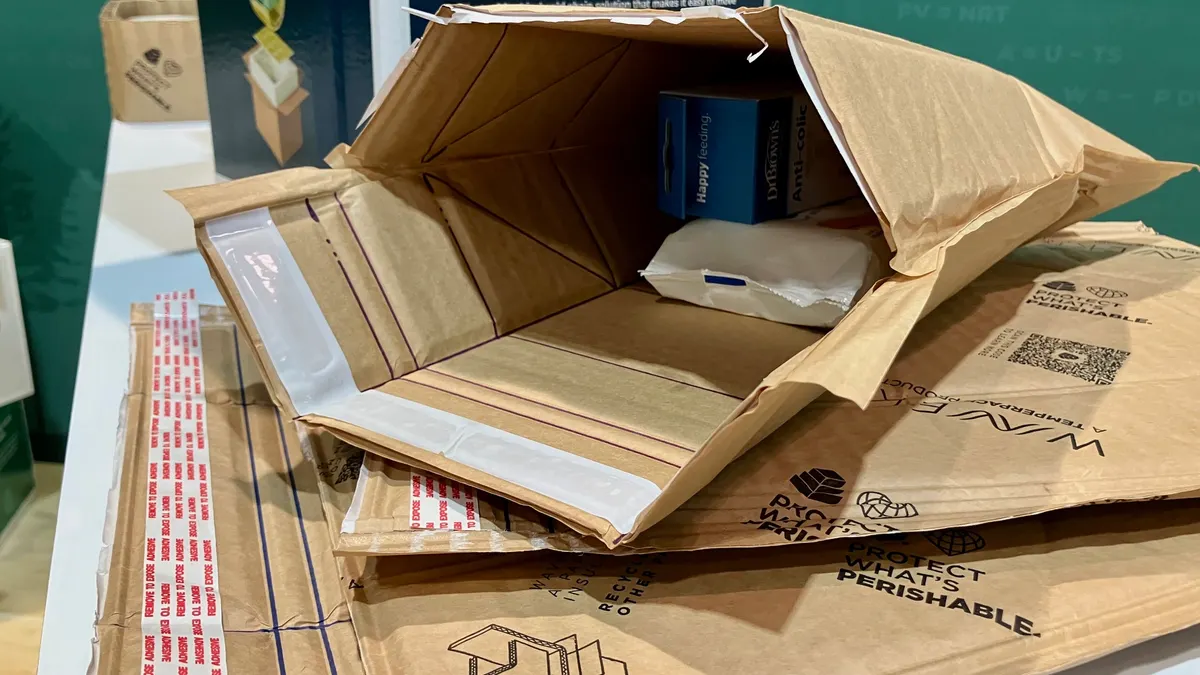
Some innovations in this realm could help reduce reliance on plastic. For example, Henkel announced this month it’s expanding its barrier and heat seal coatings portfolio for paper applications. Water-based offerings are meant to aid design for recyclability.
“By providing reliable heat-sealing performance on paper, Henkel is opening up numerous possibilities for paper-based packaging in applications where plastic solutions have long been the standard,” the company said. “These predominantly include formats requiring a seam, such as bags, sachets, or shipping packaging for small items like screws and toys, as well as (dry) food and hygiene products.”
The bigger picture
As part of its updated 2030 targets, Henkel says it will ensure that 85% of its suppliers meet specific sustainability standards. This builds on past efforts to engage suppliers to help lower its scope 3 emissions.
Henkel continues to work toward net-zero emissions by 2045, a target that was verified by the Science Based Targets initiative in 2024. By 2030, the company is working to reduce absolute scope 1 and scope 2 greenhouse gas emissions by 42%, and scope 3 emissions by 30%, from a 2021 baseline.
Despite some concerns about businesses “greenhushing,” SBTi reported last week that the number of global companies with both near-term climate goals and net-zero targets actually increased 61% year over year in 2025.