The parent company of health and beauty brands including Aveeno, Band-Aid, Benadryl, Neutrogena and Tylenol reports that it surpassed a 2025 plastic reduction goal and is on its way to achieving other sustainability targets pegged to 2030. But Kenvue also missed another 2025 packaging sustainability goal.
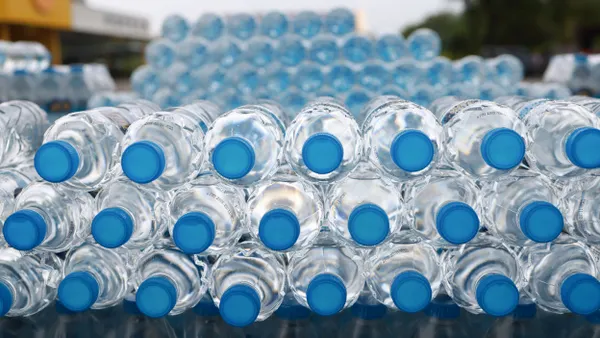
In its newly released 2025 sustainability report — the third since becoming an independent company in 2023 after spinning off from Johnson & Johnson — Kenvue reported it reduced virgin plastic tonnage by more than 33% between 2020 and 2025, exceeding its 25% target. It now aims for a 50% reduction by 2030, still with the 2020 baseline.
But Kenvue missed its target of making all packaging recyclable or refillable by 2025, having achieved 67.1% last year. That’s been steadily declining, having fallen from 69% in 2024 and 71.4% in 2023. Kenvue’s new commitment is for 95% by 2030.
Plastic reduction
Kenvue’s sustainability report highlighted several brands that reduced plastic use in 2025 by launching redesigned product packaging.
The Listerine portfolio represents Kenvue's largest plastic footprint. The bottles in some regions already were made with 50% postconsumer recycled content, but further reducing virgin plastic use was a priority, the report says. In 2025, Kenvue introduced PET Listerine bottles in North America that were 50% PCR, and it introduced 100% PCR bottles in Latin America and in the Asia Pacific, Europe, Middle East and Africa region. It plans to launch a 100% PCR bottle in the North American market in the coming years.

The redesign for Nicorette smoking cessation products from a plastic blister pack to a recyclable fiber carton balances sustainability with other factors important to consumers, such as discreetness. The company’s consumer research showed that “many users felt uncomfortable when using this product in public because its distinctive packaging drew unwanted attention,” said Gayatri Keskar, global packaging materials science leader at Kenvue, during a session at the Packaging Recycling Summit in Rosemont, Illinois, on June 16.
The company redesigned this packaging with a more discreet, paper-based, pocket-sized pack, while reducing the plastic waste by 85%, she said.
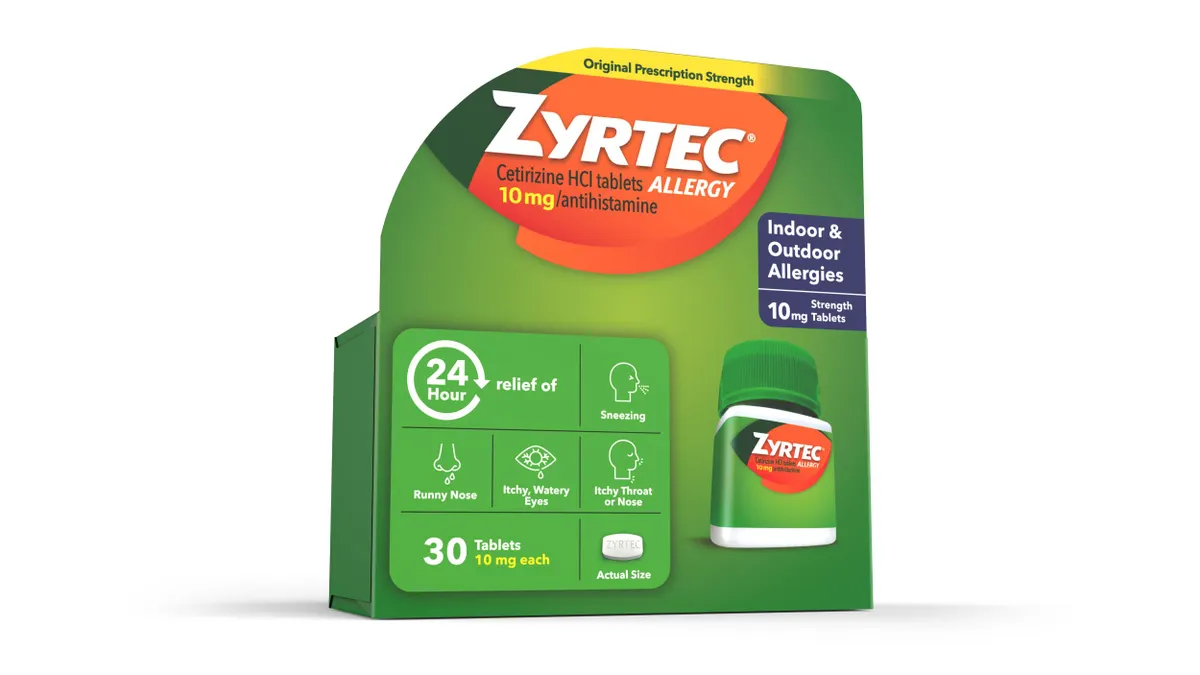
That plastic-to-fiber shift is similar to the redesigned Zyrtec packaging that Kenvue launched last year, according to the sustainability report. Zyrtec packaging now is fully fiber, eliminating approximately 152,000 pounds of plastic packaging annually, Keskar said.
Touting technologies to drive sustainability
While sustainability may have been an afterthought in previous years, Kenvue is now proactively pulling it into design decisions, Keskar said. That’s due to better data collection and digital tools.
“Environmental impact assessments were mostly high level, rarely data driven and happened typically late in the innovation process, where meaningful changes were very hard to make,” she said. “So we set out to fundamentally change how Kenvue approaches product sustainability by putting data-driven insights directly into the hands of our developers at exact moments when decisions are made.”
One tool mentioned in the sustainability report that launched in 2025 is Kenvue’s sustainable innovation profiler. It examines products across four areas: product environmental footprint, product carbon footprint, green chemistry and packaging circularity. It compares scores for prototypes to baseline products to underscore areas for potential improvements, allowing packaging engineers to make design adjustments in real time.
For the redesign of OGX shampoo bottles, the tool facilitated a 16% decrease in total carbon footprint. The OGX project involved bottle lightweighting along with using 100% PCR, Keskar said.
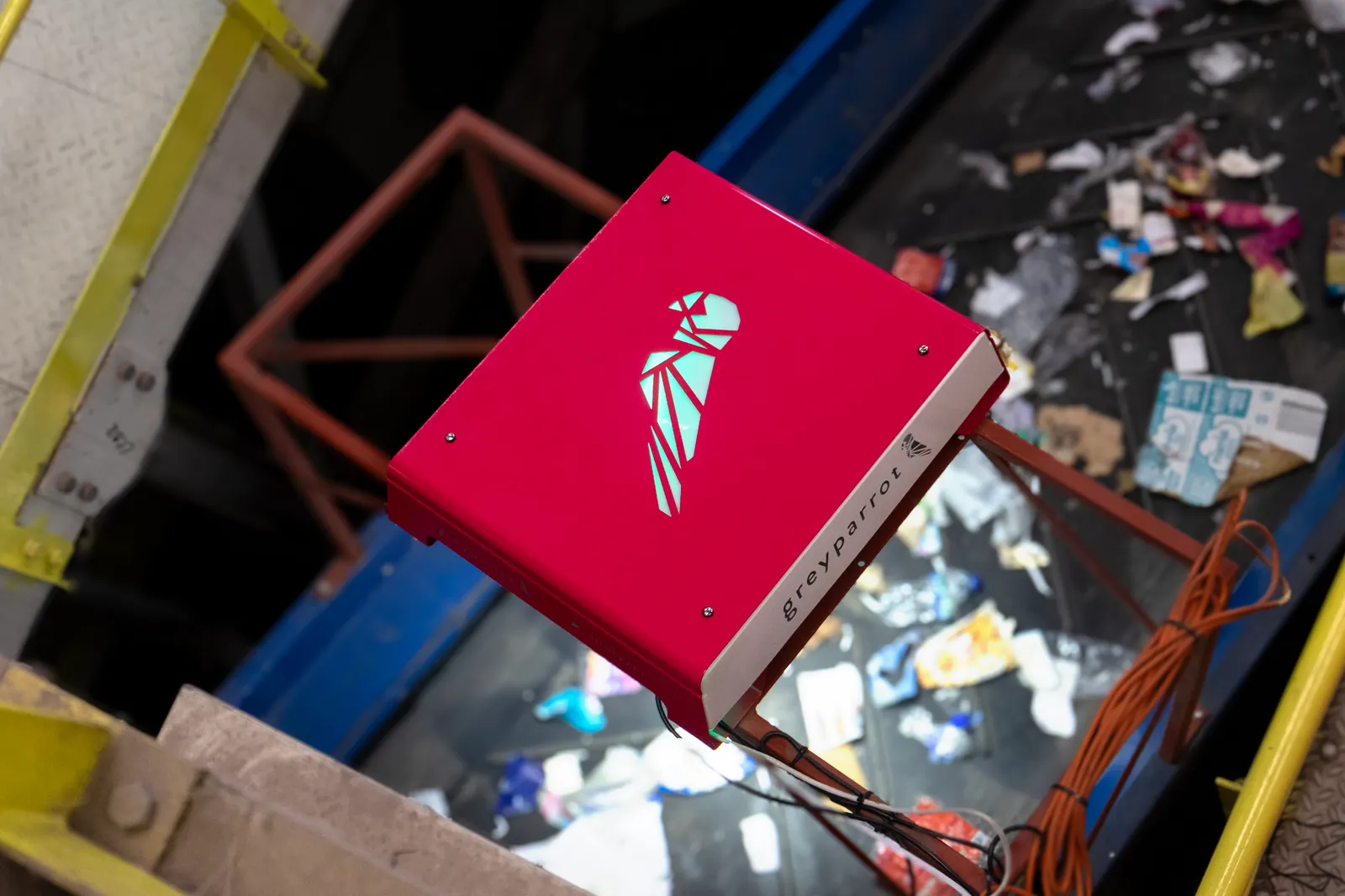
She also highlighted a newly announced partnership with Greyparrot to use AI-enabled systems to track how Kenvue’s product packaging moves through real-world recycling systems. Kenvue intends to use the insights for purposes such as forecasting the financial impact of design-for-recyclability changes.
“Ultimately, what connects these examples is a simple, yet radical, shift we are seeing in the industry: repositioning sustainability from a downstream checkpoint to an upstream design capability,” Keskar said. “We are leveraging consumer insights and materials data in order to help us make smarter decisions earlier.”