Dive Brief:
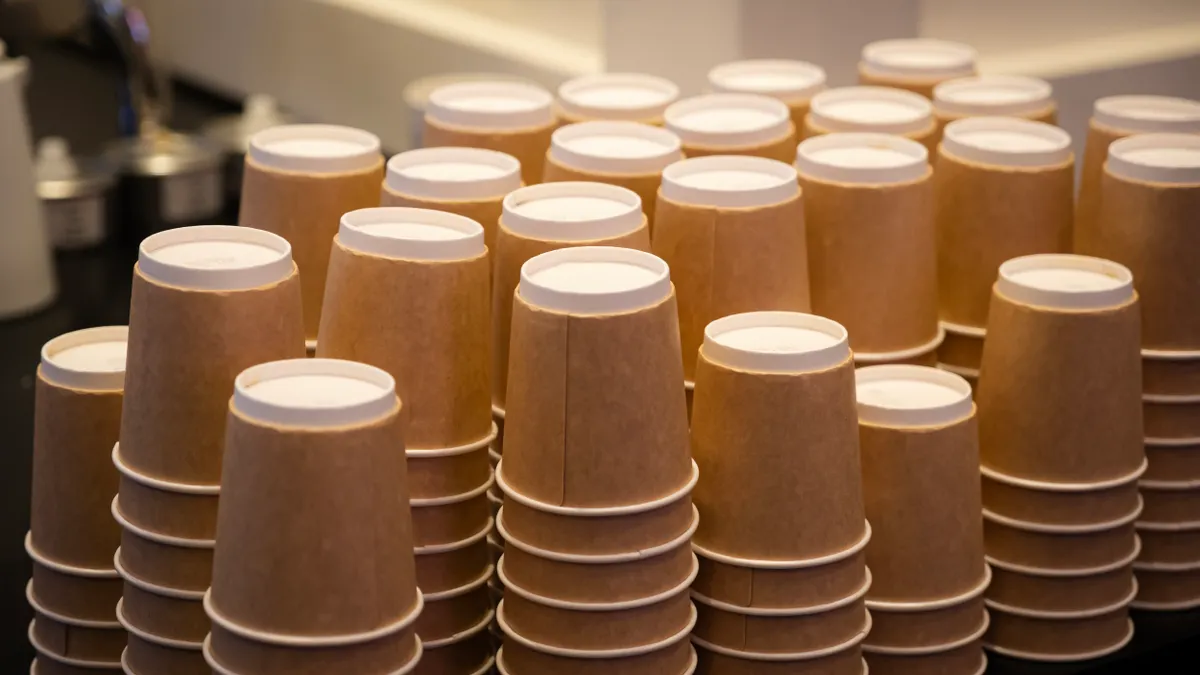
- Paper cup recycling in the United States has reached a new milestone, as 20% of the population now has residential recycling access for both single-sided and double-sided cups for hot and cold drinks, according to the Foodservice Packaging Institute. This access is via curbside or drop-off programs.
- Access is up from 11% in 2022 and 5% in 2017, the year FPI launched a community partnership program to work on expanding recycling access for foodservice packaging. More than 30 communities have participated in that program to date.
- FPI said in 2024 that more than 40 North American mills accepted paper cups. That total is now down to 35 due to recent mill closures and idled capacity in 2025 and 2026, Ashley Elzinga, FPI's director of sustainability and outreach, said via email.
Dive Insight:
It took years of work and collaboration to reach this recycling milestone, including through FPI founding the Paper Cup Alliance in 2018 to accelerate paper cup acceptance and recovery. But the journey is far from finished, according to FPI.
“There is still more work to be done so that even more of the population can recycle their paper cups. FPI will continue to support efforts to strengthen end markets, increase collection and sorting, and improve communications within communities,” FPI President Natha Dempsey said in a statement.
That work includes engaging with industry stakeholders and exploring opportunities to expand end markets for paper cups in light of the reduced number of mills in the pool now to accept the material, Elzinga said via email.
FPI did not specify the distance between a resident and a collection program that it qualifies as “access.” While most of the 20% access is through curbside programs, FPI does not have a detailed breakout of the program types at this time, Elzinga said.
“Building durable recycling programs requires ongoing engagement with communities, mills, haulers, MRFs and other stakeholders to develop partnerships that are sustainable long term,” Elzinga said. “These types of programs are not built on an annual cycle, and FPI’s approach focuses on meaningful, lasting infrastructure and market development rather than short-term milestones.”
Consulting firm Resource Recycling Systems compiled the data for FPI, as it has for previous reports.
Graphic Packaging International also heralded the 20% milestone and noted its participation in efforts to expand acceptance as well as to recycle paper cups.
“The momentum behind paper cup recycling reflects years of investment and collaboration across the value chain — from communities and recyclers to brands and manufacturers,” a spokesperson said via email. “It also depends on continued consumer education through efforts like Graphic Packaging’s [Renewability] outreach initiative, which helps schools and communities take action to increase recycling locally.”
GPI executives have noted that the company is a major user of recovered fiber for making new products, and they have called GPI the largest producer of paper cups in North America. In October, GPI began operating its new recycled paperboard mill in Waco, Texas, which is capable of processing up to 15 million paper cups per day as a feedstock.
Executives have described how GPI designed the Waco facility with capabilities to work with paper cups, which they referred to as an underutilized fiber source that frequently ends up in landfills. For instance, Waco has advanced pulping technologies that will allow GPI to use fewer coating materials in the paperboard it produces.
Last year, the Recycled Materials Association added paper cups to its materials specification list for the first time. ReMA’s ISRI specifications set standards for the quality of recycled materials and serve as a guide for scrap material buyers’ and sellers’ transactions, but they do not mandate that recyclers must accept certain materials. The specs are considered to be influential for what gets collected for recycling.
During the spec update process, ReMA had received some feedback that certain mills prefer not to work with paper cups. That mostly centered on comments that cup coatings contribute to contamination, rendering the amount of fiber recovered not worth the hassle. But FPI and other paper cup recycling advocates note that more advanced technologies are being installed in mills to better separate the polyethylene liners to allow for the recovery of valuable fiber.
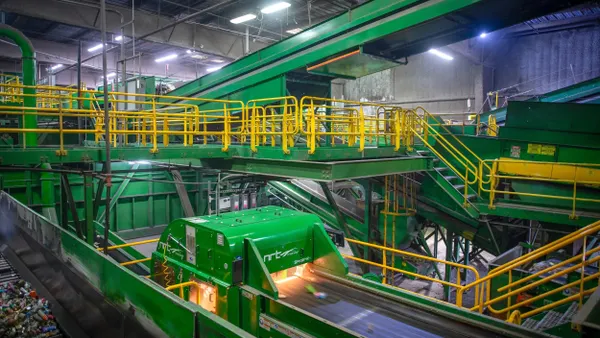
FPI also cites work by haulers and recyclers who accept paper cups, including WM, Rumpke Waste & Recycling, GFL Environmental and Casella Waste Systems. Specifically, WM announced in November that it added paper cups and polypropylene cups to its accepted items list across its network, thanks to recent automation upgrades at its MRFs.