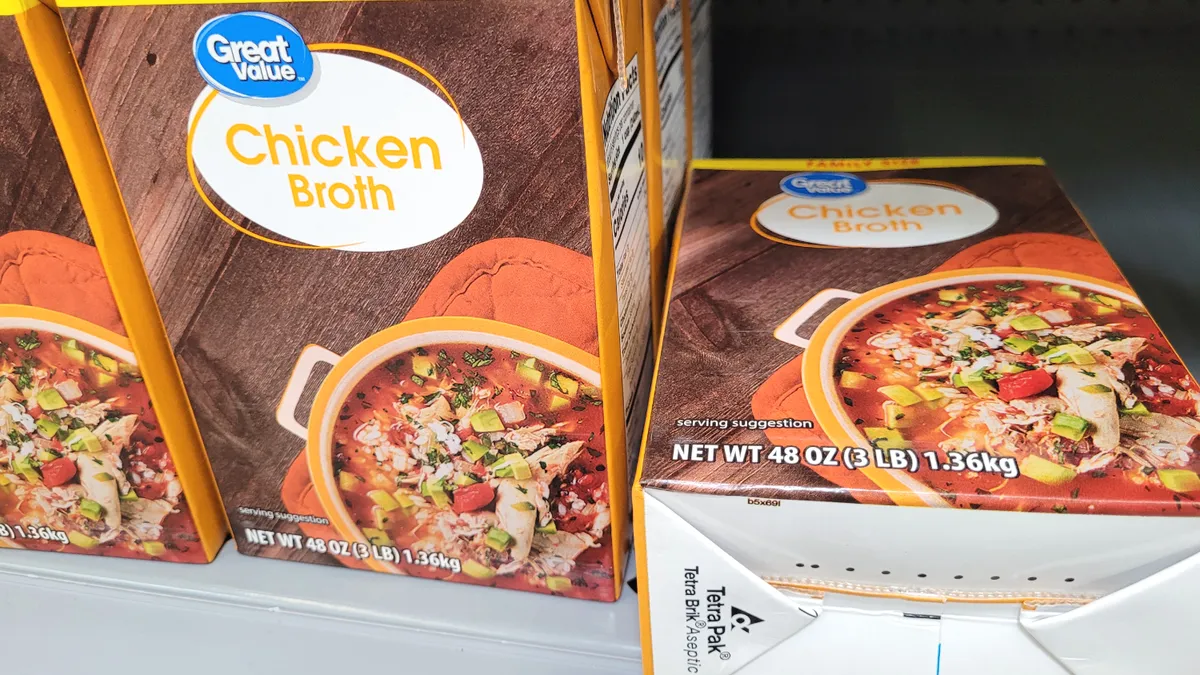
California’s tandem packaging laws, SB 343 and SB 54, are creating difficulties for producers by putting items previously considered recyclable into the non-recyclable category, as seen this year with cartons and molded fiber packaging. Cartons’ non-recyclable designation was reversed this summer, and a sustainability leader is advising others who might be in the same boat that tenacity can pay off.
“It's been a lot of work, and it's been a bit of a roller coaster. A couple steps forward, a couple steps back. But overall, it was a positive outcome,” said Jason Pelz, Tetra Pak vice president of sustainability for the U.S. and Canada, during a conversation at Pack Expo in October.
For packaging to be labeled “recyclable” under SB 343, the “truth in labeling law,” it must meet two 60% thresholds: 60% of Californians must have access to collection of that material, and the material must be sorted by MRFs that serve 60% of Californians. This also influences the materials covered under SB 54, the state’s extended producer responsibility for packaging law.
At the end of 2025, CalRecycle data showed that cartons met the access to recycling threshold but not the sortation threshold, Pelz explained. Tetra Pak is a member of the Carton Council, and both entities collectively worked with MRFs in the state to increase sortation, he said. As of June, three additional California MRFs provided carton recycling, and CalRecycle updated its data to show 62% of the state’s counties provide carton recycling.
“[CalRecycle] will be updating the covered materials list Jan. 1, and that will show cartons as recyclable,” Pelz said.
He’s not concerned about maintaining the recyclability status.
“Even with the addition of those few MRFs in the middle of the year, which helped, there are additional MRFs that we've been working with since then that will come on board as well,” he said. “We expect to grow well above the threshold in the near future. Really, it’s a continuous thing. We’ll continue to do this work.”
Cartons aren’t the only material that has come under scrutiny as SB 343 and SB 54 play out. Earlier this year, the International Molded Fiber Association raised the red flag about its producers facing similar recycling designation difficulties.
Molded fiber was not allowed to be labeled recyclable under SB 343, explained Tom Hendrickson, industry affairs manager at IMFA, during an interview in July. CalRecycle’s SB 54 covered material data from Dec. 31, 2025, showed that molded fiber is only recycled at a 7% rate. IMFA has worked for months to gather data to present to CalRecycle to get molded fiber’s status changed.
The association, along with GreenBlue’s Sustainable Packaging Coalition and consulting firm Moore & Associates, met with CalRecycle on Oct. 27 to discuss the partners’ proposal to survey California MRFs regarding their sortation of molded fiber products, Hendrickson said via email Wednesday. He reports that CalRecycle was “generally receptive” to the proposal, and the partners are close to finalizing the MRF survey plans. They anticipate having results in early 2027.
“IMFA firmly stands behind the recyclability of molded fiber products and packaging, and we are confident that the survey will provide evidence that molded fiber is being sorted by California MRFs and recycled,” Hendrickson said.
Pelz offered advice for other material producers that might be grappling with recyclability status in light of these regulations. He advised not to get distracted by “outside noise,” which could include legal challenges to SB 343 or other state packaging laws.
“Keep focused on the prize. You need to figure out a way to grow the recycling infrastructure for the various products so more stuff gets recycled so you can meet these potential targets,” Pelz said. “Keep at it.”