
Why extending asset life matters more than ever
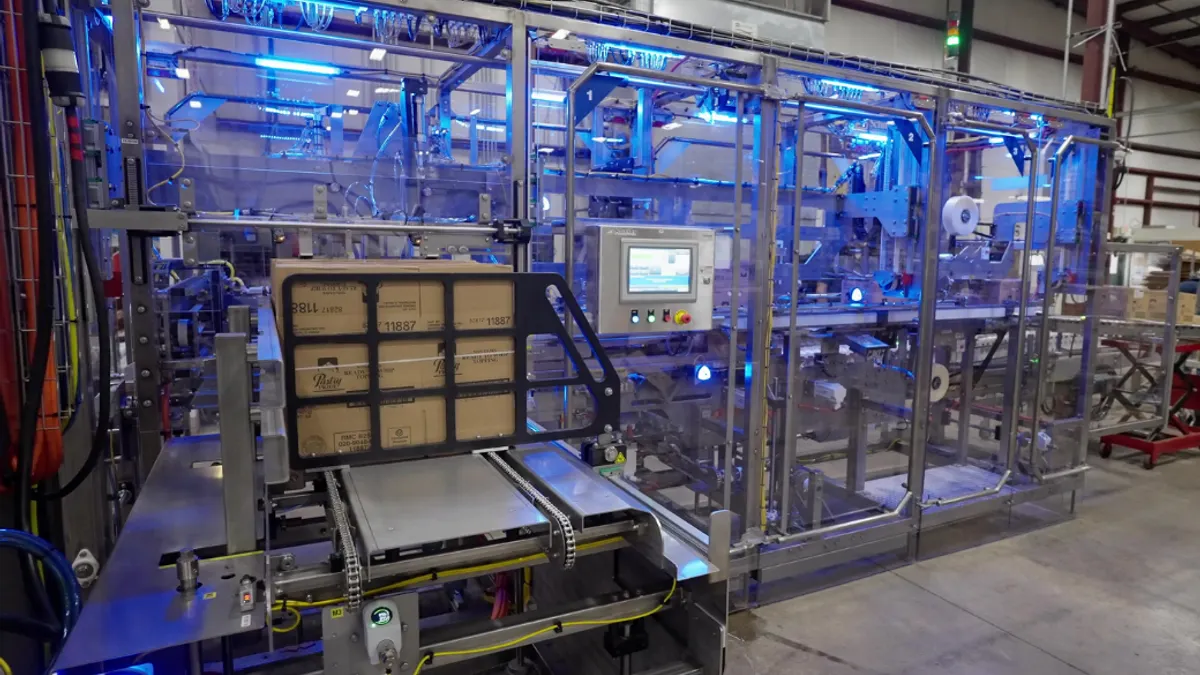
For food, beverage and consumer packaged goods (CPG) manufacturers, packaging equipment must do more than simply run. It must operate reliably, support evolving production requirements and contribute to improved Overall Equipment Effectiveness (OEE). Yet many facilities continue to rely on case packers, robotic palletizers, conveyors and other packaging assets that are 10 to 20 years old. While these systems are often mechanically sound, aging controls, obsolete components and increasing maintenance demands can gradually reduce performance and profitability.
The good news is that significant OEE improvements do not always require investing in entirely new equipment. Strategic maintenance programs and targeted retrofits can often extend asset life by years while delivering performance gains comparable to much newer systems.
The hidden impact of aging equipment
Aging equipment affects all three pillars of OEE: availability, performance, and quality. Frequent downtime, obsolete controls, declining machine speeds, lengthy changeovers, and spare parts challenges often create production losses that accumulate over time. Because these issues develop gradually, their true impact can go unnoticed until productivity and operating costs are significantly affected.
Modernizing case packers for greater reliability
Case packers are among the most critical assets on packaging lines, making reliability essential to overall plant performance. As these systems age, manufacturers often face outdated HMIs, obsolete servo technology, mechanical timing issues and increased maintenance requirements.
Rather than replacing the entire machine, many facilities achieve substantial benefits through controls modernization. Upgrading PLCs, HMIs, servo drives and motion controls improves diagnostics, simplifies troubleshooting and enables remote support. New servo technologies also provide more precise motion control, reduced mechanical stress and improved energy efficiency. Automated recipe management and electronic adjustments further reduce changeover times, allowing manufacturers to run more SKUs with less downtime.
Extending the performance of robotic palletizers
While industrial robots themselves often remain reliable for many years, most palletizer downtime originates from supporting systems rather than the robot. Common failure points include end-of-arm tooling, conveyor transfers, vision systems, product infeeds and safety devices.
Targeted upgrades can dramatically improve performance. Modern end-of-arm tooling increases grip reliability, boosts cycle rates and reduces product damage. Updated vision systems improve product tracking, layer formation and mixed-load palletizing accuracy. Controller modernization helps extend robot life while simplifying support and spare parts management. Safety system upgrades can also improve compliance while reducing production interruptions and recovery times.
Conveyors: An overlooked OEE multiplier
Conveyors are often viewed as simple material handling systems, yet they influence nearly every aspect of packaging line performance. Problems such as accumulation issues, motor failures, worn belts, sensor faults and unplanned jams can quickly create bottlenecks throughout the line.
Modern conveyor retrofits can deliver significant benefits at a fraction of the cost of replacement. Intelligent controls enable zoned accumulation and dynamic product spacing, helping balance line flow and reduce product damage. Upgraded motors, drives and sensors improve reliability, increase speed control accuracy and provide valuable diagnostic feedback. Replacing key wear components can also restore performance while extending system life.
Moving beyond reactive maintenance
Predictive maintenance is becoming an essential strategy for maximizing asset performance. Technologies such as vibration monitoring, thermal imaging and connected equipment monitoring allow maintenance teams to identify developing issues before failures occur. By monitoring machine health, downtime trends and maintenance requirements in real time, manufacturers can reduce unexpected breakdowns and schedule maintenance activities more effectively.
The business impact of retrofits
Well-planned modernization programs often deliver substantial gains across every area of OEE. Benefits include improved availability through reduced downtime, higher performance through faster machine speeds and shorter changeovers and better quality through more consistent operation and product handling. Organizations also benefit from lower total cost of ownership through reduced maintenance spending and extended equipment life. Additionally, modernized systems simplify troubleshooting and reduce dependence on tribal knowledge, improving workforce efficiency.
Retrofit or replace?
A full equipment replacement makes sense when machinery is structurally worn out, production requirements exceed system capabilities, or critical safety concerns cannot be effectively addressed. However, retrofits often provide the strongest return on investment when the machine's mechanical foundation remains sound and performance issues stem from obsolescence, wear components, or outdated controls.
A strategic approach to asset management
The most successful manufacturers no longer view maintenance and modernization as separate initiatives. Instead, they combine preventive maintenance, predictive maintenance, controls modernization, mechanical upgrades, safety improvements and continuous OEE monitoring into a comprehensive asset management strategy. By taking this approach, manufacturers can extend equipment life, improve throughput, maximize uptime and unlock significant performance gains from assets already on the plant floor.
Bottom line: The highest ROI opportunity on many packaging lines is not always replacing equipment. It is often found in strategic maintenance, targeted retrofits and modernization efforts that unlock the untapped potential of existing assets.