Brand owners are having to manage plenty of regulatory mandates related to their packaging, such as complying with extended producer responsibility schemes. Yet global data standards nonprofit GS1 is still persuading businesses to prioritize the voluntary transition to adopt 2D barcodes like QR codes on packaging in the next year.
Sunrise 2027 is GS1’s ongoing push for packaging to ultimately feature the data-packed, retailer and consumer-friendly 2D codes — and for retailers to be able to scan them by the end of 2027.
Some 2,000 retailers and 1,900 brands have been involved in national pilots or implementations to 2D. The updates were presented by GS1 at Pack Expo.
“If you have a very large product catalog, the best thing to do is to pick one or a few products where you know you have packaging real estate, because you have to have both the 1D and 2D barcode on for a time period,” Andrew Morehead, global standards manager with GS1 US, said in an Oct. 20 interview at Pack Expo. “So they pick those products, they see what that implementation process looks like, and then they replicate it.”
Brands that have implemented 2D codes are scaling. “Some have a lot of regulations to meet, so they need to move faster than others,” Morehead said. Those regulations could require traceability or identification for food, healthcare products or wine and spirits, to name a few.
For now, brands that are transitioning SKUs have a period of including both a 2D and traditional 1D barcode to ensure there’s no down period at point of sale. That creates a challenge with overall real estate on packaging. In packaging design, “some may have marketing touch it first and barcoding touch last,” Morehead said.
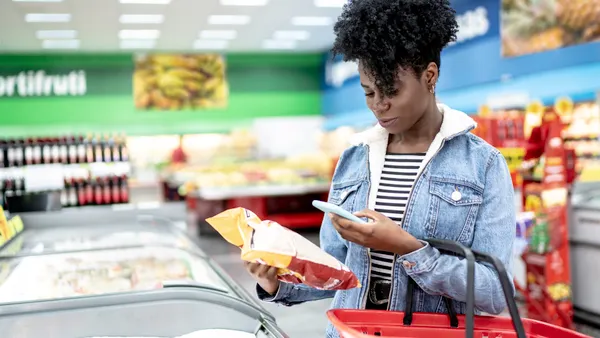
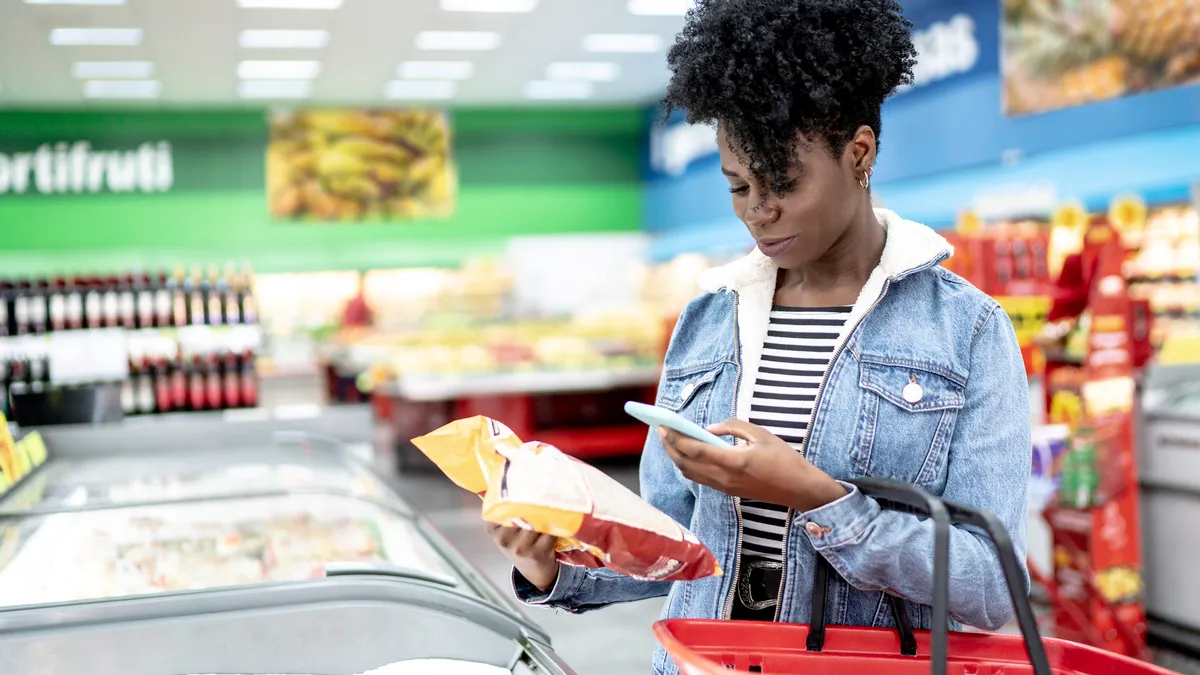
Aside from brands taking the leap, effectively changing consumer behavior may be an even more important step. A single scannable code could offer information on expiration or recalls, how to recycle the packaging and more. “There has to be value in even performing the scan,” Morehead said.
Incentives could help push that along. For instance, scanning the code could offer the consumer a discount on their next purchase, Morehead noted. There are also some functions today that involve a consumer scanning a code to evaluate ingredients, which is also helping to build the habit. “Those are the calls to action that'll help change consumer habits around just looking at a barcode and then actually choosing to scan it,” Morehead said.
Brands also seem to understand a pressing need for more data, Morehead said.
“They want more data. The consumers want more data. The retailers want more data. And regulatory bodies require more data. So that imminent need is what’s really driving the adoption of 2D barcodes within their practices, because you need to have more data somewhere, or at least to connect to it,” he said. “Having a barcode that can have that data encoded into it without growing in size is the first step.”