Dive Brief:
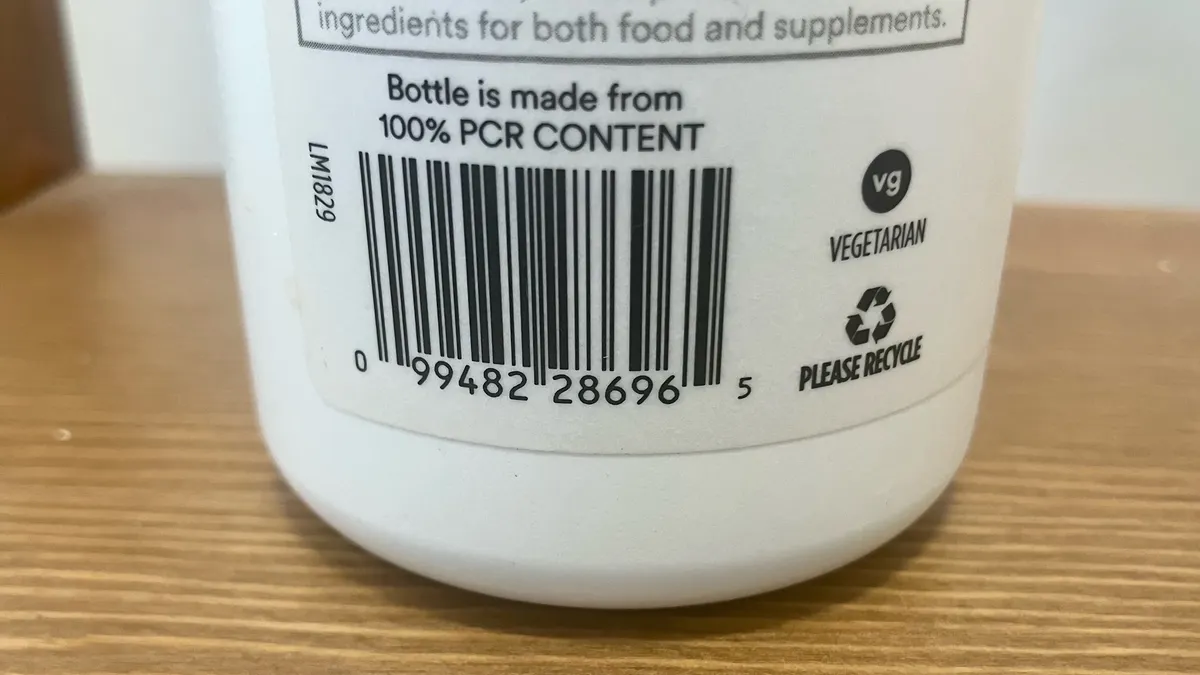
- A recycled content claims bill in California is on its way to Gov. Gavin Newsom. AB 2253 seeks to tighten standards for recycled content claims made on all products beyond just plastic food containers.
- The bill was sponsored by Californians Against Waste and supported by numerous environmental advocacy groups, including Beyond Plastics, the California Product Stewardship Council and others. It was widely opposed by packaging and CPG groups, including Ameripen, the American Beverage Association and others.
- The bill passed the Senate by a 28-10 vote on Aug. 28 and passed the Assembly by a 42-20 vote on Aug. 30. Newsom has until Sept. 30 to act on bills.
Dive Insight:
2026 has brought heightened attention to recycled content claims and labeling issues both in California and at the federal level, with members of Congress introducing bills such as the Tracking Plastic Act, the Recycled Materials Attribution Act and the Truth in Labeling Act. In California, where recycled content minimums are already required in plastic beverage containers, Democrat Assemblymember Tasha Boerner advanced AB 2253 this year.
The bill notes that existing law requires that a manufacturer or supplier making a recycled content claim for a plastic food container product conform to the Green Guides, the Federal Trade Commission’s guidelines for environmental marketing claims that have not been updated in more than a decade. Come 2030, AB 2253 would expand that requirement to all products making recycled content claims, and specify that the Green Guides reference applies to how they read on Jan. 1, 2026.
Furthermore, AB 2253 would require that recycled content claims reflect the actual recycled content “used in the production of the material used in the product line using specified methods.” Allowable methodologies includes identity-preserved, segregated model, controlled blending model, rolling average percentage method or proportional attribution, aligned with certain ISO standards.
“If signed, AB 2253, known as the Protecting Consumers Against Greenwashing Act, would protect consumers from deceptive recycled content claims by requiring companies that advertise recycled content in their products to be honest about the amount of recycled material used,” Boerner said in an emailed press release Monday. “AB 2253 ensures consumers can support real sustainability if they choose to, and helps restore trust to product labels.”
According to a recent bill analysis, opponents say that mass balance accounting is unnecessarily demonized. The “industries most affected, packaging manufacturers, food producers, material suppliers, and retailers, are not using mass balance to evade accountability,” per comment in the analysis. “They are using it because these accounting systems are designed to match how manufacturing actually works. When materials are blended and inputs cannot be physically separated once mixed, the recycled content must be tracked across the production run rather than isolated in a single product.”