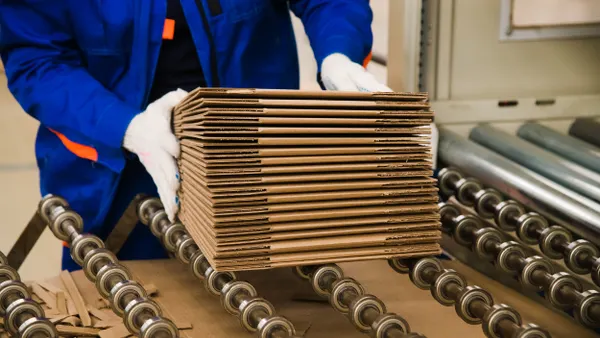
CHICAGO, Ill. — The U.S. corrugated box industry is smack dab in the middle of its busiest time of year — autumn — due to upcoming holiday shopping demand, and that has remained a relatively consistent trend across recent years. But other factors such as trade, lightweighting and extended producer responsibility laws have put certain corrugated market dynamics in flux, said Cory Martin, executive vice president at the Fibre Box Association, during Pack Expo on Monday.
Despite some market changes, corrugated boxes remain the dominant packaging format. “You can’t get away from corrugated boxes no matter where you are,” Martin said.
General manufacturing, distribution, e-commerce and agriculture are top markets for corrugated boxes. E-commerce has helped to offset losses due to manufacturing outsourcing to other countries.
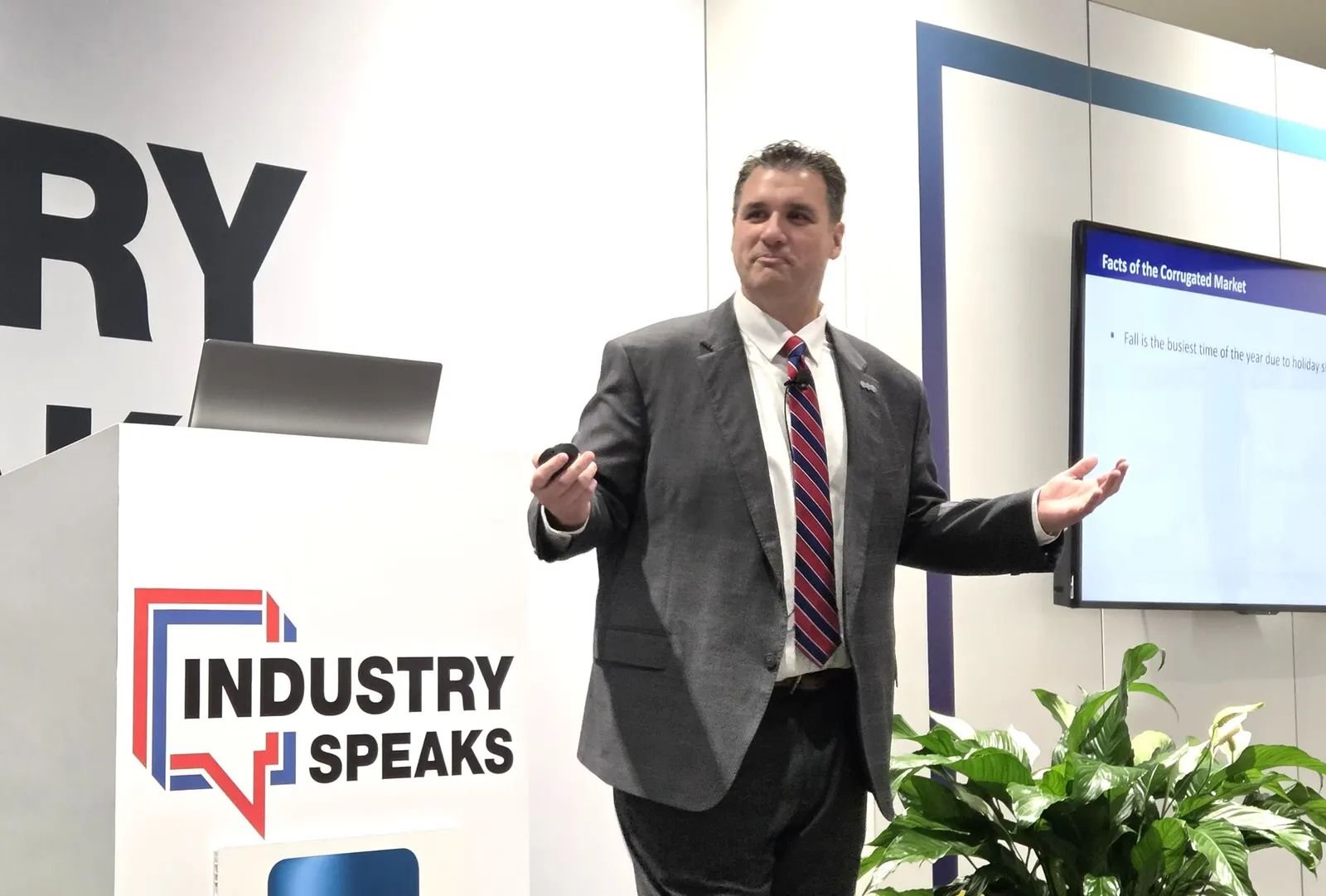
While Martin didn’t specifically mention tariffs, he noted how trade policy is affecting the industry. Trade decisions affect customers’ businesses and where they source products. Trade also affects the machinery that corrugated box manufacturers use, considering how much is made internationally and shipped to the United States, he said.
Nearly all the fiber used to manufacture corrugated boxes domestically is sourced from U.S. mills, according to FBA.
“We have a very small amount of corrugated that's imported, and almost all the paper that's produced in the U.S. goes to boxes made here in the U.S. We’re very insular in that way,” Martin said.
The local sourcing plays into a key feature of corrugated: sustainability.
Last year, up to 75% of cardboard available for recycling in the U.S. was indeed recycled and turned into new products, Martin said, citing data from the American Forest & Paper Association. In addition, he pointed out that the domestic corrugated packaging industry reduced its per-unit greenhouse gas emissions by 50% from 2005 to 2020.
Shorter corrugated supply chains reduce the amount of emissions for shipping, as does the lighter weight of corrugated compared with other packaging formats, he said. The weight also helps to keep freight costs in check.
Lightweighting — reducing the amount of material used — has been a trend in corrugated that also boosts the industry’s sustainability profile, Martin said.
“We're looking at ways to be able to reduce the amount of fiber, but we have to keep the same specs, right?” he said. “We have to be able to offer the same strength, pass the crush test, all of that to make sure that we're offering the same type of rigidity.”
EPR is also an emerging factor in sustainability. Corrugated box producers need to pay attention to EPR because state laws include primary and secondary packaging, Martin said. But some state laws exempt tertiary packaging, while others do not. Manufacturers need to work EPR considerations into their business plans, Martin said, regardless of how tertiary packaging is regulated and how related EPR lawsuits play out.
“It’s not going anywhere. There's going to be some form of EPR in the future, no matter what happens,” he said. “There's still a cost because we are part of EPR. There's still a fee that we pay. But typically, it is much less than other types of packaging.”