Graphic Packaging International President and CEO Robbert Rietbroek has had an eventful year since taking over the top spot on Jan. 1.
“The net of it is: I’m incredibly encouraged by the last five months. It was difficult walking into this assignment,” Rietbroek said during the Wells Fargo Industrials & Materials Conference on Tuesday. “Where I sit now five months later, I'm far more optimistic, but also realistic, about the challenges that we have on the cost side.”
Another part of Rietbroek’s job is to capitalize on GPI’s estimated $15 billion potential addressable market with converting customers’ plastic or foam packaging to paper. “I'm actually engaging, in some cases, with the chief sustainability officers of some of these large corporations directly to understand their needs, the process, how they engage with procurement, how they track performance,” he said.
Making sense of inflation
Inflation hit a three-year high in May, the Bureau of Labor Statistics reported Wednesday.
So far this year, GPI has seen about $65 million more in impact from inflation than originally anticipated, “which we're trying to work through and offset now,” Rietbroek said. To that end, he highlighted the company’s recent reduction in 500 roles and sale of a facility in Croatia.
“We are treating this inflation like it's permanent in the way that we're re-engineering our cost structure” to improve margins, he said. “But we are hopeful that part of it is transitory.”
As with other businesses, GPI is experiencing turbulence in costs, particularly in transport and logistics with oil and gas prices elevated related to the war with Iran, Rietbroek explained. On the flip side, the pressure these dynamics are putting on plastic prices could close the gap on paper premiums for customers.
‘Very resilient’ demand
Despite those cost challenges, demand is actually doing OK, with Rietbroek describing it as “very resilient.”
“We have not seen spikes in any way that would suggest inventory buildup,” he said. Rietbroek credited GPI’s geographic and end market diversification across household, beauty, health, nicotine, beverage and food products.
Additionally, as traditional packaged food customers feel the pinch from health trends and GLP-1 use, GPI is focused on expanding its portfolio “beyond the center of the store.” GPI developed “a very large fruit trade business” that originated in the U.K. and is now expanding across Europe, Rietbroek said. Items like berries are converting from plastic packaging to paper trays, driven by regulatory changes.
“Diversification has created quite a bit of a calm in our top line,” he said, allowing GPI executives to focus on initiatives to lower costs.
Shrinkflation for consumers, upside for packaging producers
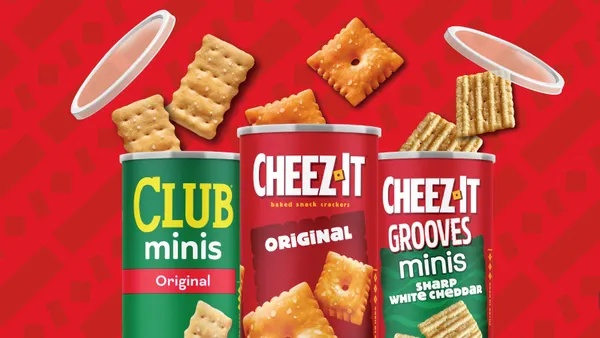
Consumers are familiar with “shrinkflation,” or CPGs trying to discreetly decrease the amount of product in a package. Companies frequently opt for the terms “price pack architecture” or “portion control.” Graphic Packaging International is well positioned to capitalize on this trend, which can actually translate to more packaging material, Rietbroek noted.
Rietbroek offered the example of mini cans for carbonated soft drinks, which result in more individual units. “Those are all very favorable for Graphic Packaging because that's a lot more packaging material and packaging boxes,” he said. “So when we look at downsizing portion control, we are very much in favor of that.”