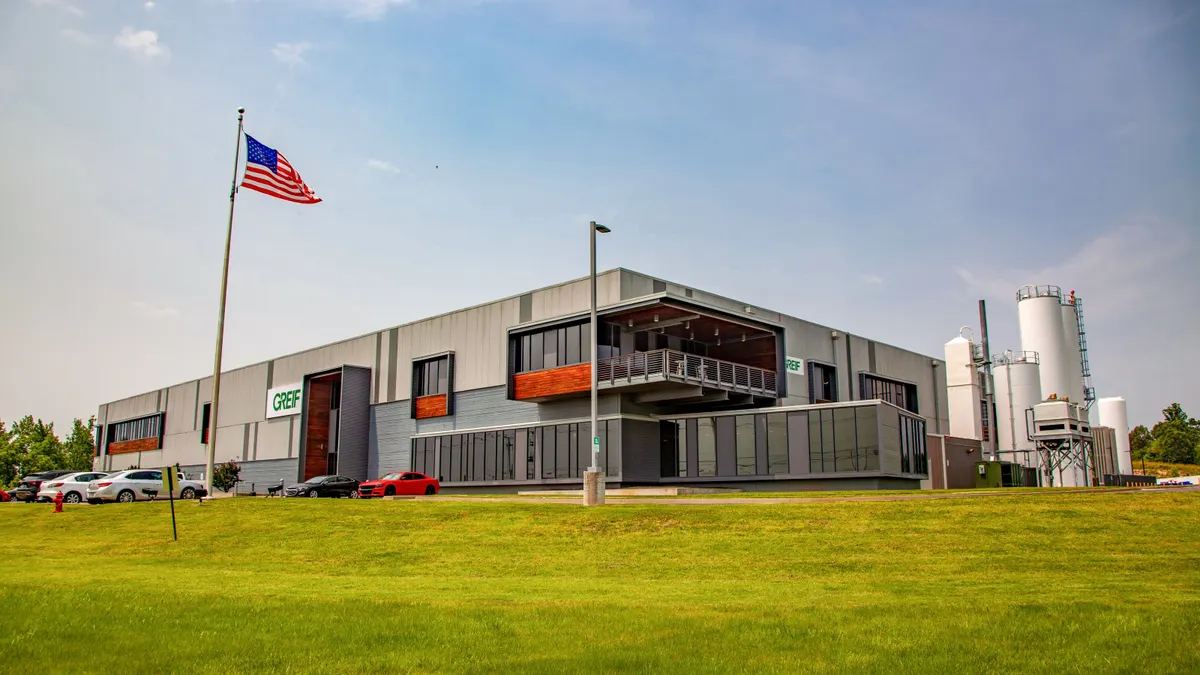
Greif’s fiscal third-quarter results show the company’s work to cut costs and strengthen its business is paying off, said President and CEO Ole Rosgaard during Wednesday’s earnings call. He cited achievements including 25% adjusted earnings before interest, taxes, depreciation and amortization; a leverage ratio reduced to 1.1x; and the company reaching a $90 million cumulative run-rate cost optimization milestone earlier than anticipated.
“Those results were not driven by stronger markets. They were driven by disciplined execution,” Rosgaard said. “The most important takeaway from this quarter isn't simply that our financial results improved, it’s that the underlying business continues to improve.”
Middle East conflict impacts
The gains occurred “during a quarter with significant geopolitical disruption and complex supply chain challenges,” said CFO Larry Hilsheimer. Executives reiterated that the war with Iran remains a headwind. They explained during their last earnings call that the war, which began Feb. 28, has caused both indirect and direct impacts to Greif because of its multiple facilities in the Middle East region.
In fiscal Q3, the company maintained higher inventory balances than usual to ensure supply continuity for customers amid that volatility. “That inventory was at a high dollar cost due to the increased raw material indices in Q3,” Hilsheimer said. The company expects inventory levels and costs to normalize in fiscal Q4. It also anticipates the Middle East conflict will cause roughly $20 million of negative impacts for the year.
Improvement across 4 business segments
Rosgaard said all four business segments showed sequential improvements. However, he cautioned that it’s too early to call the demand patterns an inflection point after roughly five years of challenges.
Volumes in the polymer solutions business segment increased 1.5% year over year, led by strength in intermediate bulk containers and large polymer containers. That occurred despite “dramatic price increases in resin through Q3” resulting from the war, Rosgaard said.
Although broader industrial markets remain soft and the metal solutions segment had a year-over-year decline, it improved sequentially. Volumes for closures experienced 5.5% year-over-year growth as Greif won new customers.
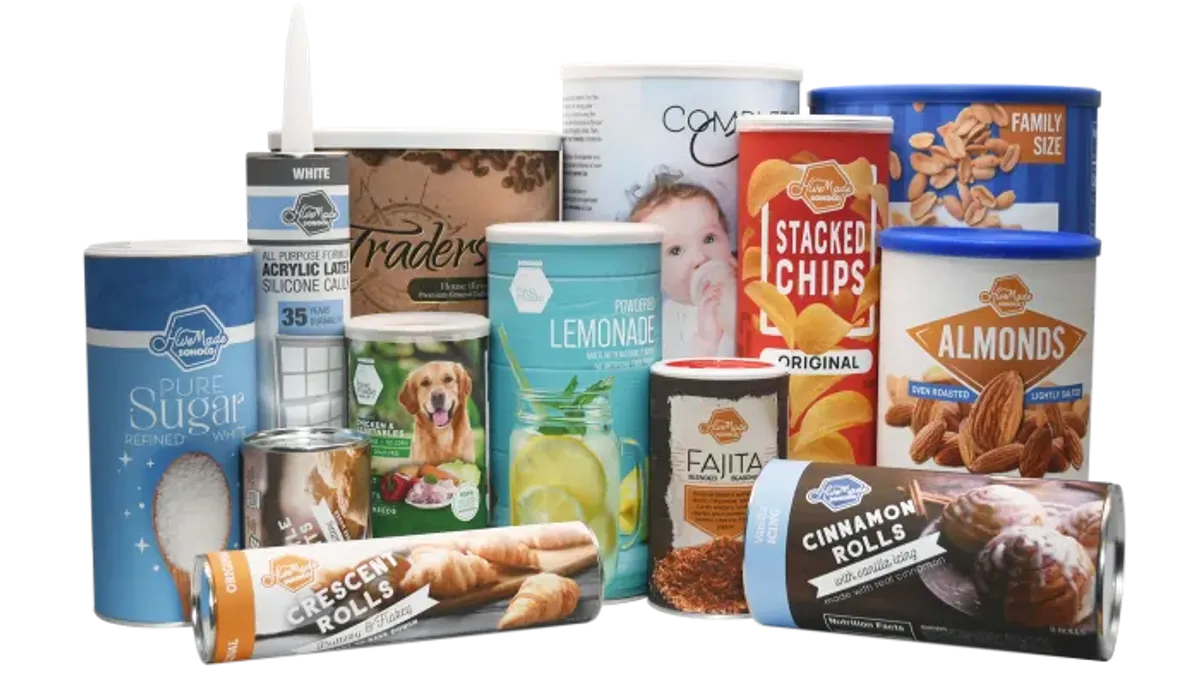
Fiber solutions improved sequentially, but it was the only segment with lower year-over-year net sales — a 6.5% decrease; that’s due to closing a mill in Los Angeles last year, executives said.
Inflation for input costs largely offset the $60 per ton price increase announced in April for uncoated recycled paperboard, Hilsheimer said. Greif announced another $60 per ton increase in June, as did other major URB producers including Sonoco and Cascades, and that has been fully implemented with customers not tied to the Fastmarkets RISI pricing index, Hilsheimer said.
However, the index didn’t recognize that increase in July, he said, adding that “we don't think the underlying fundamentals support RISI not recognizing the price.” Greif still expects the index to fully recognize the price increase in the coming months.
Acquisition
Greif is actively pursuing organic, bolt-on acquisitions. During the fiscal third quarter it acquired small polymer container producer Envaplast for $61.7 million, net of cash acquired. That company is based in Spain, a market where Greif previously had a limited presence in the small polymer sector.
“This acquisition provides a strong foothold to accelerate our organic growth strategy across EMEA while expanding our position in the agrochemical market, which represents the majority of Envaplast's business,” Hilsheimer said.
Greif expects to do more such acquisitions in the coming years. “We have a healthy pipeline of similar companies that we are working on,” Rosgaard said.
Updated guidance
Greif again updated its full-year guidance, after having lowered it last quarter in light of Iran war impacts.
It bumped up the low-end estimate for EBITDA from $610 million to a range of $615 million to $635 million. The company expects an adjusted free cash flow conversion of approximately 50% for the full year, and it upped that low-end guidance from the previous $315 million to a range of $305 million to $325 million.