Companies constantly innovate and redesign their packaging to boost performance, enhance sustainability and improve marketability. Here’s a look at four recent packaging developments on Packaging Dive’s radar.
Thick glass
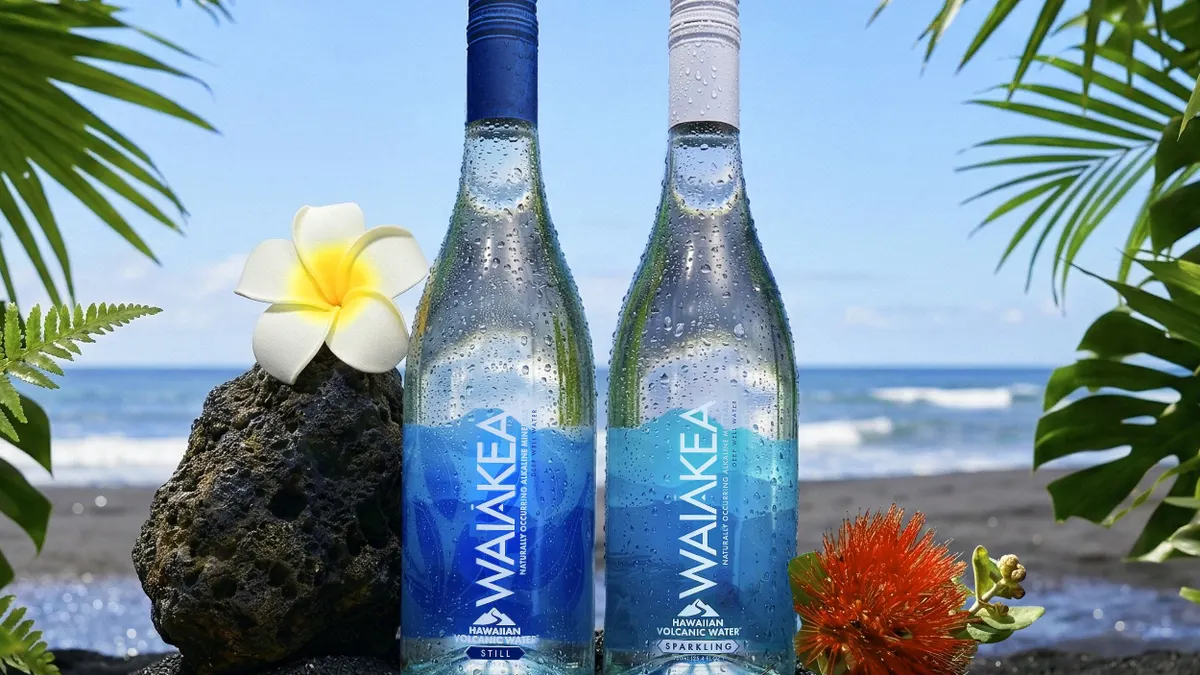
Waiākea Hawaiian Volcanic Beverages introduced a new packaging format — reusable glass bottles — for its new Waiākea Pa’a still and sparkling waters. This bottle adds to the company’s portfolio of aluminum and plastic packaging options that contain postconsumer recycled content.
The company engineered this bottle with extra-thick, durable walls so it isn't treated as a single-use container, cofounder and CEO Ryan Emmons told Packaging Dive via email. “It’s designed to be a permanent, everyday vessel at home or the office long after the original volcanic water is consumed.”
The bottle is made with 40% cullet, or recycled glass, and the company hopes to reach 100% within five years. While glass initially has a higher carbon footprint than other substrates due to its manufacturing processes and transportation weight, it’s crucial to maximize recycled content and ensure circularity, Emmons said.
”By combining a 40% recycled cullet baseline with long-term consumer reuse, we actively dilute that initial carbon footprint over time,” he said. “Down the line, our goal is to scale this into a formalized regional refill program right here in Hawai’i to further optimize that loop.”
The bottle has a heavy-duty aluminum screw cap. Typical crown caps are easily damaged and are only suitable for a single use, but the screw cap enables repeated opening, closing and refilling without degrading the seal, Emmons said.
Waiākea chose the glass substrate in part due to customer requests for this format. The different substrates in the company’s beverage portfolio serve different purposes, according to Emmons: 100% PCR plastic is suitable for active, on-the-go applications, while glass is applicable to stationary, high-end consumption, such as at high-end restaurants and in other hospitality environments.
Sweet talk
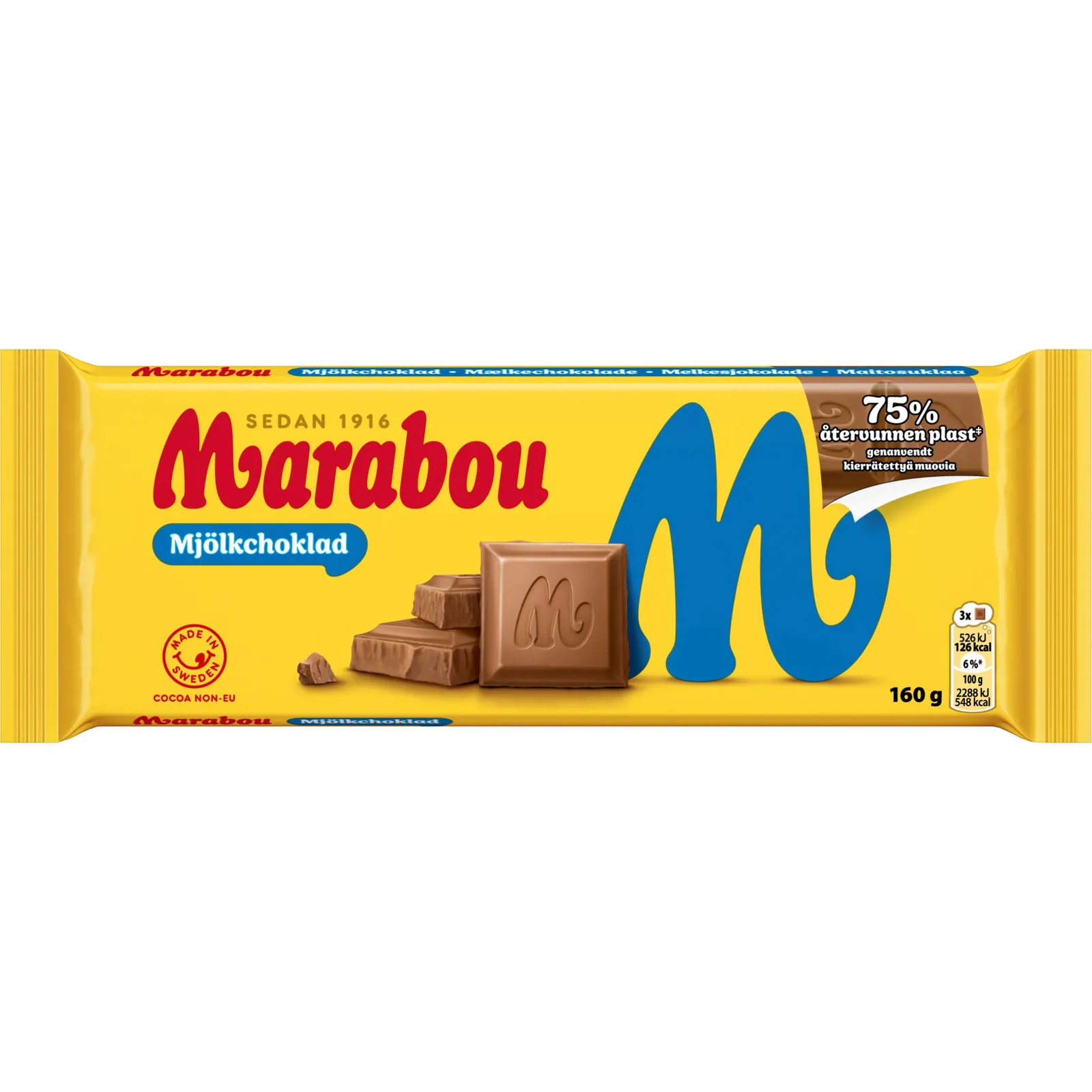
Snacks giant Mondelēz International worked with Amcor, chemical and polymer manufacturer LyondellBasell, and others to develop a flexible plastic candy bar wrapper with high levels of postconsumer recycled content.
The packaging for Marabou chocolate bars is made with 75% recycled content. The material is derived from hard-to-recycle mixed plastic waste transformed into food-grade flexible material via chemical recycling, according to a news release.
The partners emphasized the importance of collaboration across the value chain.
“This initiative shows what becomes possible when brand owners, recyclers, packaging material producers and converters work together to turn circular ambition into commercial reality,” said Richard Akkermans, packaging sustainability manager at Mondelēz, in the news release. “For consumers, the message is simple: plastic packaging can be recycled and allocated back into new food packaging.”
Pillowy PCR
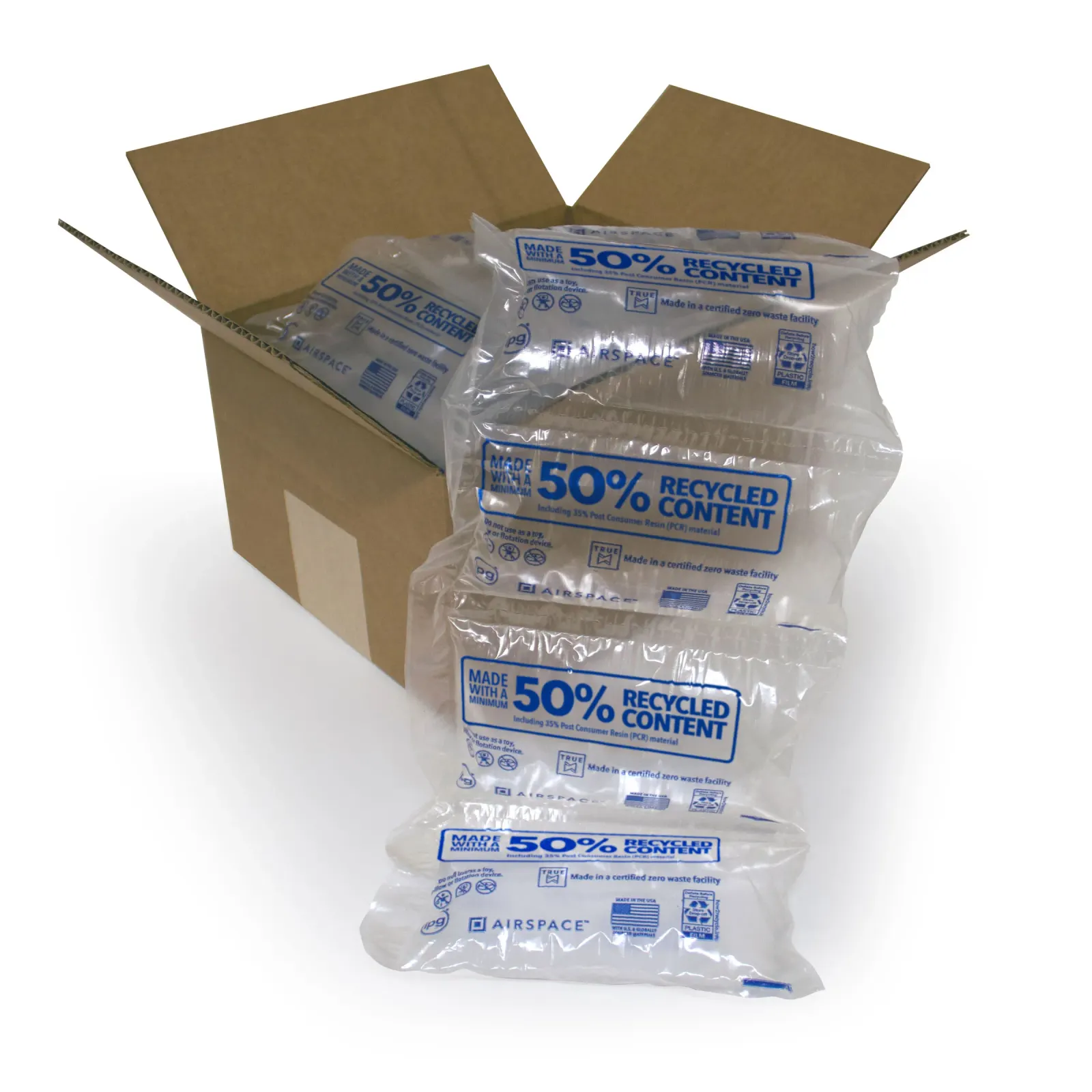
Another PCR advancement comes from IPG, which introduced plastic film air pillows with a minimum of 50% recycled content.
The material includes 35% third-party certified postconsumer recycled content and 15% postindustrial recycled content, according to a news release. The material runs seamlessly on the company’s existing equipment, according to IPG.
The company says this void-fill solution addresses the “growing demand for environmentally responsible packaging.”
One-track mind
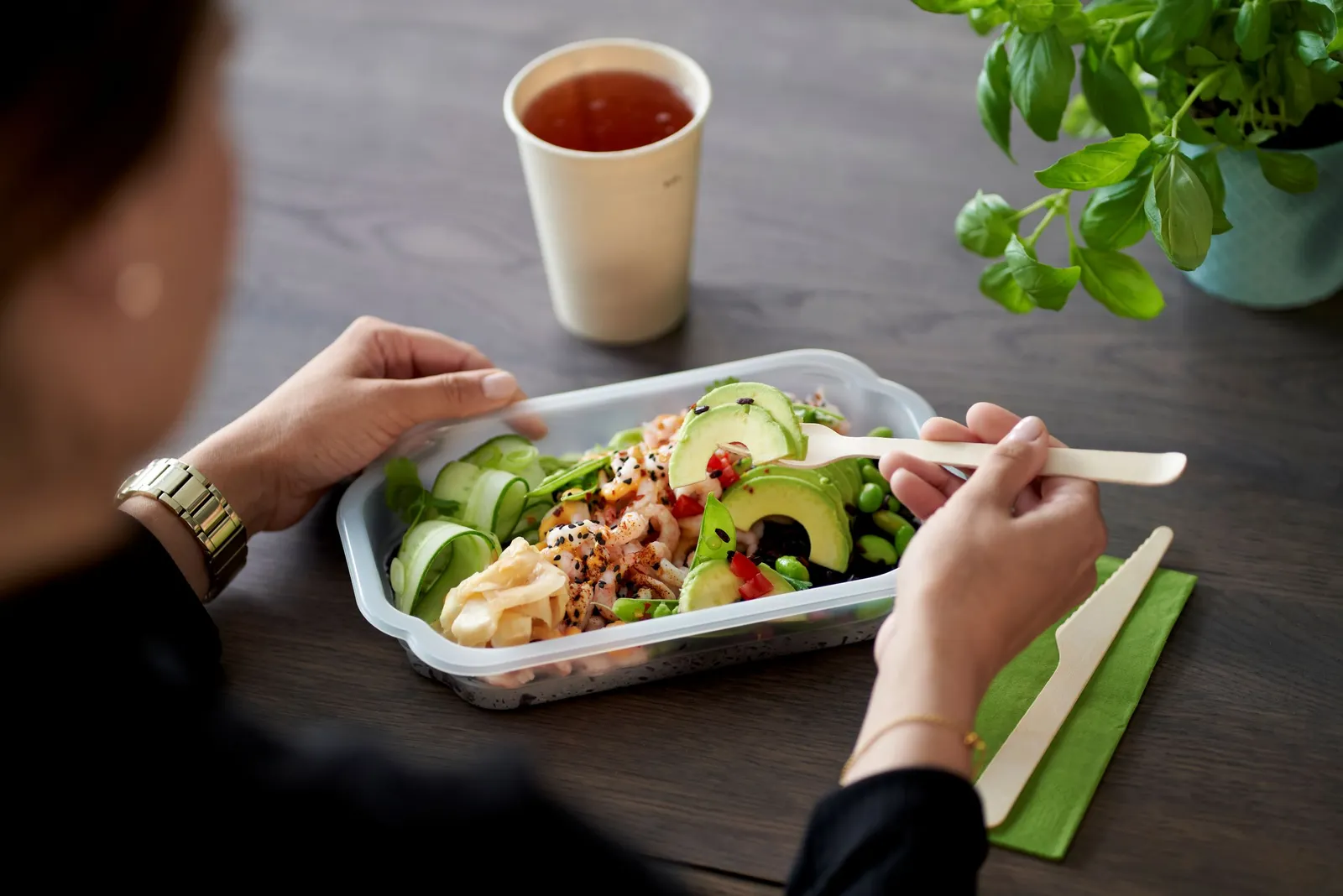
Duni Group is now making numerous Duniform branded foodservice packaging products monomaterial to improve recyclability.
The company says it reduced the amount of additives and fillers so the products are now pure polypropylene. The revamped products do not result in any changes for customers, including for quality and functionality, according to Duni Group.
“This is an important step where we significantly improve recyclability at scale,” said Marie Davies, category manager for trays and films at Duniform, in a news release.