Dive Brief:
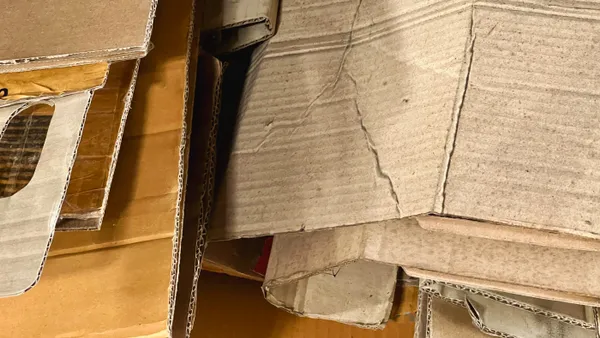
- Graphic Packaging International announced Monday it is entering the uncoated recycled paperboard market with the introduction of an offering called PaceSetter Ridgeline.
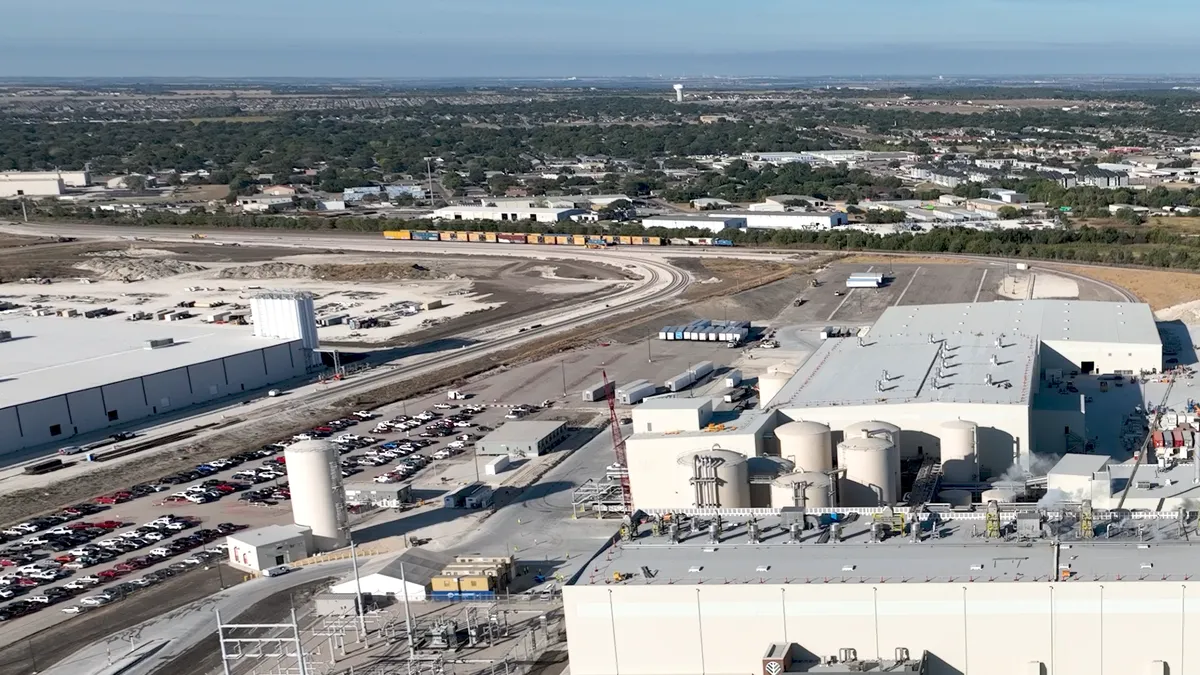
- The URB product contains at least 45% postconsumer recycled content and will be manufactured at GPI’s mill in Waco, Texas, which has been commercially operational since October 2025. That mill will be able to switch between existing production of coated recycled paperboard and the new URB based on customer demand, according to a news release.
- This offering will help GPI’s recycled paperboard reach new markets, namely industrial applications, according to a statement from President and CEO Robbert Rietbroek.
Dive Insight:
Throughout years of planning and construction, GPI had previewed the Waco site as a CRB mill that would meet growing demand for that grade. It introduced PaceSetter Rainier three years ago as a flagship CRB product suitable for packaging applications in healthcare, beauty, confectionery, dry goods and dairy.
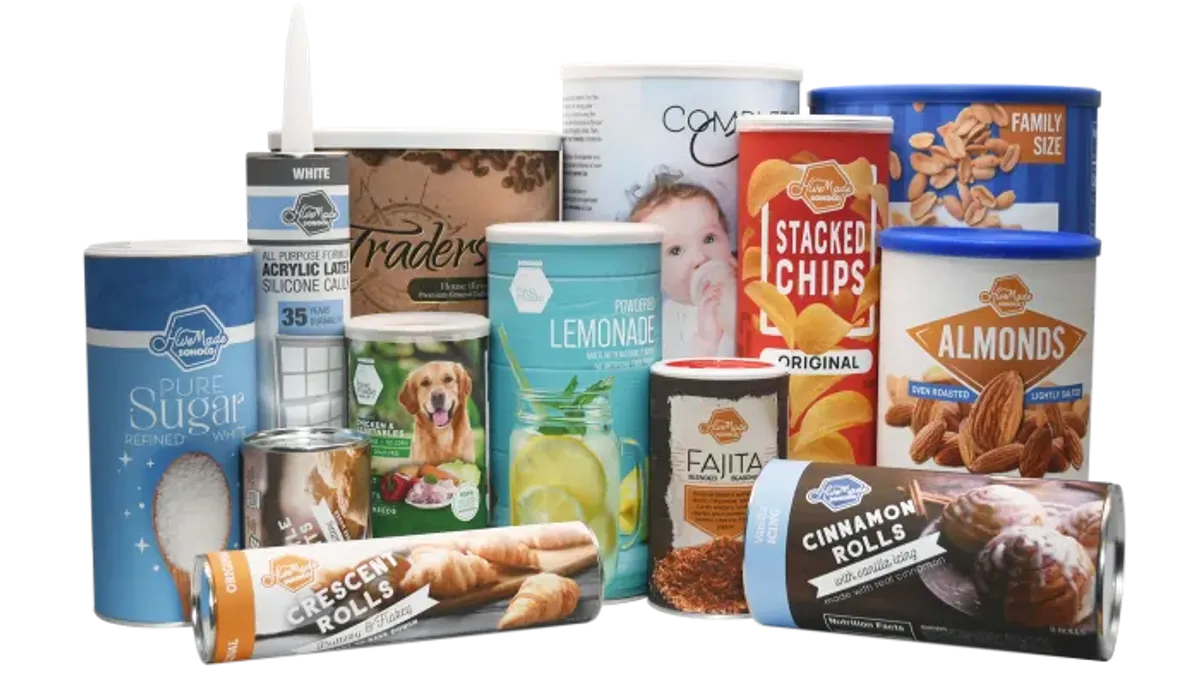
The new PaceSetter Ridgeline product is suitable for folding cartons, laminations, edge protectors, tubes and cores and other specialty purposes, according to the news release. Entering the URB space will allow Graphic Packaging to serve a broader spectrum of paperboard and consumer packaging customers, the company says.
As far as why the company is delving into URB now, certain analysts suggest lagging demand for other grades could be at play.
“We believe the decision to produce URB is due to softer CRB demand and pricing, and potential difficulty filling Waco’s 550k ton CRB capacity,” said Michael Roxland, senior paper and packaging analyst at Truist Securities, in a Monday note to investors.
“We also believe that there could be some major contract renewals occurring this year which [GPI] was hoping to procure for Waco and this announcement could be an indication that some of them may not come to fruition,” he said.
Executives at GPI have discussed in recent months the ongoing changes to demand dynamics among fiber grades. “The two grades that really matter most to us, as you know, are recycled and unbleached, because that's what we primarily use. And both of those markets are in good balance,” CEO Robbert Rietbroek said during a May earnings call.
At that time, he touted PaceSetter Rainier as being cheaper to make than bleached board, adding that “we continue to believe that PaceSetter Rainier will take volume from bleached over time.” While further discussing the balance of supply and demand, Rietbroek noted the company’s numerous CRB closures in recent years, including plants in Tama, Iowa; Middletown, Ohio; East Angus, Quebec; as well as the K3 line in Kalamazoo, Michigan. He also mentioned the sale of a bleached paperboard mill in Augusta, Georgia, to Clearwater Paper.
“We have been very proactive in our approach to supply, while others have added capacity,” Rietbroek said during the May call.
GPI began production on its K2 CRB machine at Kalamazoo in 2022. Company executives have repeatedly described Waco as being built to mirror Kalamazoo’s operations. “Waco and Kalamazoo are world-class assets, the highest quality and most efficient recycled paperboard manufacturing facilities in North America,” Rietbroek said during a February earnings call. Still, he noted at the time that “the market has been weak” and GPI hoped for a return to more normalized consumer spending to boost volumes at Waco and Kalamazoo.
GPI’s foray into the URB space marks a portfolio adjustment at a time when other fiber companies’ executives also have rebalanced their boxboard grades and volumes. Companies continue to raise the issue of a solid bleached sulfate oversupply, with Clearwater Paper announcing in April that it would halve production and cut 20% of employees at its SBS mill in Cypress Bend, Arkansas.
That followed Smurfit Westrock’s February announcement that it would permanently close an SBS machine at its mill in La Tuque, Quebec. SW disclosed another boxboard shift during an October earnings call, when executives announced a plan to transition more customers away from CRB and toward SBS and coated unbleached kraft.
Roxland mentioned that GPI entering the URB space could put pressure on Sonoco and Greif, the two largest North American producers of that grade which he said account for approximately 75% of the market. It could also put pressure on pricing. In June, major URB producers announced their second round of price hikes this year — $60 per ton — following an initial wave of announcements in March for $60 to $70 per ton, depending on producer.