Fiber and metals aren’t the only packaging materials and products to get caught in the United States-Canada trade war. As companies sift through tariff codes they’re learning of the numerous plastic items that are included. Alongside impacts from the war with Iran, these tariffs are among the most pressing issues for plastic packaging producers right now, according to Rabobank.
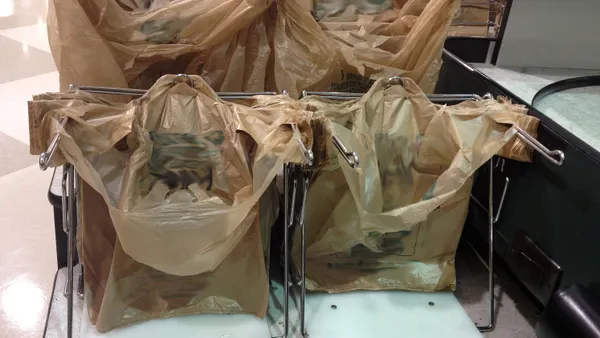
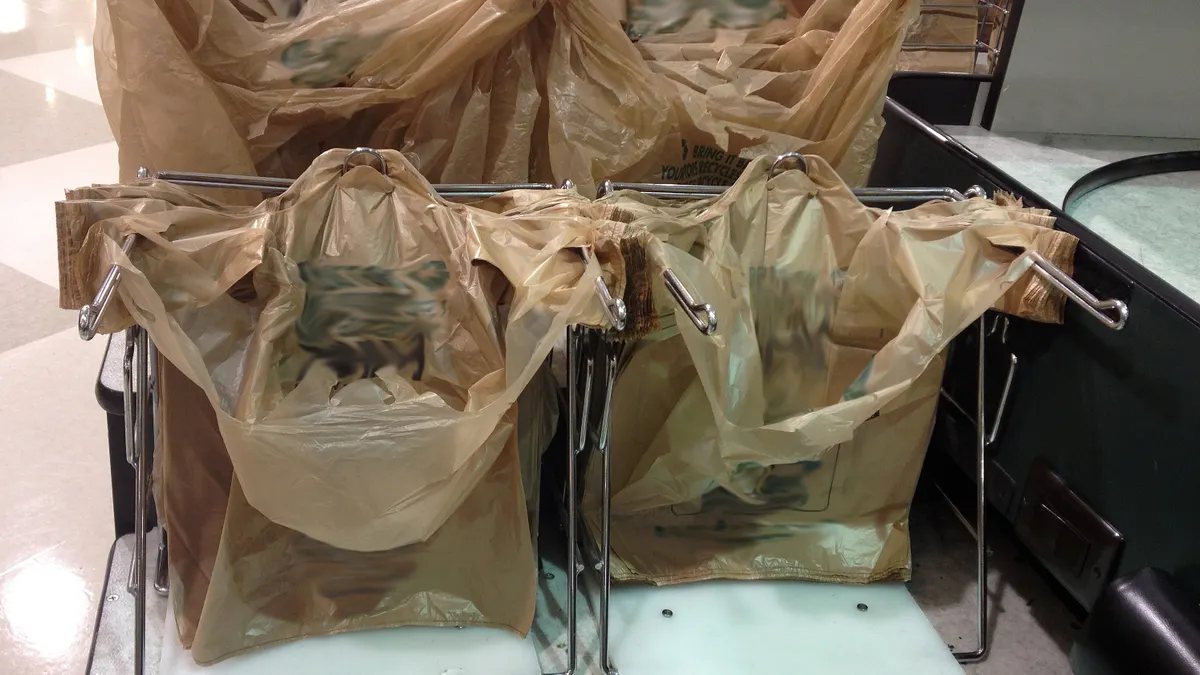
Polyethylene bags are listed in Canada’s reciprocal tariffs order at a 50% tariff rate, as are stoppers, lids, caps, other closures and table ware. There are also 15% tariffs on various molds for manufacturing plastic, metal and rubber products.
With the changing nature of the trade war, companies aren’t always clear about precisely which products are included in the Harmonized Tariff Schedule codes and which aren’t. That issue hasn’t been isolated to plastics.
For example, Hugues Simon, CEO of Canada-based fiber packaging company Cascades, pointed out on an August earnings call that different products of the same fiber grade are not treated equally under the countries’ tariffs. And Montreal news outlet The Gazette published a story this week describing similar challenges for a plastic air pillow manufacturer.
“It's up to the exporters and importers to identify what the correct codes are,” said Jim Owen, senior packaging and logistics analyst at Rabobank. “Depending on the size of the converter and your influence over the supply chain, there's probably a lot of confusion.”
Owen noted in a recent report that about 20% of the approximately $15 billion U.S.-Canada plastics trade is exposed to the 50% tariffs that the U.S. imposed on $20 billion of Canadian goods in July. However, the situation is dynamic and the scope could grow.
“I wouldn't be surprised, until we come to a resolution, that there would be continued fluctuation in what's hit and how hard,” Owen said.
Quick tariff changes combined with the uncertainty create volatility that puts affected converters at short-term margin risk, he said. In this environment, it’s challenging for companies to commit to a fixed-price purchase order because costs could fluctuate significantly between the time of a bid and the fulfillment.
The Section 338 duties stack on top of base duties and apply even to goods covered for free trade under the U.S.-Mexico-Canada Agreement, he explained.
“We spent 30 years making this a well-oiled machine with free trade on plastic and molds and resins and additives,” Owen said. “It's a pretty big shift to add some friction into that equation.”
The ongoing effects of the war with Iran are causing further stress for plastic converters. The war reached the six-month point in late August, and polyolefins have been bearing the brunt of the effects this year. Hope of a resolution materialized in June, but supply chain disruptions and price spikes returned after fighting resumed in July.
While polyethylene and polypropylene producers have reported surging profits, packaging converters have been in a pinch as they face significantly higher costs for materials, energy and transportation.
North American PE and PP producers typically use ethane to manufacture their materials, which costs less than the petroleum-derived naphtha that Asia and Europe rely on. Amid oil supply chain disruptions and price spikes stemming from the war and Strait of Hormuz closure, global demand has grown for the lower cost North American polyolefins that are increasingly being exported to other markets.
That’s putting pressure on some U.S. converters who no longer have the advantage of purchasing the lower-cost domestically produced materials as producers ship it elsewhere and/or hike prices. “There's people eating margin right now that make it very challenging to deliver on yearly or quarterly results,” Owen said.
All the geopolitical and economic situations playing out right now could have a lasting effect on plastics markets and businesses.
“With the Strait of Hormuz doing what it's done to plastics, as well as the consumer rut that we're in where demand is low, it's quite a challenge,” Owen said. “And I don't see a huge change coming in the next several years.”