Dive Brief:
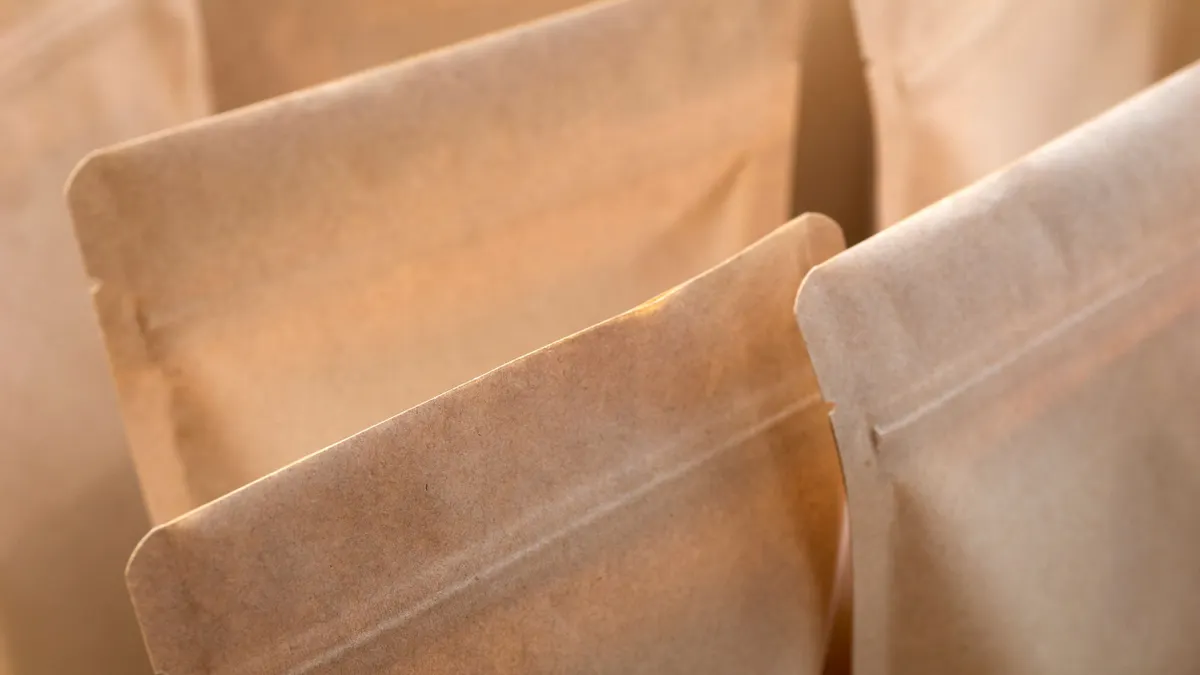
- The Ellen MacArthur Foundation on Wednesday launched the PaperFlex Consortium to accelerate innovation for paper-based flexible packaging solutions as alternatives to plastic packaging.
- It will primarily target innovation for small-format packaging and will prioritize geographic markets where plastics are likely to end up in the environment due to lack of collection and recycling systems.
- Six consumer packaged goods companies — Colgate-Palmolive, Mars, Nestlé, PepsiCo, Procter & Gamble, and Unilever — are the founding members, and EMF invites others to join.
Dive Insight:
Early conversations about the consortium began in parallel with EMF’s work on a paper-based flexibles report that the group released in March, which suggested that making the switch to fiber could reduce pollution from small-format plastic packaging. “They really share the same objective. The report was an important piece to make sure that all the stakeholders are aligned on the same vision,” Sander Defruyt, strategy lead for plastics at EMF, told Packaging Dive.
The report laid out six criteria that paper flexibles would need to meet, including being produced responsibly and avoiding hazardous chemicals. But those options are elusive.
“The report really concluded that paper-based flexible packaging solutions that meet all those criteria do not exist today, and definitely not at the scale and the cost that we need them,” Defruyt said. “That's the gap that the PaperFlex Consortium aims to answer.”
Members intend to collaborate on R&D to get flexibles innovations to market faster. They’re aiming for solutions that are both biodegradable and recyclable, which currently lags in the marketplace, Defruyt said.
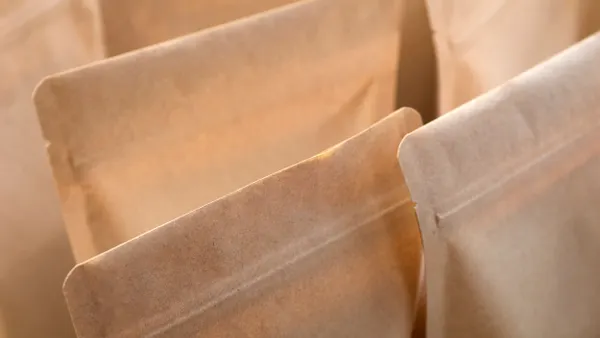
The group will also seek replacements for a particularly challenging category of packaging: small-format flexibles that are sized A5 or smaller, such as sachets, wrappers and pouches. These items, when made from plastic, have high “leakage rates,” or instances of ending up in the environment, according to EMF.
“They are very hard to collect — they’re very small, flimsy, lightweight — making it hard especially in countries where there's no formal collection systems,” Defruyt said. Examples include Asian markets such as India, Indonesia and the Philippines.
Barriers and coatings will be another area of focus, such as identifying biodegradable coatings that boost packaging performance. “That combination really doesn't exist for most” paper-based flexibles,” he said. Plus, the products would need to be manufactured at speeds that are “economically viable.”
Some details about the consortium are still being worked out, he said. But the current thinking is that the group of fast-moving consumer goods companies would engage with solution providers. That could include “small innovators or big banks. Suppliers or coating companies, etc. We will need all of these earlier in the supply chain to work with the consortium towards solutions,” Defruyt said.
The timeline for the consortium’s work is another area that’s still a bit foggy. “By the very nature of the innovation process, it's a bit hard to predict,” Defruyt said. But what’s clear is that the group will begin by identifying specific technologies that seem most promising, he said. The group is collectively focused on R&D, and it will be up to individual companies to commercialize the solutions.
The PaperFlex Consortium intends to share its findings and progress along the way. That should allow the entire industry to benefit, not just the consortium members.
This group’s work aligns with the 2030 plastics agenda that EMF outlined in late 2025. The agenda discusses the need for collaboration and pooling resources to solve plastic pollution problems. It also noted that flexible plastic packaging is one of the major roadblocks to achieving a circular economy for plastics and packaging, Defruyt said, and “this consortium really addresses that very specific issue.”