Smurfit Westrock faced a variety of unanticipated pressures in the third quarter, including heat waves in Europe and cyclosporiasis outbreaks in the United States, executives said during Wednesday’s earnings call. But the most significant impact was “unprecedented and greater-than-expected cost inflation,” primarily for energy and freight, said CEO Tony Smurfit.
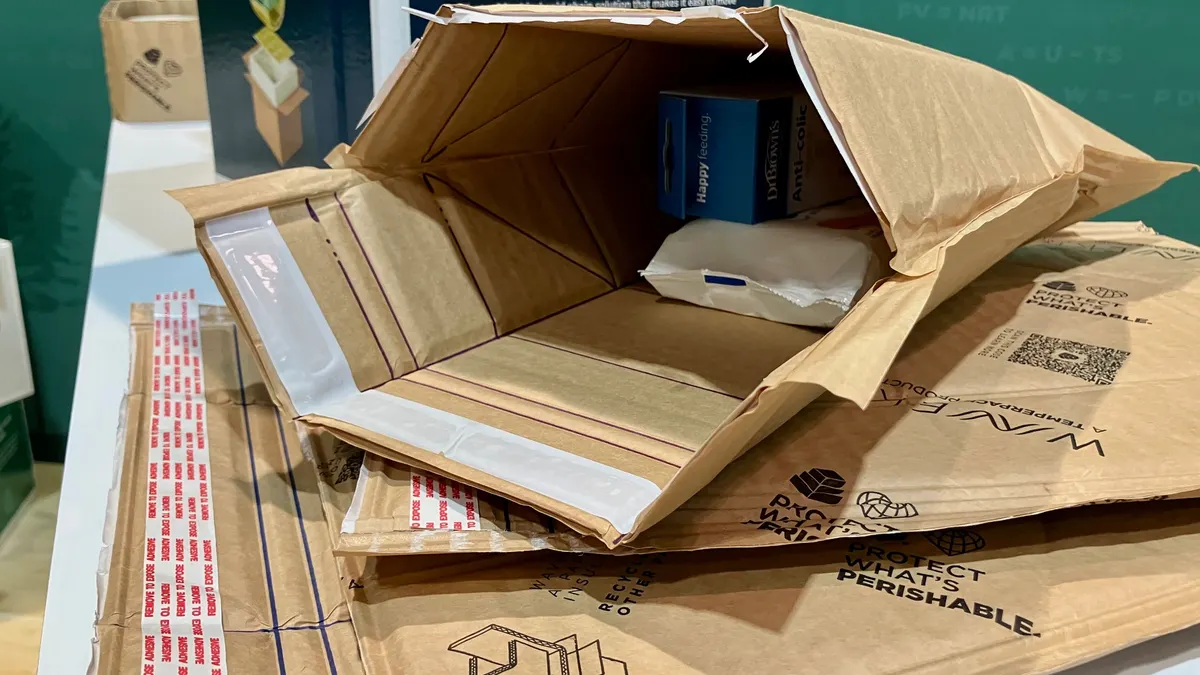
While the North American business continues to improve in most areas, “this improvement is masked by the amount of increased costs that we have incurred,” he said. Corrugated volumes improved sequentially. And there was a notable boost to sales of paper bags, of which the company says it’s the largest producer in the U.S.
Across grades, “we’ve been in a sold-out position for the last number of months — and we have still orders to fulfill from April and May,” Smurfit said. “The structural change that’s happened in North America has been very significant.”
Overall demand in Mexico is “as weak as I have seen it in recent years,” he said, but cost-cutting measures and footprint rationalizations are helping. In the EMEA and APAC regions, the company continues to “outperform our integrated peers,” Smurfit said, noting the “consumer business has grown radically in Europe.”
Pricing
Price increases are the main lever the company is pulling for cost recovery, especially due to the “spiraling cost of energy” which is “reaching levels that we have rarely seen” and shows no sign of easing, Smurfit said. “We’re being whacked by these massive cost increases in energy that we’re going to get back.”
In July, when containerboard producers initiated their third wave of price hikes this year, Smurfit Westrock announced a $100 per ton increase. Fastmarkets RISI recognized $70 per ton in September. “From our perspective we would have expected to get 100, but we'll wait and see what happens going forward,” said Smurfit.
Of the net $170 per ton increase that Fastmarkets RISI’s index has recognized this year, $100 of that has simply gone to cost recovery, Smurfit said. Costs continue to rise and eat into what executives had hoped to be margin improvements, he said. However, they anticipate that some of the most recent $70 price recognition stemming from producers’ third round of hikes will translate to margin enhancement.
Outlook
Despite challenges during 2026, executives still anticipate meeting Smurfit Westrock’s previously announced target for adjusted earnings before interest, taxes, depreciation and amortization of roughly $7 billion by the end of 2030, as laid out in the medium-term plan released in February. But with 2026 adjusted EBITDA now projected to be $4.7 billion, down from a previous estimate of $5 billion to $5.3 billion, the path to 2030 likely will look a bit different than anticipated.
“Clearly, the backdrop in cost for 2026 has kind of impacted the timing, but not the recovery or achievement of the target,” Bowles said. “It'll just be kind of a flex in between the years” leading up to 2030.
Volumes in October have been in line with last year. November orders looks decent so far, but executives are monitoring whether outcomes of the U.S. midterm elections next week could affect demand.
Executives now anticipate inflation costs from energy and freight will represent an estimated $700 million of additional costs for 2026, which is “materially above our earlier expectations,” Smurfit said. High diesel prices will likely bring an additional full-year cost of $120 million to $130 million just in North America. “As we move into 2027, we believe the actions we've taken during the year will more than offset these costs,” Smurfit said.