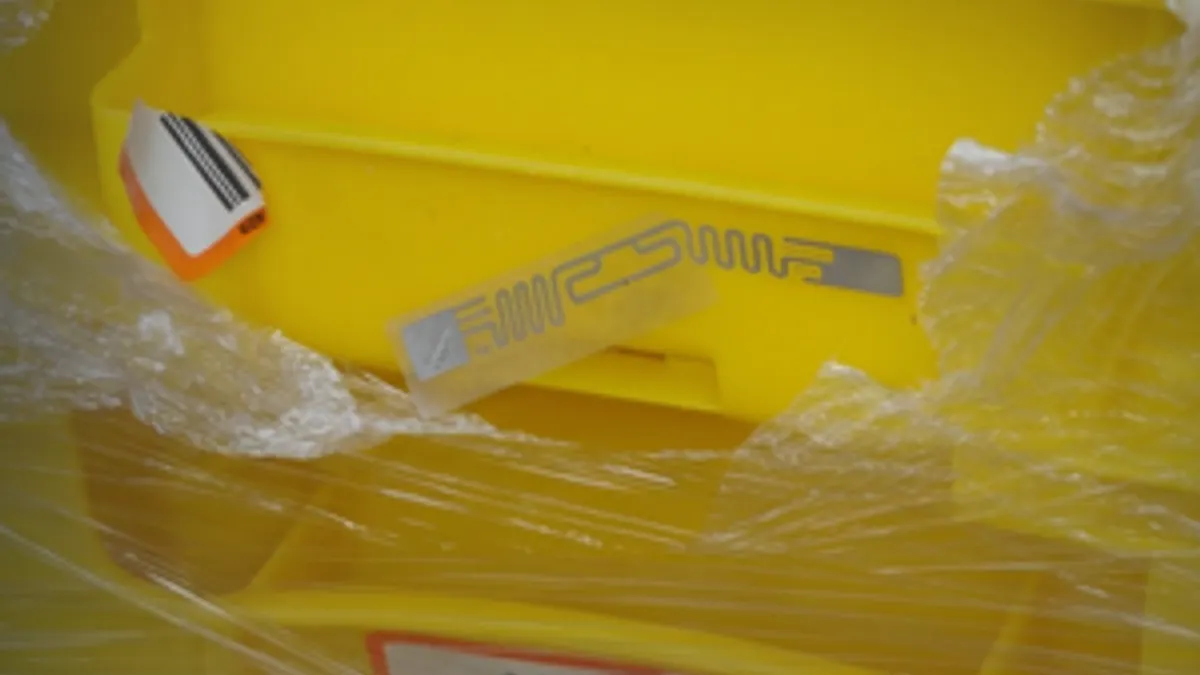

A packaging engineer once described a major supply chain disruption this way:
"The software worked. The warehouse worked. The automation worked. The label didn't."
The root cause was surprisingly simple. A low-cost label failed. Identity disappeared, visibility vanished, manual intervention increased and unforeseen costs followed. At first glance, it seems impossible that a three-cent label could create million-dollar consequences.
Until you understand how much that label guides the entire supply chain.
How did we get here?
Fifty years ago, durable products and packaging were manufactured from stainless steel, aluminum and other materials that readily accepted paints, markings and adhesives. Labels primarily communicated branding, instructions and basic identification.
Packaging is different today.
From fuel tanks and automotive components to pallets and reusable totes, products once made from metal are now engineered polymers such as HDPE and polypropylene. These materials are lighter, corrosion resistant, longer lasting and often more sustainable over their lifecycle.

Supply chains evolved as well, growing from local distribution networks into automated global systems. Identity inherited new responsibilities.
A label no longer simply identifies a product. It now supports automation, inventory management, traceability, compliance, recovery systems and asset visibility.
Products evolved. Supply chains evolved. Organizations still evaluate product identity as though little has changed. That disconnect has quietly made identity one of the most overlooked engineering decisions in reusable packaging.
Start with the operating environment
Most identity failures are not technology failures. They are operating environmental failures.
A climate-controlled Sephora warehouse presents a very different challenge than an automotive tote moving through countries with wash cycles, chemicals, forklifts, outdoor storage and years of repeated use.
Begin by defining the environment the asset must survive. A system that performs perfectly indoors may struggle in harsh conditions. Matching the technology to the operating environment is often the most important decision in the process.

Consider the lifecycle
How long should identity survive?
Many reusable assets remain in service for five, 10, or even 15 years. identity should perform alongside the asset. If identity reaches end-of-life first, relabeling, replacement, manual intervention and recovery challenges become part of the operating model.
Durability supports operational performance, sustainability and total cost of ownership simultaneously. The real question isn't whether the asset can be identified today.
It's whether it can still be identified years from now.

Determine the how information will be transmitted
Every identity technology was engineered to solve a different problem.
Barcodes, QR codes and GS1 provide low-cost, highly scalable identification. RFID enables bulk reading and automation. BLE supports real-time location and monitoring. The right choice depends on operational environment, not the sophistication of the technology.
Some organizations overdesign systems, adding unnecessary complexity and cost. Others under-design them and discover later that the technology cannot support automation, recovery, or operational objectives.
The right answer depends entirely on your specific set of operating facts.
Identity is an economic decision, not a price decision
The purchase price of a label, tag, or device is often irrelevant to the cost of the system.
The hidden costs appear later; manual intervention, lost visibility, lower asset utilization, replacement assets, downtime and reduced productivity, poor reporting.
A barcode that no longer scans requires relabeling. An RFID tag that detaches interrupts operations. A missing identifier creates gaps throughout the supply chain. These are hidden costs.
The question is not: What does the identity system cost?
The better question is: What does identity failure cost?

 Sustainability begins with durability
Most sustainability discussions focus on recycled content, recovery rates and material selection. Label systems are rarely part of that conversation. They should be.
Every replacement label, failed tag and relabeling event consumes additional materials, labor, transportation and energy. Durability and sustainability are not competing objectives, they reinforce one another. Regardless of technology, the identity system that lasts the longest generally creates the lowest environmental and operational impact.
The best technology is the one that fits
There is no universal identity solution.
A consumer product moving through a controlled indoor environment may be well served by a traditional label or RFID. A reusable asset operating for years in a harsh environment may require a completely different approach.
Engineering has never been about selecting the newest or most sophisticated technology. It has always been about selecting the technology that best fits the application. The same principle applies to product identity.
Choose the system that best aligns with the environment, lifecycle, operational requirements and recovery objectives of the asset. Because in modern supply chains, identity is no longer simply a label.
It has become part of the infrastructure.